Staring up at a massive, empty drywall vault is incredibly uninspiring. Those giant overhead spaces often turn a cozy living room into a cold, echoing barn. Introducing a structured farmhouse ceiling with heavy timber trusses or rich wood planks changes the entire dynamic. It brings immediate architectural warmth and pulls the room down to a comfortable, human scale.
A shallow beadboard grid to define open zones
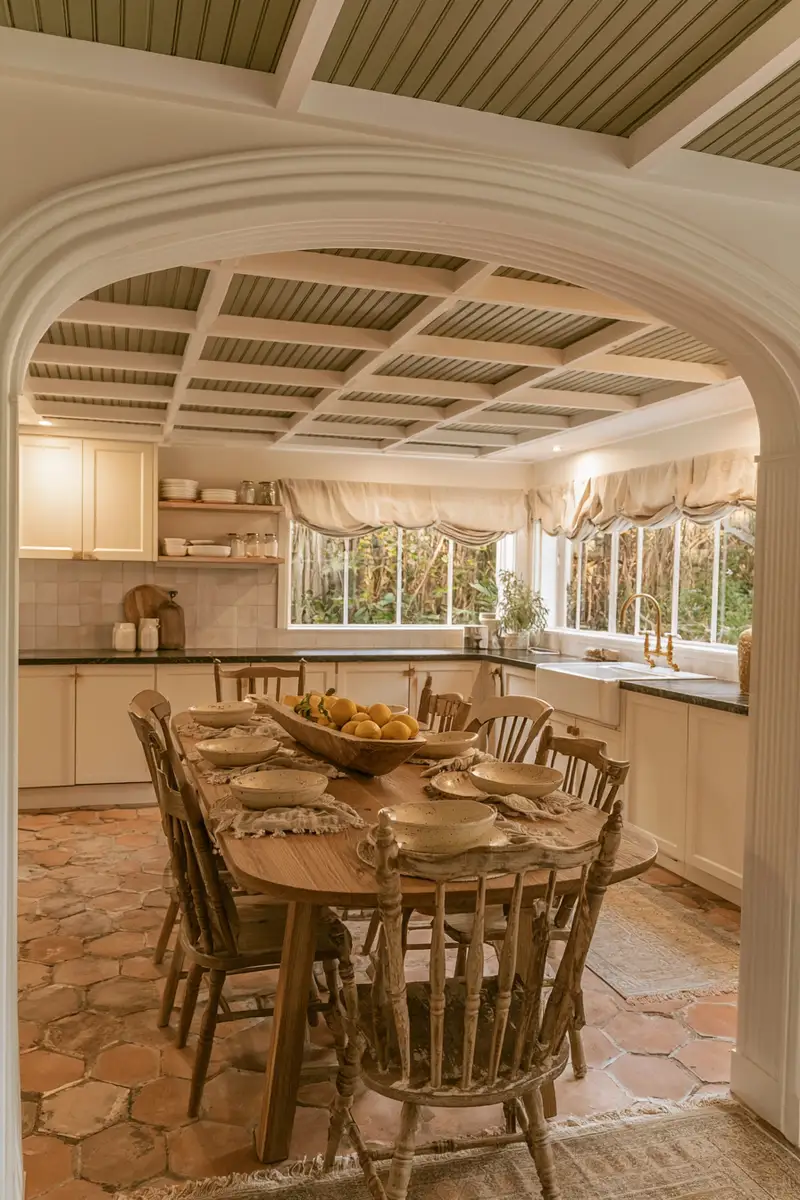
Open concept kitchens often lack clear boundaries. A massive flat ceiling makes the dining area feel like an afterthought. Installing a shallow coffered grid over simple beadboard solves this visual gap immediately. It gently lowers the scale of the room. It anchors the dining table without needing heavy partition walls.
Taming a massive vault with raw timber
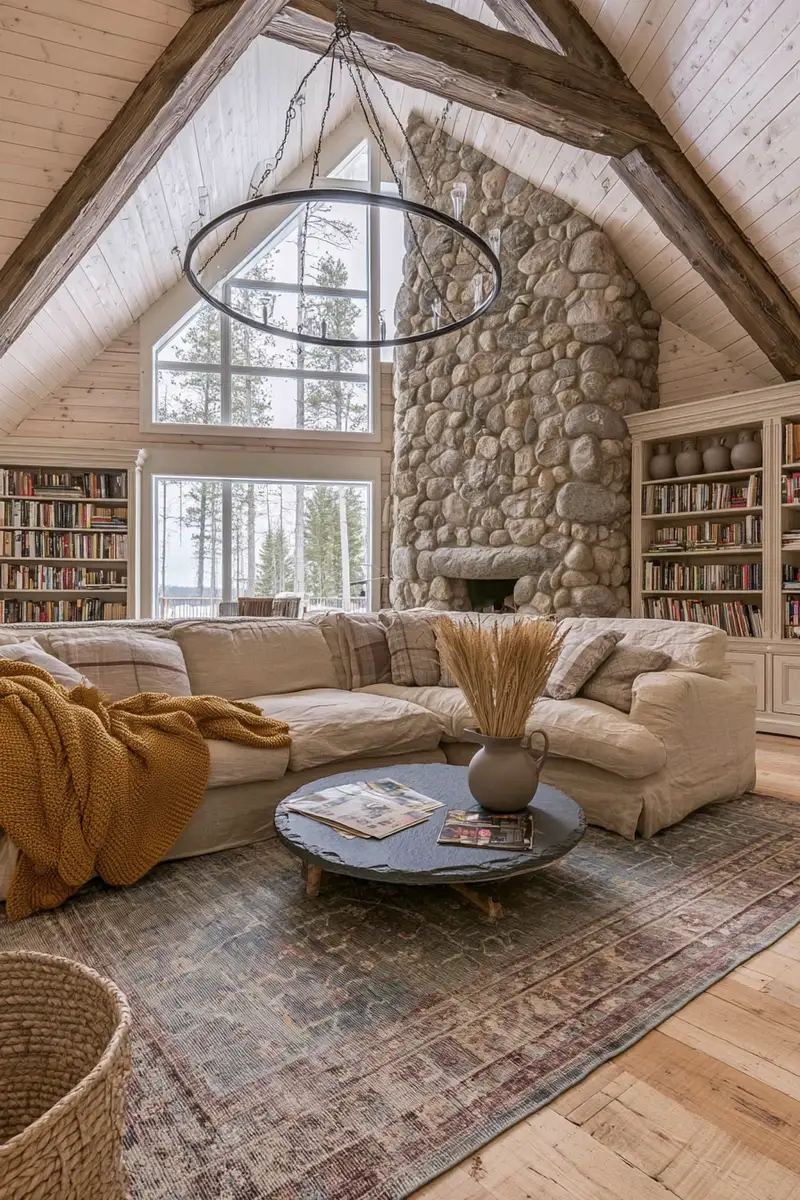
Giant vaulted ceilings look great on paper but live poorly. They echo terribly and feel icy cold in the winter. This living room setup tackles the void smartly. Wrapping the entire upper vault in whitewashed wood planks keeps the natural light bouncing around. But the real structural anchor is the oversized, raw timber trusses. Dropping these heavy wood elements lower in the room visually tricks the eye. It brings the ceiling down to a comfortable human scale. You get the drama of the height without feeling like you live inside an empty commercial barn.
Unpeeled logs for rough zones
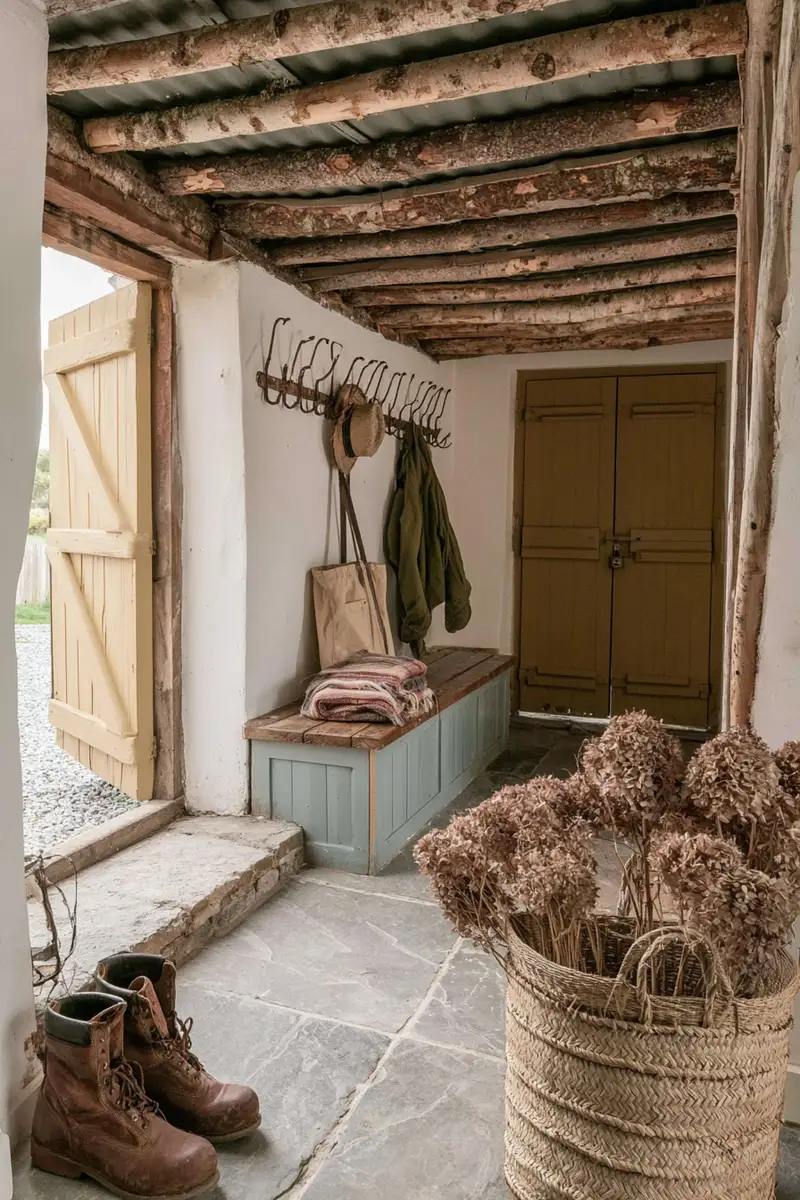
Mudrooms destroy delicate drywall ceilings. Using raw, unpeeled logs to hold up a simple corrugated metal roof creates an indestructible drop zone. It requires absolutely zero paint or maintenance over the years. Wet coats and dirty boots fit right in.
Reflective vintage tin panels
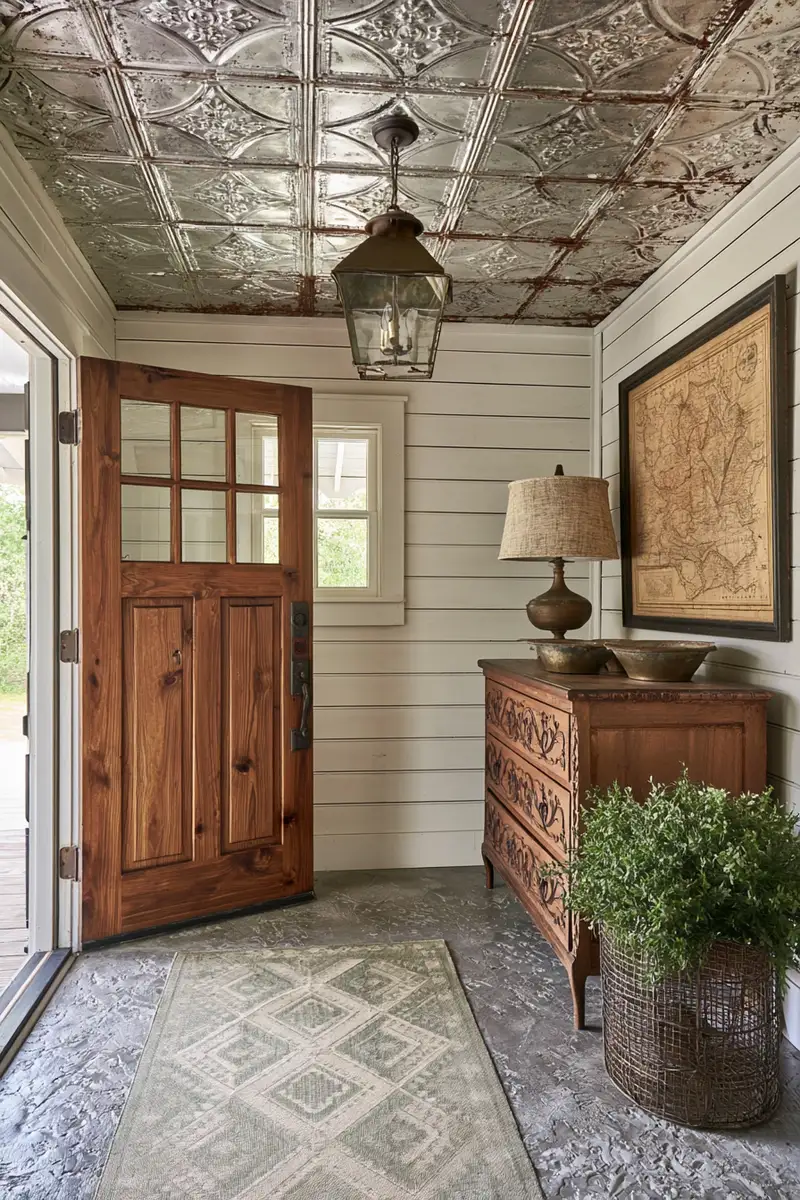
Dark, narrow entryways feel cramped and unwelcoming. Slapping standard flat white paint up there does nothing to fix the shadows. Installing stamped tin tiles adds instant architectural texture. The slightly distressed metallic finish actually catches and bounces ambient light from the front door deeper into the hall. It hides daily dust and age perfectly.
A single wood beam breaks the white
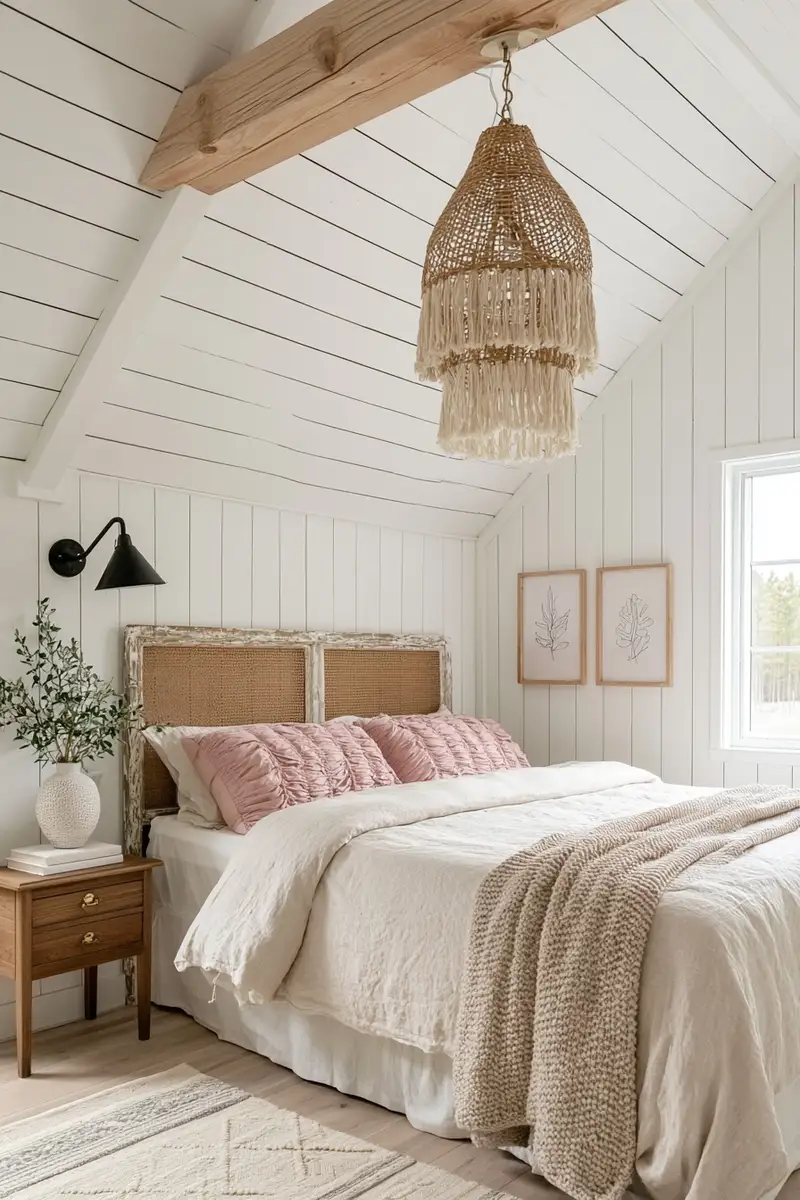
Sloped bedroom ceilings easily feel like they are closing in on you. Heavy dark grids make small rooms feel even tinier. Running crisp white shiplap all the way up the pitch solves the claustrophobia completely. It pulls the eye up toward the peak. Adding just one smooth, natural wood beam at the very center provides necessary structure. It breaks up the endless sea of white without weighing down the room.
Embracing low heights with bold paint and raw joists
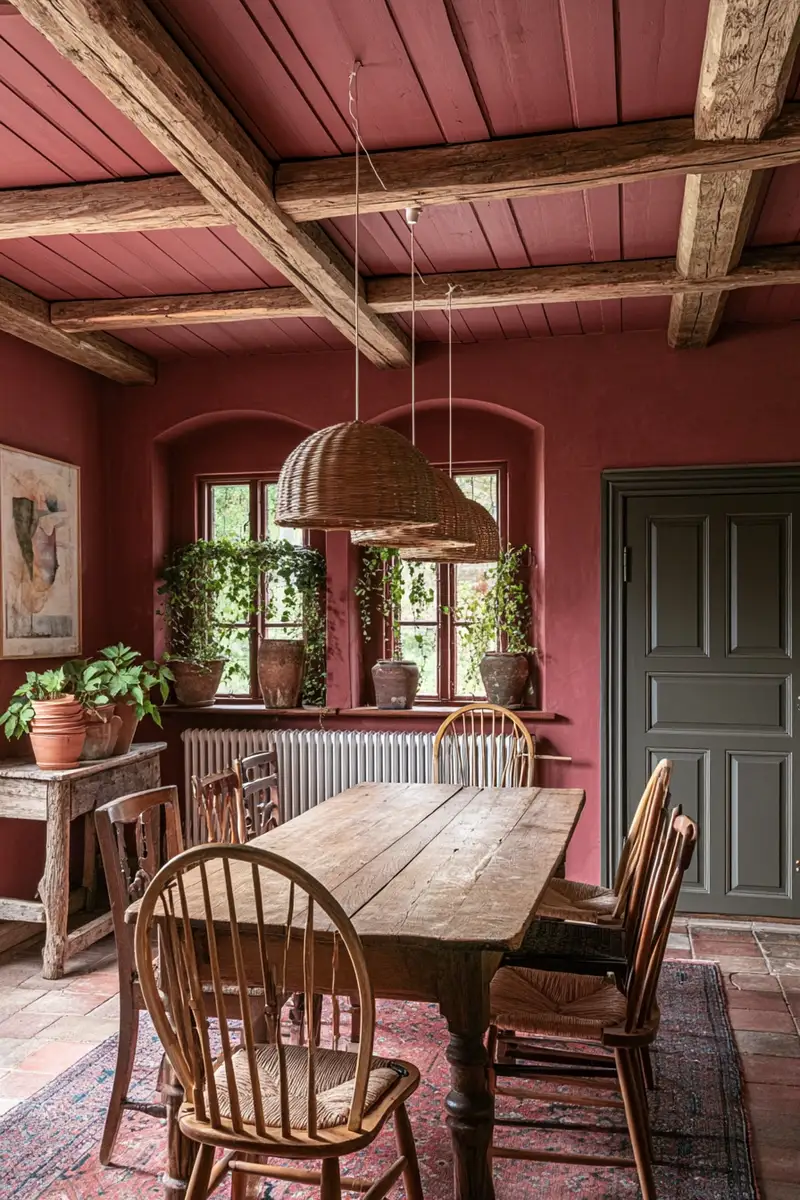
Everyone assumes a low ceiling must be painted bright white. That is a stubborn design myth. Forcing white paint onto a low, cramped ceiling just makes the room feel like a cheap box. This dining room flips the rule completely. Painting the ceiling base a deep, muted red actively embraces the tight proportions. It turns a structural flaw into a moody, intimate feature. Leaving the rough-sawn wood joists completely natural stops the dark paint from feeling heavy. The raw wood provides a warm visual break. It is a highly effective trick to make a small dining room feel expensive and intentional.
Tin tiles framed by heavy timber
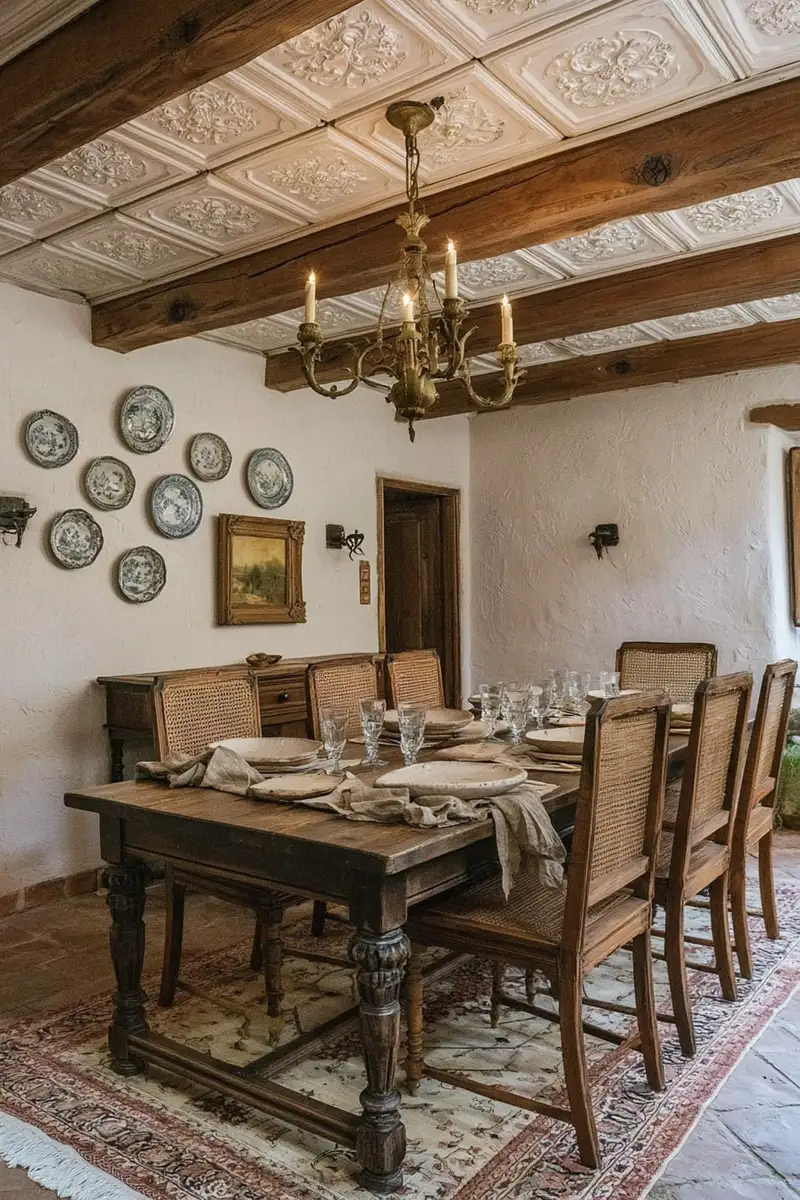
Standard drywall offers zero sound absorption in a noisy dining space with hard floors. Combining pressed white tin ceiling panels with thick, dark wood beams adds massive texture to a flat room. The heavy timber hides uneven ceiling lines perfectly and easily conceals modern lighting wires.
Arched trusses soften rigid lines
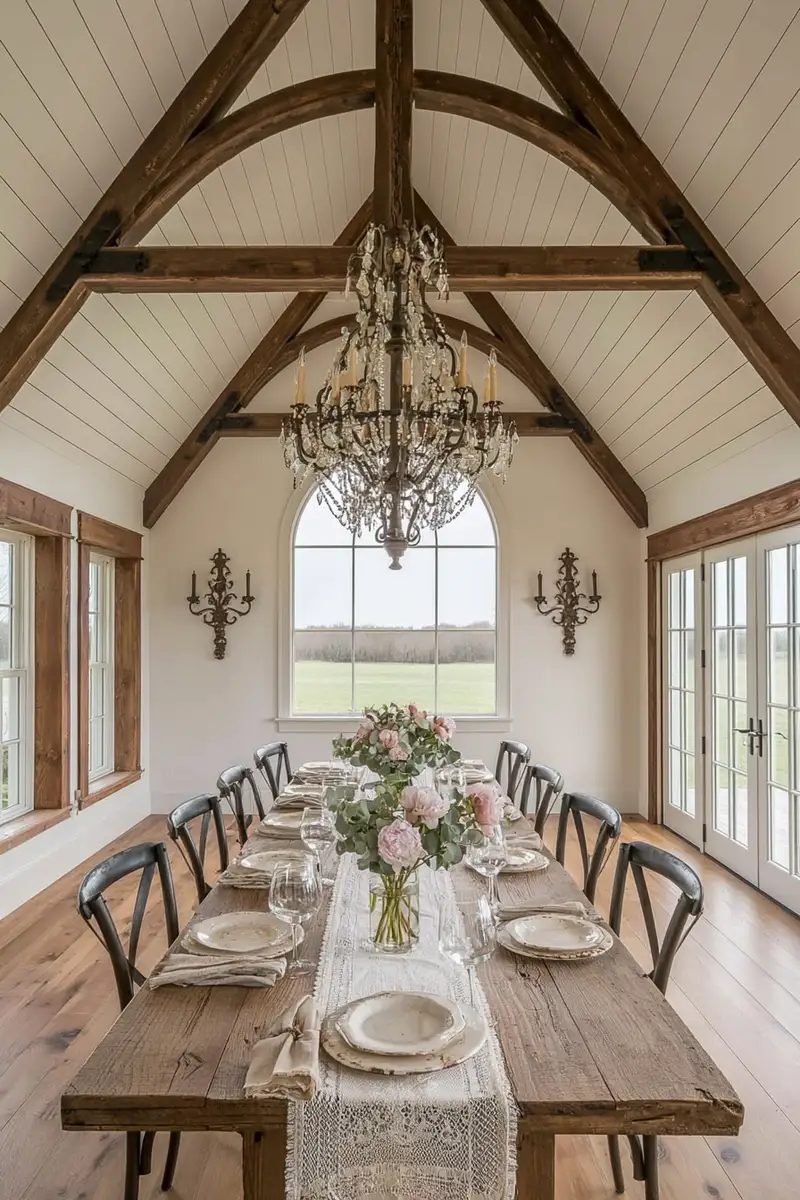
Long, high-vaulted rooms easily turn into echoey bowling alleys. The straight lines run away from the eye way too fast. Bridging that massive gap with arched wooden trusses slows everything down. The gentle curve of the dark wood softens the harsh, sharp angles of the pitched roof. It holds the massive chandelier securely while pulling the walls visually closer together.
Indoor corrugated metal
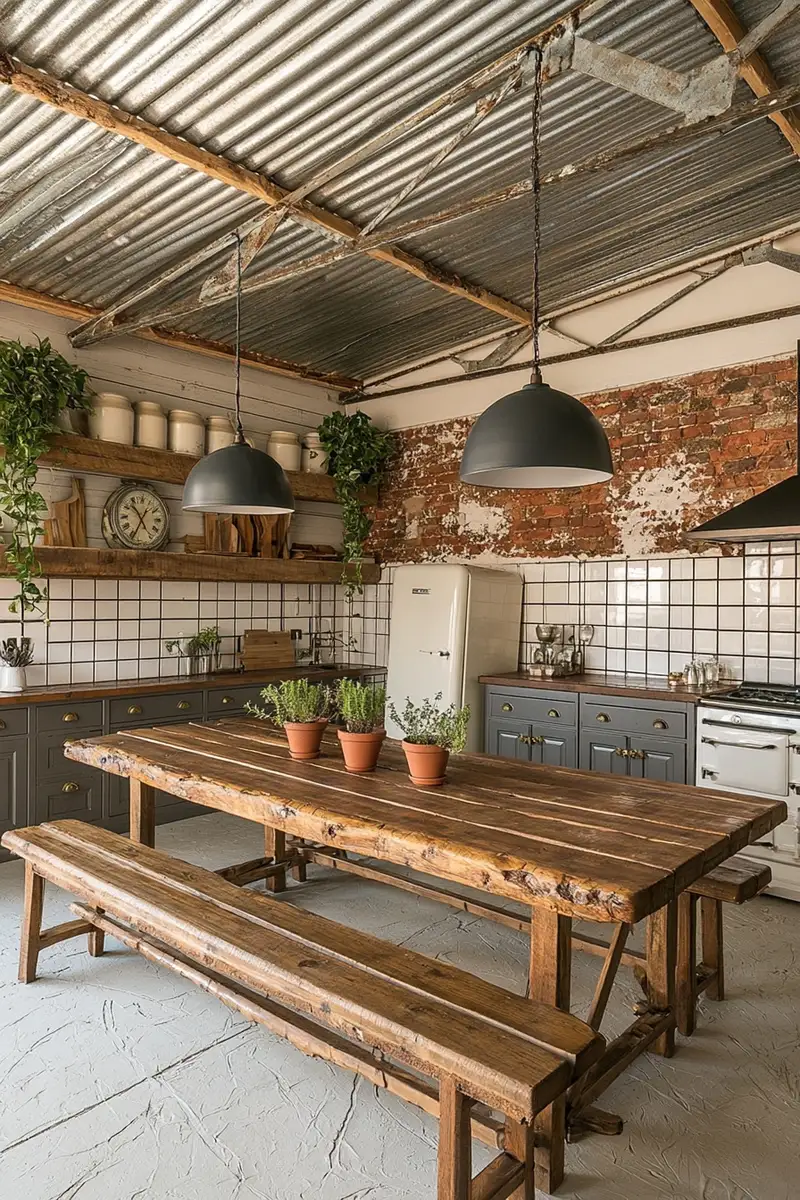
Kitchen grease and cooking steam destroy flat white ceiling paint fast. Swapping fragile drywall for raw corrugated metal is a brilliant utility move. It is completely fireproof and ignores daily moisture. You never have to patch a drywall crack above the hot stove again.
Floral wallpaper between painted ceiling battens
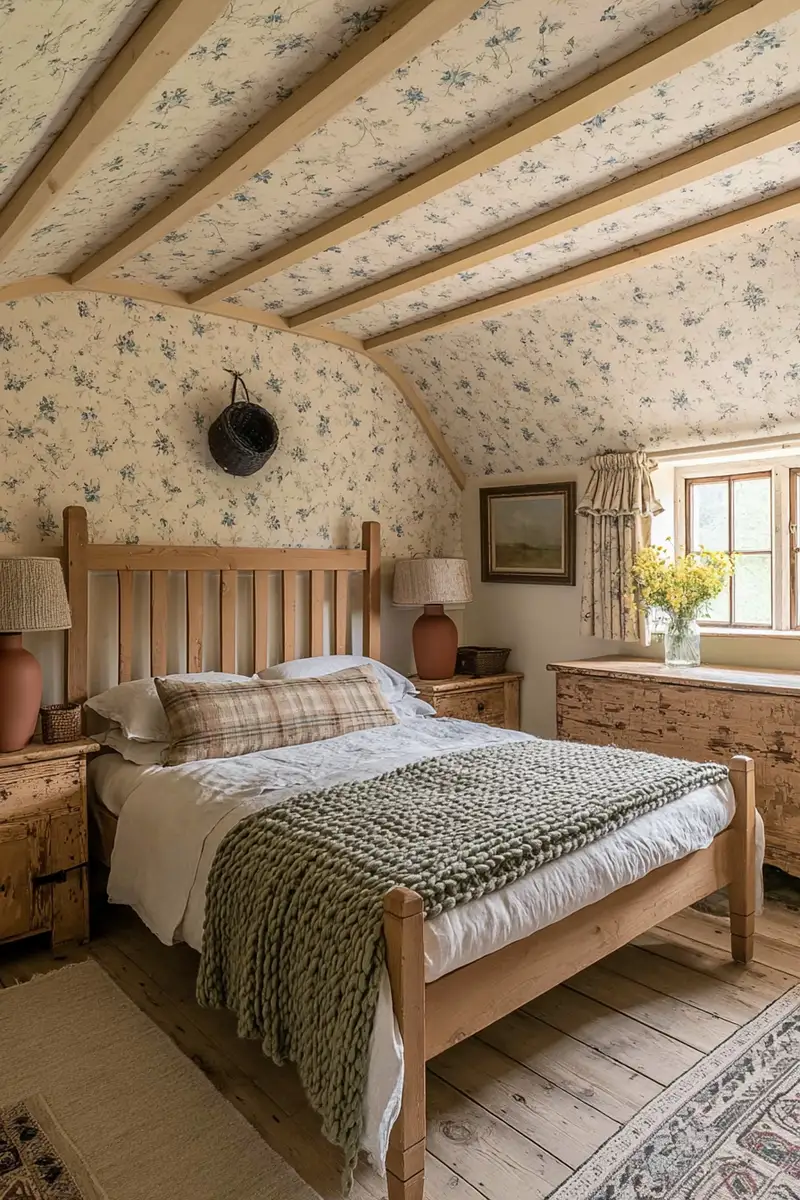
Attic bedrooms suffer from awkward, blank sloped walls. You cannot hang framed artwork on a severe angle. Applying a soft, patterned wallpaper directly to the ceiling between simple painted battens fixes this dead zone. It acts like a cozy canopy over the bed. The rigid structure of the wood strips keeps the busy floral pattern neatly contained so it never looks chaotic.
11. Spaced timber for low dining rooms
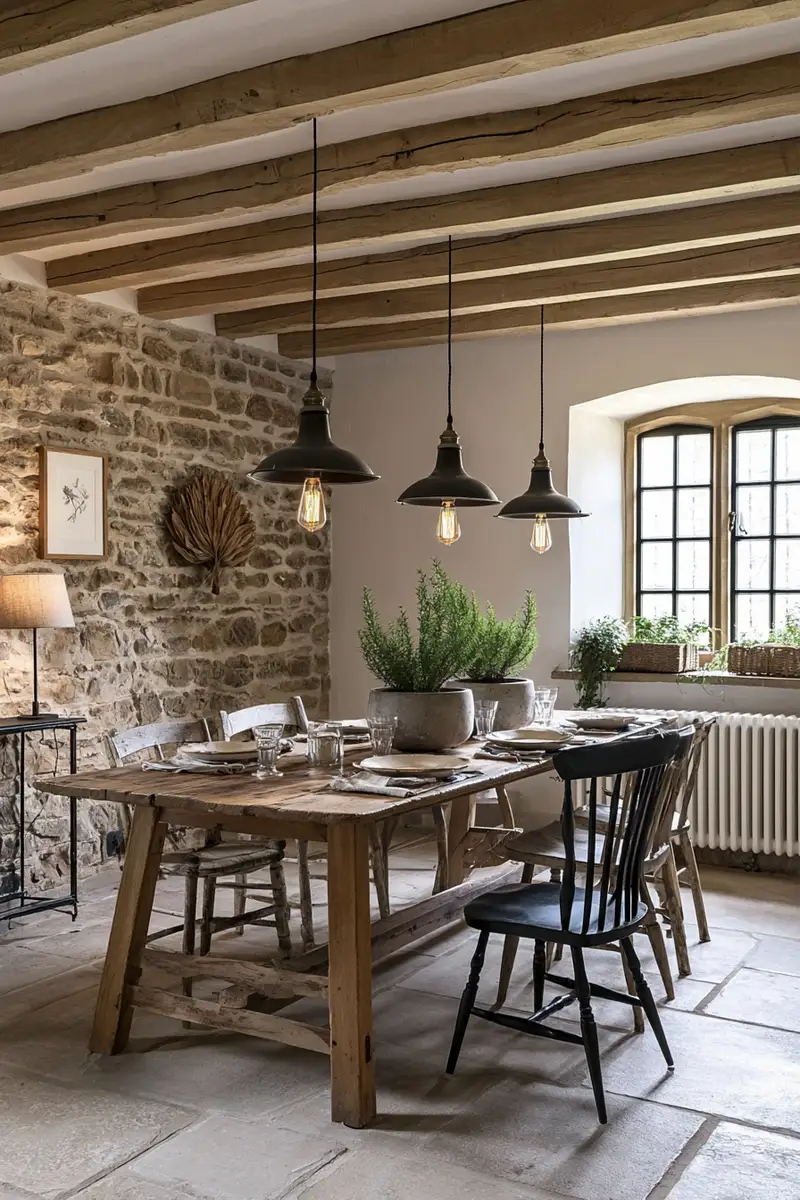
Old stone houses often suffer from heavy, oppressive ceiling heights. Trying to cover them with flat drywall just makes the room feel smaller and completely claustrophobic. Leaving the original rough-hewn beams exposed and widely spaced fixes this instantly. It draws the eye horizontally across the room. Dropping dark metal pendants right over the table grounds the dining zone perfectly without causing a head-hitting hazard.
12. Thick plaster hides the mess
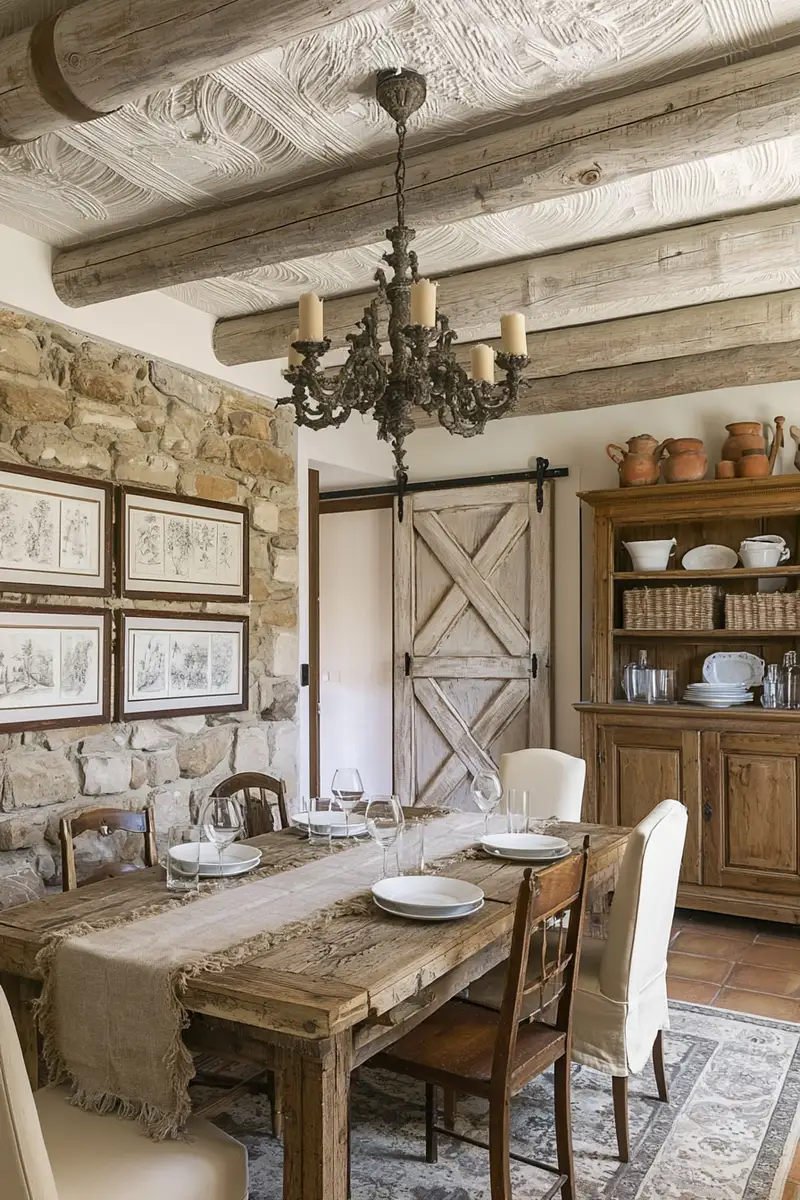
Hiding terrible drywall seams in a high-traffic room is a huge headache. Heavy textured plaster applied tightly between thick log beams solves it completely. The thick swirls absorb echoing dinner chatter. It turns a messy surface into a deliberate structural asset.
13. Adding warmth to sterile white planks
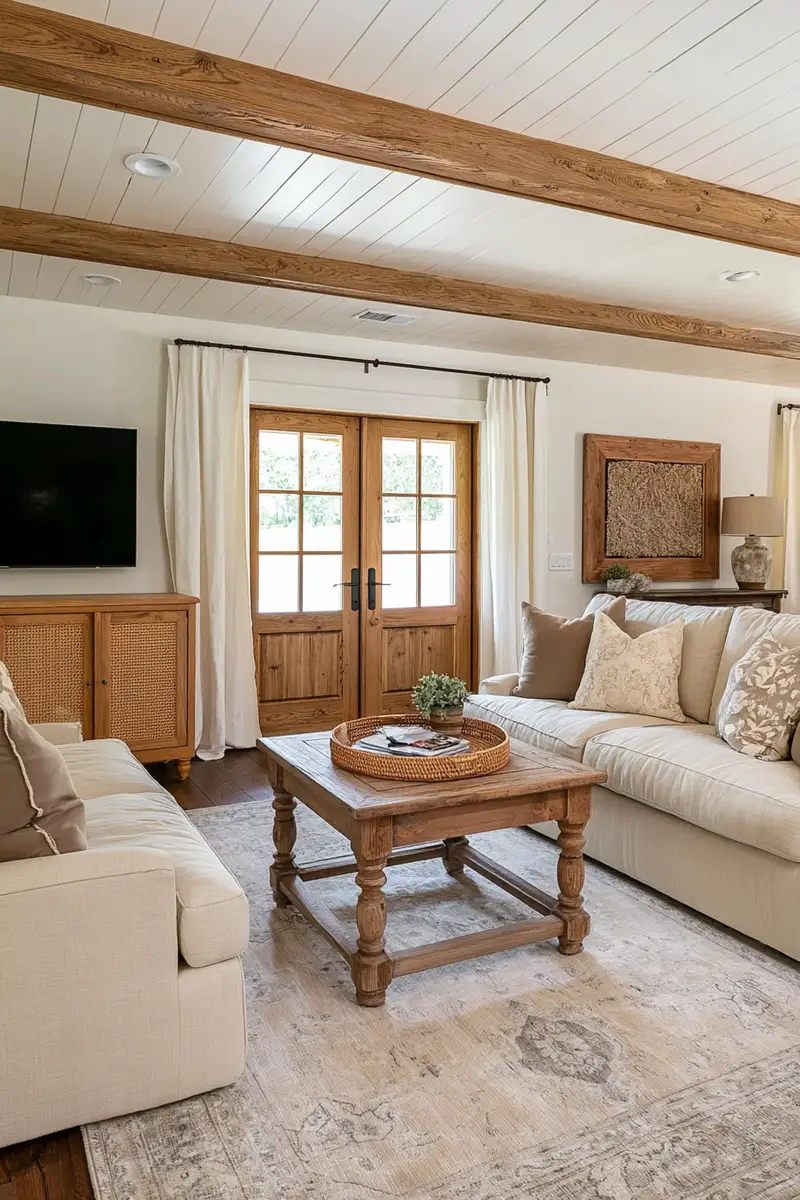
Running bright white shiplap across a massive living room usually makes the space feel like a sterile floating box. You need visual weight. Installing smooth, stained oak beams directly over the white planks solves the floating problem instantly. The wood anchors the room entirely. It warms up the stark white paint without sacrificing that bright, airy feeling you actually want for a family room. A very smart structural balance.
14. Reclaimed wood
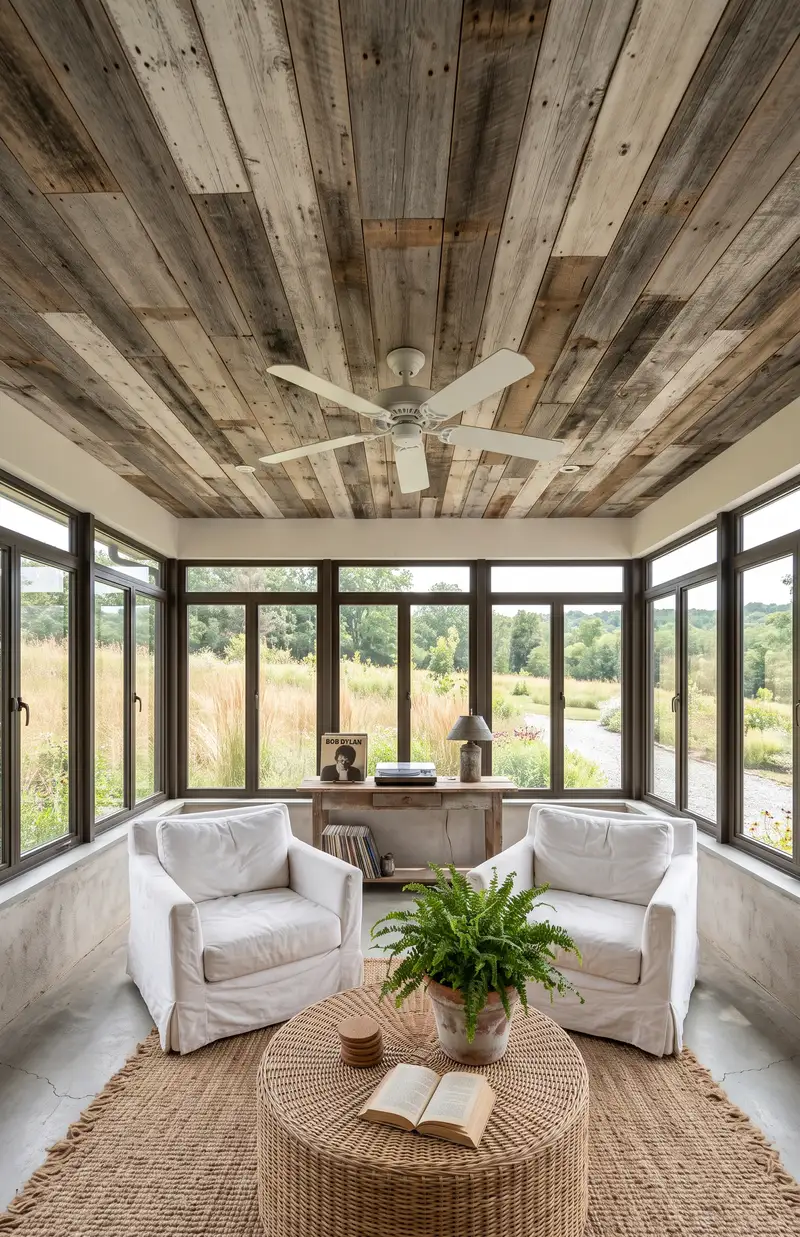
Flat sunroom ceilings are notoriously boring. Covering the entire surface in reclaimed barn boards fixes that dead space. The varied gray tones effortlessly hide minor water spots or dust. It brings rugged outdoor texture directly inside.
15. Taming a giant A-frame vault with heavy cedar
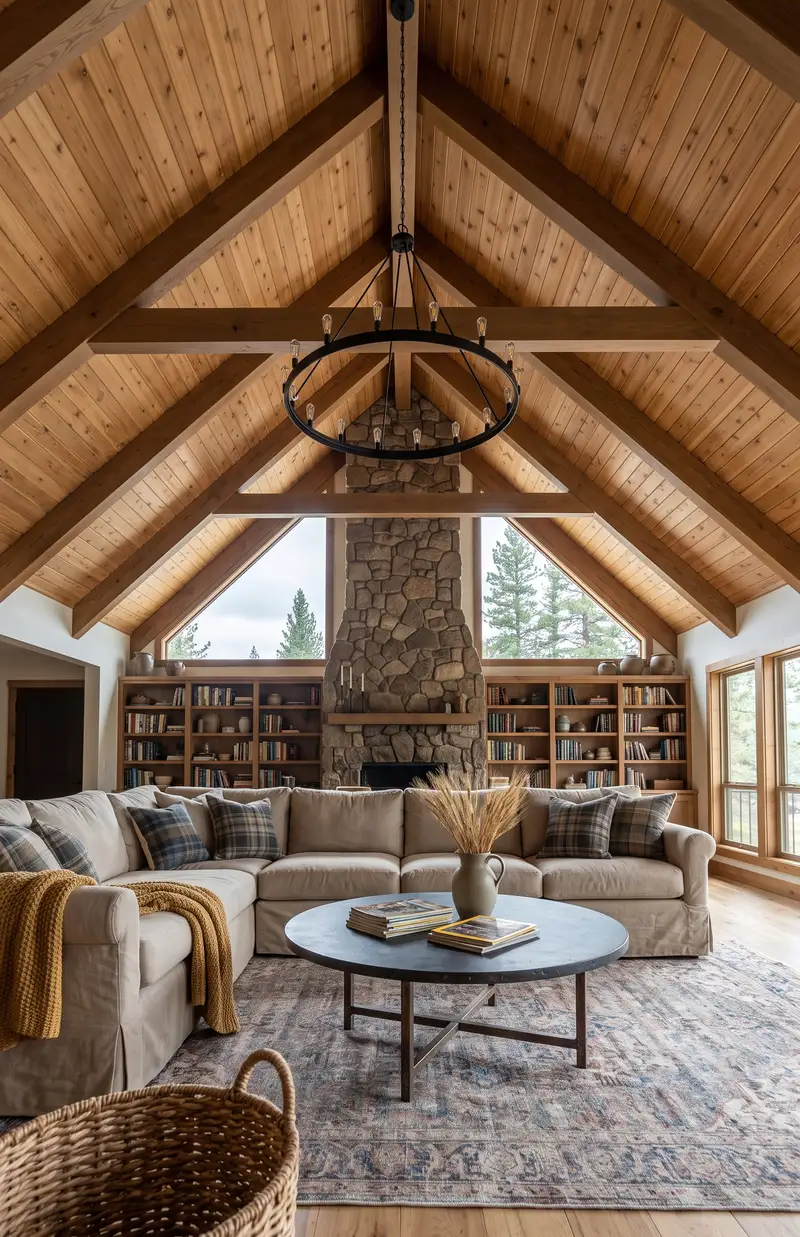
Huge vaulted living rooms look incredible on architectural plans but live terribly. They are impossible to heat and incredibly hard to light properly. Wrapping the entire steep pitch in warm cedar planks prevents the massive room from feeling like a cold, empty museum. But the real genius here is the lower structural truss. It spans the wide gap and drops the massive iron chandelier down to a normal human height. This completely solves the tricky lighting issue. It visually lowers the ceiling while keeping the dramatic architectural peak perfectly intact.
16. Low ceilings and heavy timber
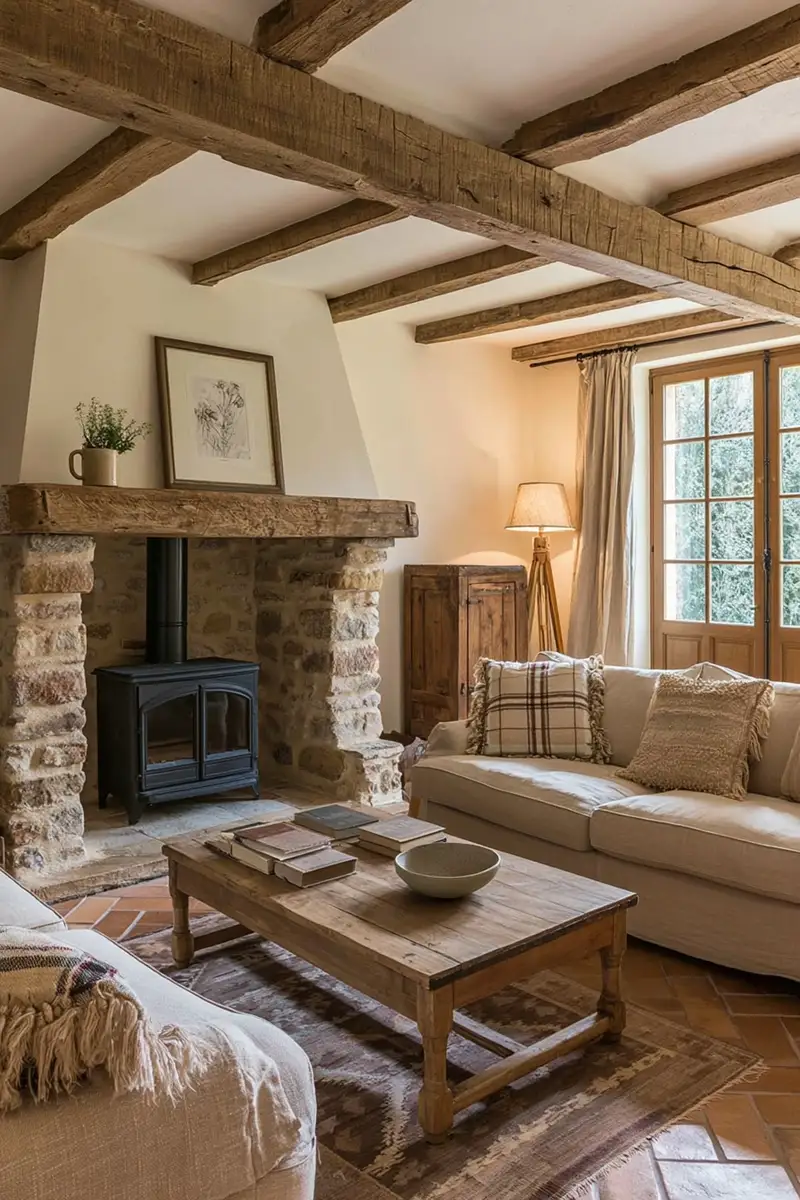
Very tight ceilings over a fireplace feel cramped. Painting the base bone-white pushes the visual plane up.
The oversized rough beams distract your eye immediately. You completely forget about the low height.
17. Woven ceiling panels for glass rooms
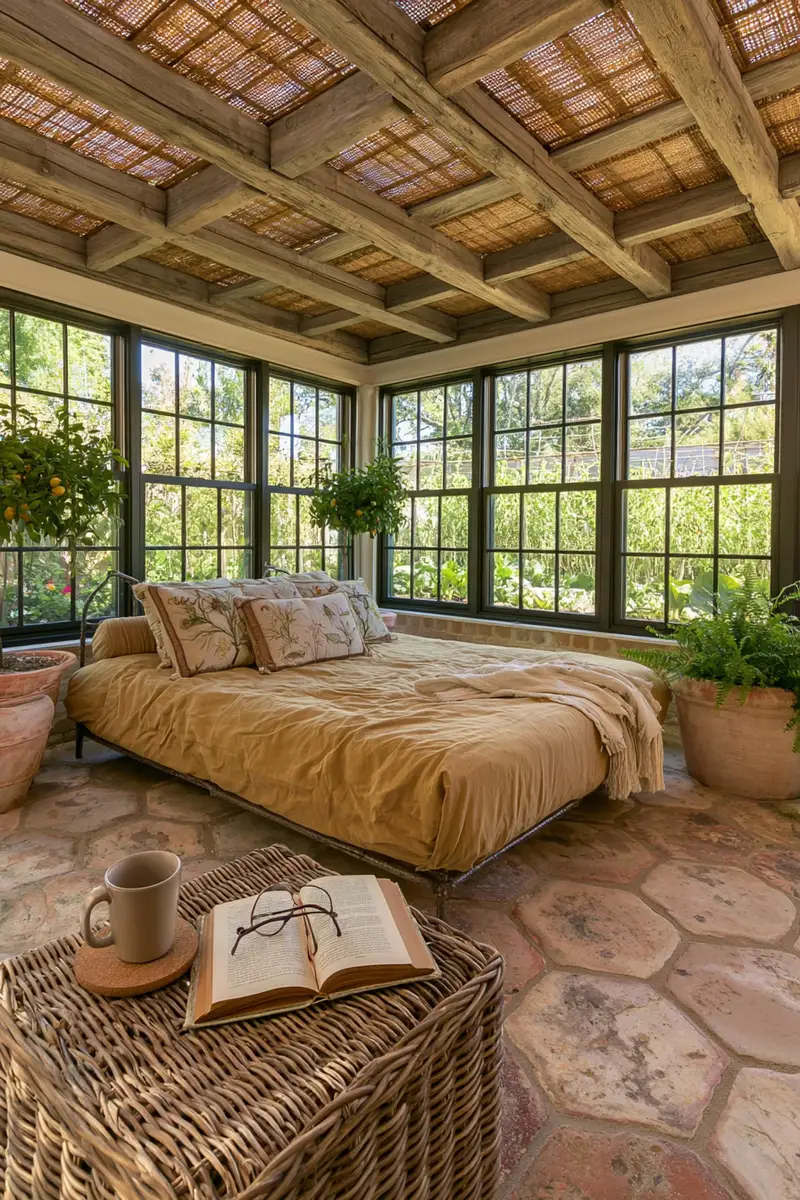
Rooms made entirely of glass get unbearably hot. The overhead glare is brutal during the afternoon. A heavy timber ceiling grid filled with woven rattan panels is an elegant, highly functional fix.
The natural fibers diffuse the harsh sunlight beautifully. They also provide serious acoustic dampening in a room filled with hard stone floors and glass walls. The annoying echoes just vanish. It feels exactly like sitting under a shaded outdoor cabana.
18. Tin tiles to define open zones
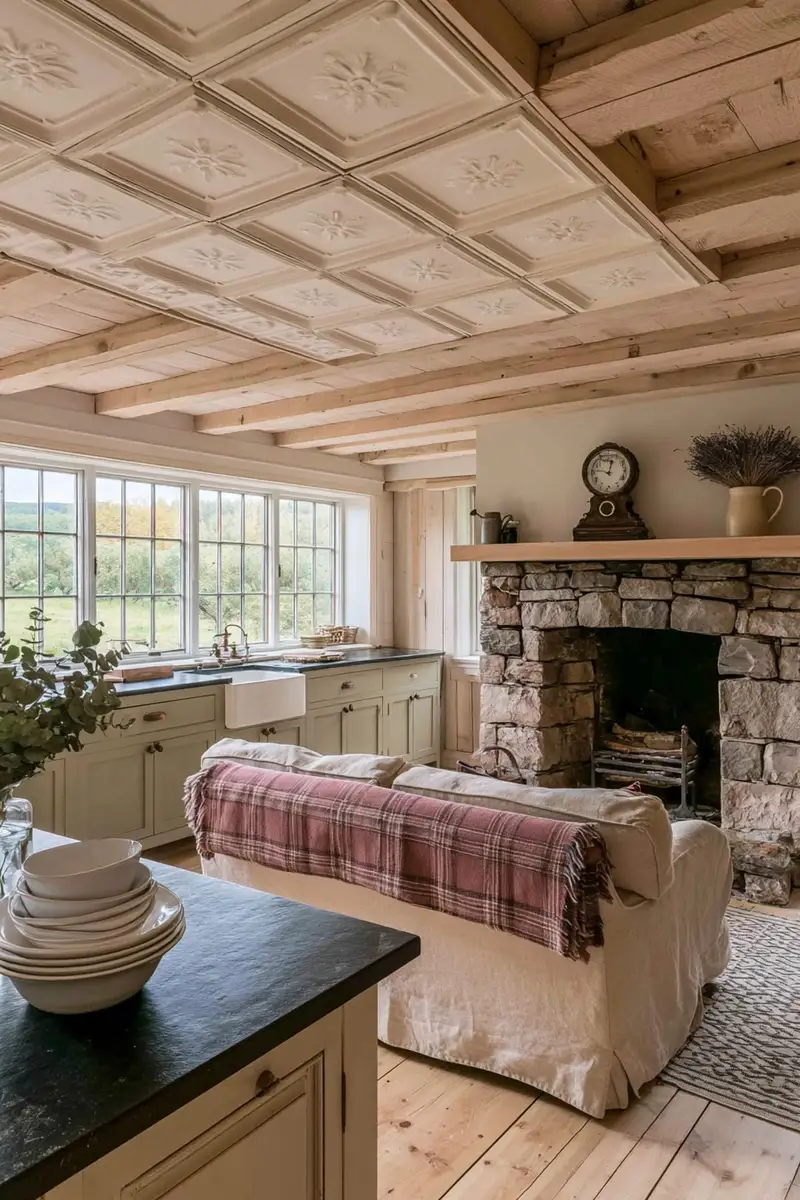
Open floor plans make it difficult to separate the kitchen from the sitting area without building physical walls. Creating a custom ceiling grid of decorative white tin tiles framed by thick wood beams acts exactly like an area rug.
It clearly maps out the living zone from above. Plus, the pressed tin bounces natural window light back down into the deep room perfectly.