Staring at a neon plastic slide ruining your landscaping is exhausting. You want a backyard that feels mature but still keeps toddlers busy. Blending raw timber structures right into the garden actually works.
1. The giant shade sail hack
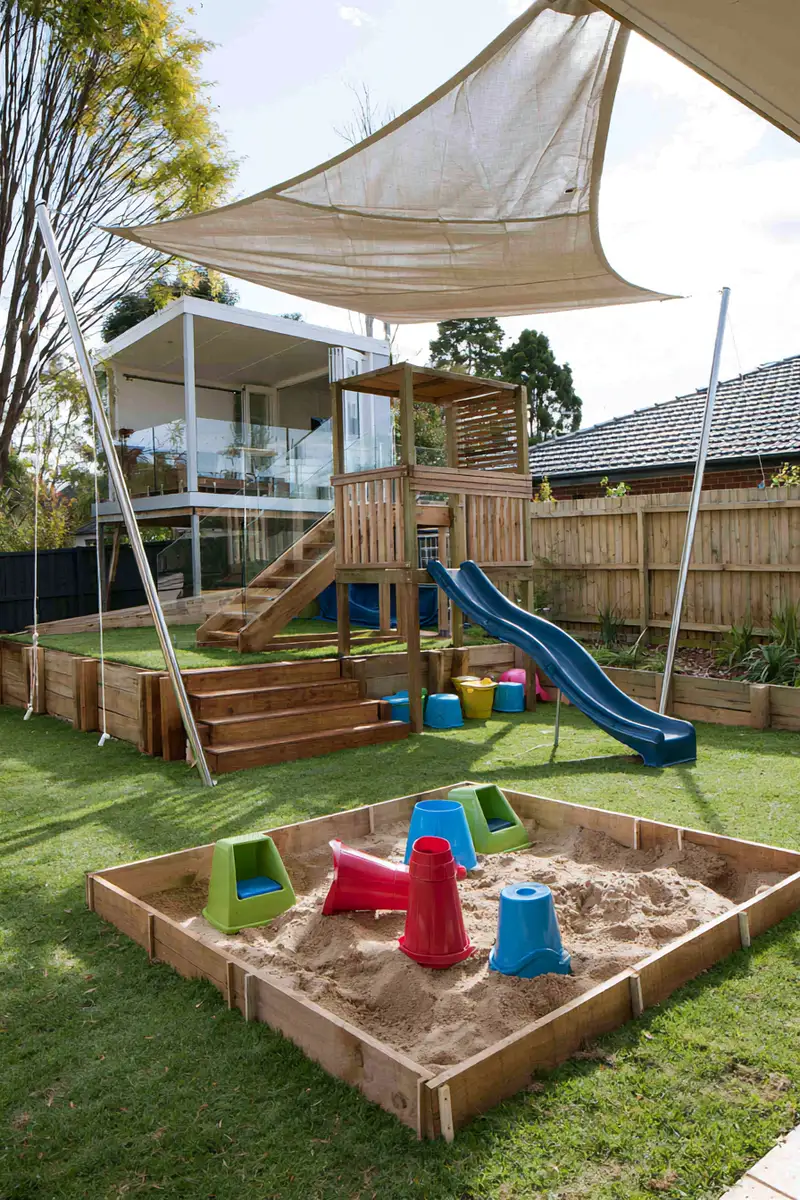
Open backyards are brutal in mid-summer. Play structures get dangerously hot, and kids get roasted. Suspending a massive commercial-grade shade sail directly over the timber fort fixes this instantly. It drops the surface temperature dramatically without the massive cost of building a permanent pavilion roof.
2. Vertical wire storage
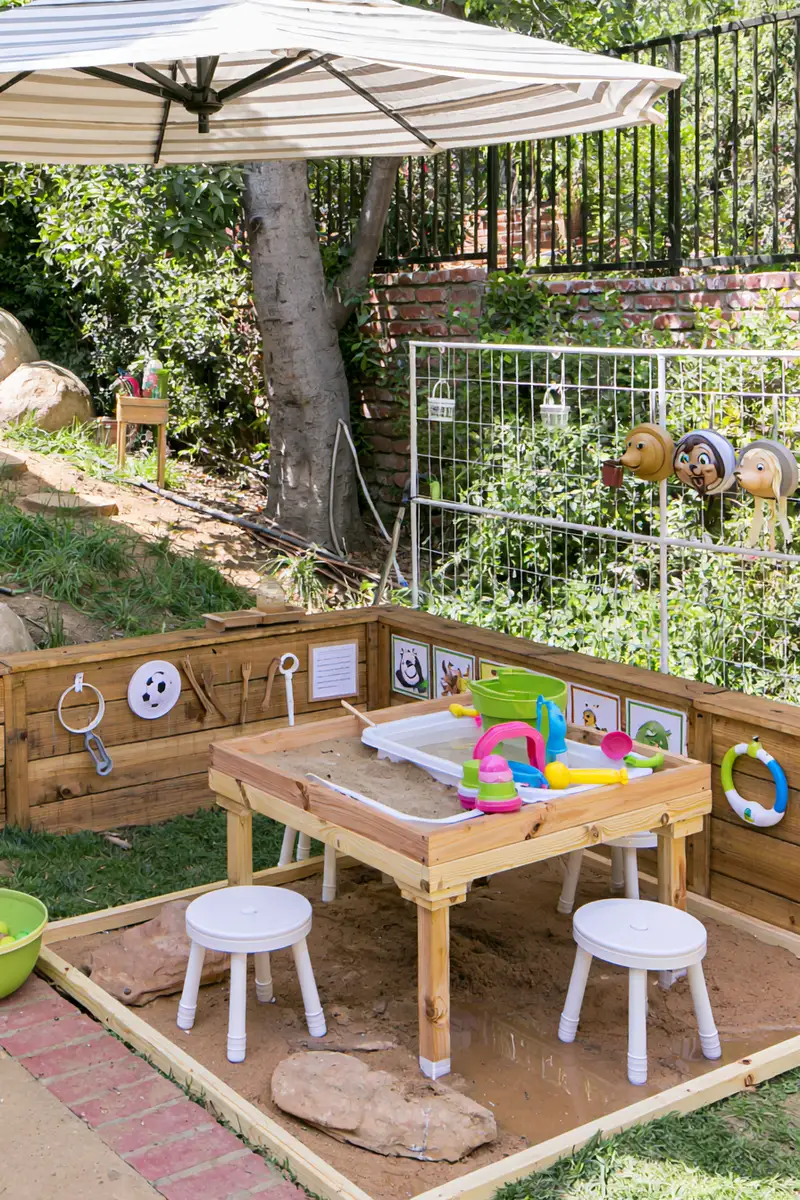
Tripping over scattered sand toys ruins a peaceful garden. A basic wire grid panel mounted right behind the water table is a brilliant fix. Wet toys hang up to drip dry. The lawn stays totally clear.
3. A dedicated track for rugged ride-on toys
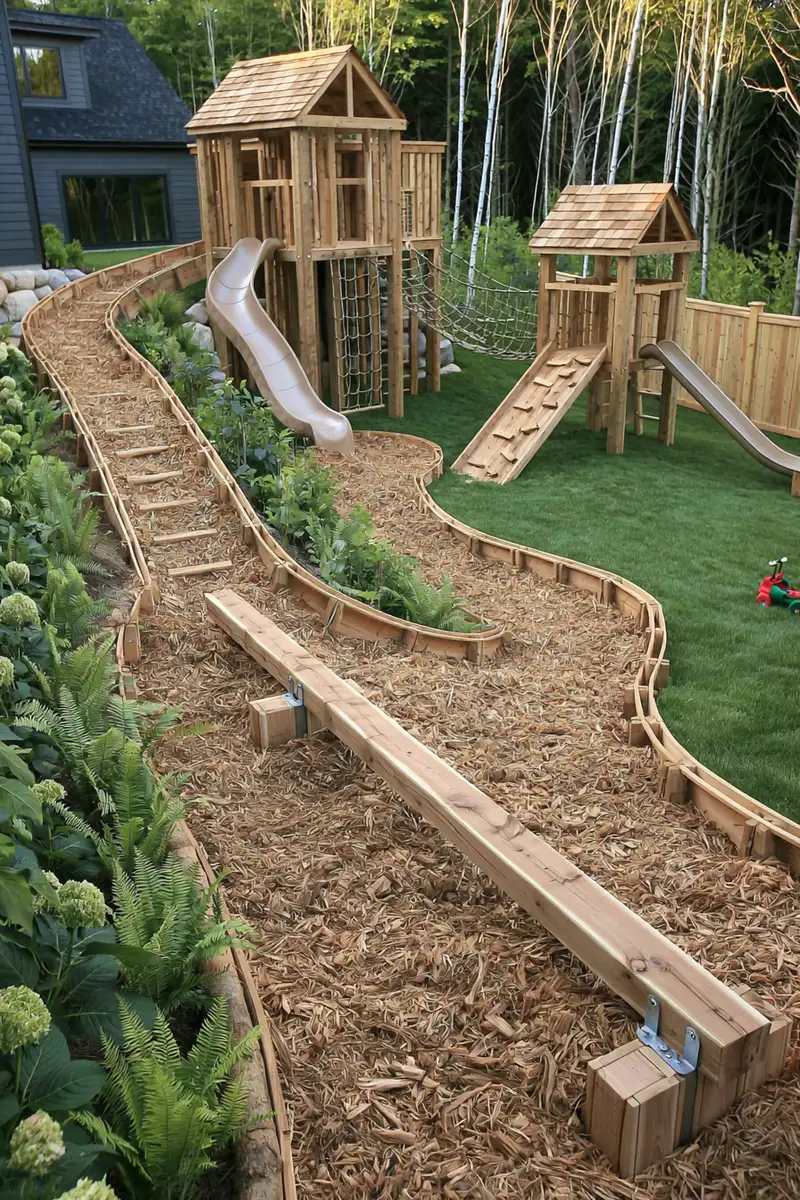
Plastic wheels on toddler bikes will aggressively tear up a manicured lawn in a matter of weeks. You end up with muddy, barren ruts crossing the yard. The smart move here is carving out a dedicated, winding mulch track bordered by heavy timber edging. It gives kids a specific, highly durable zone for racing that completely absorbs the impact. The organic, sweeping curves of the wood perfectly blend the wild play area right into the natural forest line behind it.
4. Utilizing the dead zone under giant trees
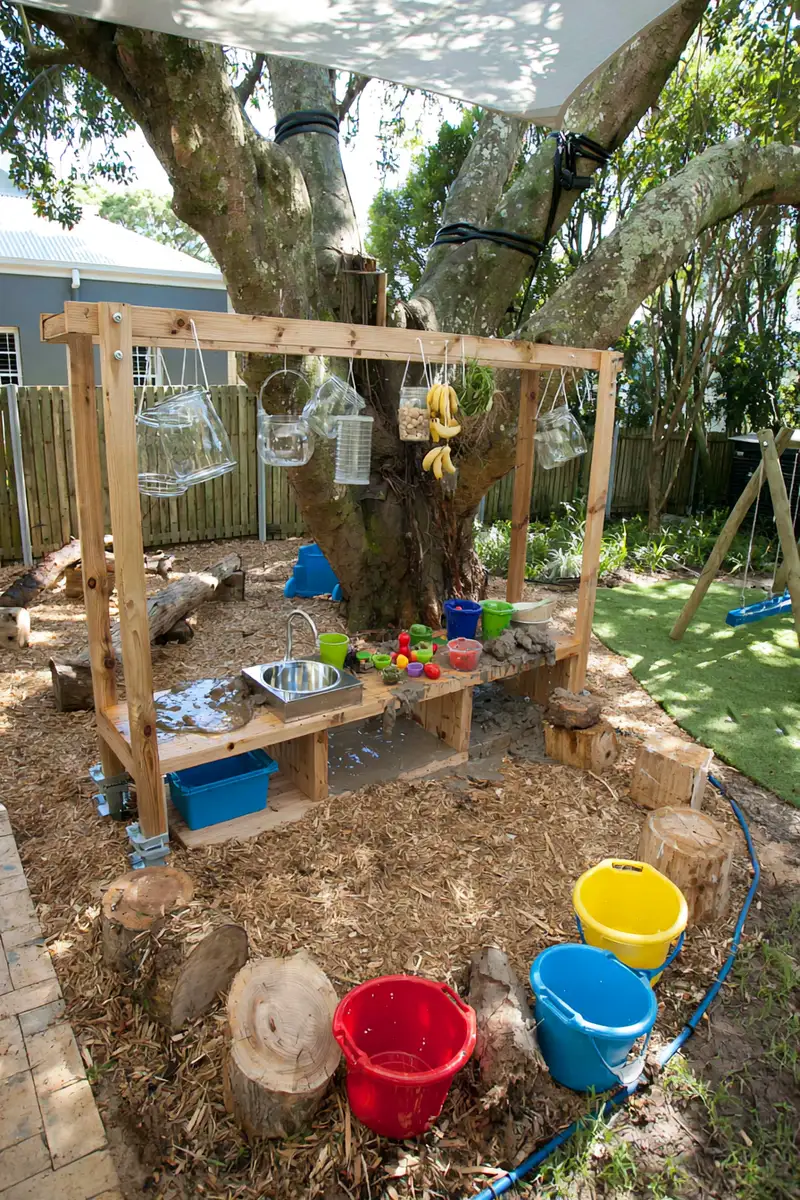
Heavy tree canopies make growing grass impossible. Dropping a raw wood mud kitchen right into that barren dirt patch reclaims the lost square footage. Hanging tools from a simple overhead frame keeps the inevitable mud mess hyper-localized.
5. Flush-mount sandbox with built-in adult seating
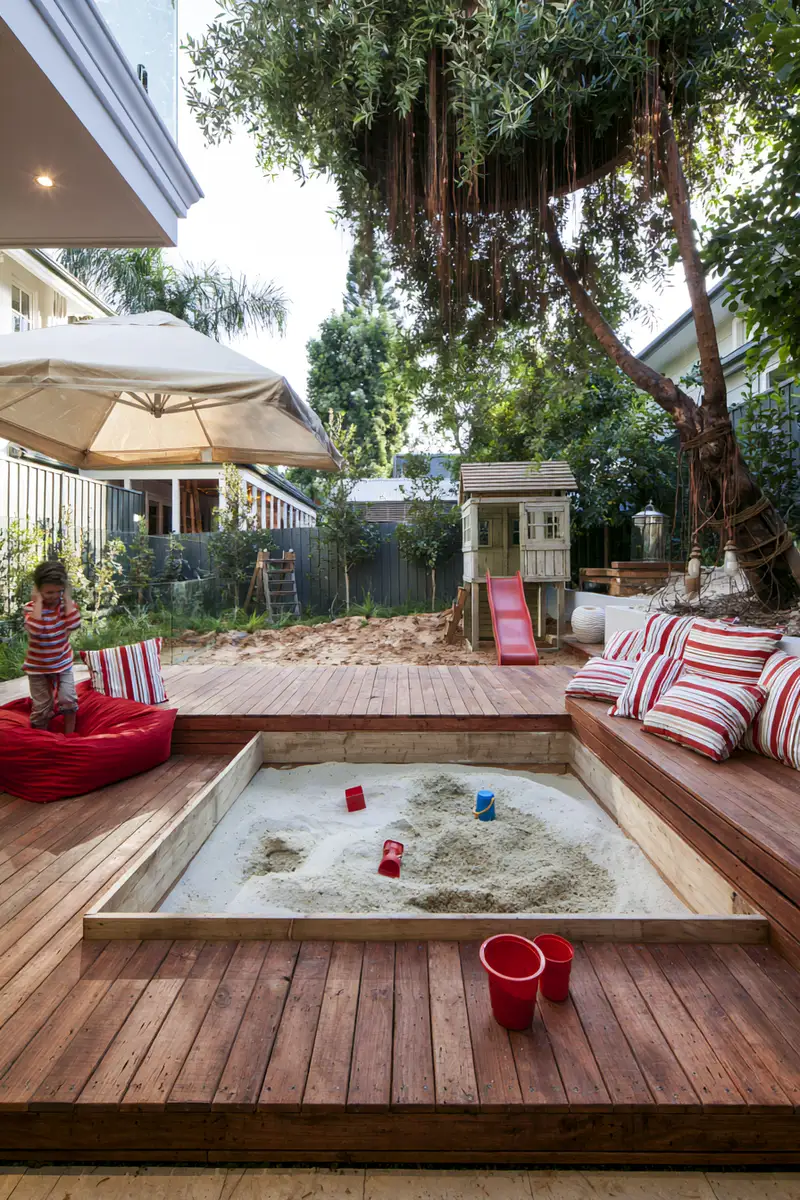
Parents usually drag cheap lawn chairs to the edge of the sandbox. It always looks cluttered. Sinking the sand pit flush into a wooden deck entirely removes the visual barrier. Wrapping it with wide, built-in bench seating provides a highly comfortable observation spot. It feels like a high-end lounge area that just happens to accommodate toddler play.
6. Fence chalkboards
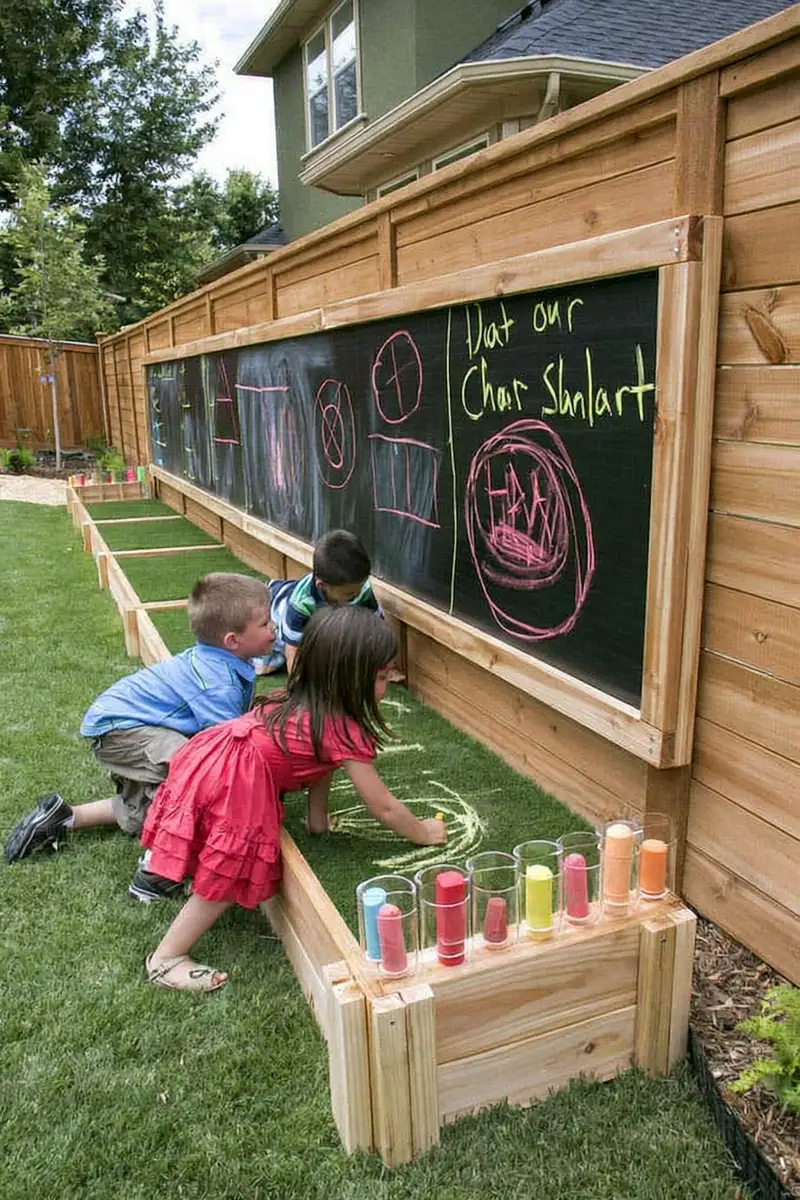
Chalk dust permanently stains expensive patio stone. Mounting a massive continuous chalkboard directly onto a privacy fence saves your hardscaping. A lower timber box catches the dust perfectly.
7. Matching the play zone to adult outdoor aesthetics
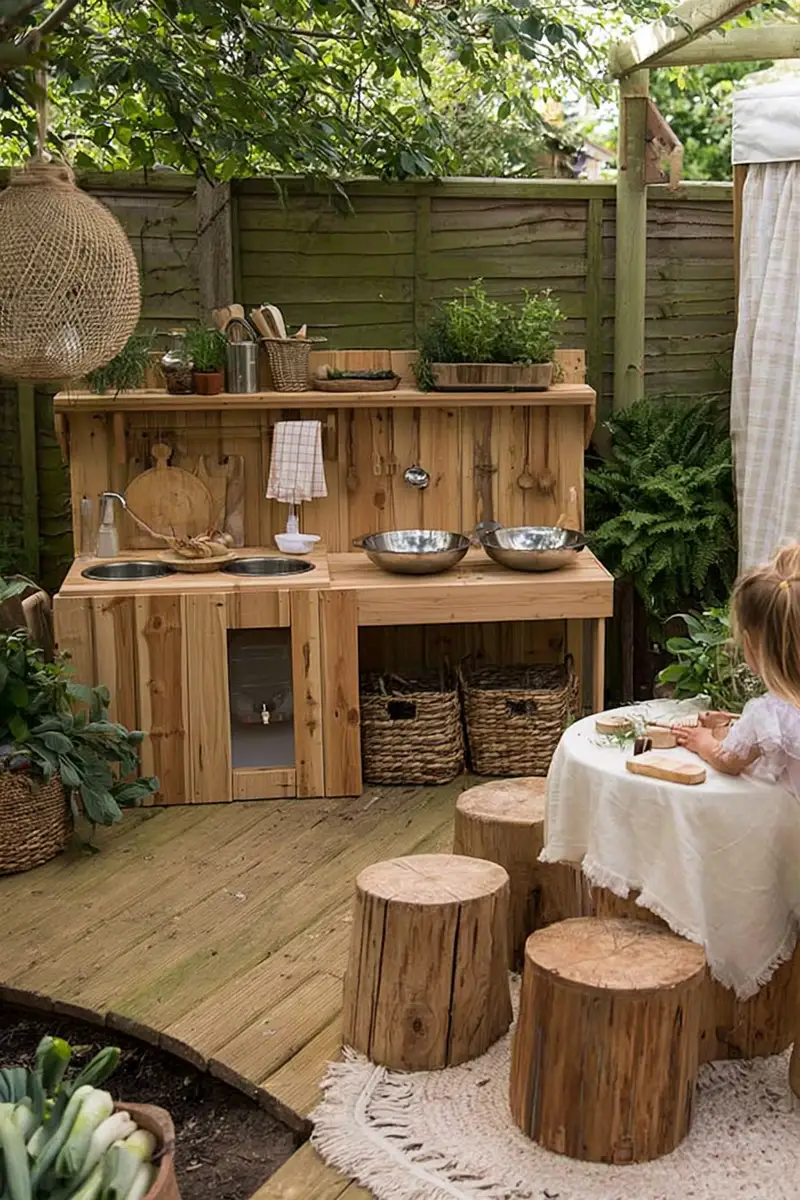
Neon plastic play kitchens instantly downgrade the look of a curated backyard retreat. They stick out terribly. Constructing a mini kitchen completely from raw timber changes the entire visual dynamic. Dropping in real metal sink basins and using heavy log stumps for seating elevates the setup. It mimics actual outdoor cabinetry. The children get their imaginative play, but the design reads as a sophisticated, rustic garden feature that actually complements the main dining deck.
8. Decoy planter boxes for endless digging
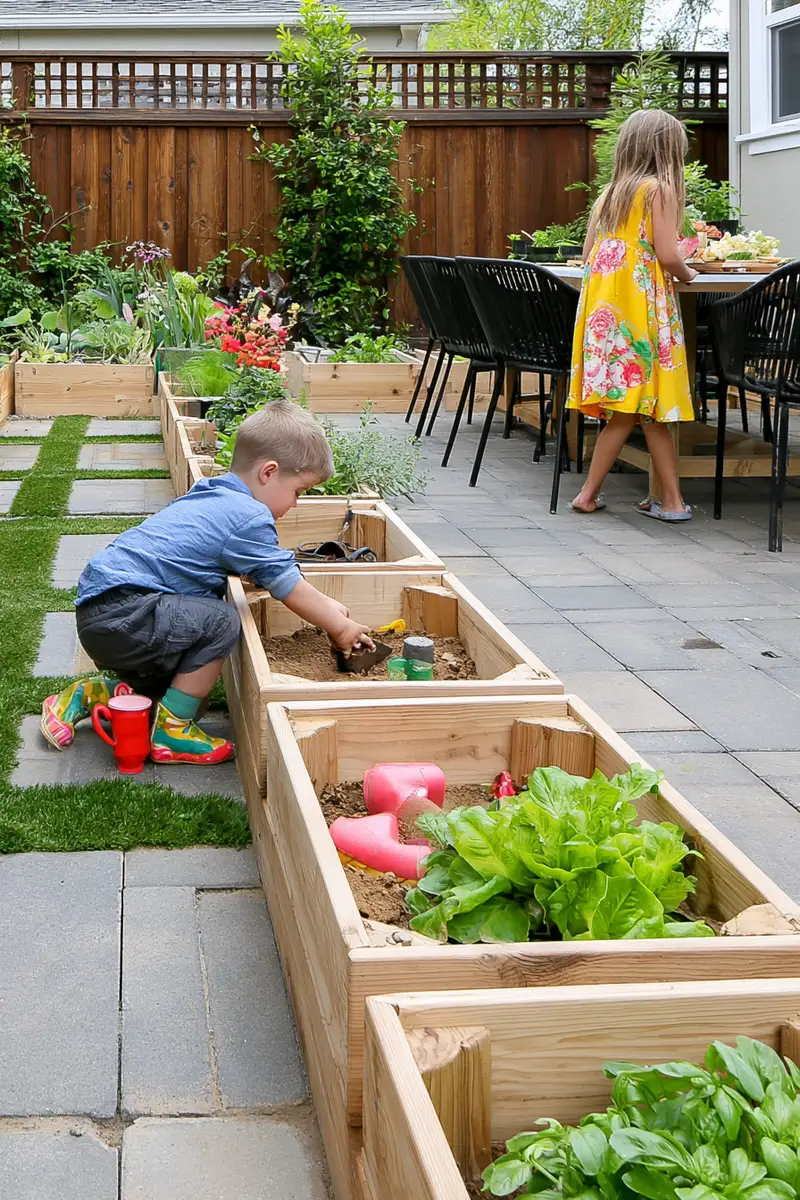
Toddlers naturally want to dig, which usually means your expensive vegetable seedlings get destroyed. Building identical raised wooden beds but filling them solely with play dirt is a genius redirection strategy. Setting them right beside the real garden makes kids feel included. The strict geometric layout of the yard remains completely intact.
9. Vertical gravity water walls with zero mud
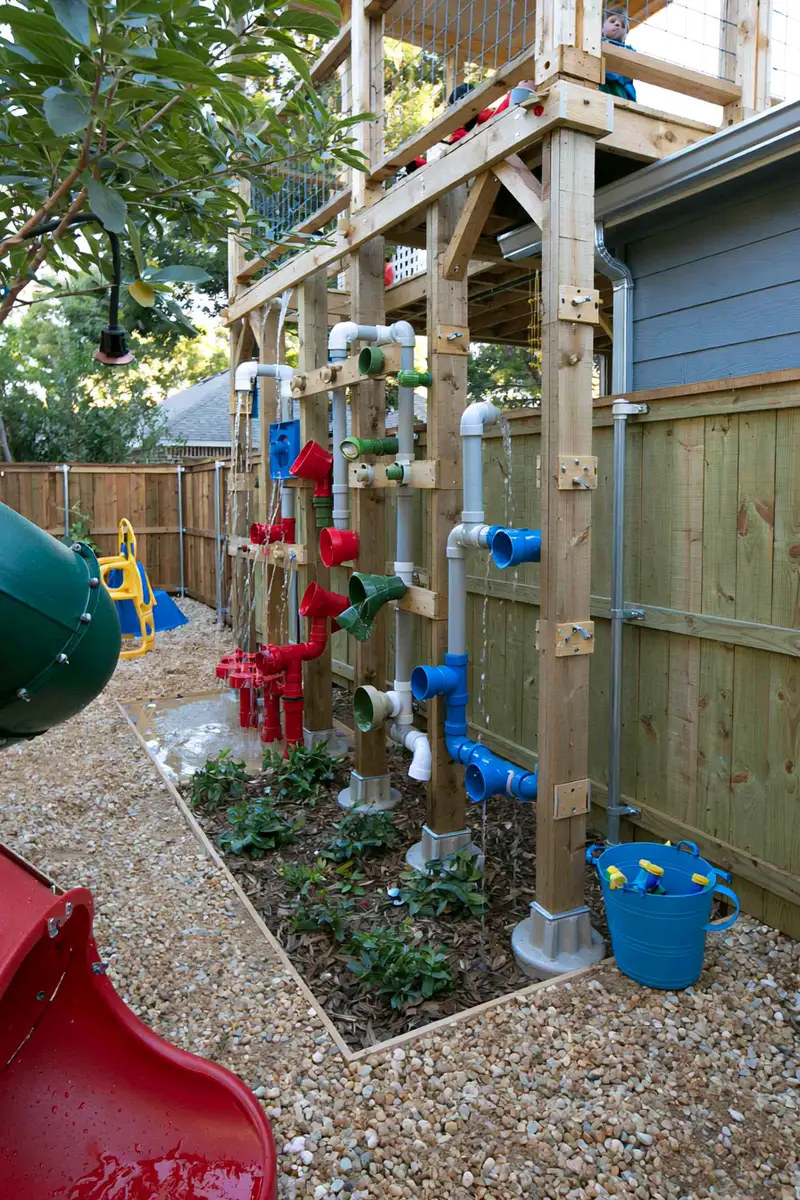
Unrestricted water play quickly turns a flat lawn into a swampy hazard. Bolting a colorful PVC pipe maze straight onto the structural posts of a raised deck utilizes pure vertical space. The real engineering trick is the deep gravel trench installed directly underneath. It instantly drains the constant runoff, preventing any mud from tracking back into the house.
10. The hidden garden station
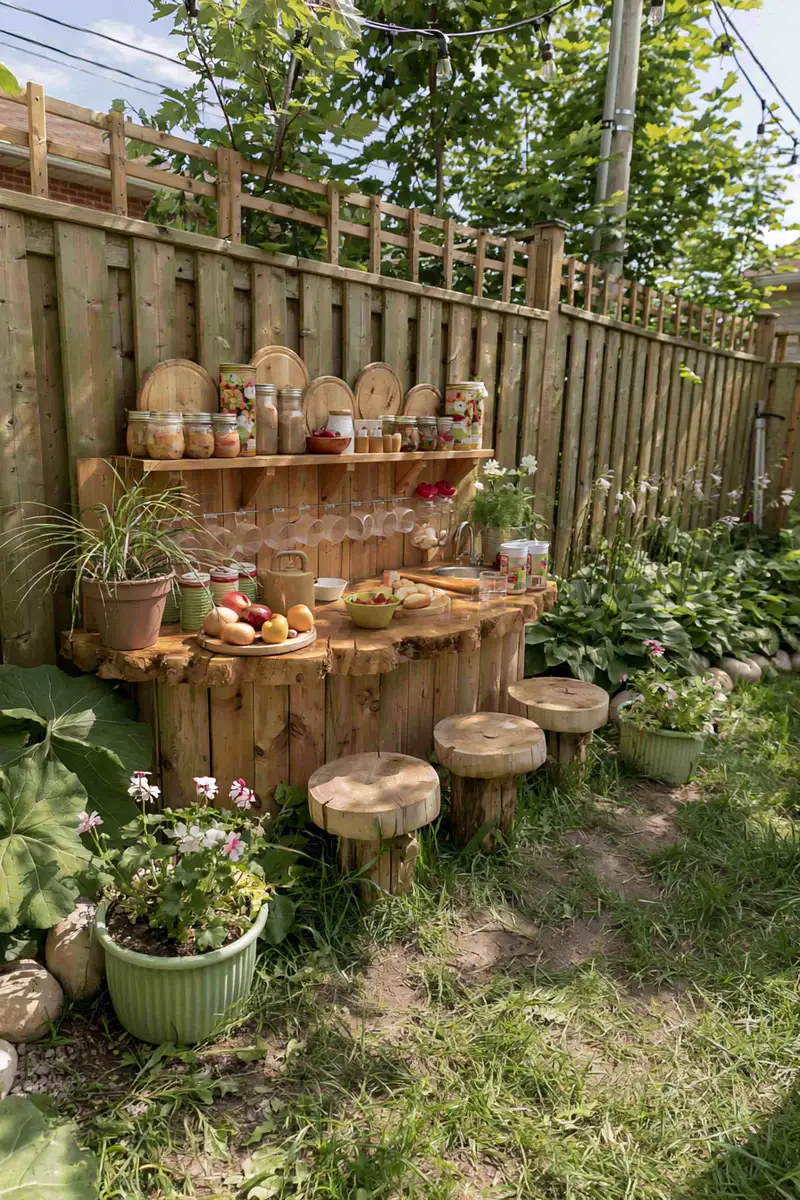
Play zones do not need to sit on barren dirt islands. Tucking a live-edge wooden play counter directly among tall, mature hostas makes it a seamless part of the landscaping. The raw timber ages beautifully right alongside the garden fence.
11. Crossing the functional dry creek bed
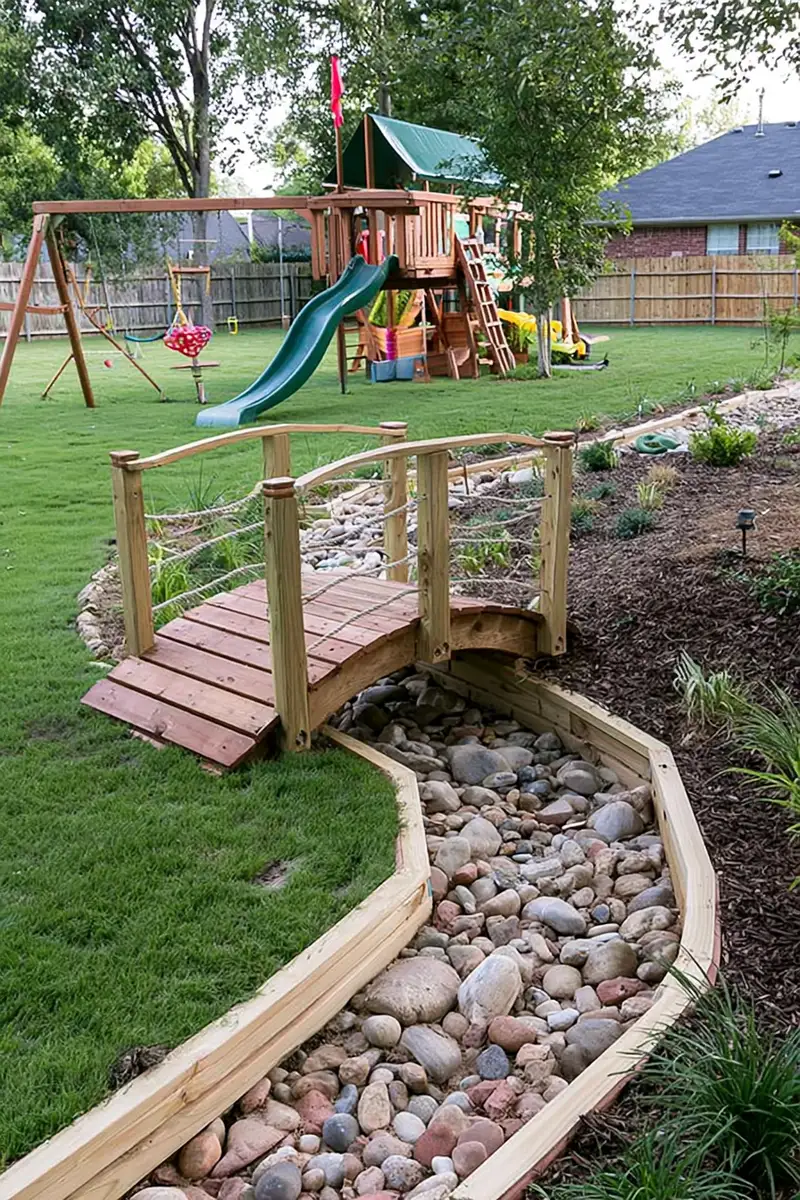
Heavy backyard runoff usually turns low-lying lawns into a permanent muddy swamp. Digging out a purposeful dry creek bed and filling it with heavy river rock solves the drainage problem instantly. Adding a sturdy, well-constructed timber bridge over the channel transforms a basic landscaping necessity into a major architectural play feature. Kids get a dedicated crossing, and the yard handles storm water perfectly.
12. Decomposed granite borders
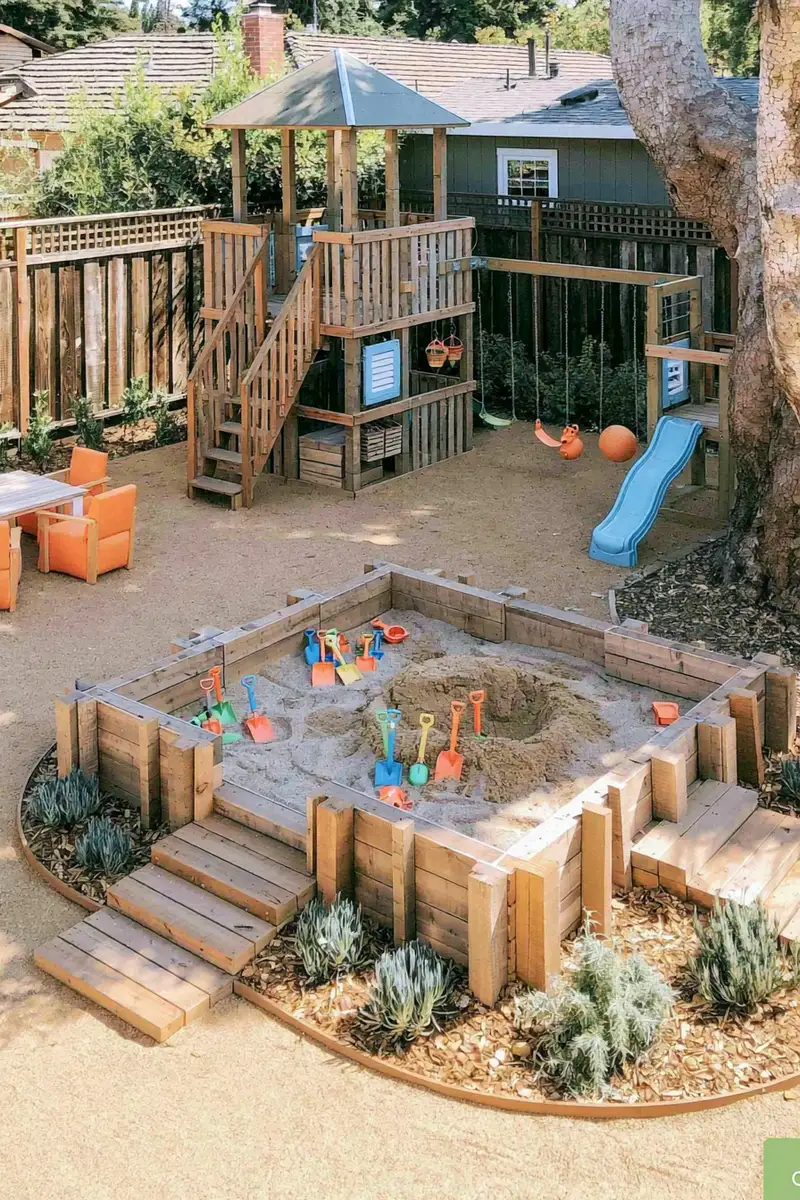
Trying to mow directly against a sandbox edge guarantees damaged grass and endless maintenance. Swapping the lawn for a wide perimeter of decomposed granite around the heavy timber sand pit eliminates weed whacking entirely. It keeps the entire play perimeter incredibly clean.
13. The permanent branch teepee built for weather
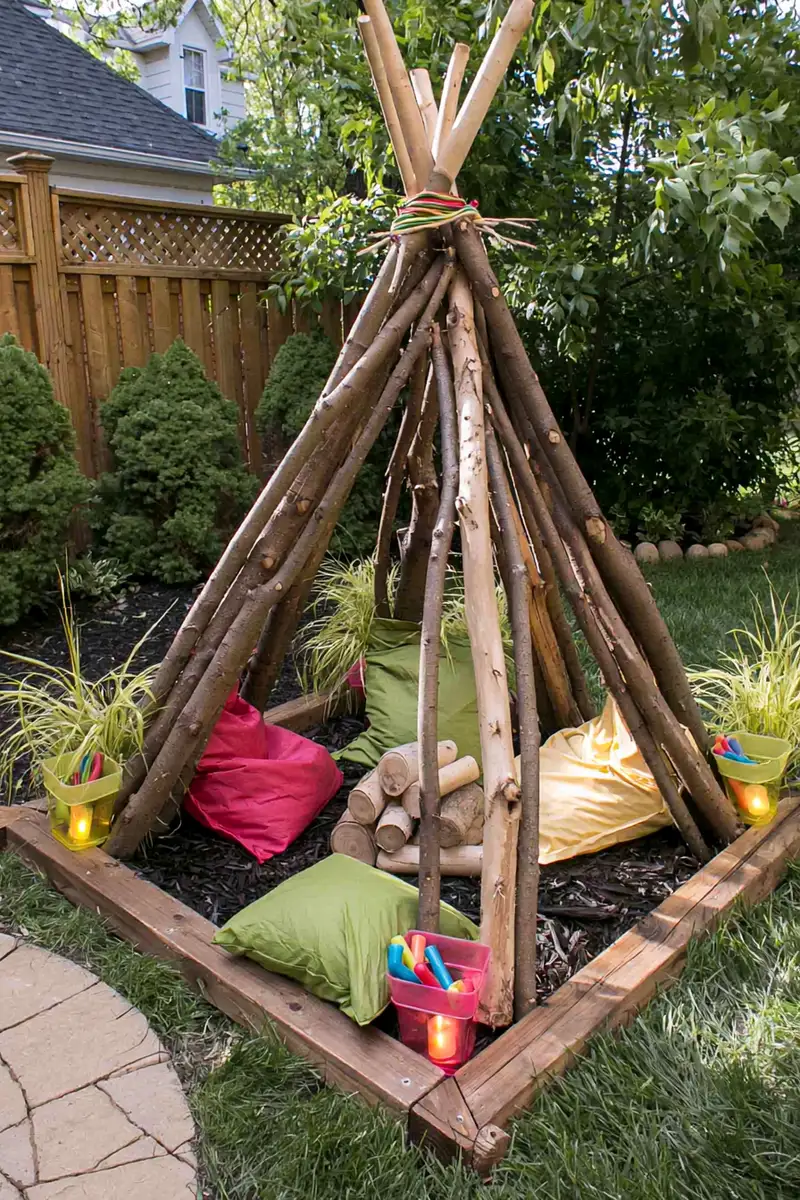
Flimsy canvas play tents rot away after a single rainy season. Constructing a teepee using thick, clean natural branches anchors the structure permanently. Setting it inside a rigid timber frame filled with dark mulch clearly defines the zone and stops the floor from becoming a muddy mess during wet weather.
14. The open storage pavilion
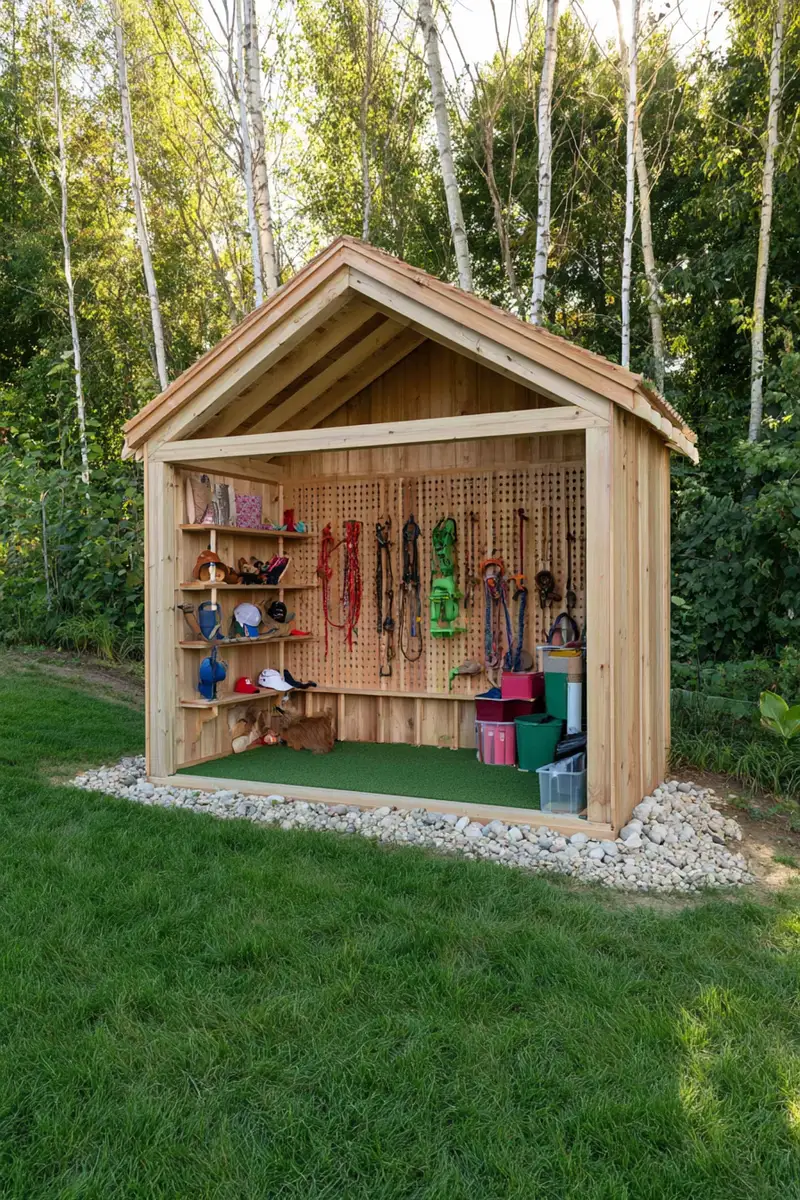
Scattered outdoor equipment ruins a manicured lawn. Building an open-faced, weather-proof timber shed with a full back pegboard forces total organization. The artificial turf floor stops mud tracking instantly.
15. Forcing foot traffic with thick log steppers
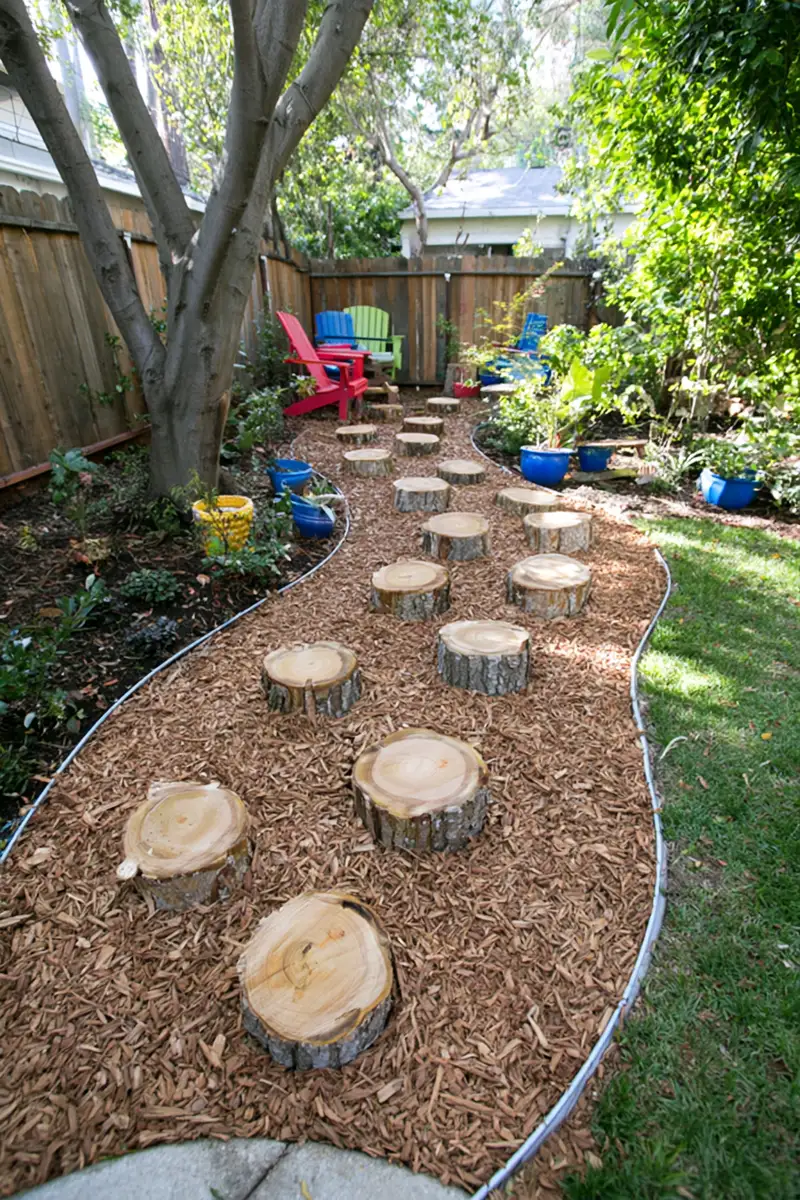
Children will naturally cut corners and trample expensive garden beds if left unguided. Installing a strict, winding pathway using thick, well-maintained log slices solves this boundary issue immediately. Sinking these heavy wood rounds directly into a thick layer of natural mulch creates a highly visible, engaging route. The metal edging keeps the organic materials completely separated from the grass. It protects the fragile soil ecosystem while giving kids an irresistible balancing path right through the trees.