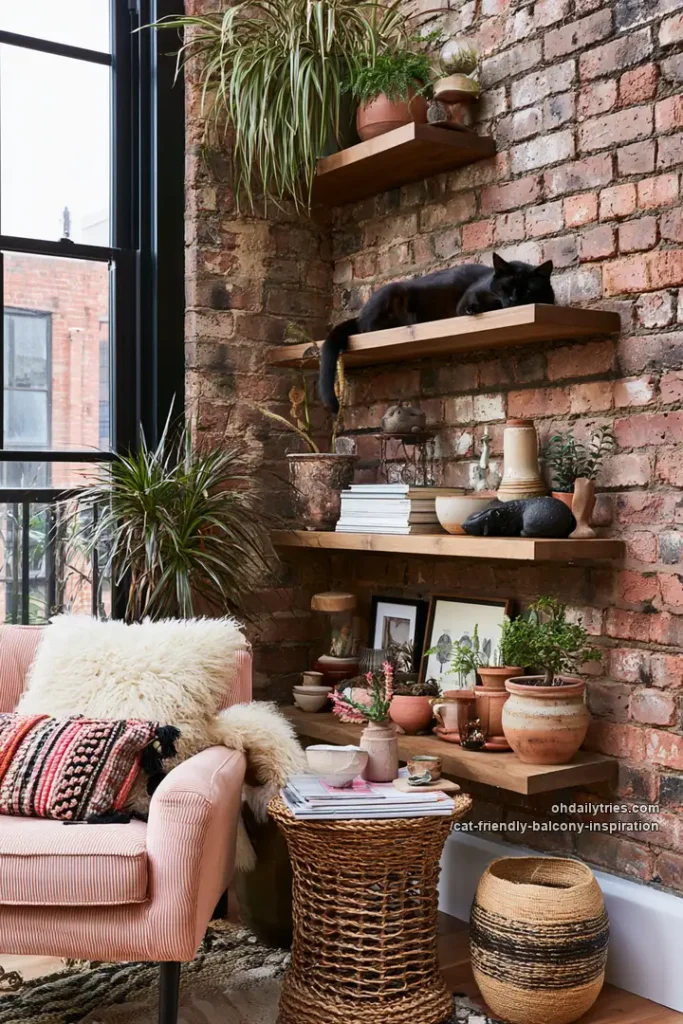
High-rise winds and freezing temperatures normally kill the outdoor season early. Most people just abandon their apartment decks completely by October. The Scandinavians know better. They treat these exposed micro-patios as essential living rooms, totally immune to bad weather.
Layering thick sheepskins over smart, low-profile furniture changes the entire dynamic. It turns a freezing, neglected corner into your favorite spot for morning coffee, regardless of the chill.
1. Soft screens for exposed roofs
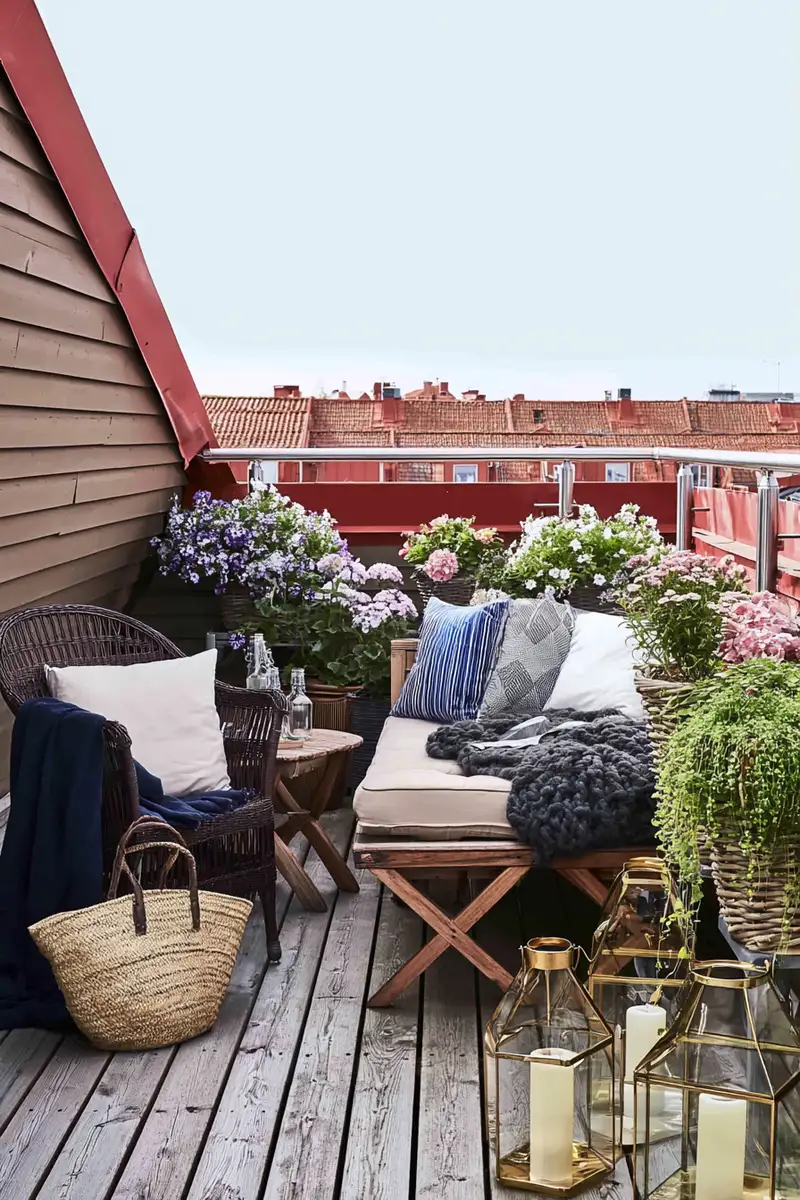
Sterile roof balconies often end up as unused storage zones. Adding lightweight woven furniture and a low daybed immediately fixes this. It creates a flexible lounge area. Grouping different plants in modular wicker baskets acts as a soft, movable privacy screen. You get maximum greenery without committing to heavy, permanent planters.
2. Blocking the neighbors
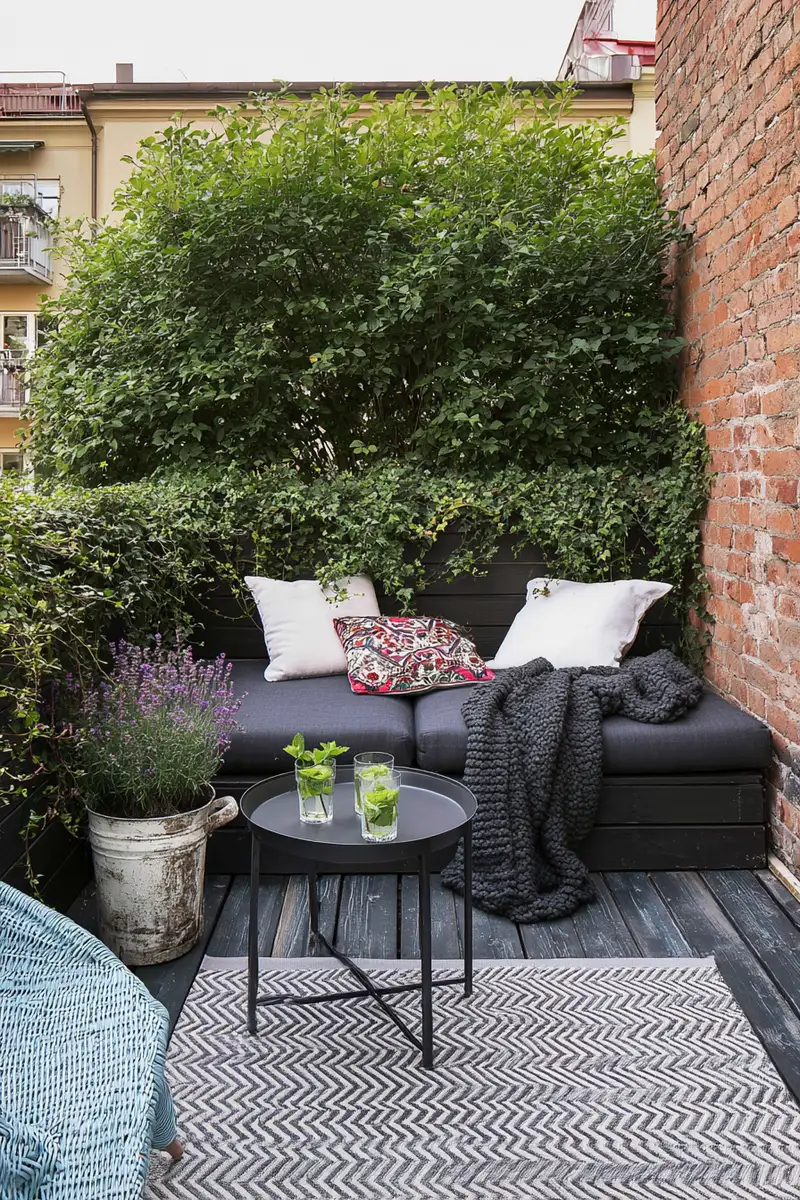
Nosy neighbors staring directly at your seating area ruins any chance to relax. A massive, dense green hedge completely blocks those awkward sightlines. Pairing it with dark, low-profile seating grounds the corner and hides dirt effortlessly.
3. A natural architectural windbreak
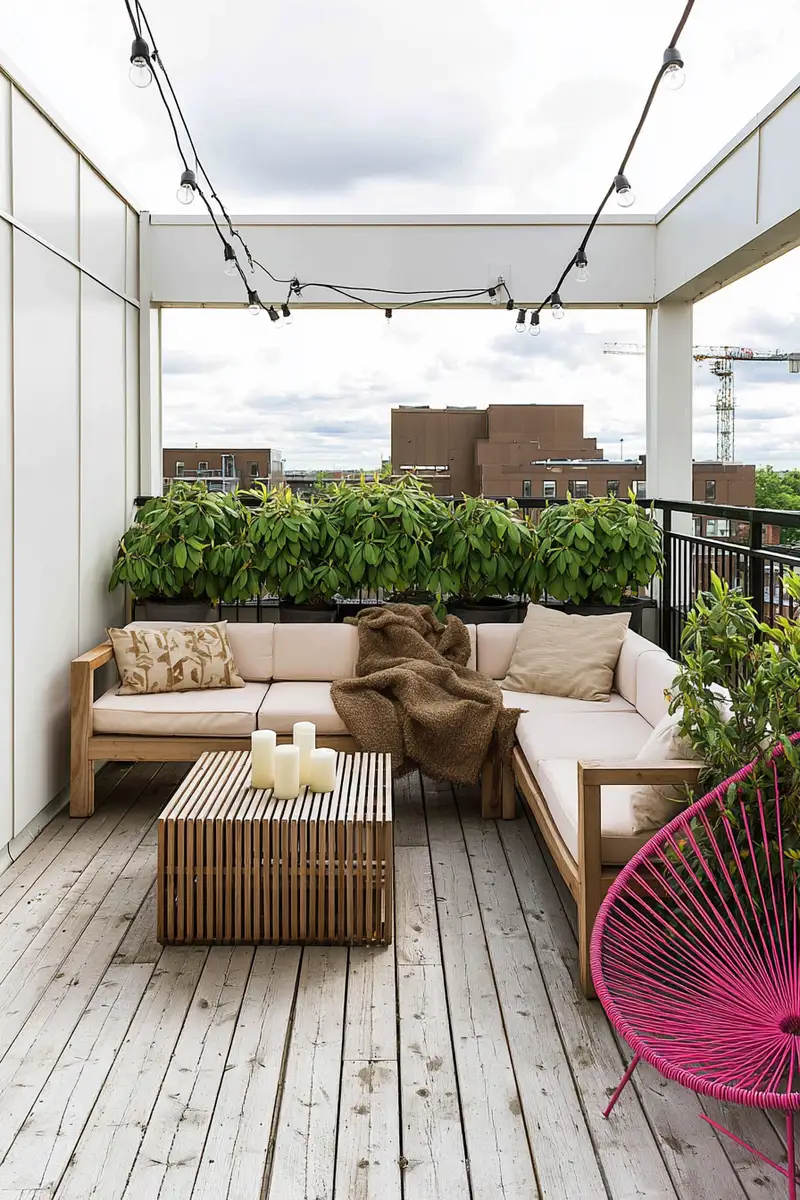
High-rise balconies face brutal wind exposure. Leaving the perimeter totally open makes lounging deeply uncomfortable. Lining the metal railing with identical, dense shrubs in black planters is a highly structural fix. It creates a solid windbreak and defines the edge sharply without totally sacrificing the city view. Pushing a light wood L-shaped sectional right into the corner maximizes the seating footprint. You get a protected, structured outdoor room that handles urban elements perfectly.
4. Instant slatted dividers
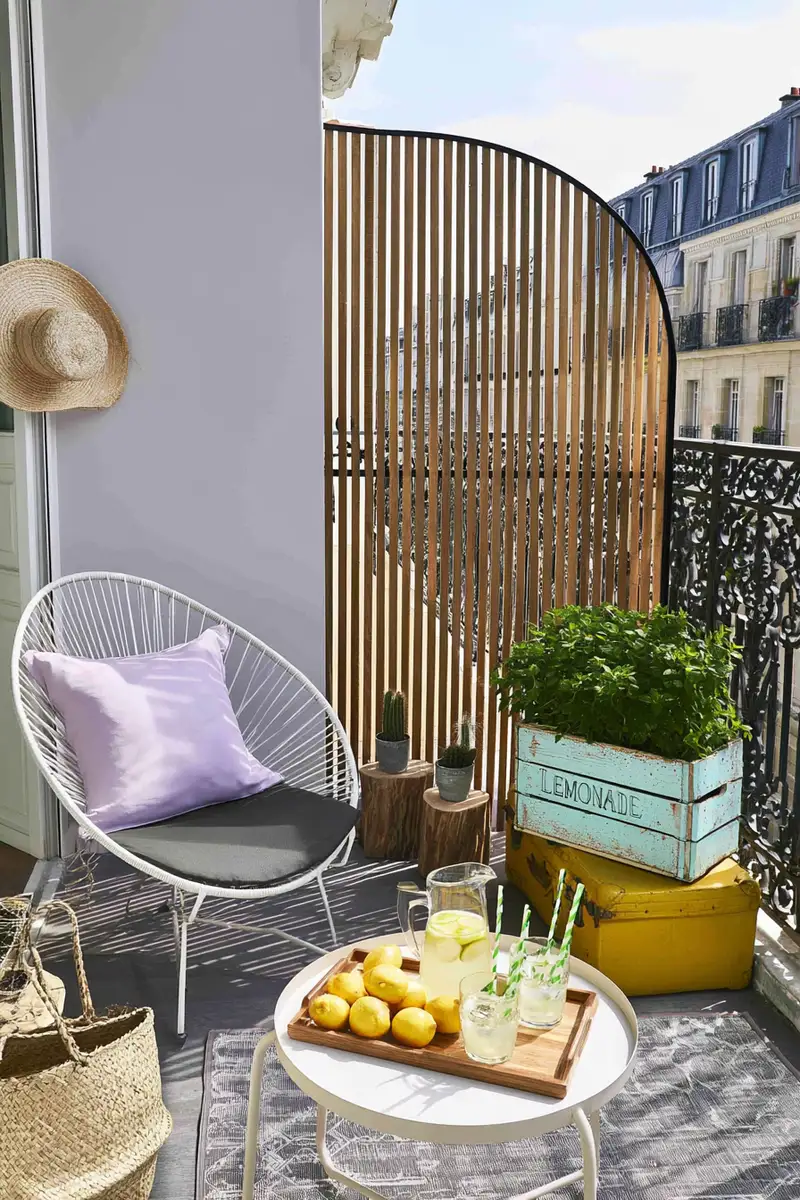
Shared apartment balconies usually lack physical separation. An arched, slatted wood partition provides instant division. It blocks views without stopping the summer breeze.
5. Warming up cold concrete

Bare concrete slabs always feel cold and industrial. Introducing oversized, heavily textured stone planters fixes this harshness. It brings lush volume right to the seating edge. The contrast between crisp white cushions and warm brass accents turns a sterile exterior into a heavily grounded, comfortable extension of the living room.
6. Foldable dining in tight corners
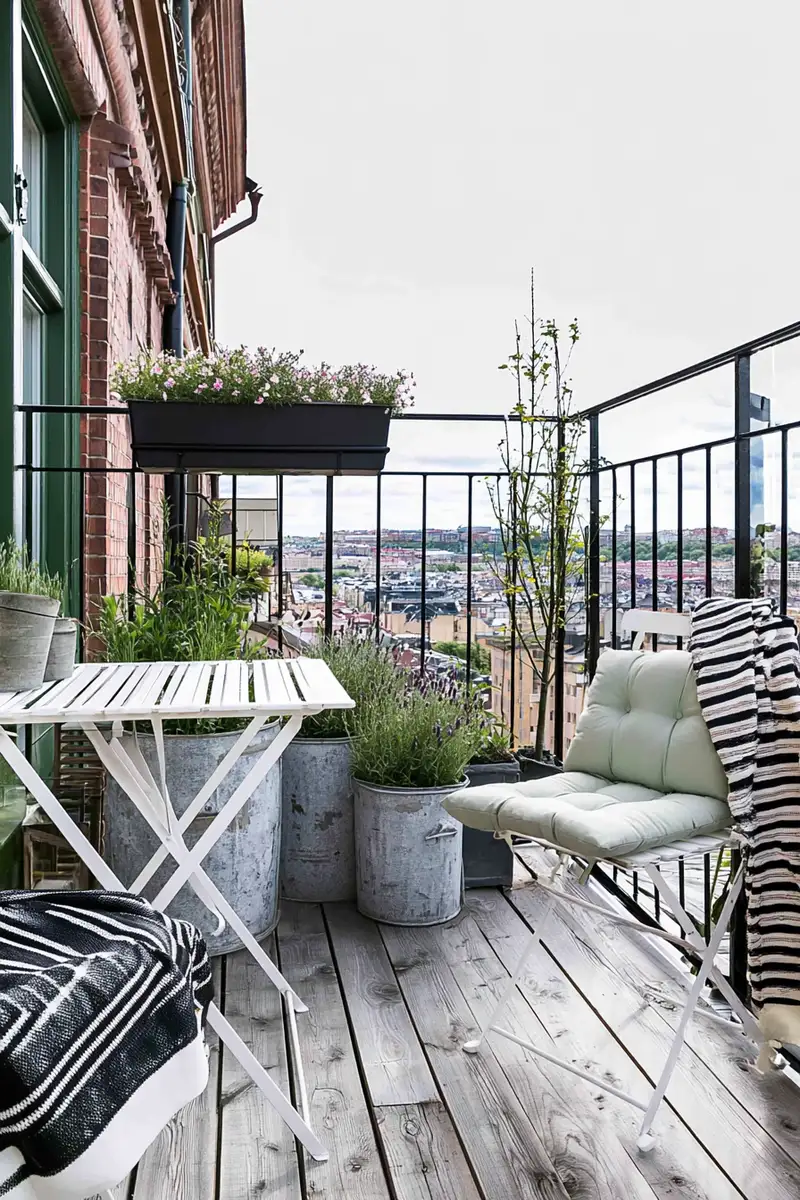
Ultra-narrow footprints leave zero room for permanent dining setups. A slim, foldable bistro set handles tight spaces flawlessly. Swapping fragile ceramic pots for tall galvanized metal buckets saves precious floor space and survives freezing urban winters without cracking.
7. Upgrading the ugly exterior wall
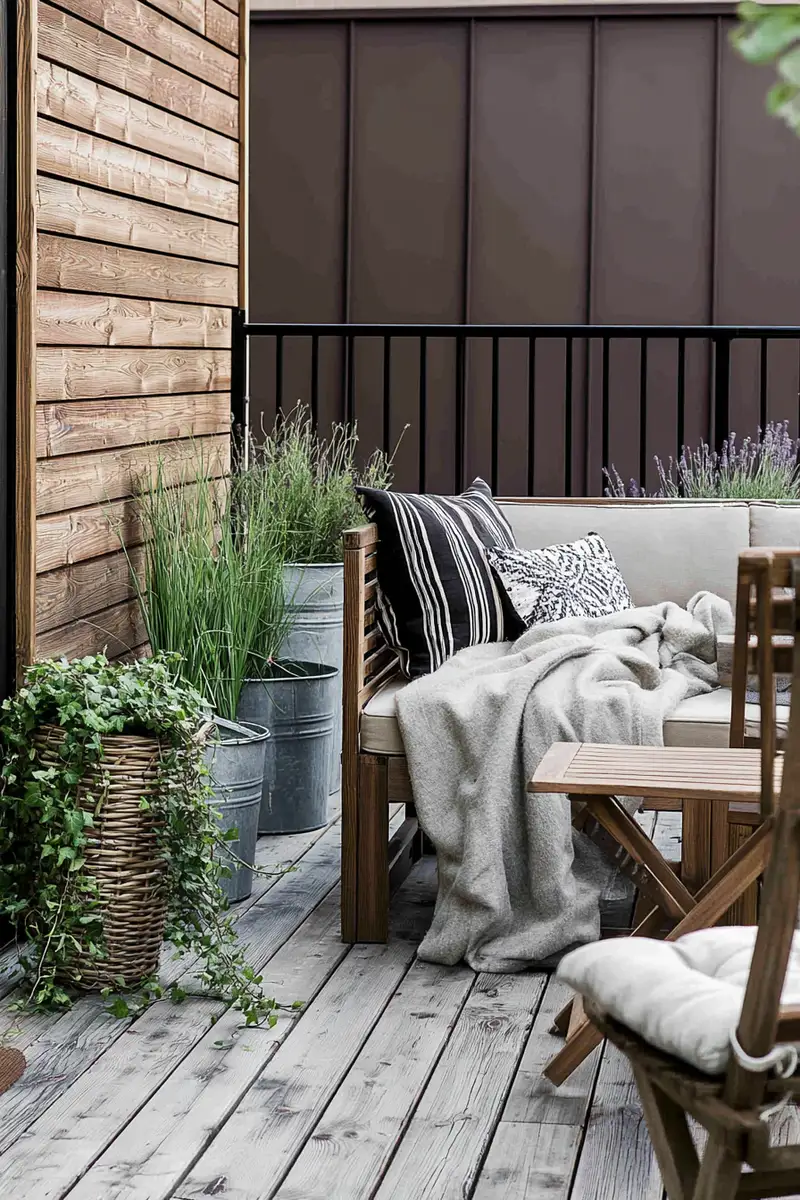
Staring at standard metal siding or cheap stucco walls makes an outdoor space feel uninviting. Installing warm, horizontal wood cladding on a single focal wall completely shifts the energy. It brings an instant cabin-like warmth to a stark urban exterior. Grouping tall, low-maintenance grasses in industrial buckets adds necessary vertical texture. They sway in the wind and soften the rigid architectural lines naturally.
8. Extending the interior sightline
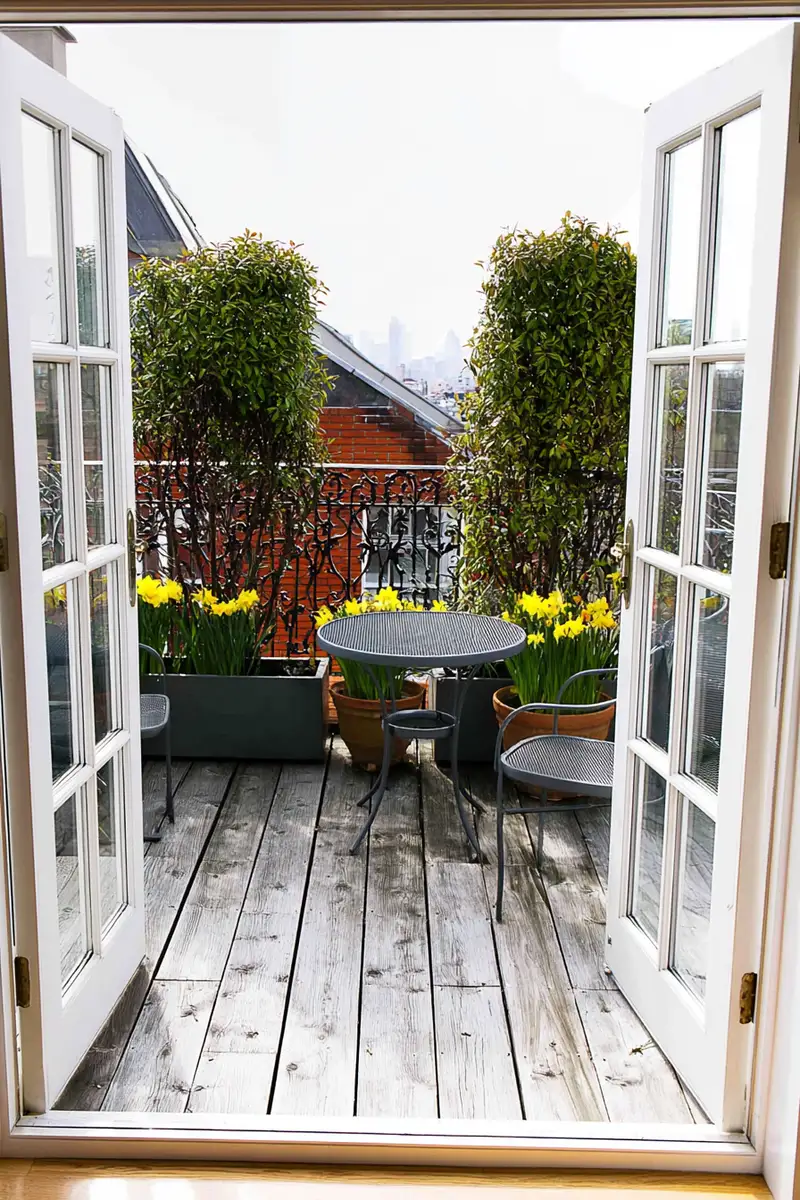
Creating a seamless indoor-outdoor transition is tricky when the exterior footprint is microscopic. Using tall, narrow planters right at the railing boundary extends the visual depth of the interior room. When those French doors open, the structured greenery acts like a natural wall. It makes the tiny deck feel like a direct continuation of the house.
9. Insulating against the chill
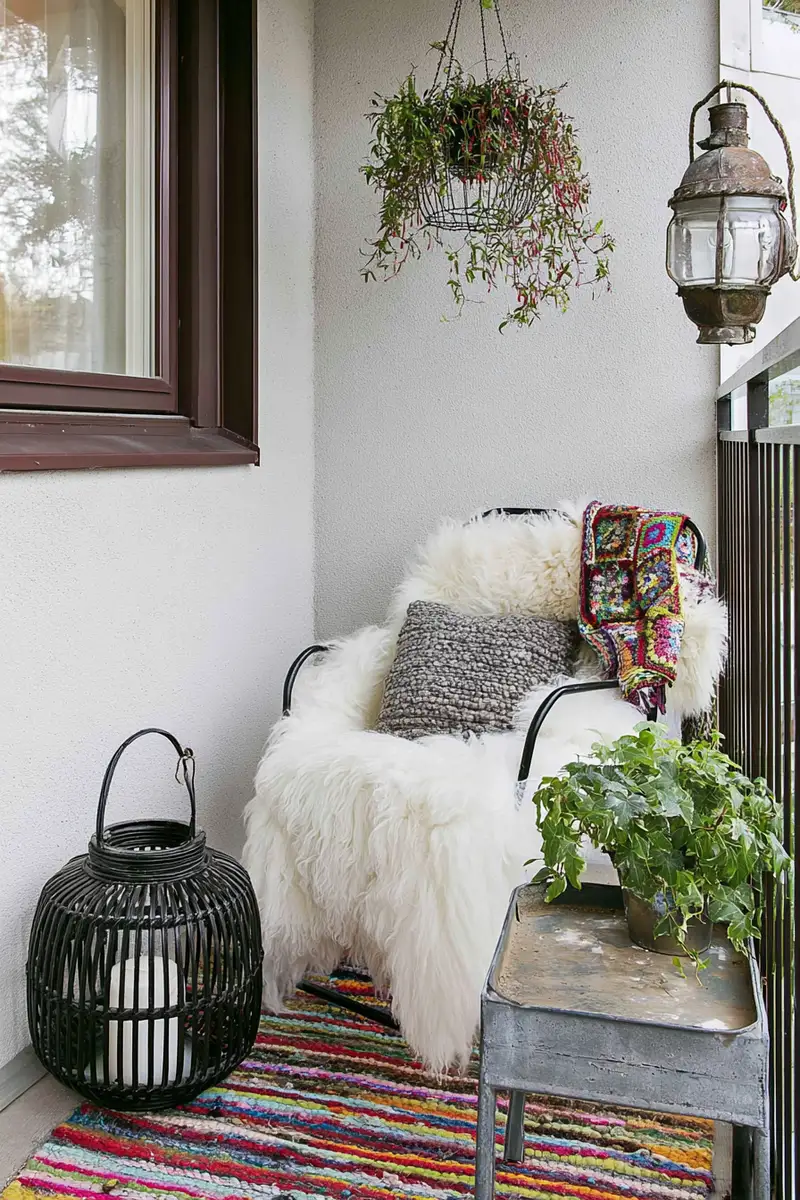
Cold balcony floors make the space unusable for half the year. Layering heavy textiles is the smartest fix. A thick sheepskin throw and a woven rug insulate against the chill perfectly.
10. The fold-out attic deck

Slanted attic apartments rarely get any usable exterior square footage. A pop-out roof window balcony solves this structural limitation brilliantly. It folds out to create a secure, open-air coffee spot out of thin air. Utilizing rail-mounted planters keeps the tiny metal floor completely clear for chairs.
11. Custom lounging on a budget
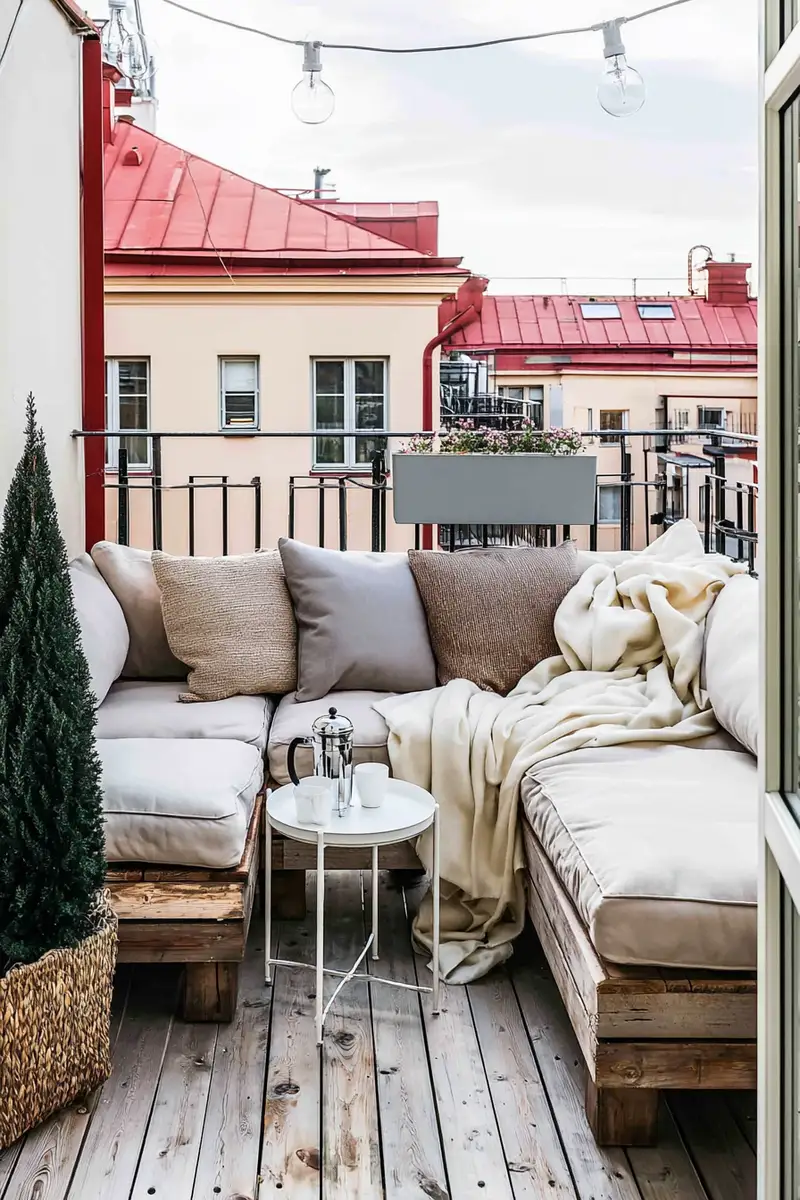
Finding outdoor sofas that perfectly fit a microscopic corner is almost impossible. You usually end up with wasted gaps or blocked walkways. Building a low sectional out of raw wooden pallets solves this footprint issue instantly. It maximizes the lounging area down to the inch. Plus, it keeps the vibe completely relaxed. Layering heavy textiles on top finishes the smart, low-budget setup.
12. Using planters as architectural walls
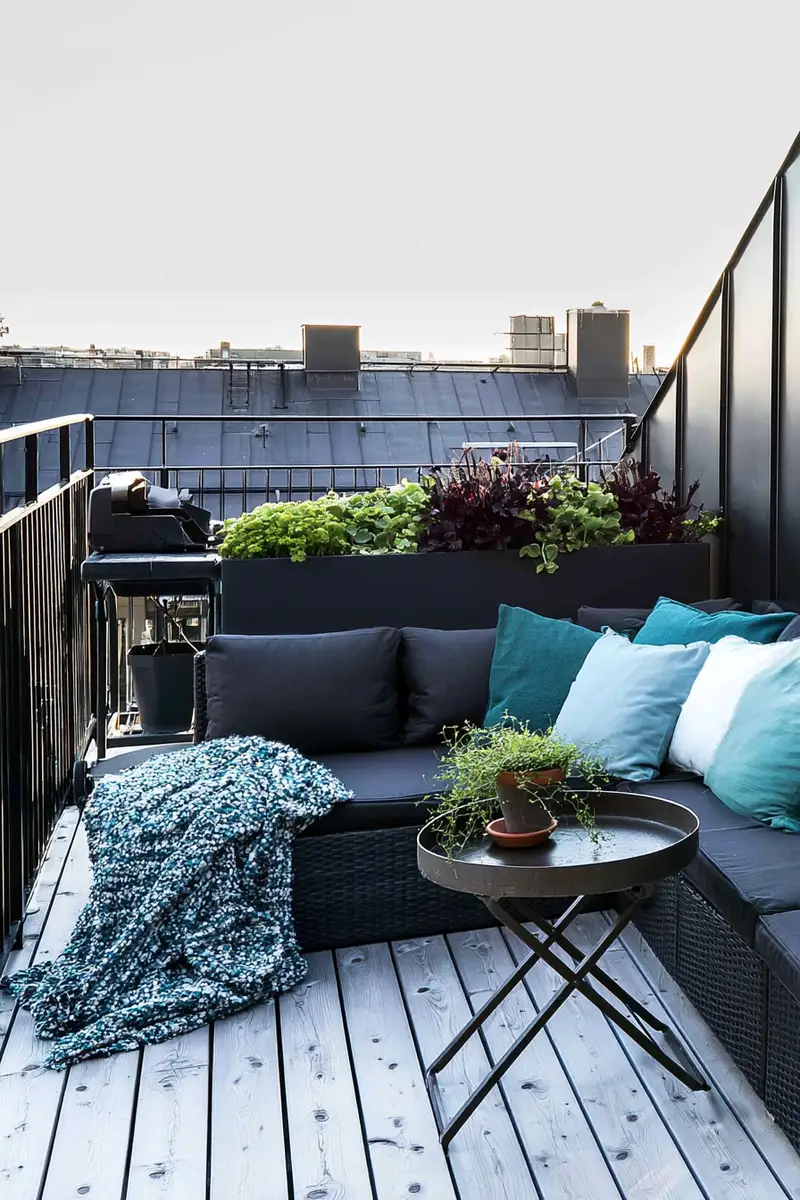
Shared apartment balconies often lack clear zones. The grilling station bleeds right into the seating area, creating a messy visual. Using a tall, sleek black planter box acts as a brilliant room divider. It defines the lounge space sharply. Treating a simple planter as a structural boundary solves the zoning problem without requiring a permanent wall. The dark canvas also does a fantastic job of making that bright green foliage absolutely pop against the urban skyline.
13. Softening the harsh industrial grid
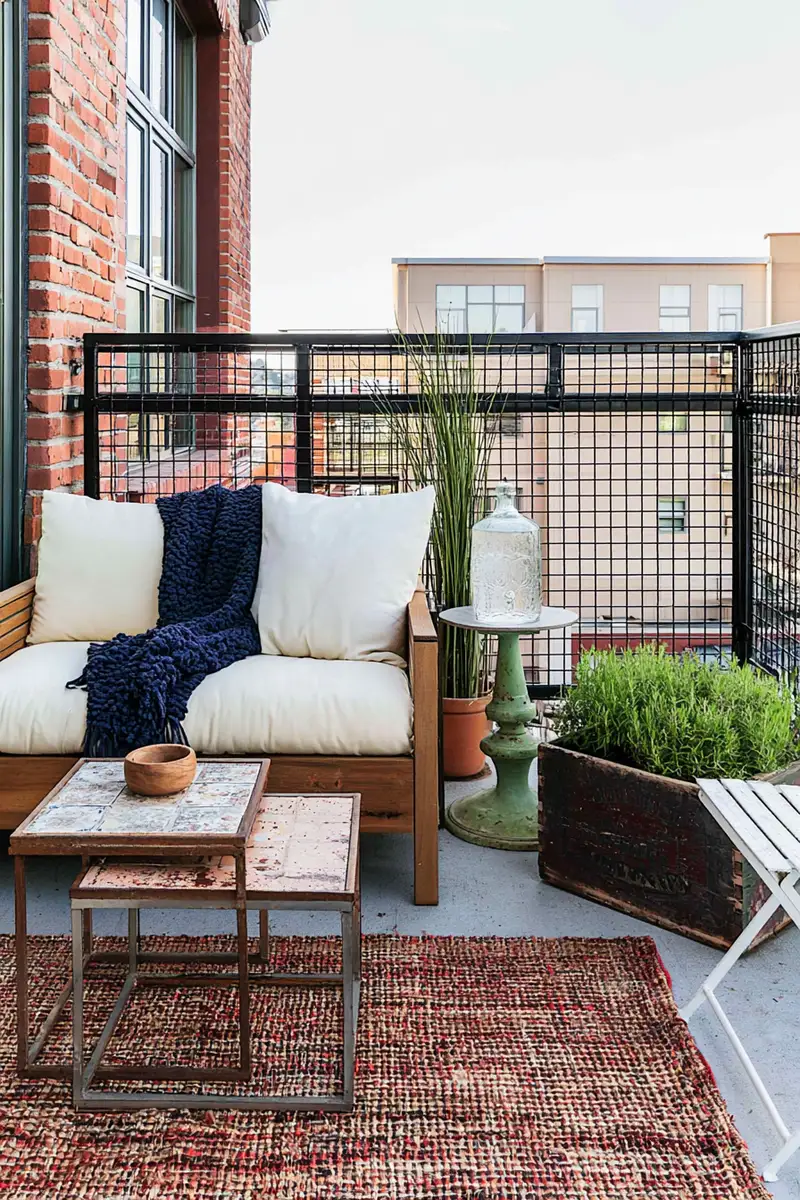
Heavy metal grid railings feel incredibly cold and unforgiving. The trick is to overwhelm that harsh steel with heavy organic textures. Repurposing a weathered vintage crate as a deep planter adds necessary rustic warmth. Drop a woven rug over the concrete. The industrial bones are instantly softened.
14. Flexible setups for enclosed micro spaces
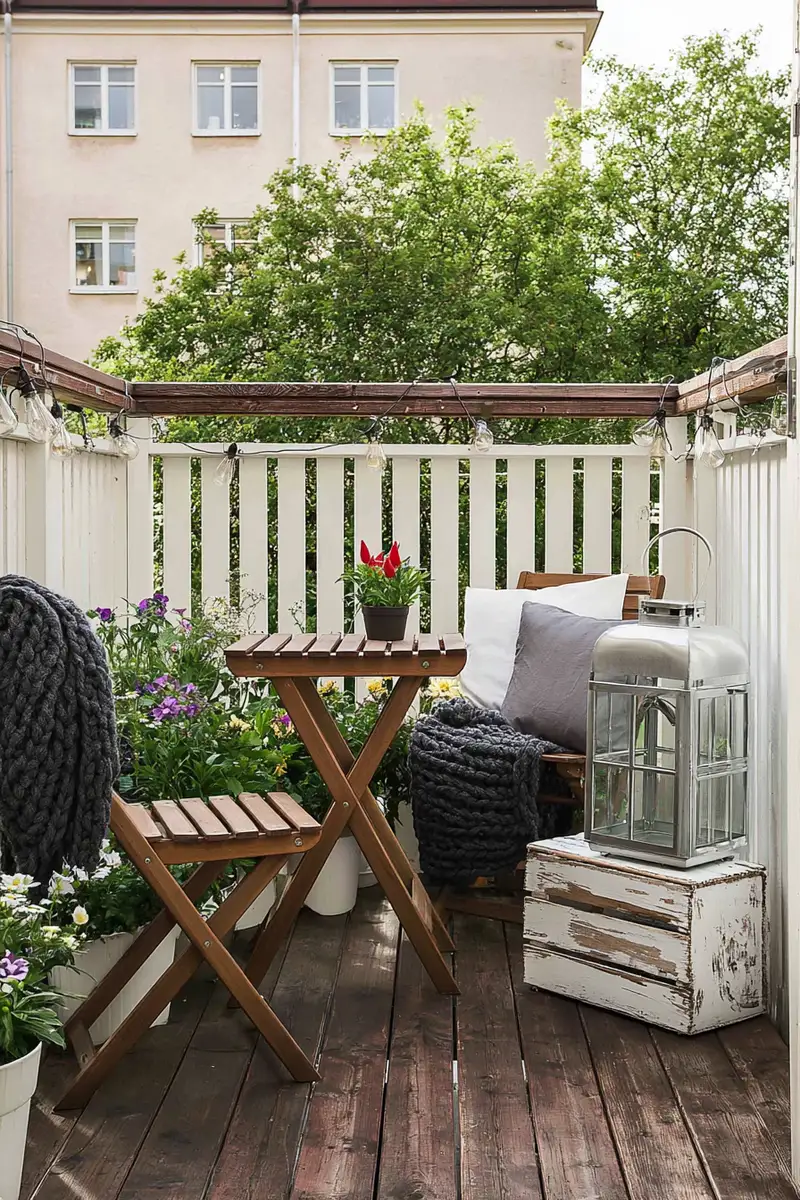
A tiny deck wrapped by a solid half-wall easily feels like a claustrophobic box. Bulky seating makes it much worse. Opting for a foldable, slatted wooden bistro set keeps the floorplan totally adaptable. You can collapse the entire dining zone in seconds if you need standing room. The slatted design is highly intentional here. It allows natural light and air to pass right through the furniture, preventing the setup from visually blocking the tight footprint.
15. Painting the exterior siding dark
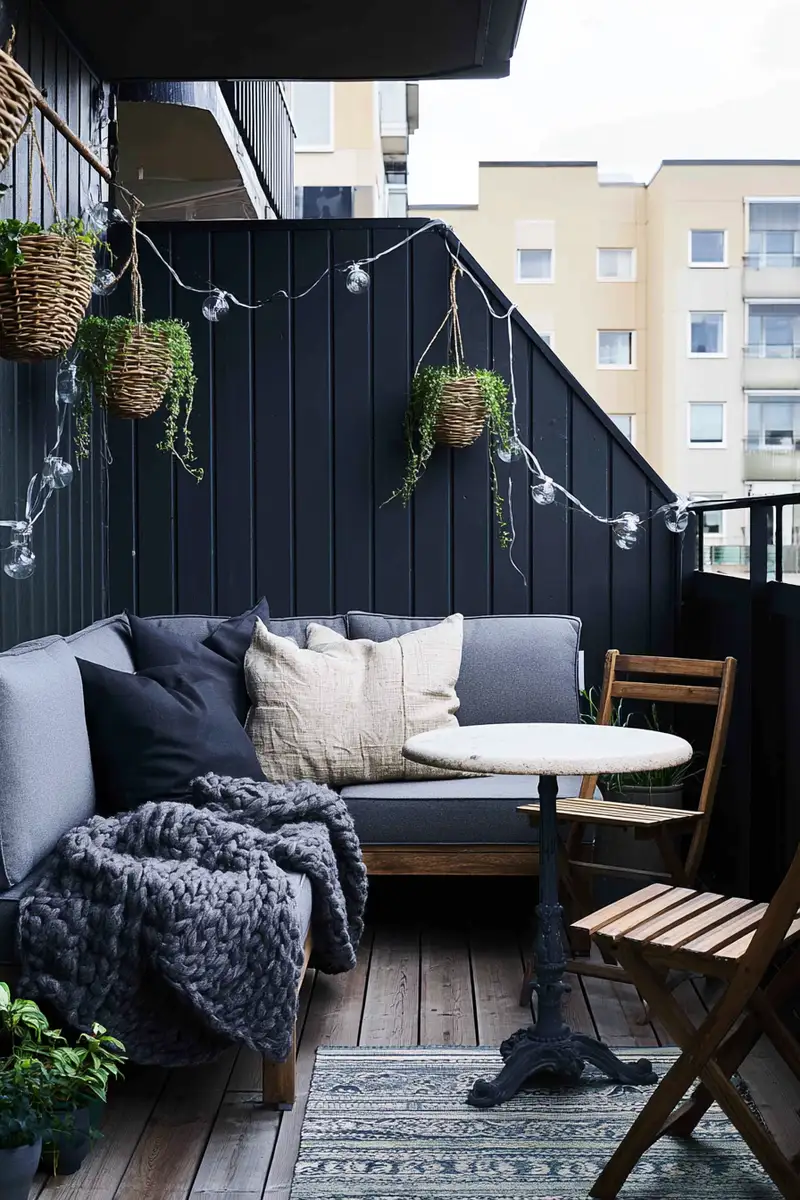
Bare exterior siding is visually flat. Coating those wooden slats in a deep, moody charcoal paint transforms a standard balcony into a high-end lounge. It creates a striking backdrop that makes cheap string lights and simple hanging baskets look incredibly expensive.
16. Reclaiming the floor plan
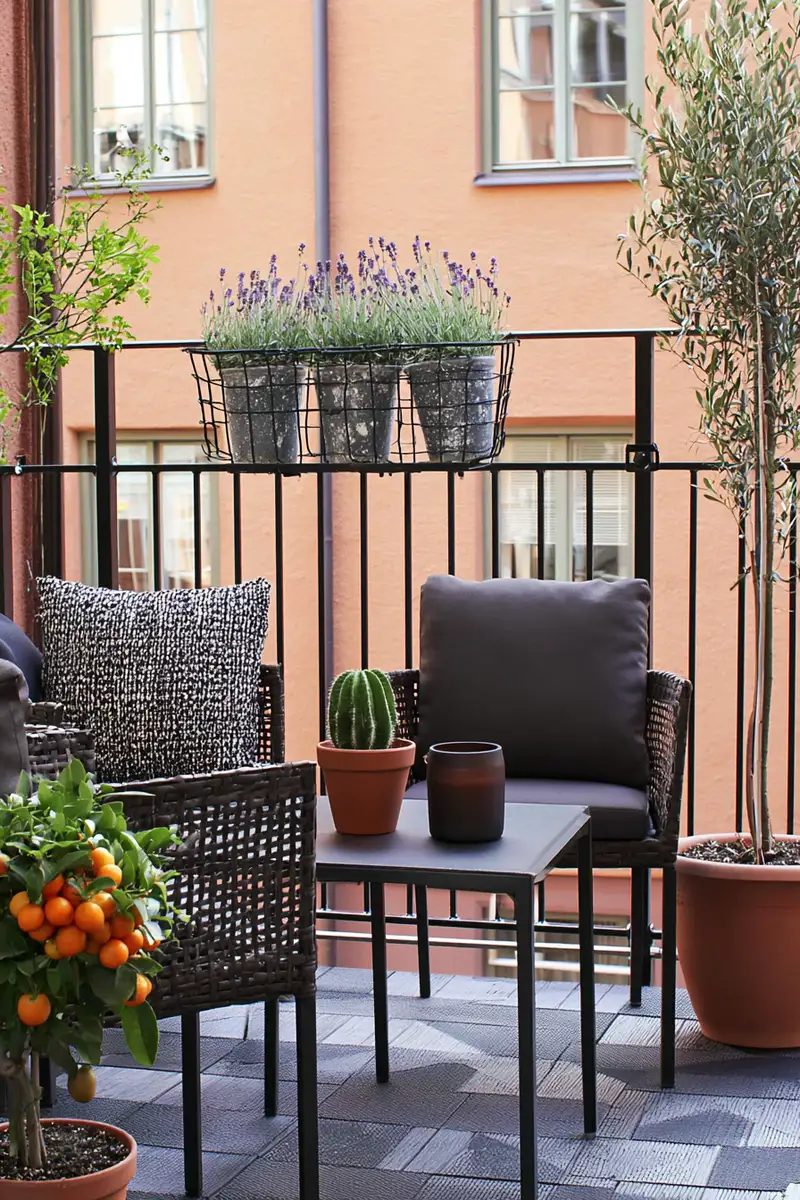
Wasting precious floor space on bulky plant pots is a common mistake on narrow apartment decks. You end up tripping over greenery just to sit down. Utilizing the vertical airspace is the smartest workaround. Hanging simple, galvanized metal buckets directly onto the railing gets the lavender right up to eye level. It secures the plants safely while keeping the decking completely clear for seating and daily foot traffic.
17. Vertical storage on wheels
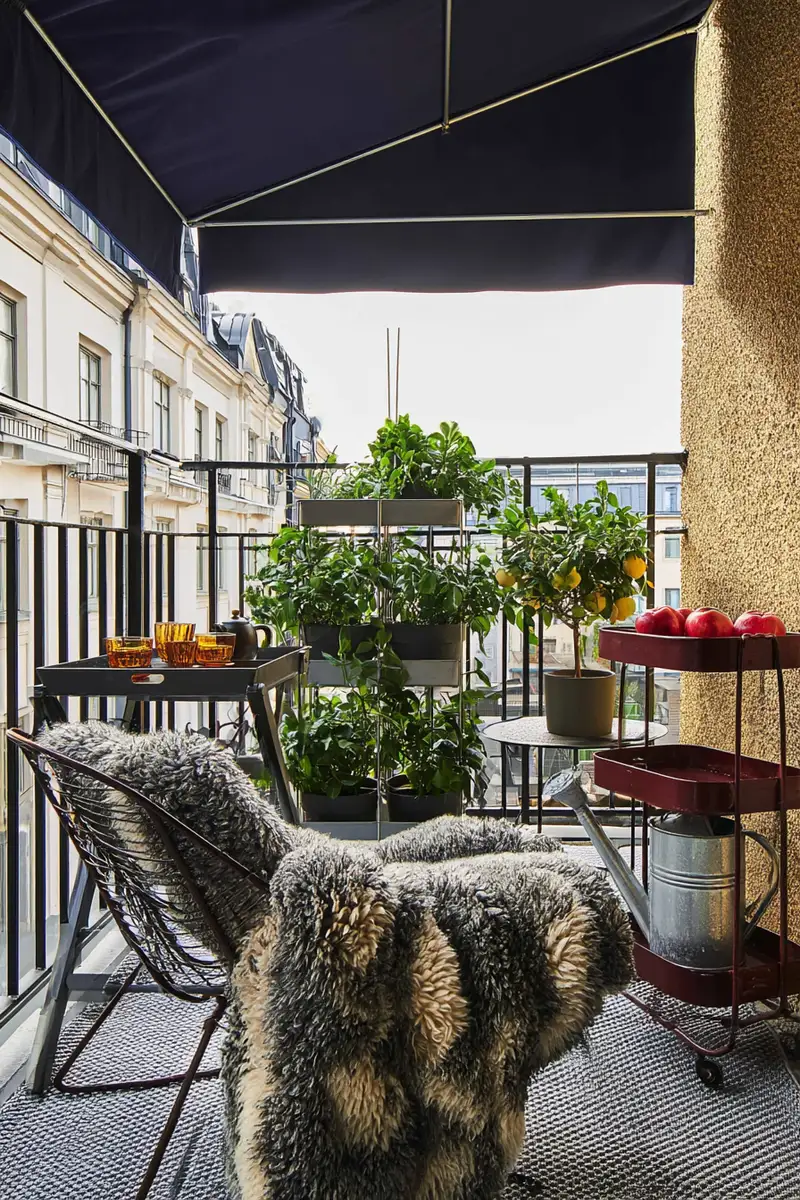
Managing gardening supplies, drinks, and plants usually turns a small balcony into a cluttered mess. Adopting mobile, vertical storage changes everything. Using a tiered plant stand and a slim rolling utility cart organizes the chaos beautifully. You can easily push the metal cart inside or out of the way when entertaining guests. It keeps the limited footprint highly functional.