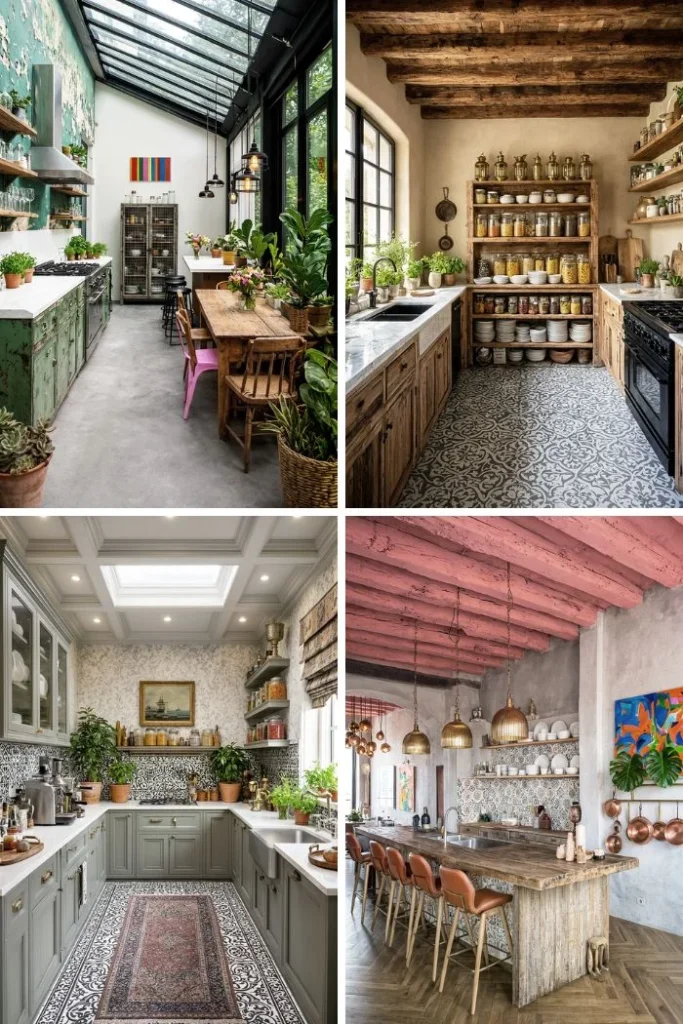
Solid kitchen walls block natural light and cut off your best garden views. Installing a simple pass-through bar or massive sliding glass panes totally redefines the architecture. It visually doubles your dining footprint without pouring a single yard of new concrete.
1. Blurring the line with heavy natural stone

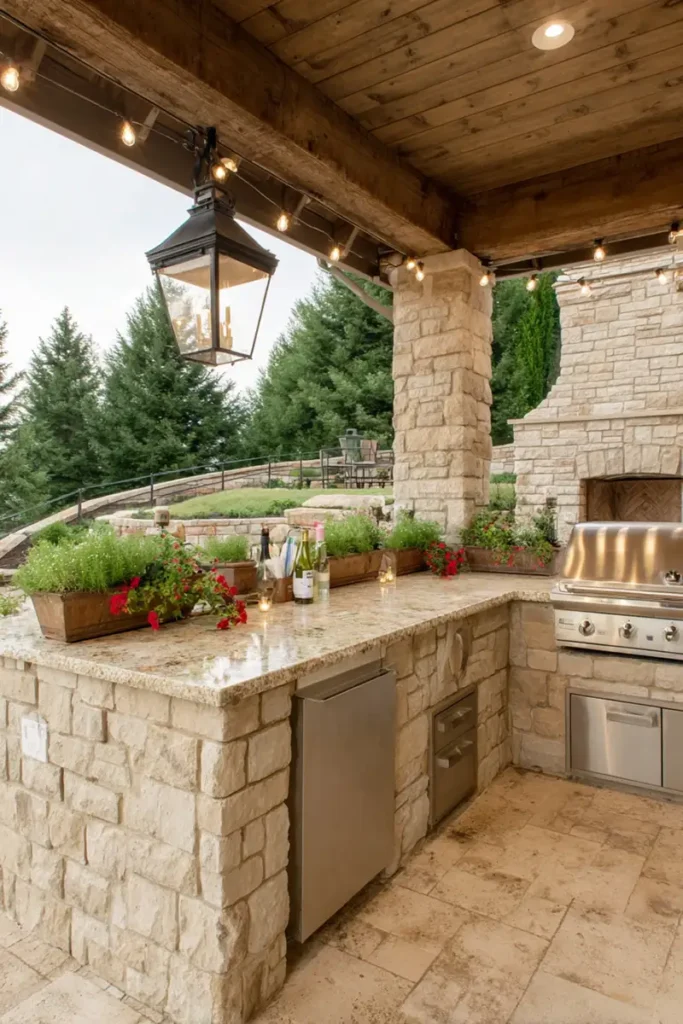
Dark, enclosed kitchens easily disconnect the host from the backyard gathering. A full glass-ceiling extension with folding doors changes the entire dynamic instantly. It establishes a bright, year-round conservatory. Bringing that rugged exterior stone wall inside makes the structural boundary completely disappear. The raw texture grounds the sleek cabinetry perfectly.
2. The pass-through window bar

Carrying drinks through narrow patio doors is a classic hosting nightmare. A gas-strut awning window transforms the sink area into an instant pass-through bar. Simple and highly effective.
3. Expanding into the tight urban courtyard seamlessly

City homes often lack deep yards for proper outdoor cooking zones. Knocking out the rear wall and running the exact same flooring straight into a walled courtyard visually doubles the room size. The structural threshold vanishes entirely. You get a massive entertainment zone without actually adding any new square footage.
4. A dedicated concrete pavilion

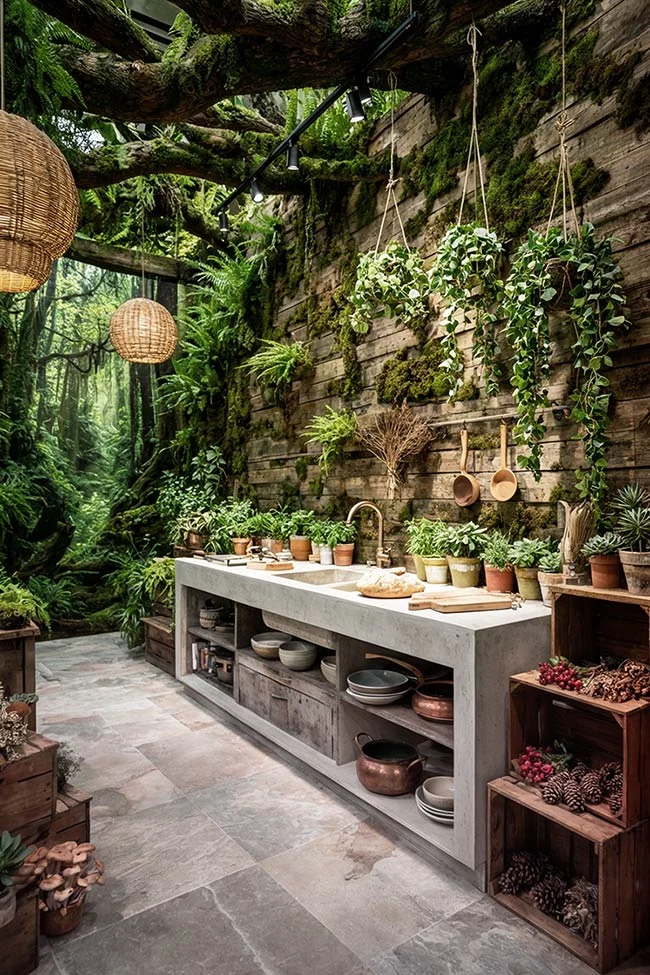
Grilling outside usually means sweating under the brutal afternoon sun while battling wind gusts. Building a freestanding concrete pavilion establishes a highly functional, weather-resistant chef zone. The heavy masonry safely houses the gas cooktop and withstands the elements easily. Meanwhile, the slatted timber roof provides smart, filtered shade without trapping heavy cooking smoke. It turns a wild garden corner into a highly structured, permanent dining destination.
5. Zero-footprint dining for small decks

Tight wooden patios cannot comfortably fit both a dining table and a heavy cooking station. Pushing a thick timber bar counter flush against the exterior siding utilizes zero floor space. The fold-up window connects the indoor prep area directly to the outside.
6. Opening the historic brick facade

Older brick homes often feel heavily compartmentalized. Installing massive bifold doors completely redefines the layout. The indoor island suddenly serves the open deck.
7. The glass roof solution for dark kitchen extensions

Solid kitchen extensions notoriously block natural light from the original house core. A structural glass ceiling solves this instantly. It floods the dark cabinetry with sunlight. The retractable glass walls maintain proper climate control while keeping the patio view completely unobstructed.
8. The cornerless dining pavilion

Standard patio overhangs trap heat and make adjoining rooms gloomy. A deep wood-clad extension featuring a central glass lantern naturally pulls hot air up and away. Utilizing pillarless corner doors completely dissolves the physical barrier between the indoor dining setup and the fresh lawn. It creates a flawless seasonal transition.
9. Retrofitting the kitchen window

Building a full outdoor kitchen requires a massive budget and heavy plumbing work. A clever window conversion achieves the exact same social flow for a fraction of the cost. Adding a heavy wooden ledge below a folding window connects the indoor chef directly to the patio seating area. It creates a highly efficient prep-and-serve station without pouring new concrete.
10. The deep architectural canopy

Uncovered patios leave outdoor dinners totally vulnerable to sudden rain. A massive cantilevered overhang acts as a permanent weather shield.
11. The space-saving bifold bar

Squeezing a full dining table onto a narrow balcony often blocks all foot traffic entirely. Swapping a standard kitchen window for a folding glass pane creates a high-functioning serving bar right on the wall. The indoor counter extends outward. It handles morning breakfasts and evening drinks without stealing a single inch of your deck space.
12. Continuous surface flow

Harsh visual breaks at the window track make both the kitchen and the deck feel cramped. Running the exact same crisp white countertop straight through the frame fixes this instantly. The physical boundary completely disappears.
13. The oversized awning window

Hosting summer gatherings often traps the chef inside while guests linger out on the patio. Installing a massive gas-strut awning window completely opens the kitchen core to the backyard. It links the heavy interior wood island directly to the dark exterior bar ledge. You get maximum social flow and a built-in rain canopy for the outdoor stools.
14. Extending the heavy prep zone

Prepping food outside usually means balancing plates on a tiny, unstable side table. Pushing a thick marble slab right through the exterior wall provides serious, heavy-duty prep space for the patio. The crisp white bifold window shuts tightly against winter weather but opens wide to serve the fire pit zone perfectly.
15. Reclaiming the dead side yard for outdoor cooking

Narrow side yards usually just gather weeds and old garden hoses. Tucking a compact kitchen under a basic metal roof reclaims this wasted footprint entirely. The bright tiled floor creates a clean, wipeable cooking zone right next to the wooden walkway. It handles messy grilling without smoking out your main seating area.
16. The structural concrete ledge

Wooden outdoor bar ledges rot very quickly under harsh weather. Pouring a solid concrete counter guarantees total durability. It anchors the light stucco wall beautifully. The sleek glass awning window lifts effortlessly, linking the warm indoor cabinetry directly to the rugged exterior seating.