
Keeping a high-rise pet safe usually means sacrificing your entire outdoor aesthetic. Ugly mesh screens and bulky carpeted towers can ruin a tiny patio instantly. You want to enjoy your morning coffee outside. Your cat wants to watch the birds. Balancing those two needs requires some clever spatial planning. Turning a standard deck into a secure feline playground does not have to look like a pet store exploded. A few smart vertical additions and hidden resting spots completely change the dynamic. These clever setups show exactly how to merge safety with high-end exterior design.
1. Floating brick wall shelves
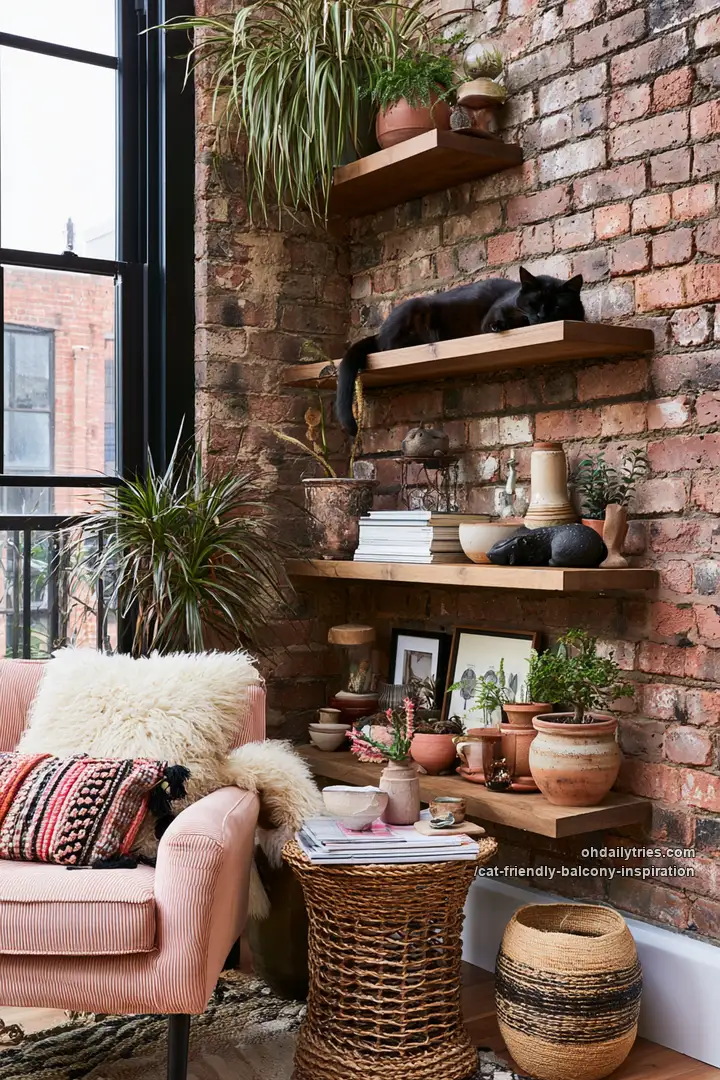
Standard cat trees ruin rustic decor. Mounting staggered floating shelves directly onto exposed brick solves this. It gives cats their required high vantage point without sacrificing your interior style.
2. The clear acrylic wall bubble
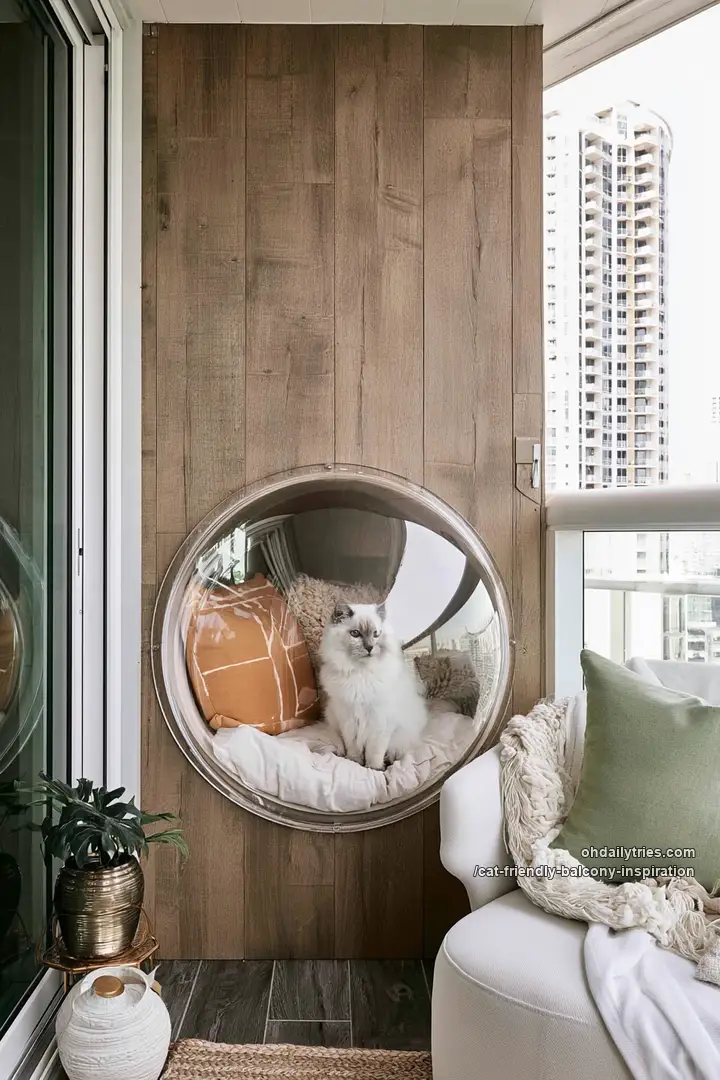
Floor beds waste tight balcony space. Installing a transparent wall bubble gives your cat a secure, panoramic lookout. It reclaims the floor completely.
3. Stepped wooden planters for shared edges
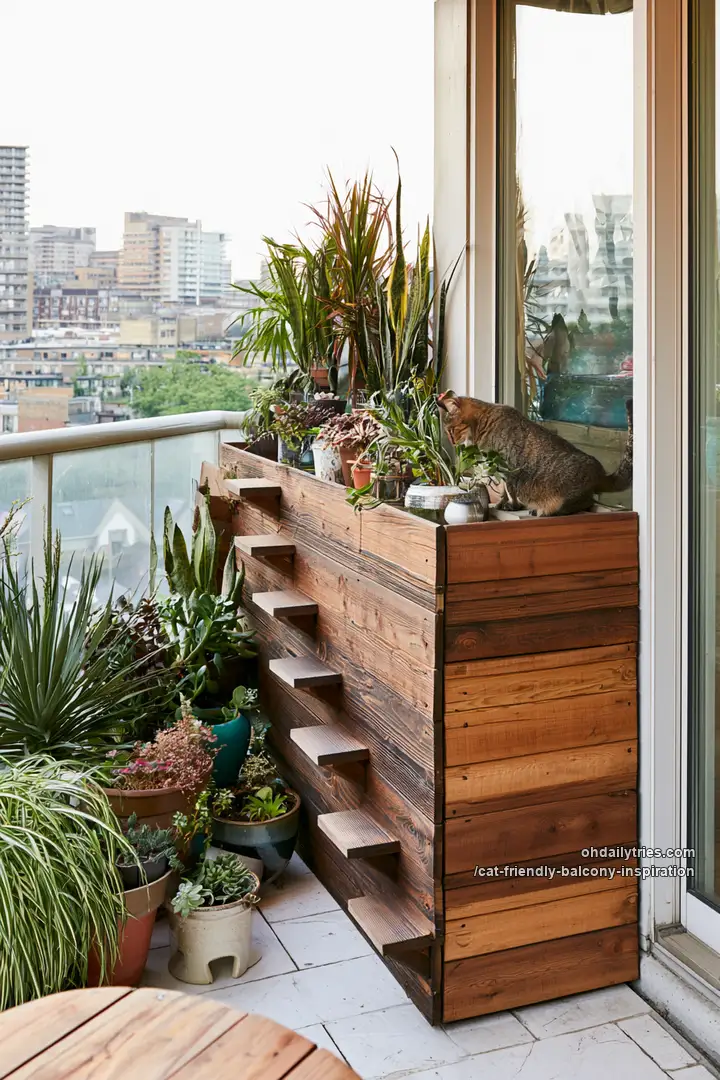
Cats crush potted plants fighting for window views. A custom stepped wooden planter acts as a dedicated climbing ladder. It protects fragile greenery while granting them safe access to the ledge.
4. Perimeter turf tracks
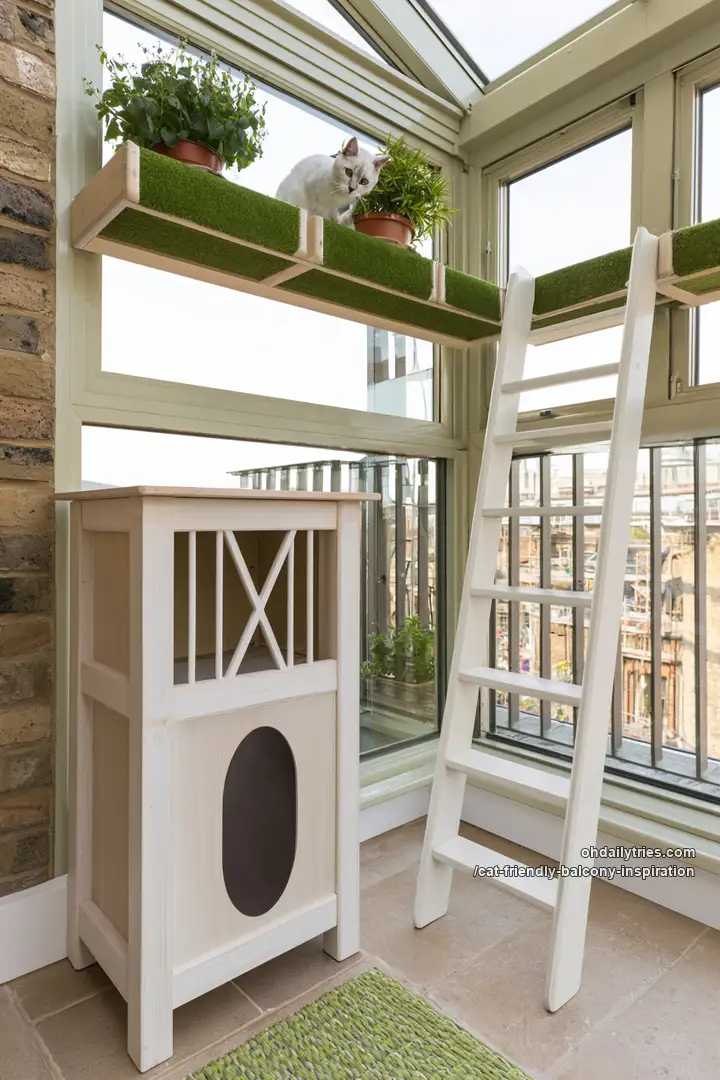
Sunrooms lack vertical stimulation. Adding a high turf-lined catwalk pushes pet activity overhead safely. Zero floor clutter.
5. Trickling pebble fountains
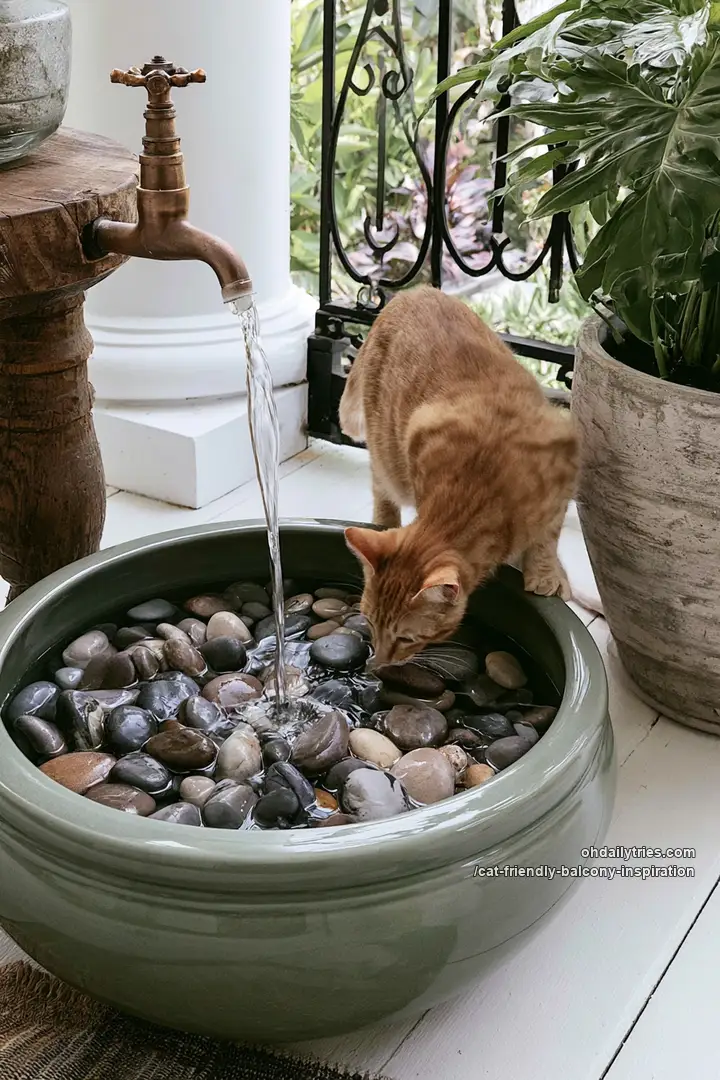
Static outdoor water bowls turn grimy fast. A continuous trickling fountain over smooth river rocks solves the hygiene issue. It adds a peaceful landscape feature that actually encourages cats to drink.
6. Real birch climbing posts
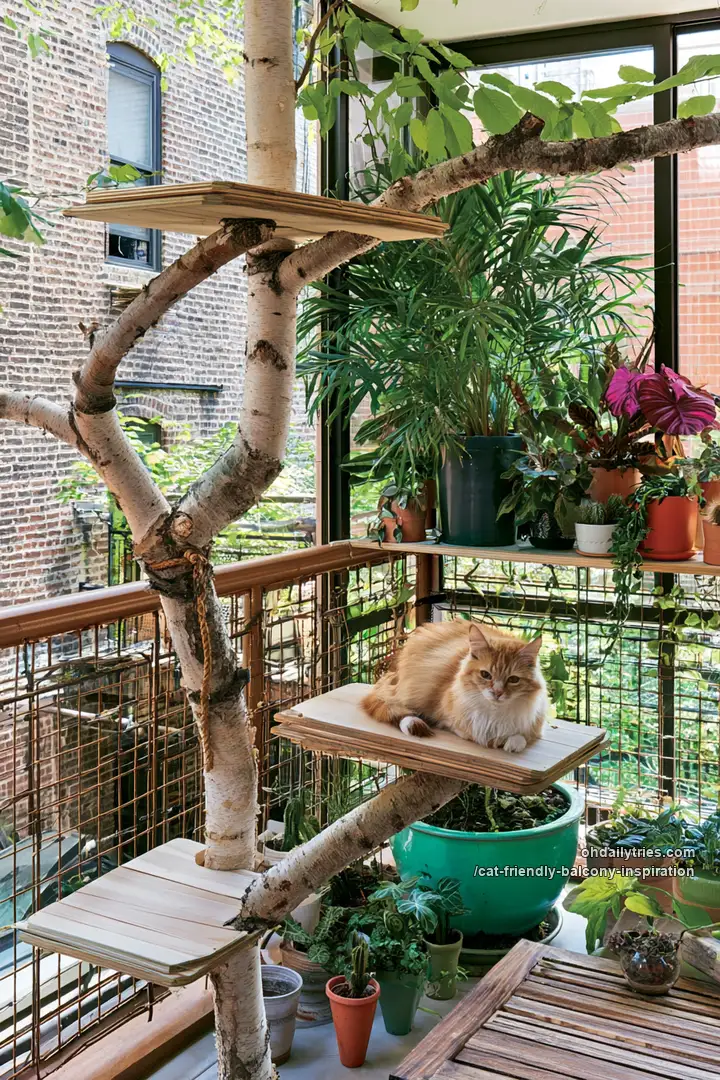
Carpeted towers look awful outside. Bolting simple wooden platforms to a real birch branch creates a highly functional climbing structure that naturally blends into your balcony jungle.
7. Dual-purpose timber benches with hidden cubbies
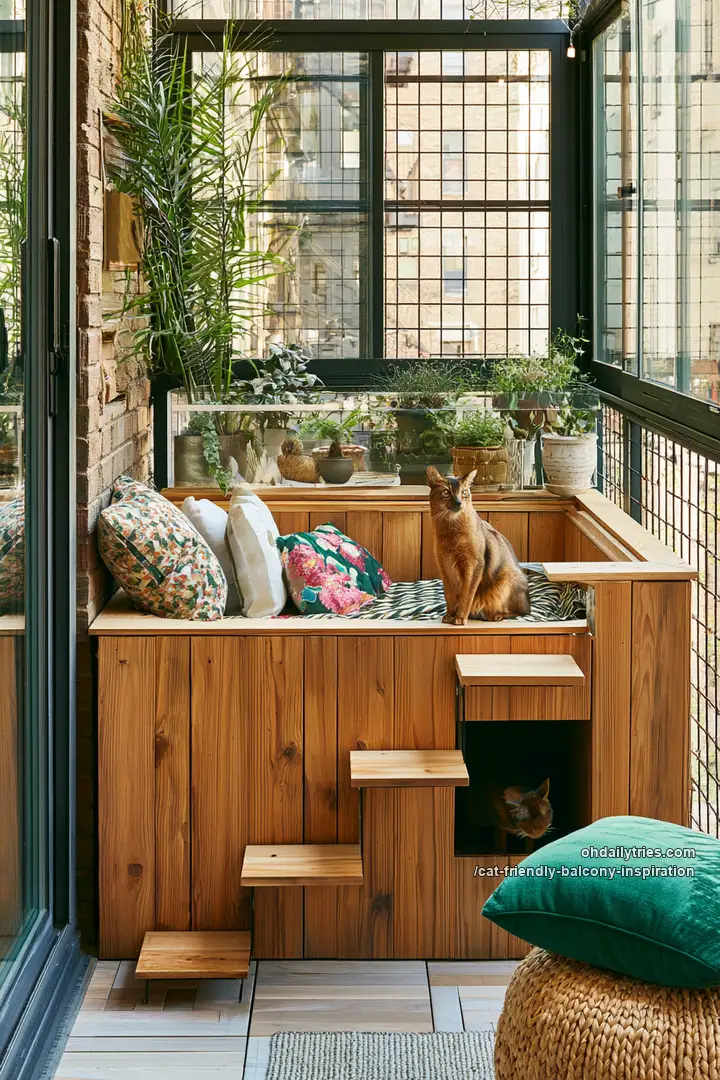
Cats overheat quickly on sunny patios. Building a timber bench with a built-in lower cubby provides shaded refuge. You get deep seating above, and they get a cool, hidden bunker below.
8. The hollow terracotta side table
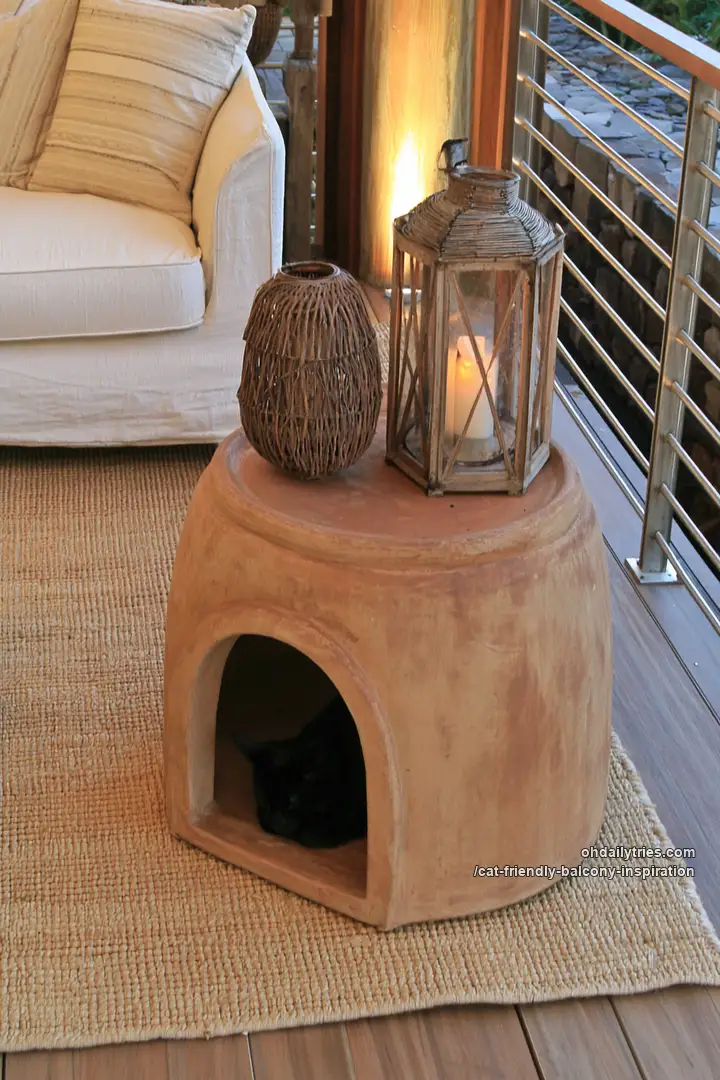
Traditional pet beds ruin chic outdoor styling. A hollow terracotta table hides the bed perfectly. Smart dual-purpose design.
9. Warm timber platforms with integrated lighting
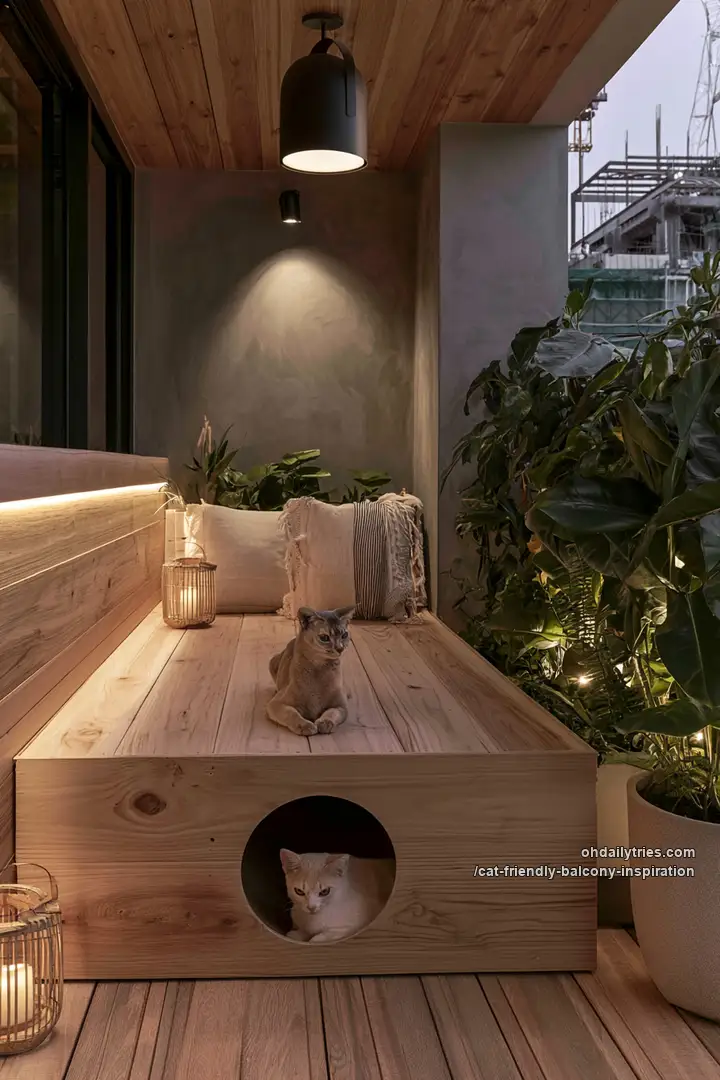
Concrete balconies feel harsh at night. A low wooden platform warmed by hidden LED strips softens the brutalist architecture. The cut-out tunnel offers a secure nighttime hideout.
10. Wall-mounted log steps
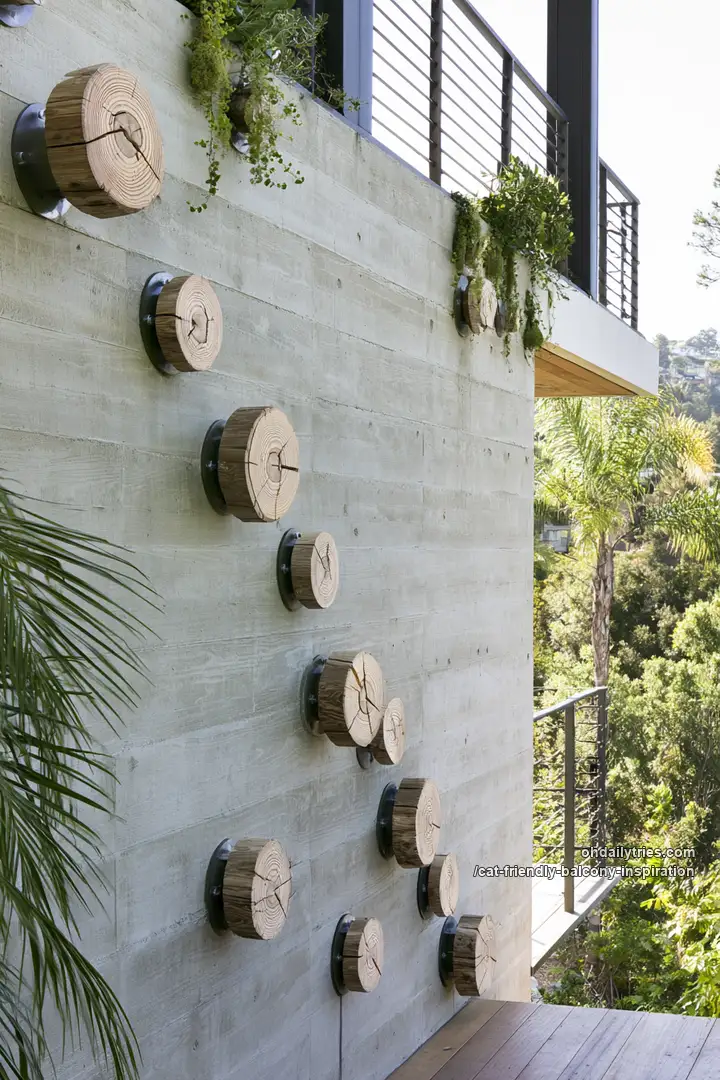
Blank exterior walls are wasted space. Bolting raw log slices to bare concrete creates an architectural climbing route. Pure functional art.
11. Turn a rough branch into a natural scratcher
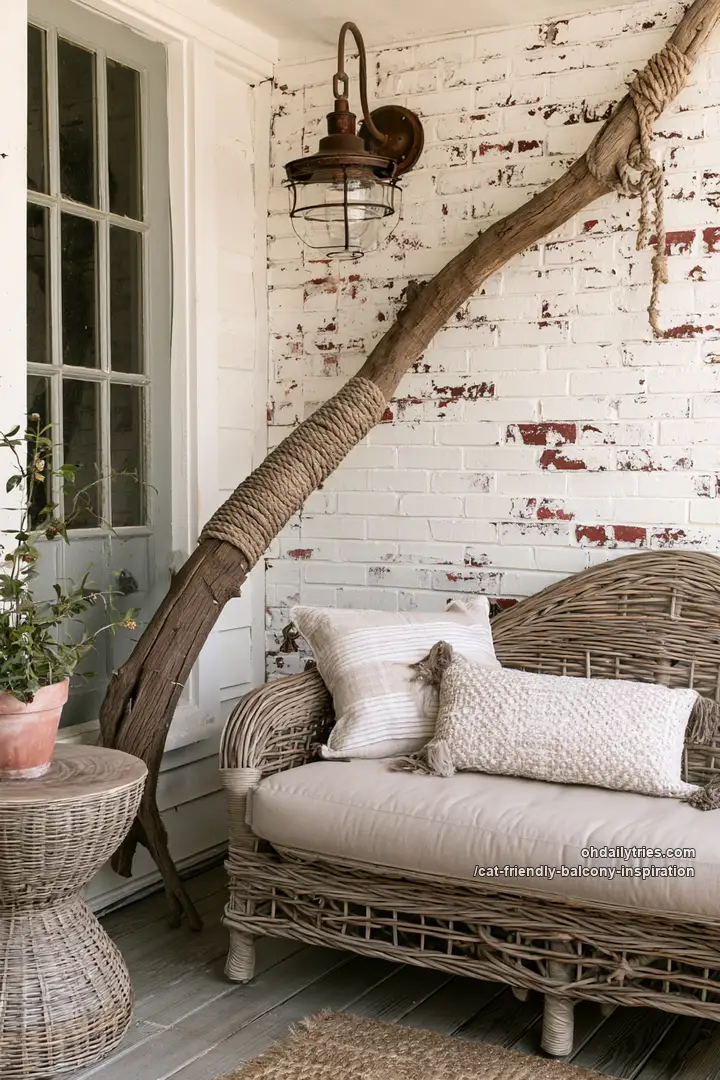
Standard pet store cat trees often ruin a carefully styled outdoor aesthetic. Bringing in a heavy piece of salvaged driftwood and tightly wrapping it in thick sisal rope offers a brilliant workaround. It blends seamlessly with rustic wicker furniture while giving cats a sturdy, dedicated spot to stretch their claws. You get organic decor, and they get a functional playground.
12. Safe netting and a sensory grass strip
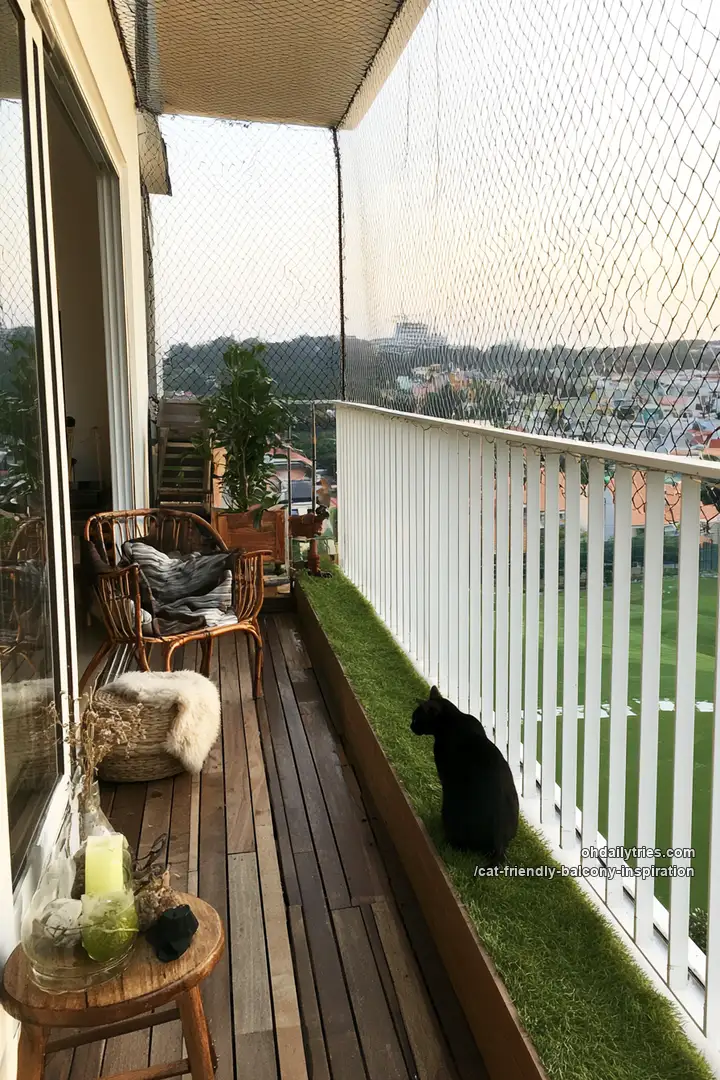
High-rise safety is a major concern for pet owners. Installing a nearly invisible floor-to-ceiling mesh net secures the perimeter without blocking city views. Adding a narrow, low-profile planter lined with turf provides essential sensory stimulation for the cat, keeping them entertained on an otherwise bare deck.
13. Floating sleep shelves free up floor space
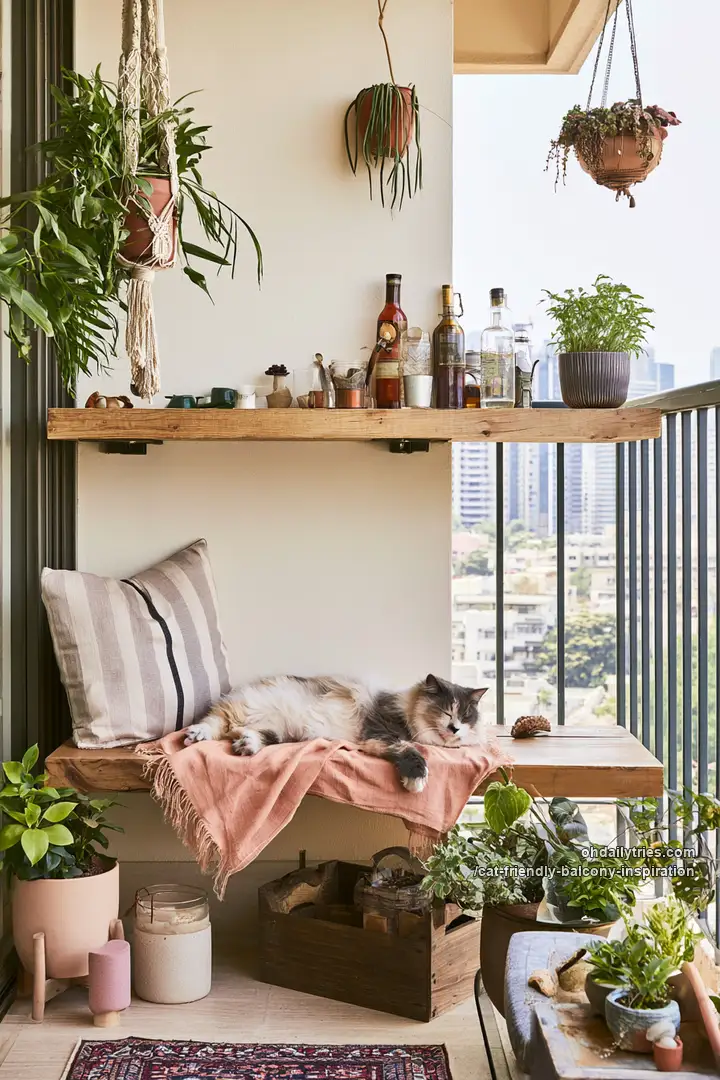
Small apartment balconies quickly feel cramped when you try to fit plants, seating, and pet beds onto the same limited floor plan. Mounting a thick, low-level wooden floating shelf directly to the wall completely solves this traffic flow issue. It gives the cat an elevated, secure place to nap comfortably among the foliage. Meanwhile, the actual deck surface remains completely clear for your own feet and larger storage crates. This smart vertical separation makes the tiny area feel twice as large.
14. Smooth stone surfaces
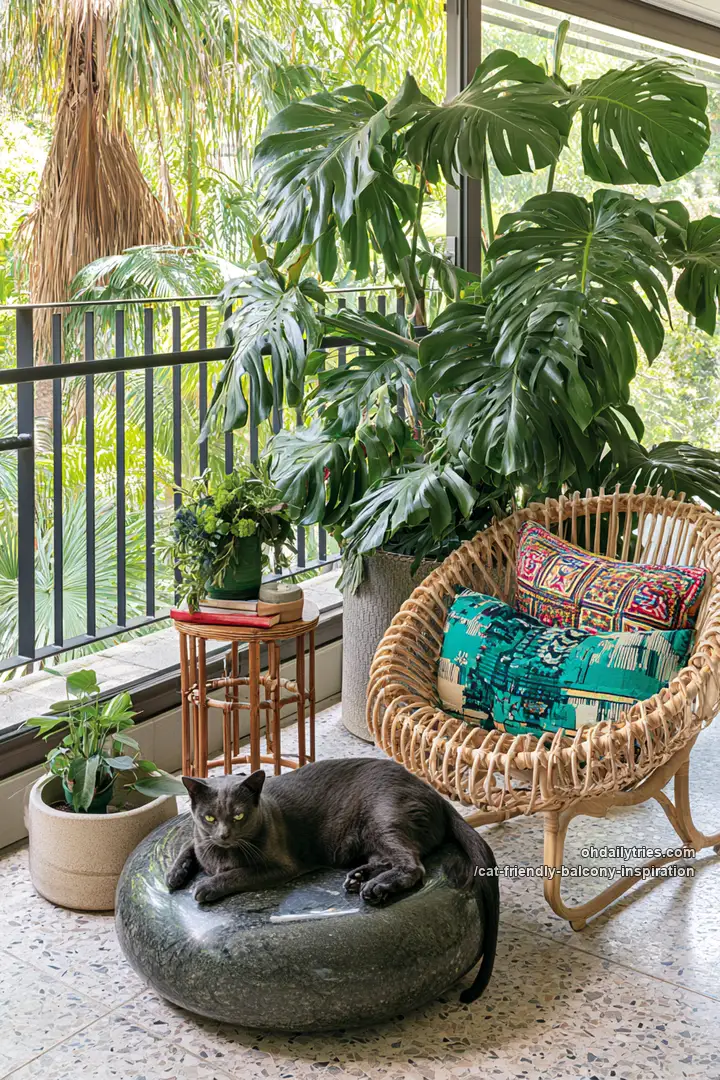
Upholstered outdoor cushions act like magnets for shedding fur and sharp claws. Swapping a fabric ottoman for a smooth, heavy stone-style piece provides a cool summer resting spot that wipes clean in seconds.
15. A dual-purpose vertical climbing wall
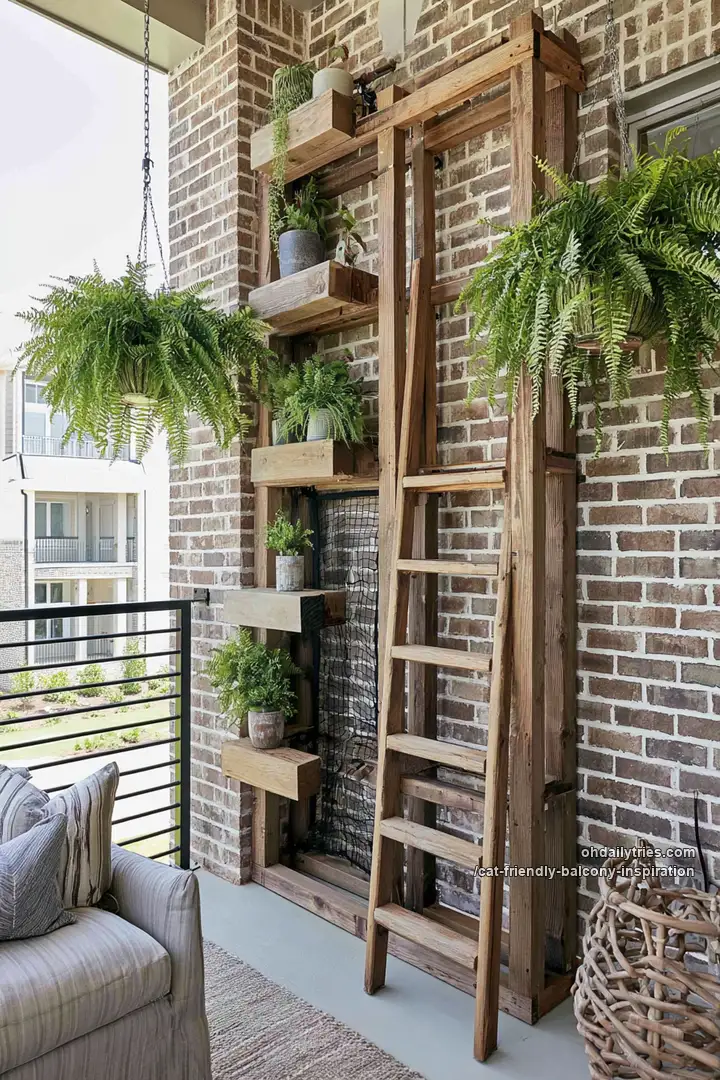
Felines instinctively seek high vantage points, but standard balcony railings are dangerous limits. Building a custom wooden shelving unit with an integrated ladder creates a safe, controlled pathway upwards. It keeps hanging plants out of the way while giving pets the vertical territory they crave.
16. Wrap those ugly concrete pillars
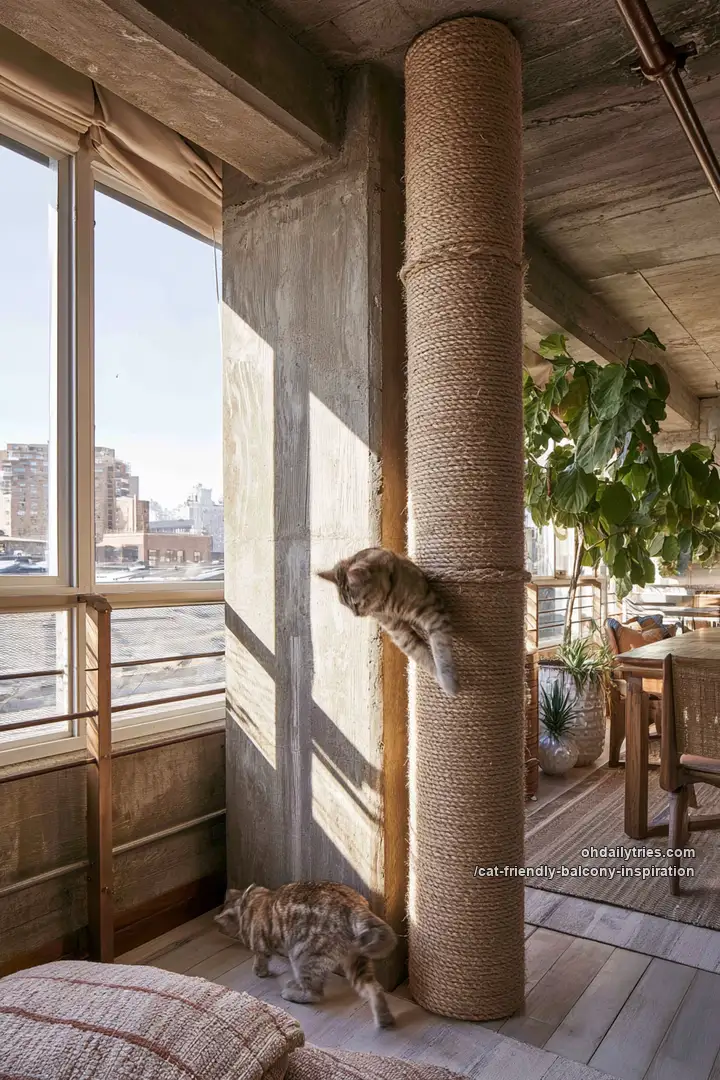
Structural support columns usually just take up valuable room. Tightly binding one from floor to ceiling with heavy-duty rope transforms a raw architectural eyesore into a massive, space-saving scratching post.
17. The enclosed hanging pod
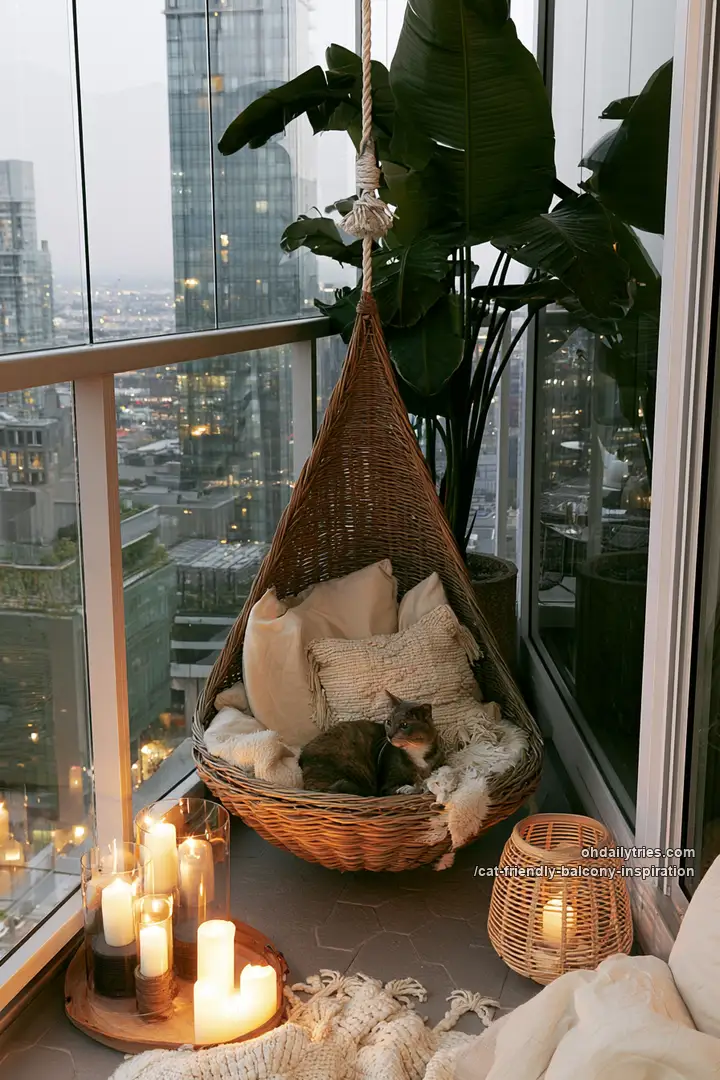
Keeping pet fur off your main lounge seating is a daily struggle. A hanging wicker pod naturally attracts cats due to its enclosed, cocoon-like shape. Tossing in a few washable throw blankets designates it as their specific safe haven, effectively keeping the rest of your furniture clean.
18. Stepped privacy screens block nosy neighbors
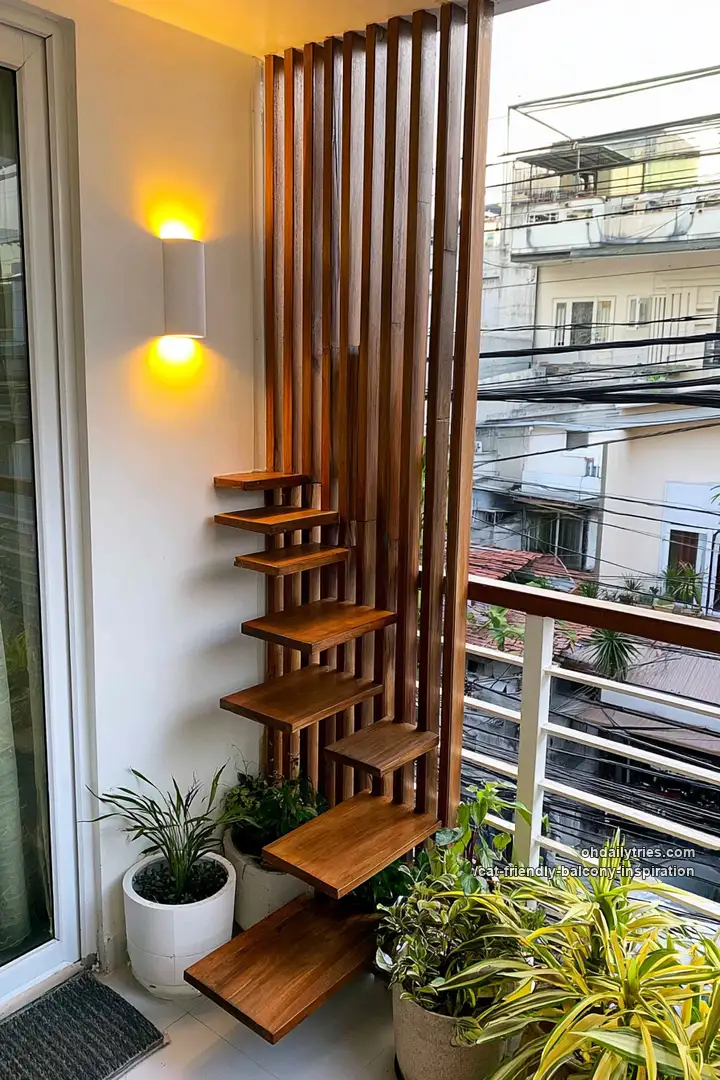
Balancing your own need for privacy with your cat’s desire to look over the railing is tricky. Installing a floor-to-ceiling wooden slatted screen instantly blocks the view from adjacent apartments. By attaching staggered, floating wooden treads directly onto those slats, you create a dedicated staircase. The cats gain a safe observation deck to watch the street, and you maintain a secluded, stylish outdoor room. It is a highly efficient use of an otherwise blank wall.
19. Overhead walkways expand small territories
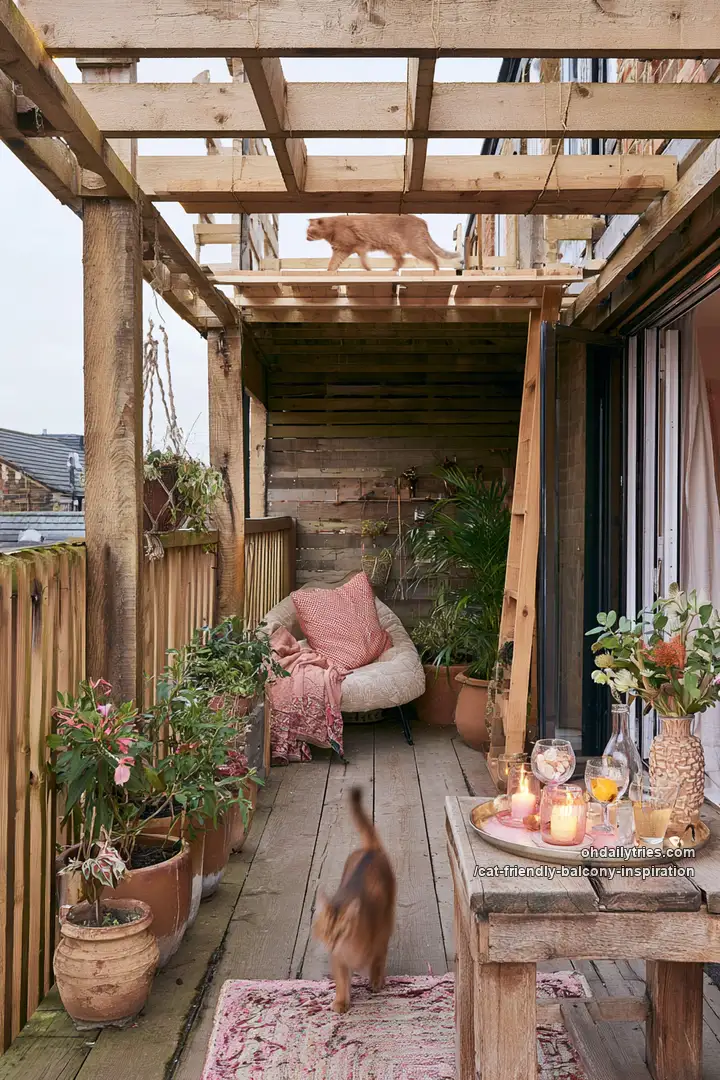
Ground space gets crowded fast with multiple pets. Building a simple overhead wooden bridge utilizes completely forgotten ceiling space, drastically expanding their roaming area without cluttering the patio.
