Wet footprints all over your grilling station. Greasy smoke blowing right into the faces of your swimming guests. Trying to fit a pool and an outdoor kitchen into one backyard usually creates a chaotic mess. You want a relaxing oasis, not an obstacle course.
I get it. The trick isn’t just buying expensive gear. It is all about smart placement. You have to separate the wet zones from the hot zones without losing that seamless party vibe. Let’s look at how to actually make these two spaces work together smoothly.
1. Curved Stucco Archways Protect the Oven
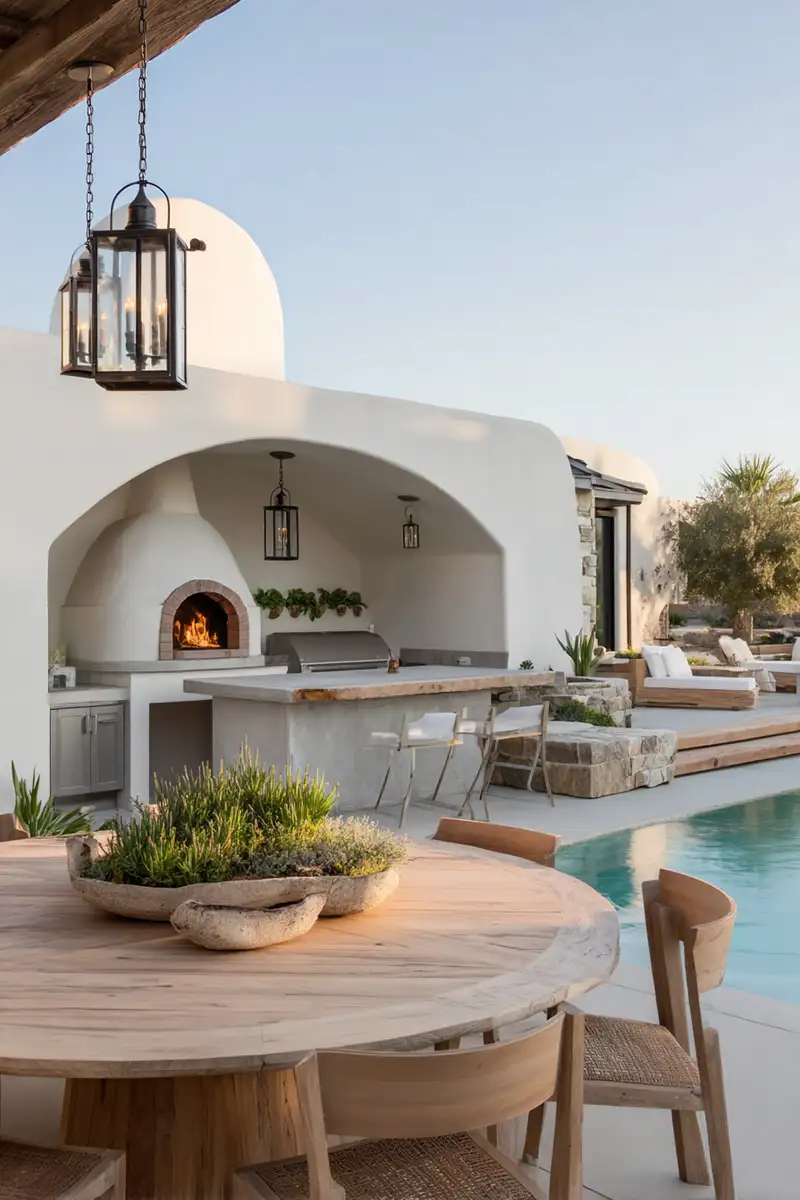
Protecting a wood-fired oven from rain usually means building a heavy, expensive roof structure.
This deep stucco arch solves the weather issue elegantly. It shields the fire and prep space but stays totally open to the breeze. The white finish keeps the deep set area from feeling like a dark cave.
2. Linear Kitchen Layouts Maximize Narrow City Lots
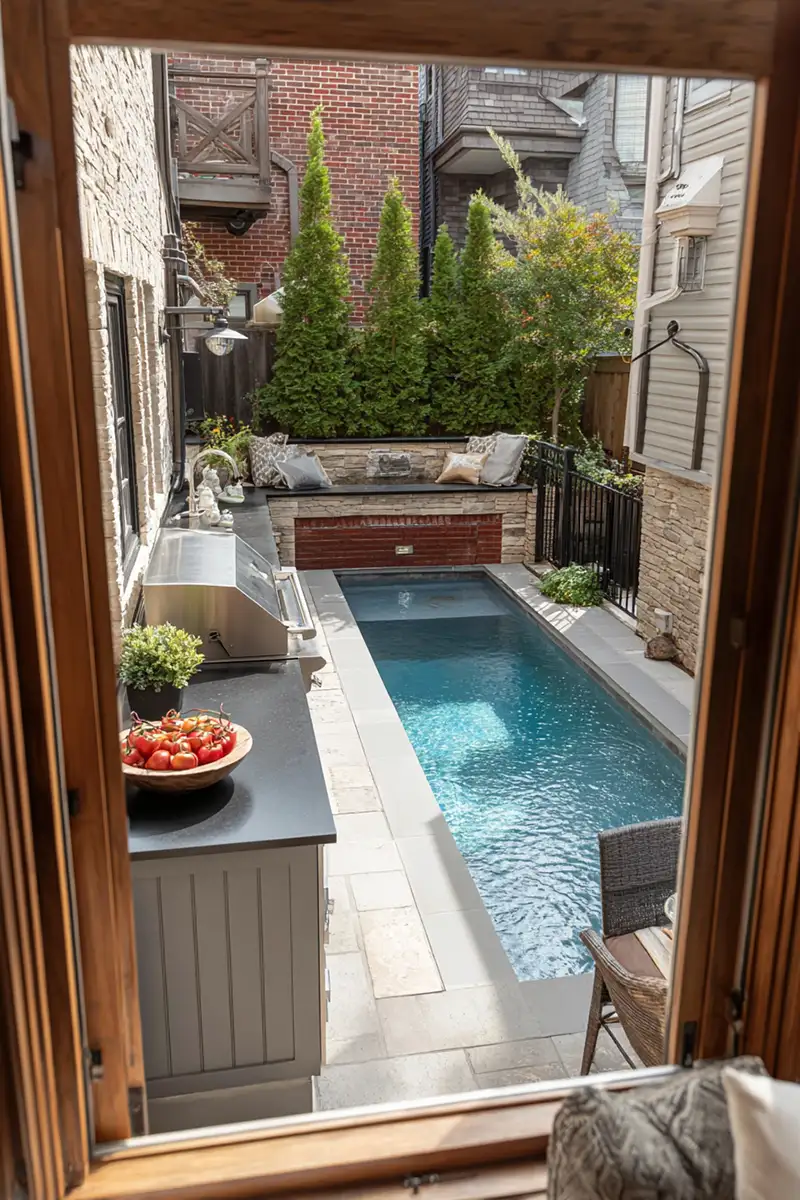
Urban backyards leave almost zero room for a pool and a grill station. Pushing a galley-style kitchen flat against the property boundary wall fixes this exact issue.
It leaves a clear path for a long lap pool right beside it. The layout is incredibly tight but highly functional. You get a full swim and a proper cooking zone without bumping elbows.
3. Sunken Prep Stations Fix Sloped Yards
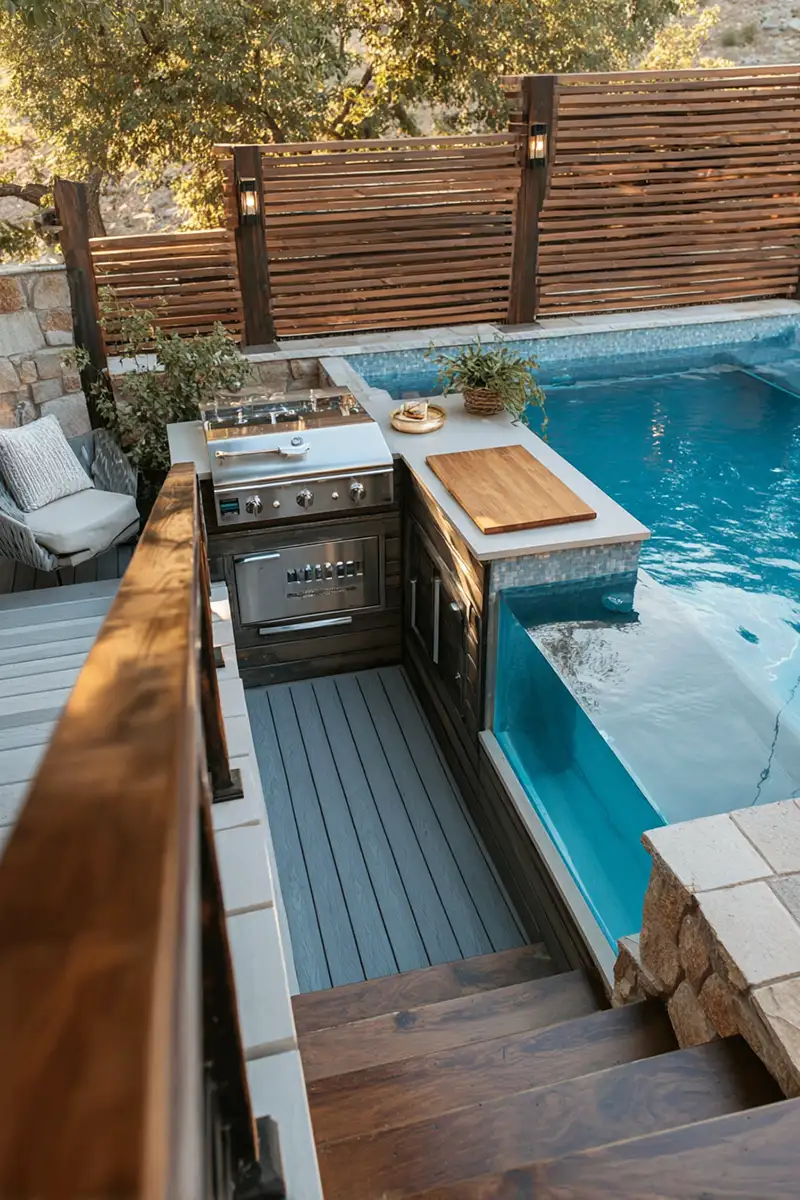
Sloped terrain makes flat patio spaces very rare. Dropping the kitchen floor down a few steps is a smart way to use the natural grade instead of fighting it.
It creates a sunken cooking zone that feels deliberate. Adding a glass pool wall right next to the counter holds back the water without blocking the view.
4. Parallel Bar Tables Keep Walkways Clear
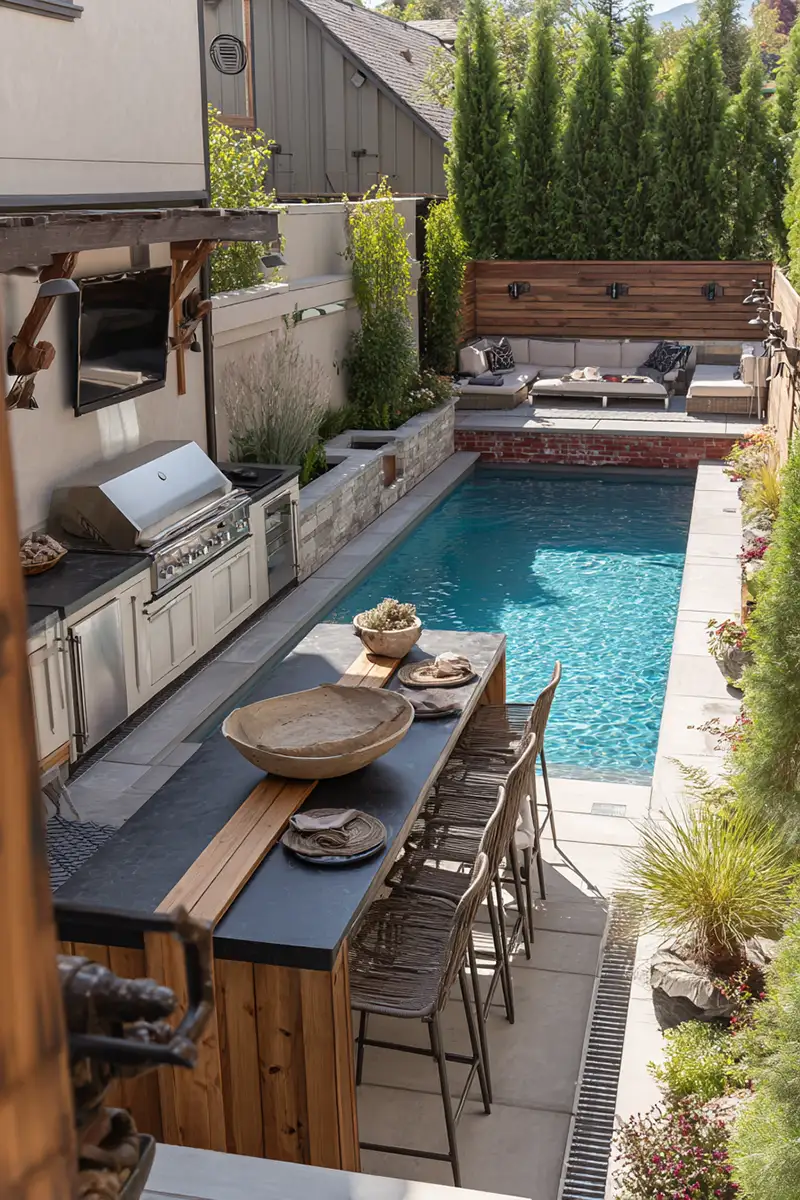
Forcing a standard dining table onto a narrow pool deck blocks the walking path. A long, skinny bar table placed parallel to the water solves the traffic jam instantly.
5. Integrated Fire Troughs Save Lounge Space
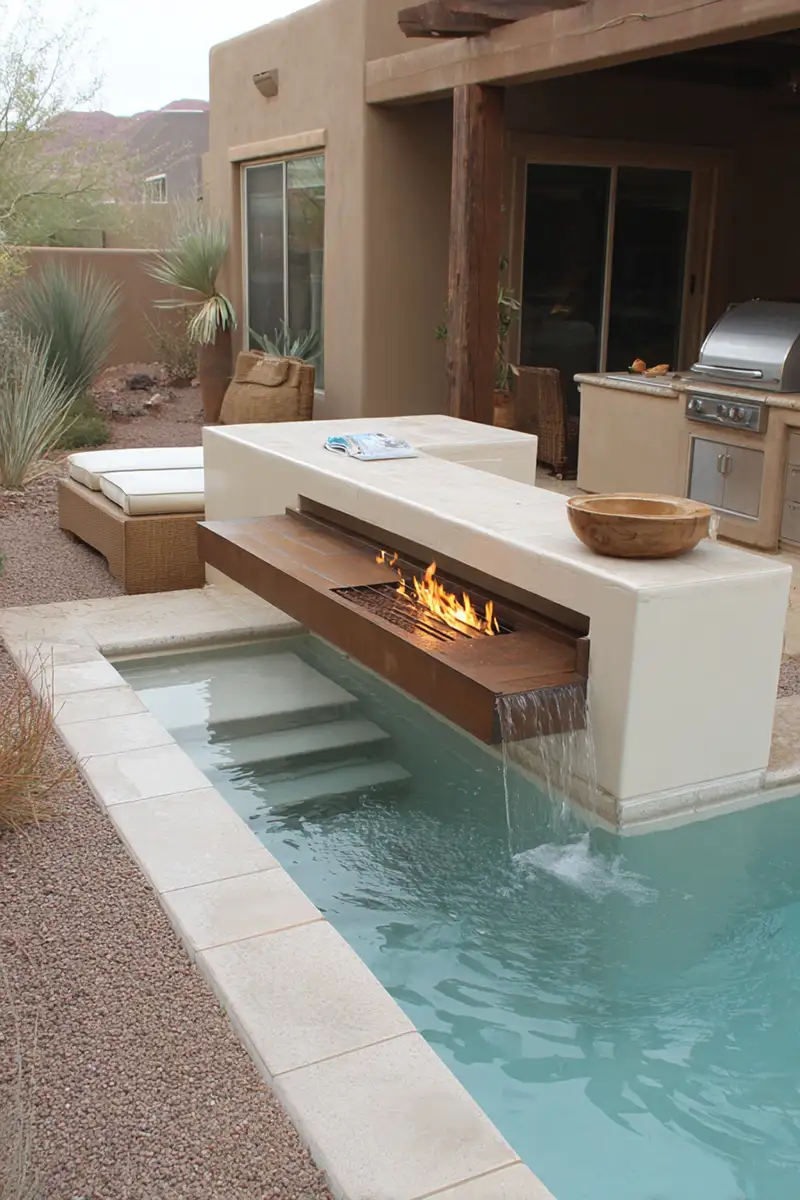
Adding fire pits often eats up valuable lounge floor space on small patios. Mounting a metal fire trough directly above the pool spillway is a brilliant alternative.
It merges fire and water into one vertical feature. You get the visual drama at night without losing any walking room.
6. Weathered Brick Grounds Modern Gear
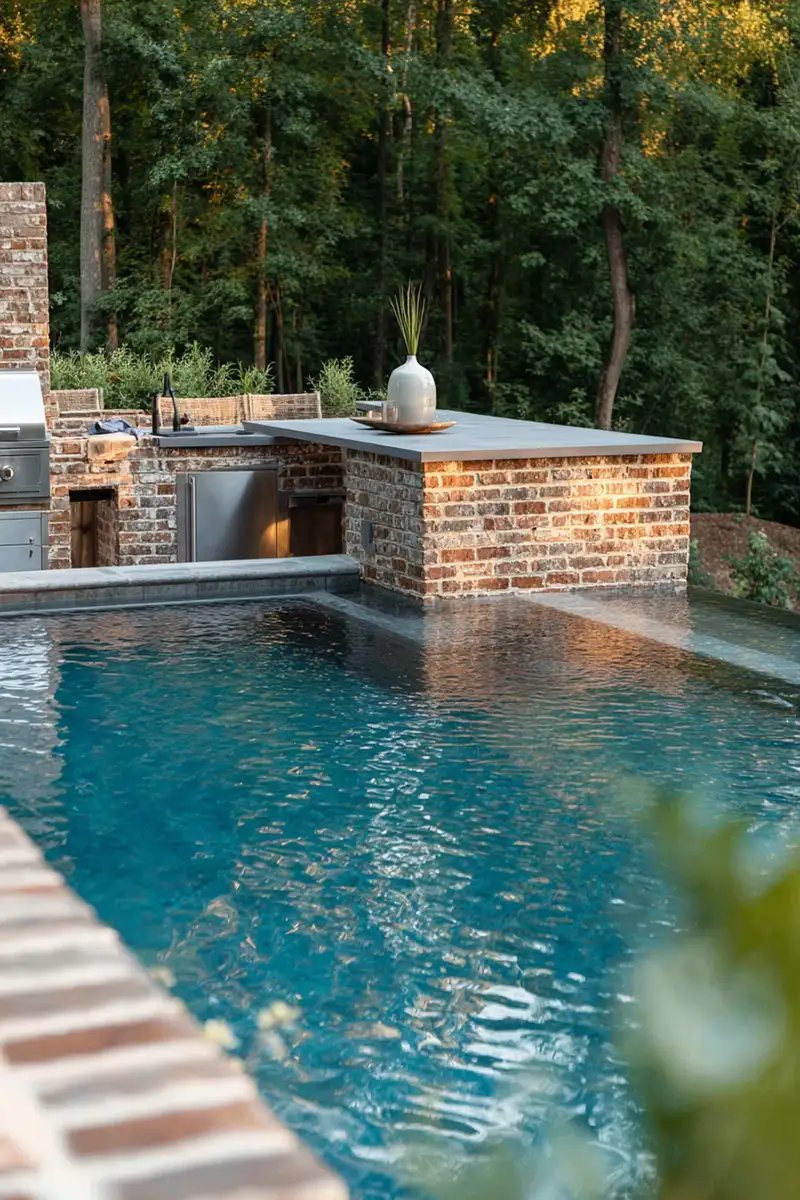
Dropping a shiny steel grill into a raw forest setting looks totally out of place. Building the outdoor kitchen base purely from weathered brick bridges that gap, making the modern gear look like it naturally belongs in the dirt.
7. Wide Counters Buffer the Splashing Zone
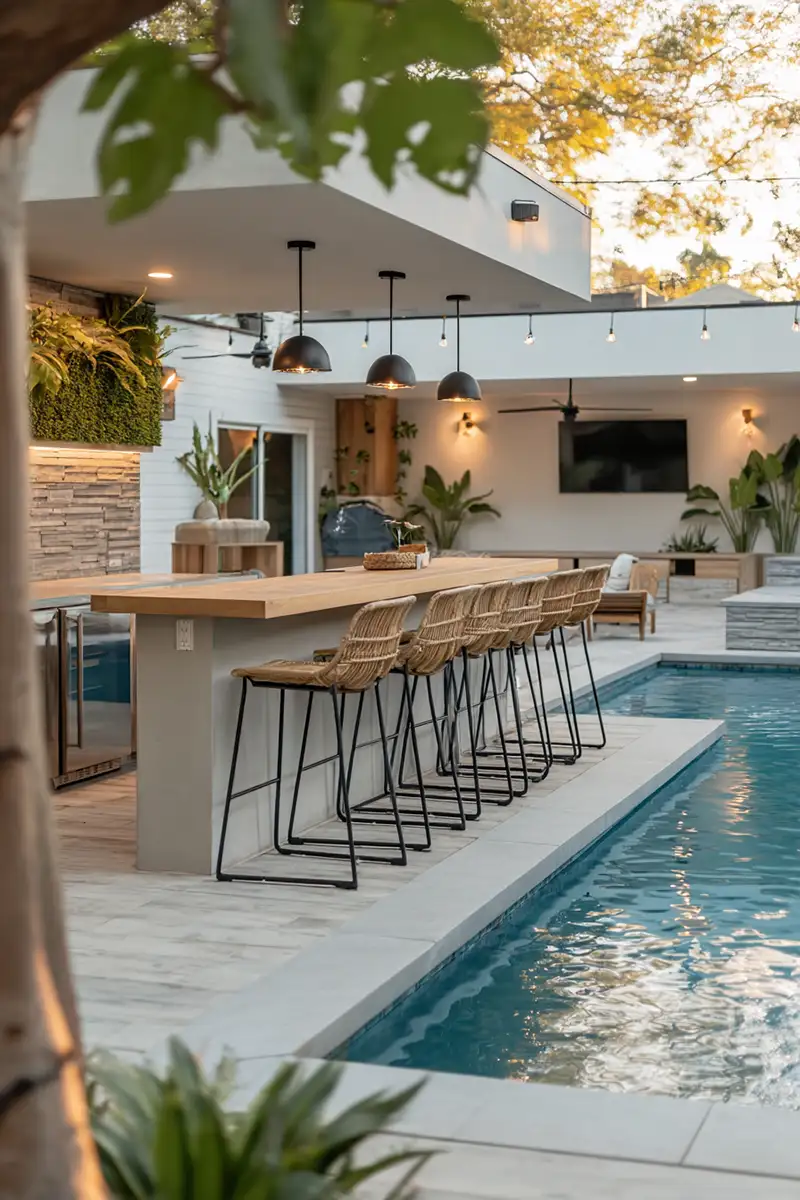
Poolside cooking means dealing with splashing water and wet guests leaning on your prep space.
A wide, raised bar counter acts as the perfect physical defense line. It gives wet swimmers a place to sit while keeping the actual cooking surface completely dry and separate. The hard roof overhead keeps the chef entirely out of the harsh midday sun.
8. Tall Chimneys Redirect Annoying Smoke
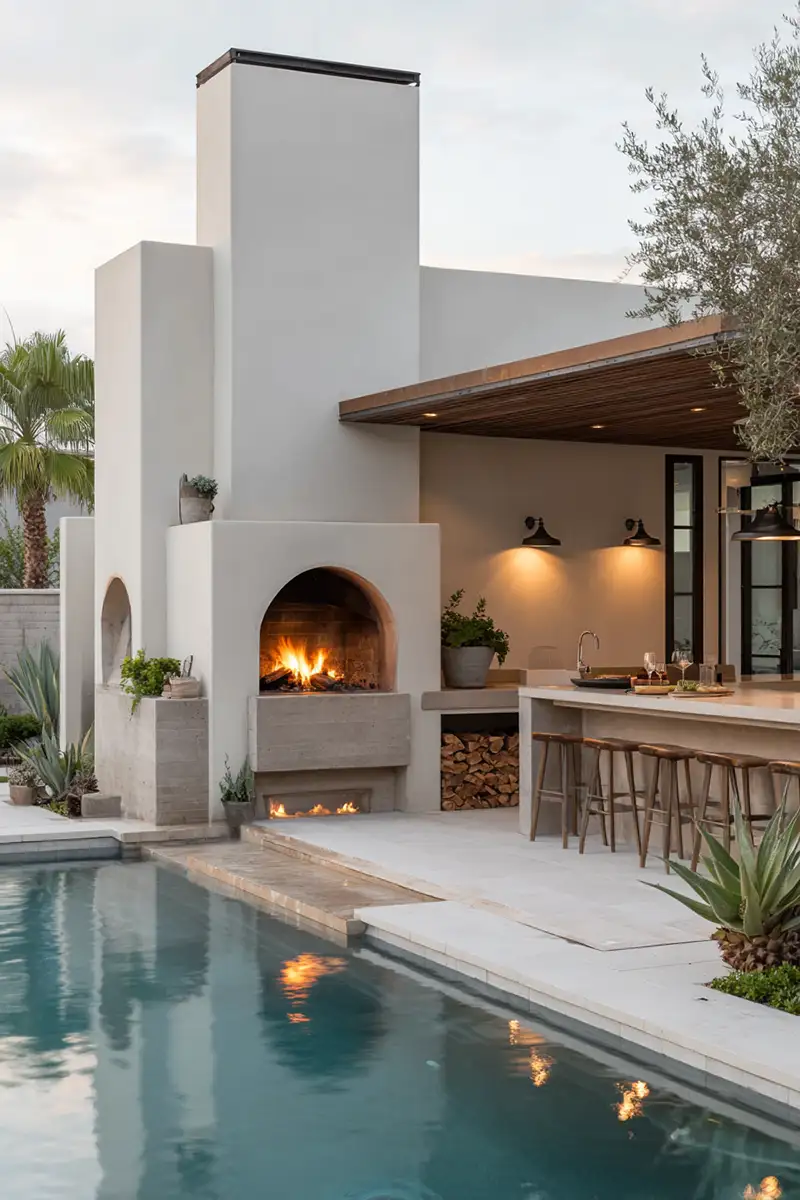
Smoke blowing directly into the faces of people swimming is a fast way to ruin a weekend party. A heavy, oversized stucco chimney pulls the draft high up and away from the water.
The solid masonry base blocks wind from messing with the fire, while the adjacent wood structure shades the main cooking zone. It controls the raw elements perfectly.
9. Stone Wrapping Upgrades Under Deck Spaces
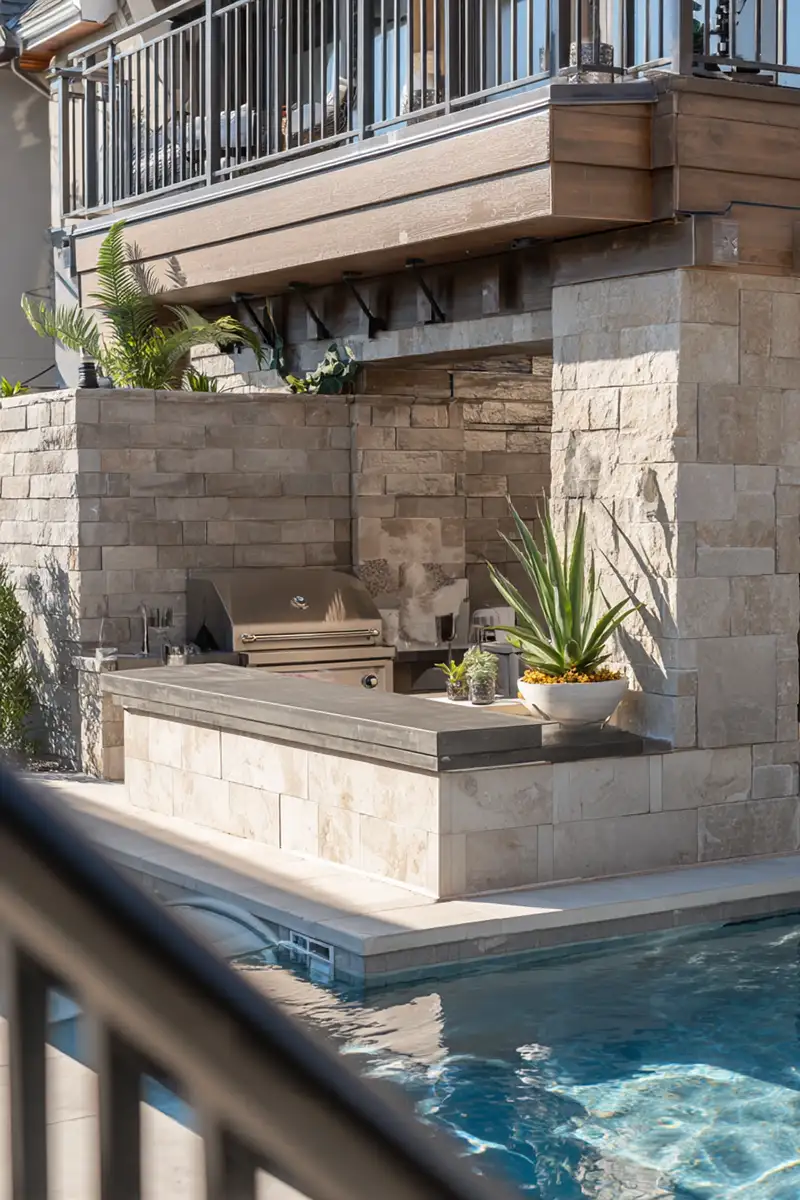
The dark dirt patch under a raised second-story deck usually goes completely to waste. Wrapping those basic support posts in stacked stone changes everything.
It creates a tough, weather-proof nook for the grill that is naturally shaded by the floor above.
10. Horizontal Wood Planks Widen Tight Corners
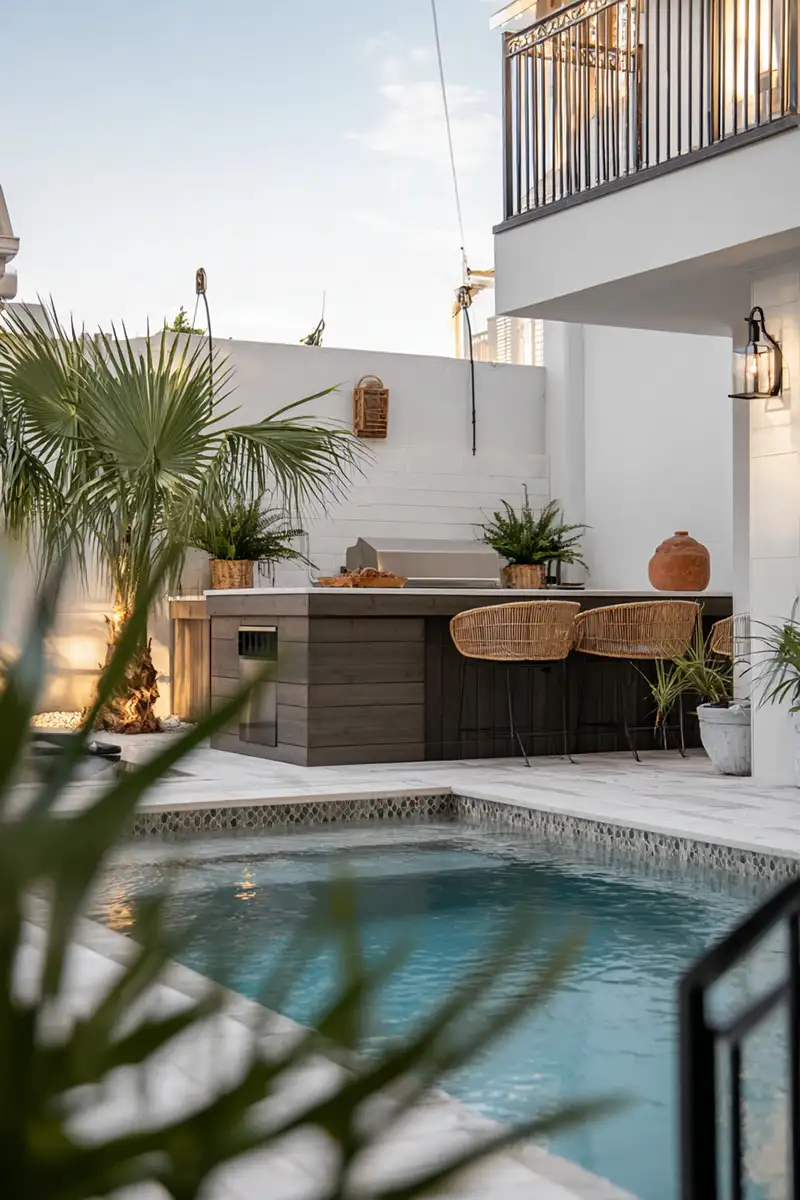
A solid stone grill island makes a walled-in courtyard feel completely boxed in. Wrapping the counter base in horizontal wood planks stretches the visual lines outward, making the tight corner feel much wider.
11. Galley Layouts Fix Tight Property Lines
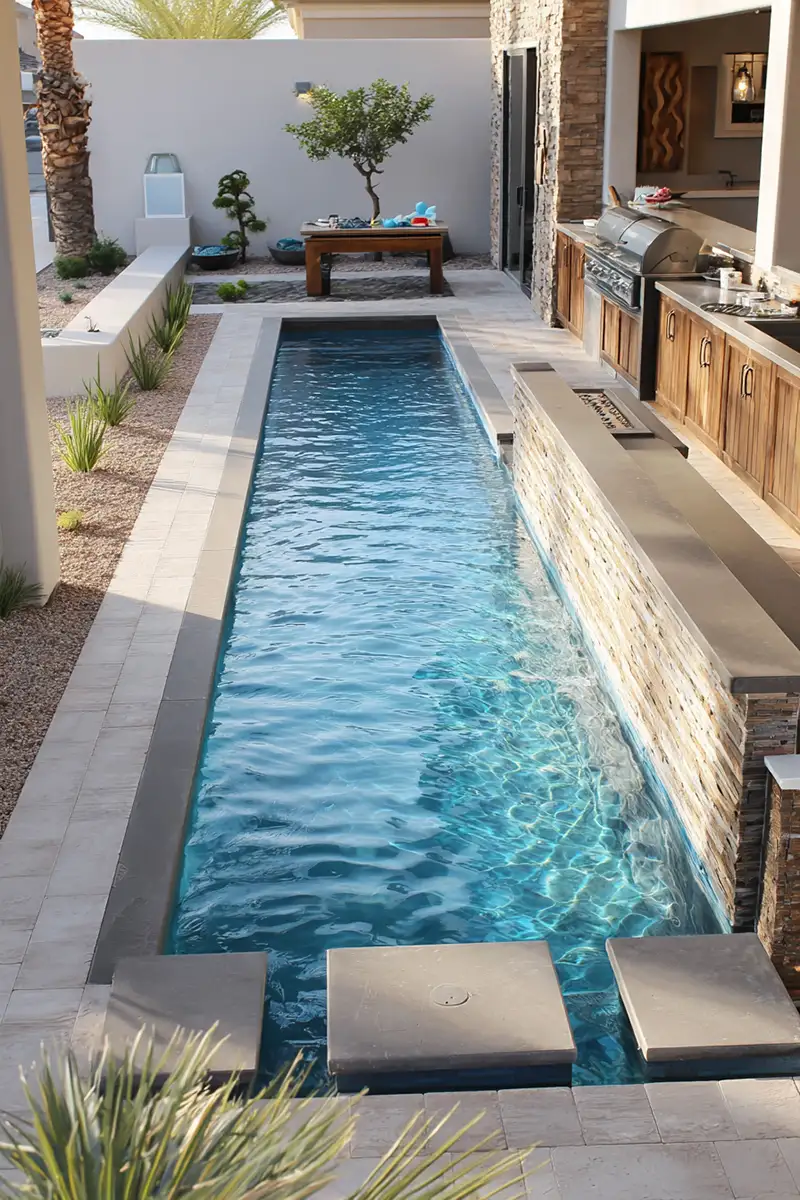
Fitting a swimming zone and a cooking area into a narrow side yard usually feels cramped and chaotic.
Pushing a straight galley kitchen flush against the house wall fixes the flow immediately.
The long stone water feature creates a solid visual boundary, keeping the wet splashing zone completely separated from the dry cooking station. This linear design uses every inch of the tight footprint without blocking the main walkway.
12. Heavy Timber Pavilions Block Summer Storms
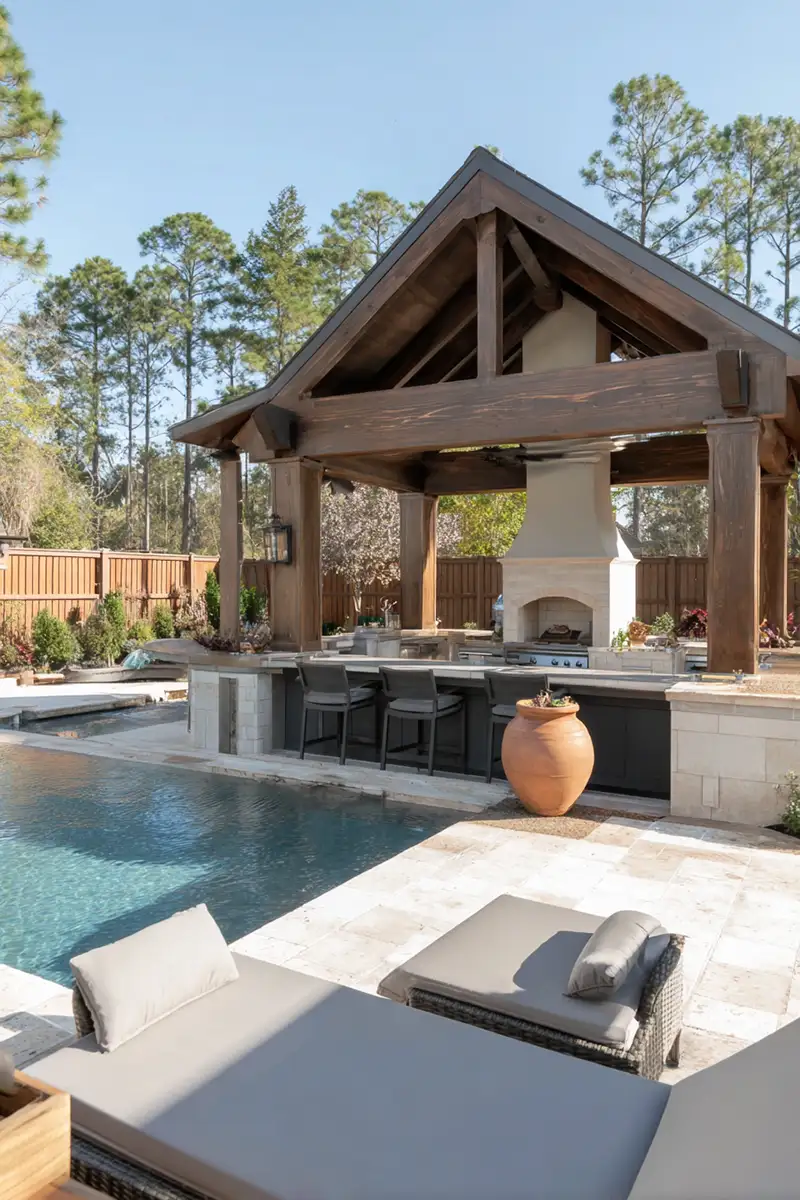
Open patios become useless during heavy afternoon rain. Building a massive timber frame structure over the main kitchen island guarantees the grilling doesn’t stop for bad weather.
The thick wooden pillars anchor the space, while the deep roof overhang keeps the expensive stainless steel appliances totally dry.
13. Sunken U Shapes Create Swim Up Prep Zones
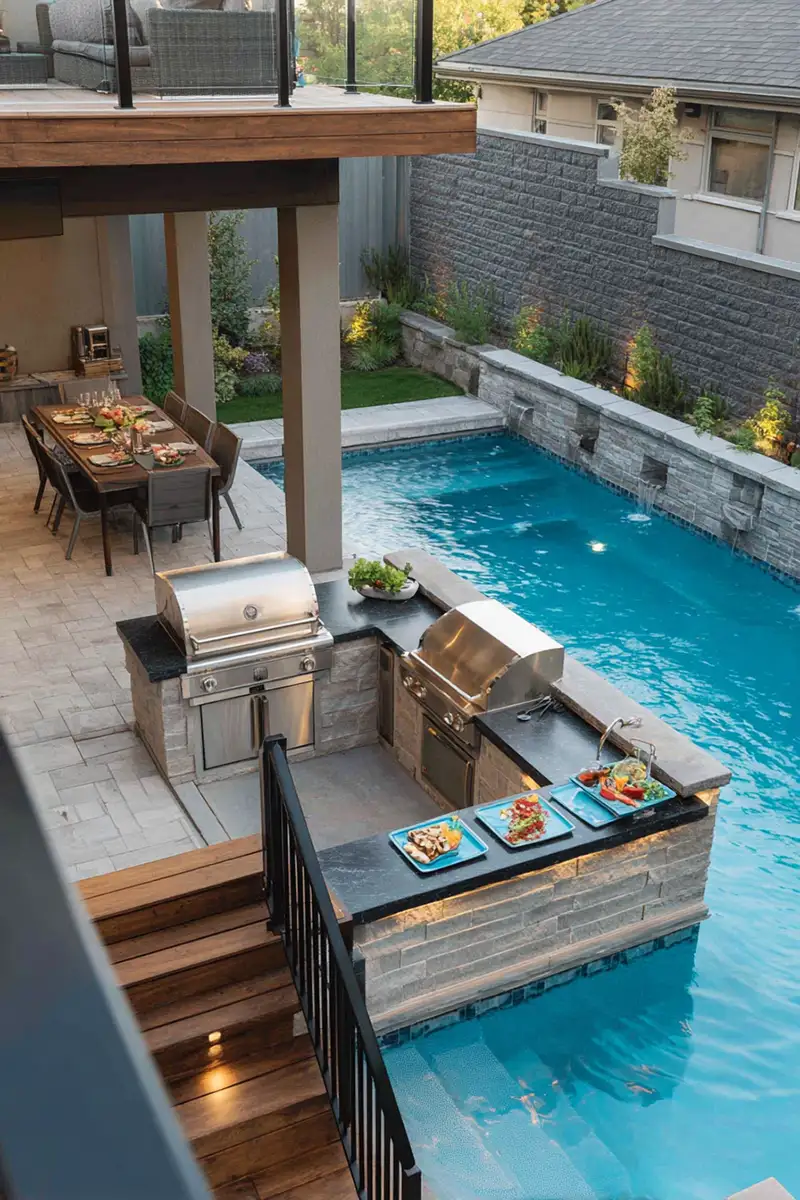
Entertaining a crowd in the water while cooking forces the chef to turn their back. Sinking a U-shaped kitchen right against the pool edge changes the dynamic.
It puts the cooking surface at eye level with the swimmers, turning meal prep into an interactive swim-up experience.
14. Covered Pizza Ovens Keep Dining Areas Clear
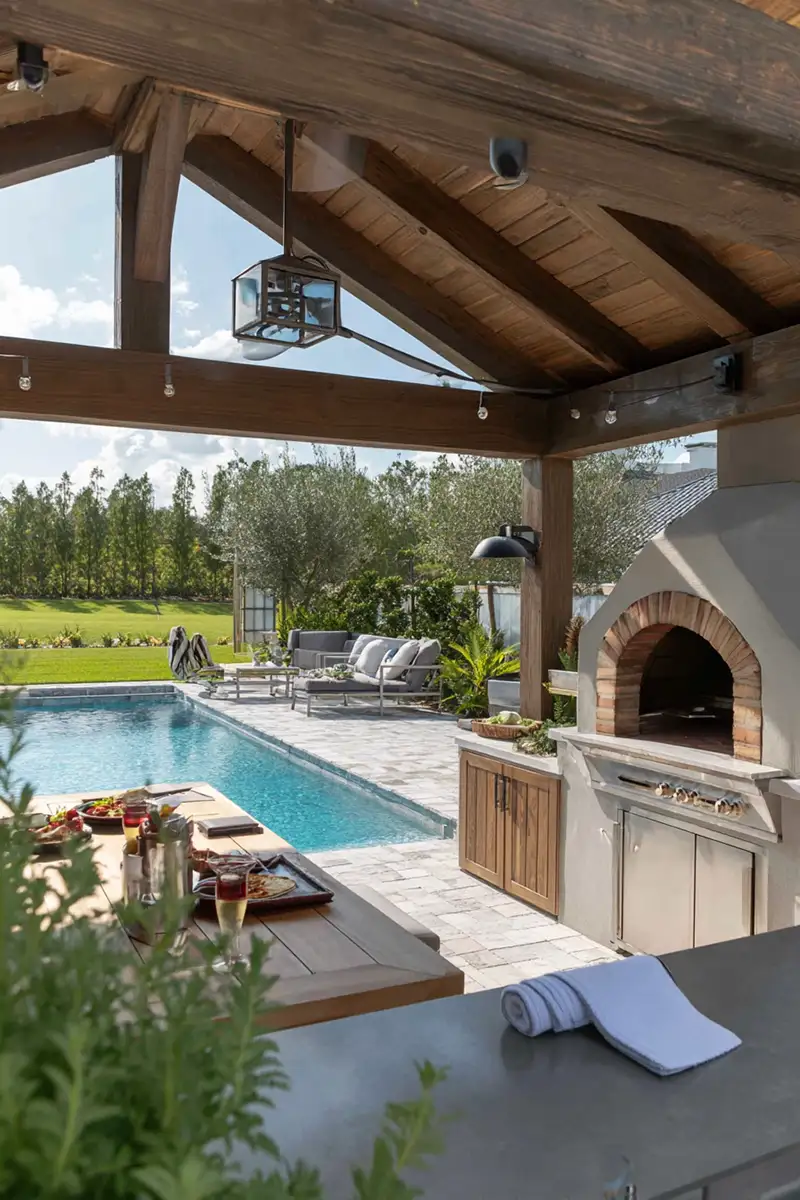
Keeping prep gear away from wet pool decks is tricky. Tucking the heavy stone oven back under a solid roof creates a dedicated dry zone, leaving the exposed patio open for simple dining.
15. Towering Chimneys Control Urban Backyard Smoke
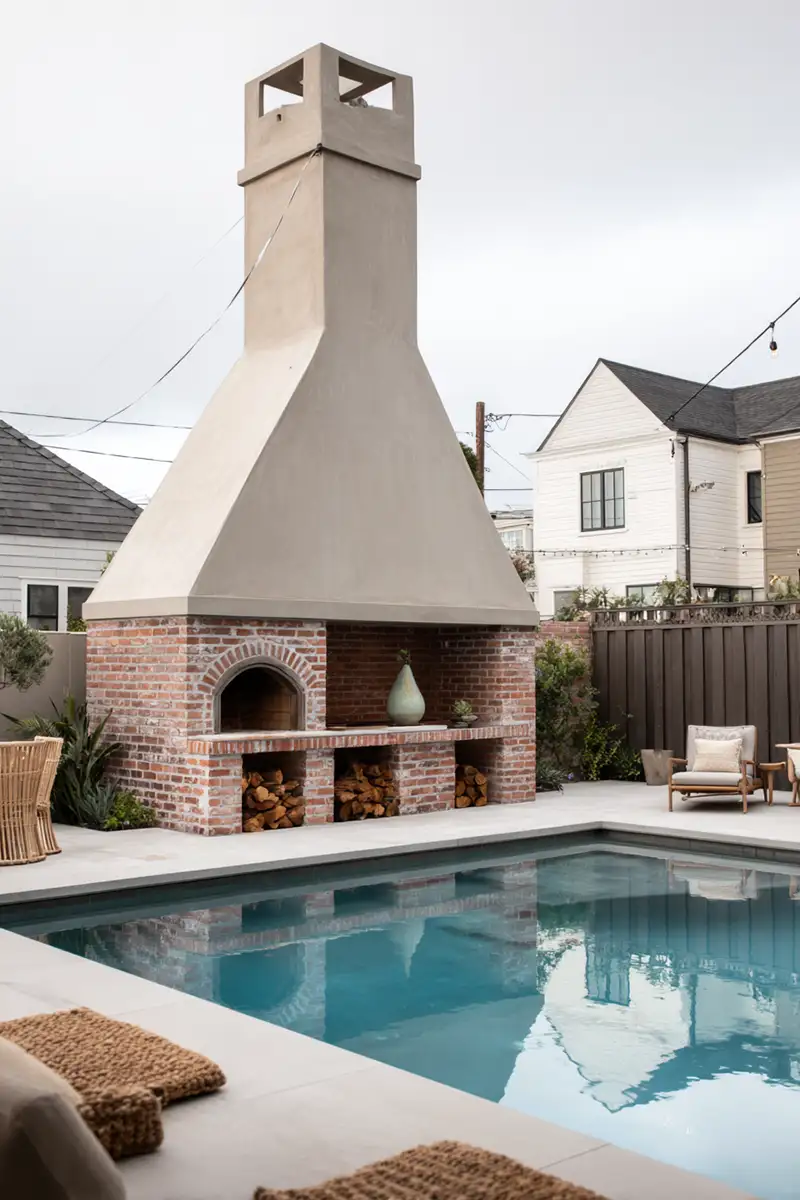
Wood-fired cooking in a dense neighborhood often leads to angry neighbors dealing with thick smoke. Building an oversized, towering stucco chimney directly above the brick oven drives the exhaust straight up and out of the yard.
The heavy brick base also provides essential dry wood storage right where you need it, preventing logs from getting ruined by poolside splashes. It is a highly practical way to handle raw fire near a tight property line.
16. Rough Stone Islands Blend Into Hillside Drops
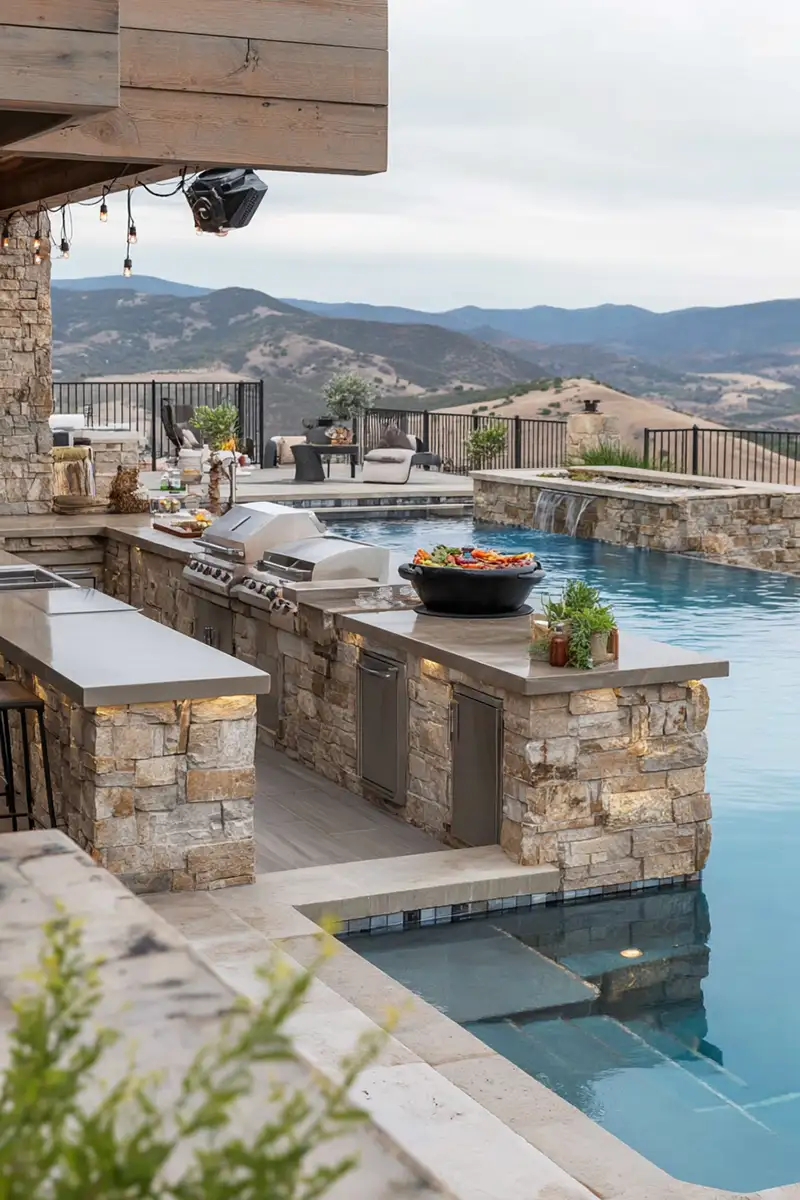
Perching a kitchen on a steep hillside deck often blocks the incredible natural view. Dropping the cooking floor down a few feet and wrapping the island in rough, natural stone solves the visual obstruction.
The station blends right into the rugged terrain, keeping sightlines totally clear for the people lounging in the water.