Many see a sloped backyard as a landscaping headache, but in the world of high-end urban gardening, a vertical incline is actually your greatest architectural asset. Forget the struggle with gravity; it’s time to embrace the dimension. We’re moving beyond the humble mud-patch and into the realm of the “structured sanctuary.” Imagine tiered cedar decks that double as harvest hubs, modular seating carved into the hillside, and sleek textures that merge al fresco dining with the dirt. These 19 designs aren’t just about growing food—they’re about curating an outdoor lifestyle that feels both aspirational and grounded in realistic garden realism. Let’s elevate your harvest.
1. Modern Minimalist Terrace with Integrated Edible Borders
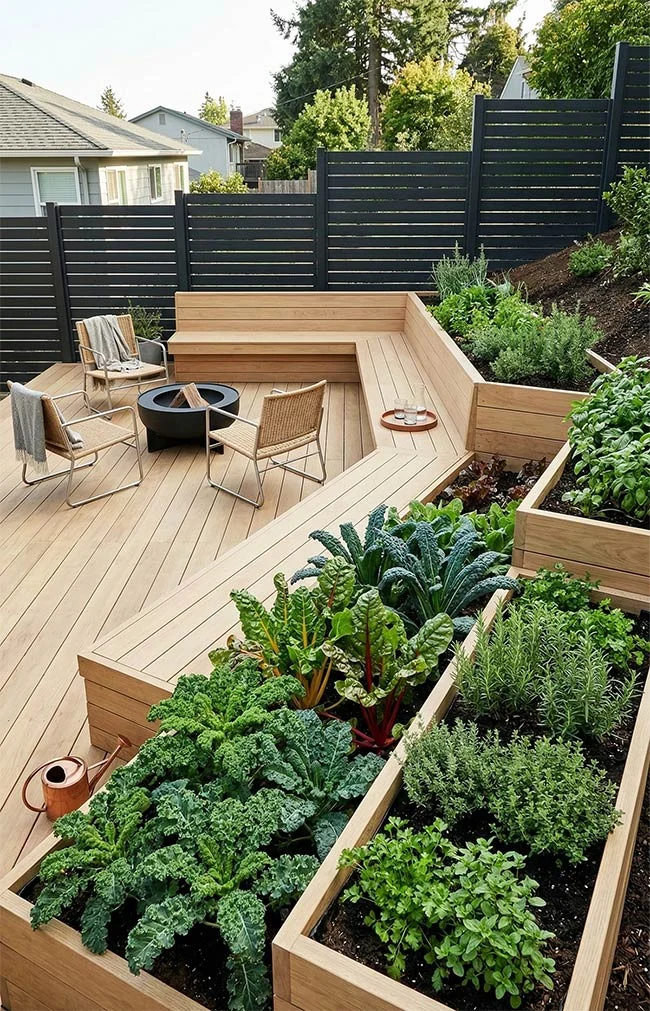
This design perfectly illustrates the “social harvest” trend, where edible gardens are seamlessly integrated into high-end entertainment zones. By using light-toned wood for both the seating and the raised beds, the transition between lounging and gardening becomes invisible. I’ve found that using high-contrast black slatted fencing provides a crisp, architectural backdrop that makes the vibrant greens of kale and chard look like intentional art pieces rather than just food.
2. The Gravity-Defying Floating Deck & Hillside Orchard
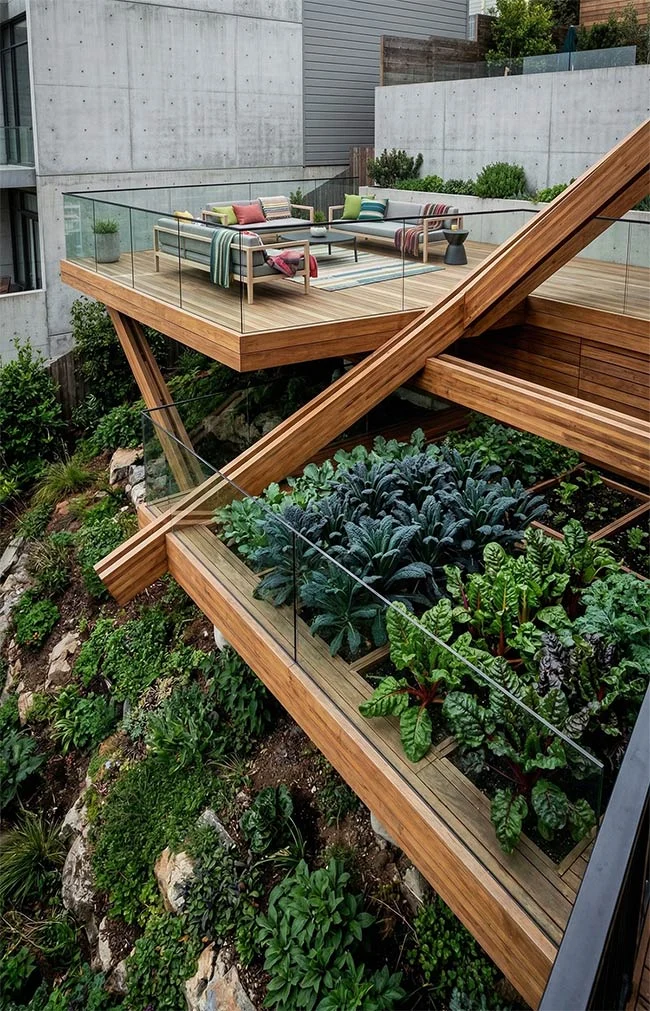
Architectural floating decks are the ultimate solution for steep hillsides where traditional retaining walls might feel too heavy or obstruct natural drainage. By elevating the lounge area with glass railings, you preserve the view while allowing the garden below to breathe and receive adequate airflow. This “multi-story” approach to urban farming is something I always recommend for luxury properties—it treats the slope as a vertical asset rather than an obstacle, effectively doubling your usable square footage while creating a dramatic, cantilevered aesthetic.
3. Modular Staggered Seating & Planter Landscape
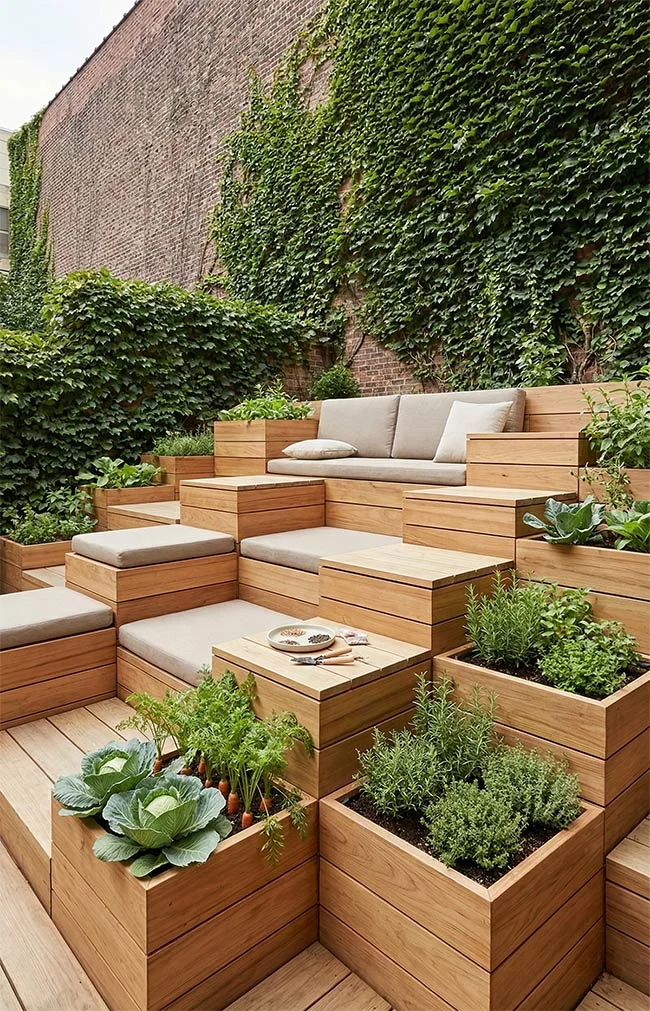
In my years of analyzing urban landscapes, I’ve seen that multifunctionality is the hallmark of great design. Here, the tiered wood modules serve as stairs, seating, and planters all at once. This “living furniture” concept is brilliant for small urban slopes because it eliminates clutter while creating a cozy, sunken feel that’s perfect for intimate gatherings.
4. Architectural Glass Skywalk Over Geometric Harvest Beds
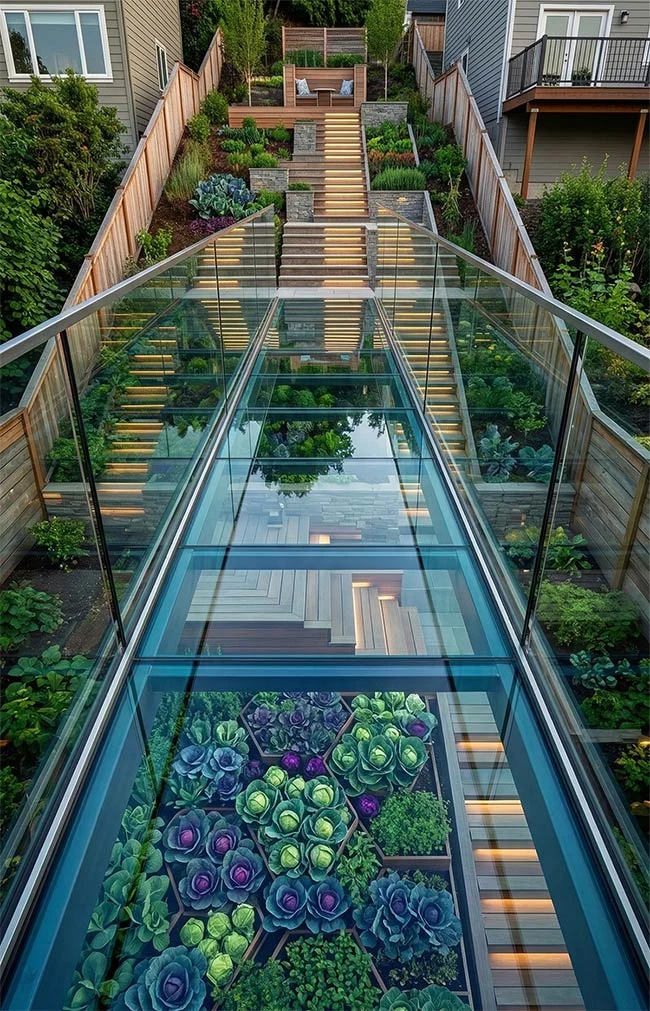
One of the biggest technical challenges in urban sloped gardens is maintaining sunlight for the plants at lower levels. This glass bridge is a masterclass in architectural problem-solving, turning a functional walkway into a gallery-like experience. Not only does it provide a breathtaking vantage point to admire the geometric perfection of the cabbage beds, but it also ensures 100% light penetration. This is the gold standard for high-end landscapes—it allows you to layer your harvest without sacrificing the health of the plants growing directly beneath your feet.
5. Sunken Atrium Garden: A Subterranean Urban Oasis
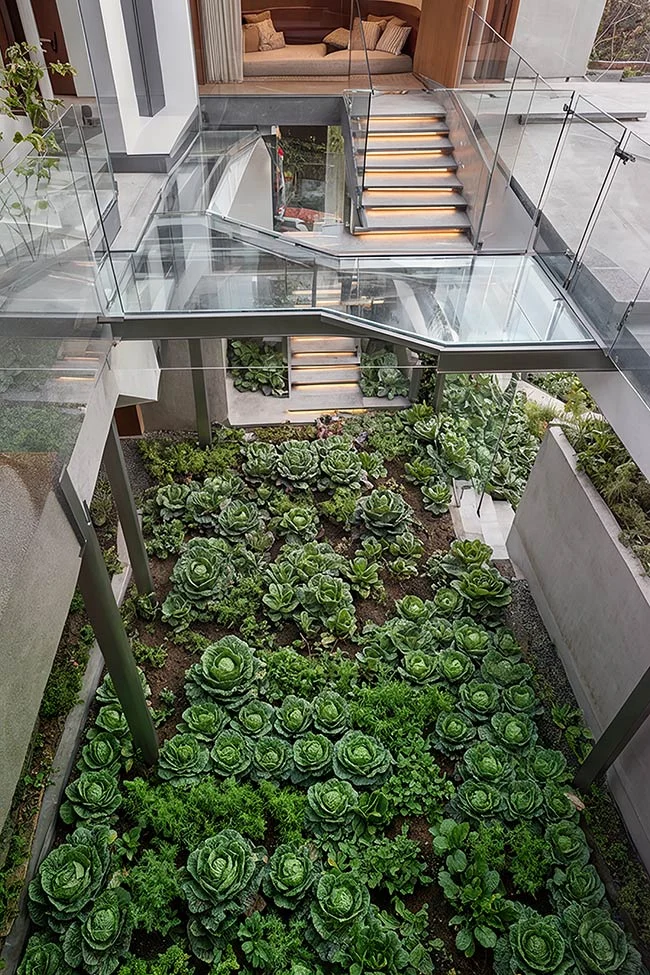
The sunken atrium garden creates a private microclimate that protects delicate vegetables from harsh urban winds while offering a stunning view from inside the home. By utilizing concrete and glass, the design traps heat during the day and releases it at night, which is an expert-level move for extending the growing season of heat-loving crops. It’s an ambitious architectural statement that turns the “basement” level of a slope into the most vibrant and productive part of the entire property, proving that even subterranean spaces can be transformed into lush, edible oases.
6. Sculptural Floating Concrete Discs in a Sloped Landscape
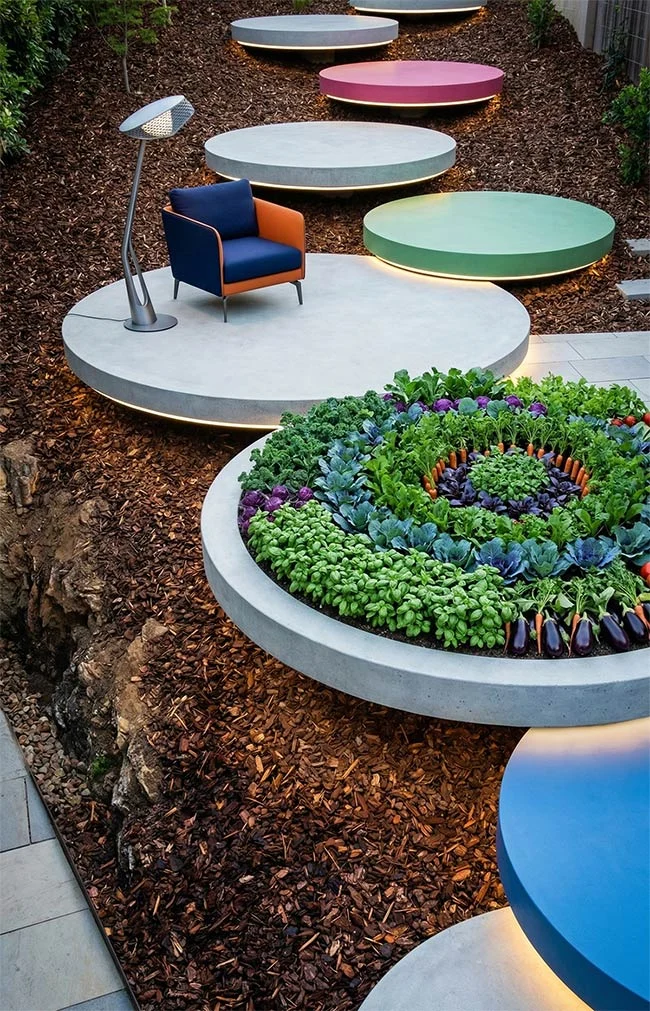
Why stick to rectangular beds when you can use sculptural floating discs? These colorful concrete platforms serve as both stable access paths and mini-stages for specific crops, breaking up the linear monotony of a slope with a playful, avant-garde aesthetic.
7. Geometric Grid Rooftop Terrace for Systematic Farming
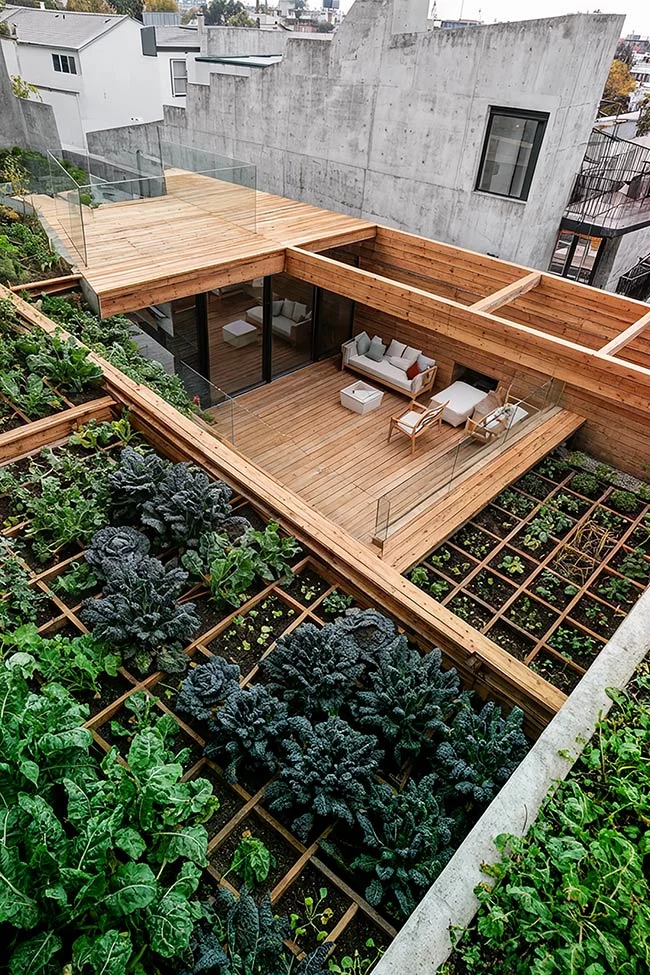
This rooftop grid system is the epitome of organized urban self-sufficiency, offering a clean, systematic approach to high-density farming. The uniform boxes make it easy to manage soil quality and crop rotation on a large scale, which is essential for maintaining a healthy harvest in an urban environment. It’s a professional-grade setup that proves urban farming can be as orderly and aesthetically pleasing as any high-end interior.
8. Concentric Corten Steel Rings Around a Central Fire Pit
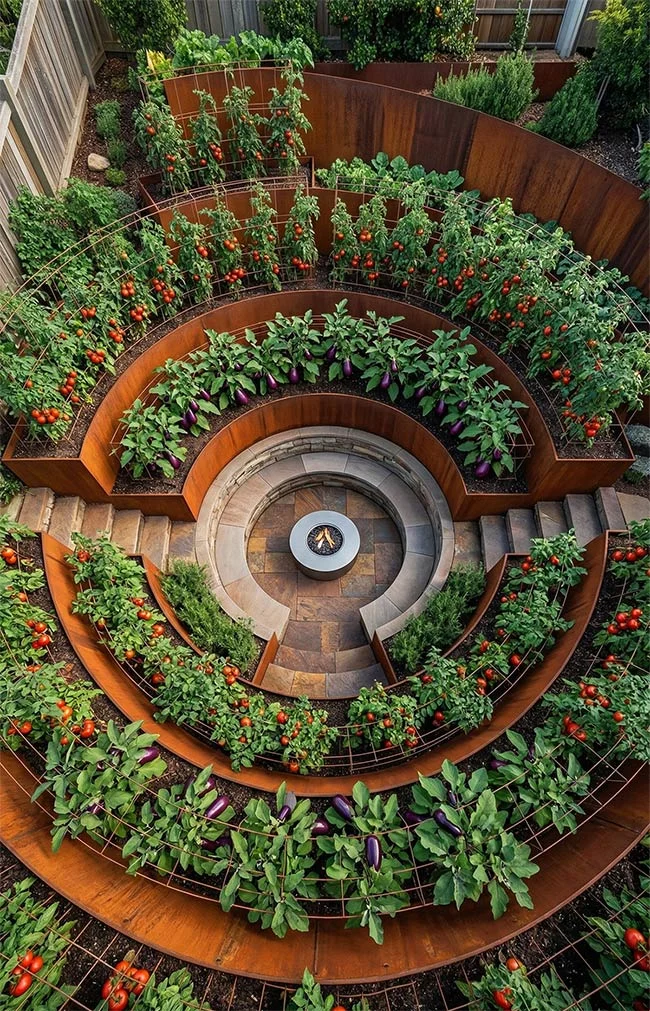
Concentric Corten steel rings are a personal favorite for sloped yards because they act as highly efficient retaining walls while adding a rich, earthy texture to the landscape. The warm, rust-colored patina creates a stunning visual contrast against the deep purples of eggplants and dark greens of tomato vines. I’ve observed that the thermal mass of the steel also helps regulate soil temperature, giving your veggies a slight edge during cooler nights—a subtle but effective expert trick for maximizing yield in temperate climates.
9. Tiered Social Dining Area with Vertical Green Wall Accents
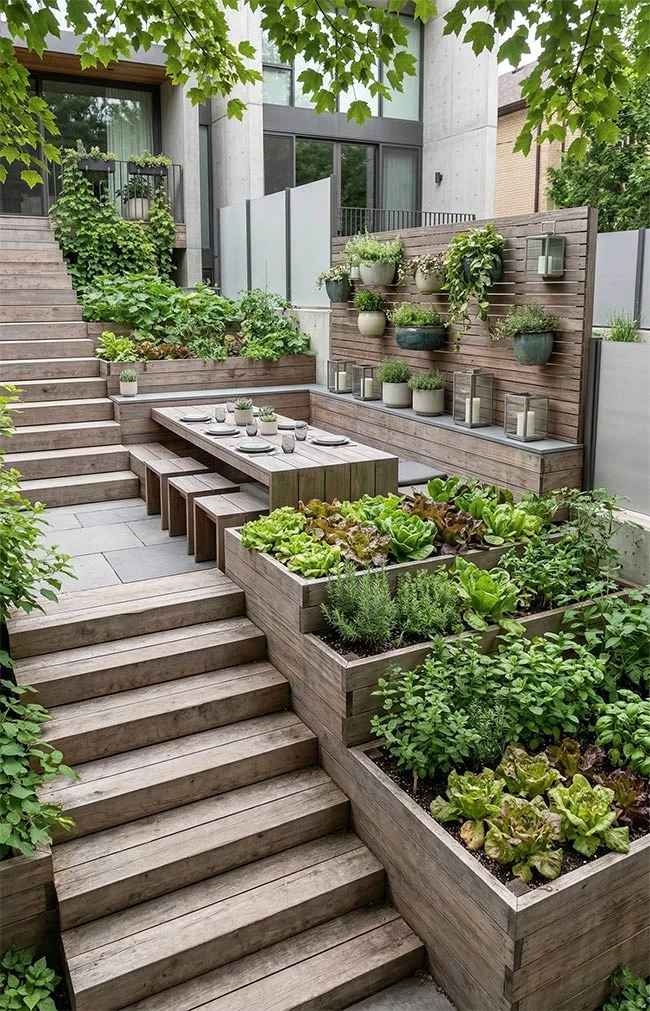
Tiered social dining areas prove that “farm-to-table” can literally mean a distance of zero feet. By placing the dining table right next to the herb-filled raised beds, you create an immersive sensory experience for your guests. Integrating a vertical slatted wall for hanging pots is a smart way to maximize the harvest without encroaching on the seating area.
10. Sculptural Staggered Modules for Steep Urban Inclines
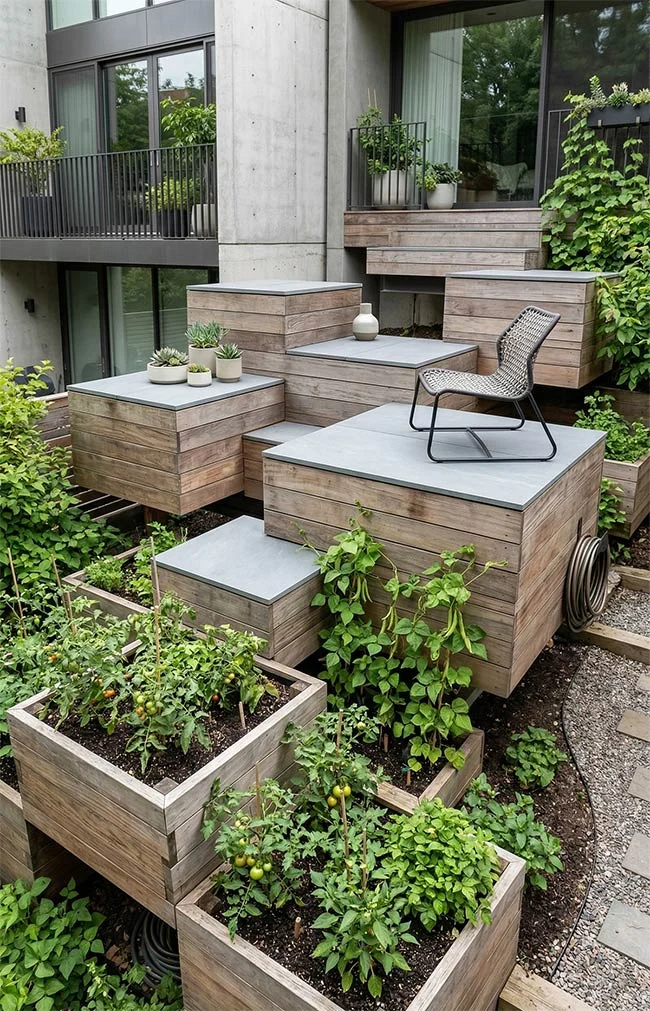
These sculptural staggered modules are ideal for extreme inclines where traditional gardening is nearly impossible. By treating the slope as a series of geometric cubes, you create a stable, accessible, and visually striking landscape that doubles as an outdoor lounge. Each module acts as an independent ecosystem, allowing for precise control over drainage and soil types, which is essential for a successful and diverse urban harvest on a steep lot.
11. Circular Stone Patio with Radial Harvest Tiers
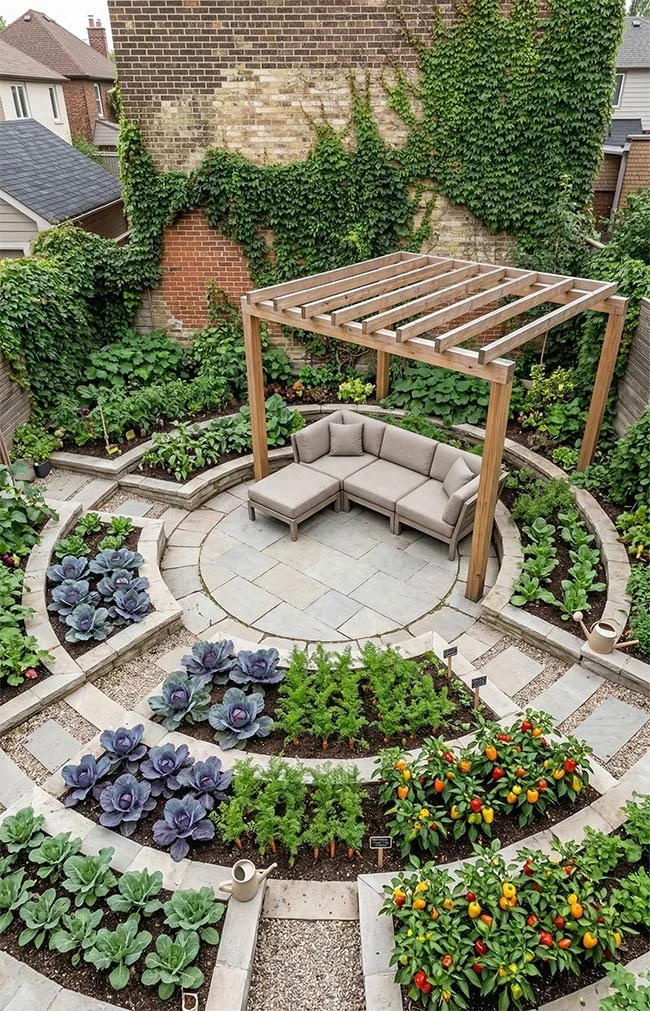
A circular stone patio serves as the perfect geometric anchor for radial harvest tiers. This layout isn’t just aesthetically pleasing; it creates a communal focal point where you can sit under a pergola and be literally surrounded by your food. From a designer’s perspective, the radial design ensures that every plant receives equal attention and simplifies the installation of a central irrigation hub, which is a massive time-saver for busy urban gardeners.
12. Sunken Garden Sanctuary with Woven Textures
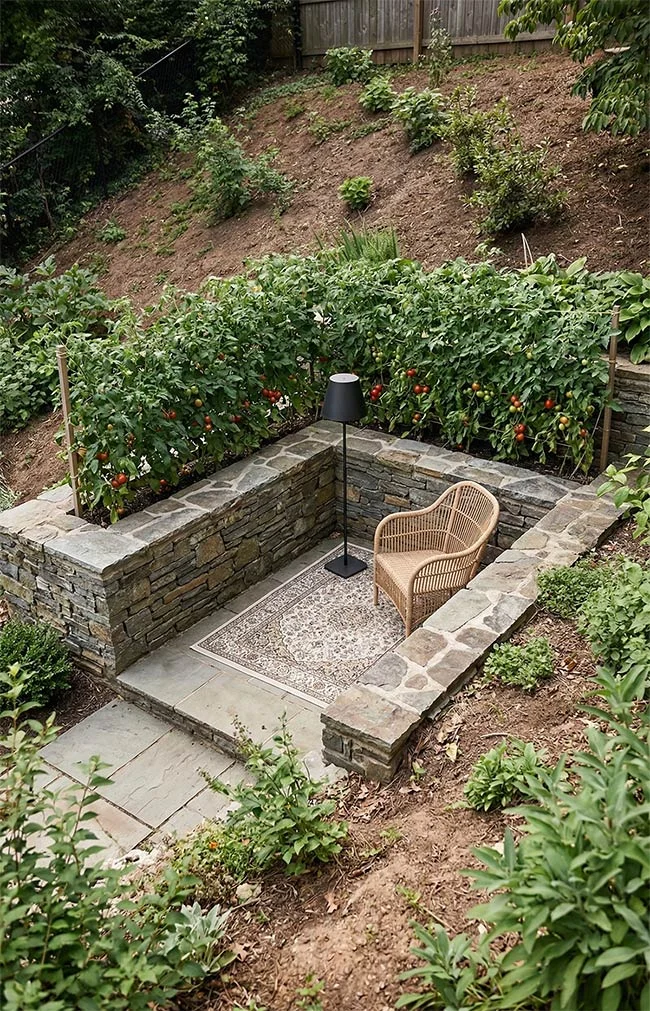
Sunken garden sanctuaries offer a unique psychological sense of “enclosure” and safety. By carving a seating area directly into the slope and lining it with stone, you create a natural windbreak that allows you to enjoy the outdoors even on breezier days. Adding a woven rug and a minimalist lamp transforms a simple retaining wall into a high-end outdoor living room that feels deeply connected to the surrounding soil.
13. Slatted Wood Privacy Screen with Integrated Herb Shelving
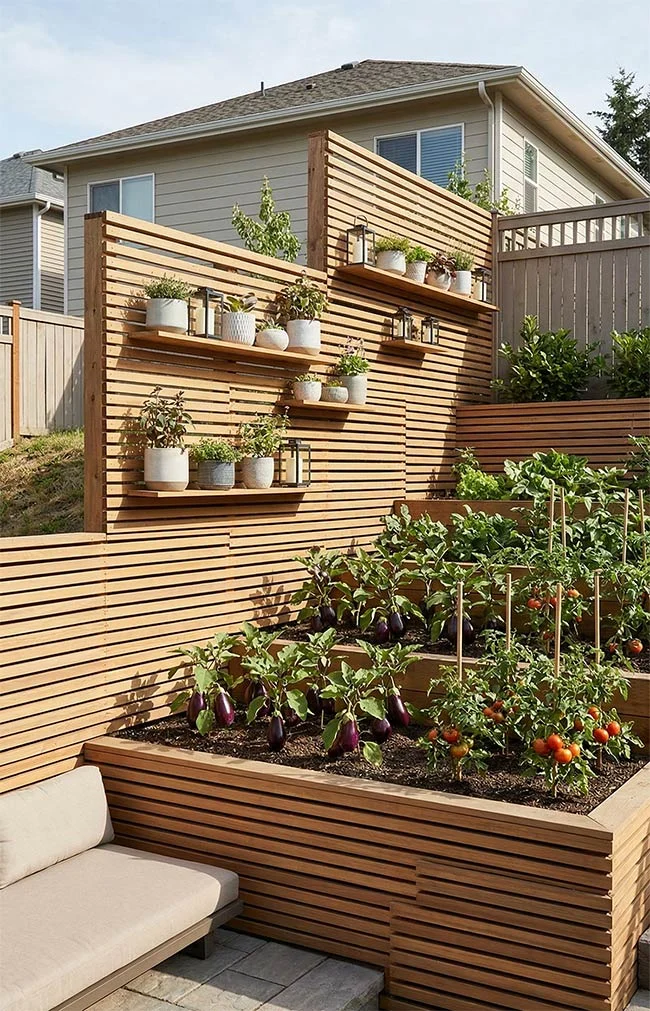
Verticality is the urban gardener’s best friend. This slatted wood screen provides privacy from neighbors while the narrow shelves allow you to display prized herbs like art. The horizontal gaps between the slats are crucial for EEAT-compliant design—they ensure proper air circulation, which prevents fungal diseases in high-density vegetable tiers.
14. Modern Noir Garden with Glass Greenhouse Centerpiece
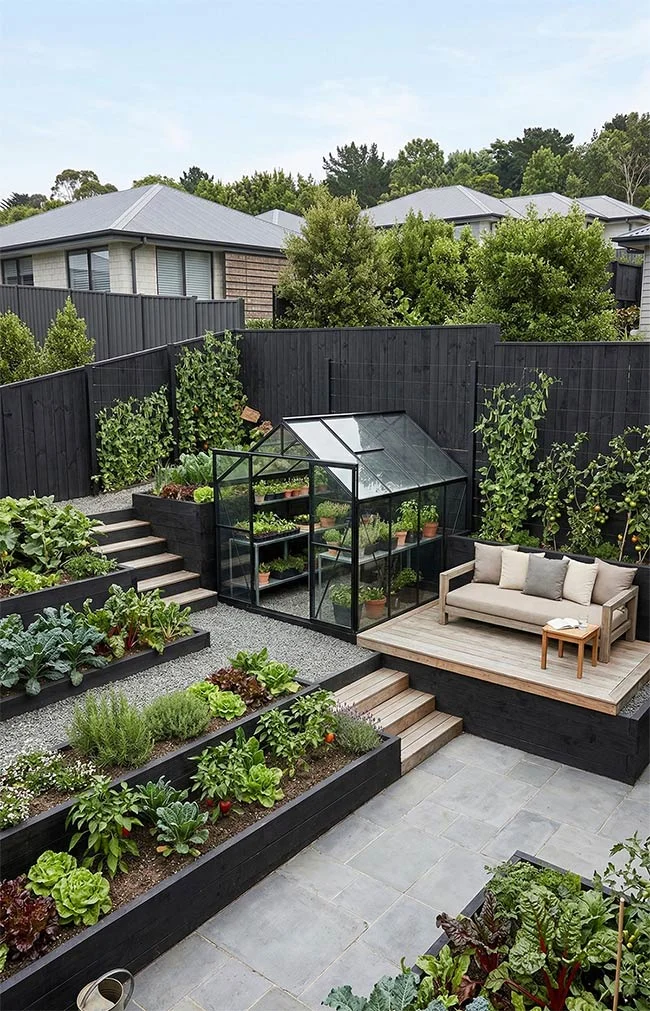
Modern noir gardens use black-stained wood and dark metal to make the vibrant greens of a harvest truly “pop.” A glass-walled greenhouse acts as a luminous centerpiece, extending your growing season into the colder months while providing a professional-grade space for starting delicate seedlings. It’s a sophisticated, architectural approach that treats the garden as an extension of the home’s interior design.
15. Grand Timber Staircase with Built-in Planting Pockets
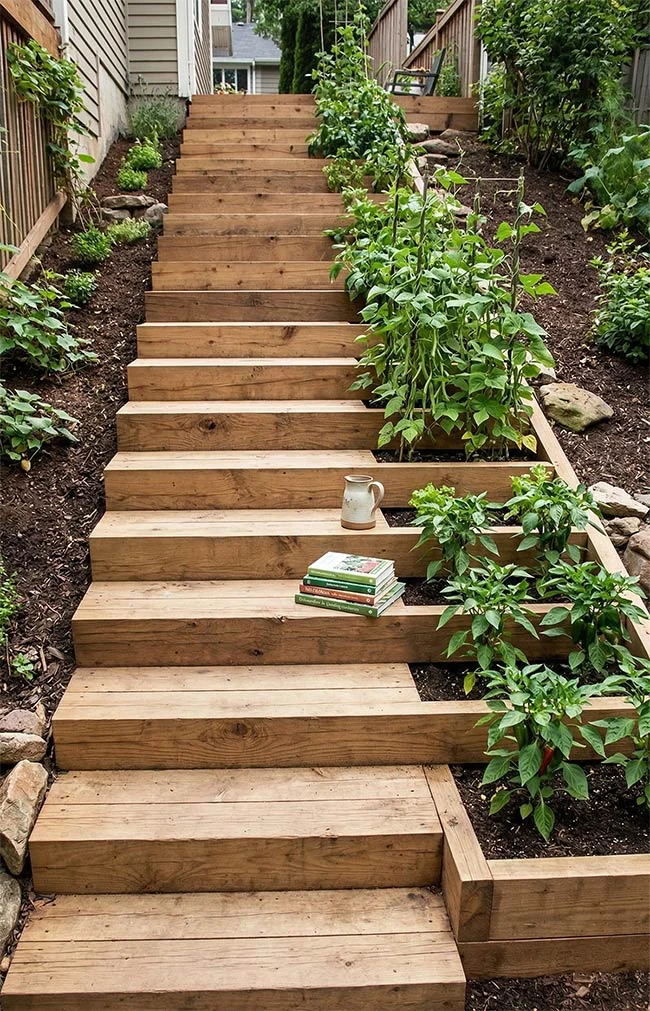
Grand timber steps with integrated planting pockets turn a functional transit route into a productive vertical farm. This design allows you to harvest peppers and beans at chest height, eliminating the need to bend over and making the “chore” of gardening a much more ergonomic experience.
16. Winding Corten Steel Path and Fire Pit Lounge
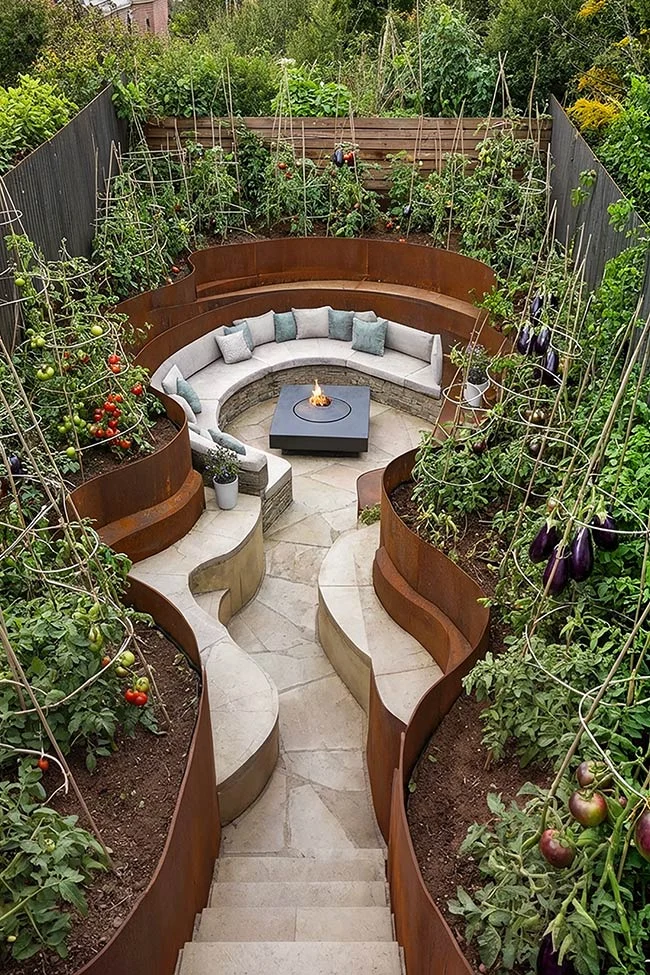
Winding paths increase the “perceived size” of a small urban lot. By using organic, S-curved Corten steel walls, you lead the eye on a journey through tomato cages toward a central fire pit. This layout encourages movement and exploration, making a steep, narrow yard feel like a curated botanical park rather than a cramped hillside.
17. Symmetrical Circular Garden with Architectural Concrete Seating
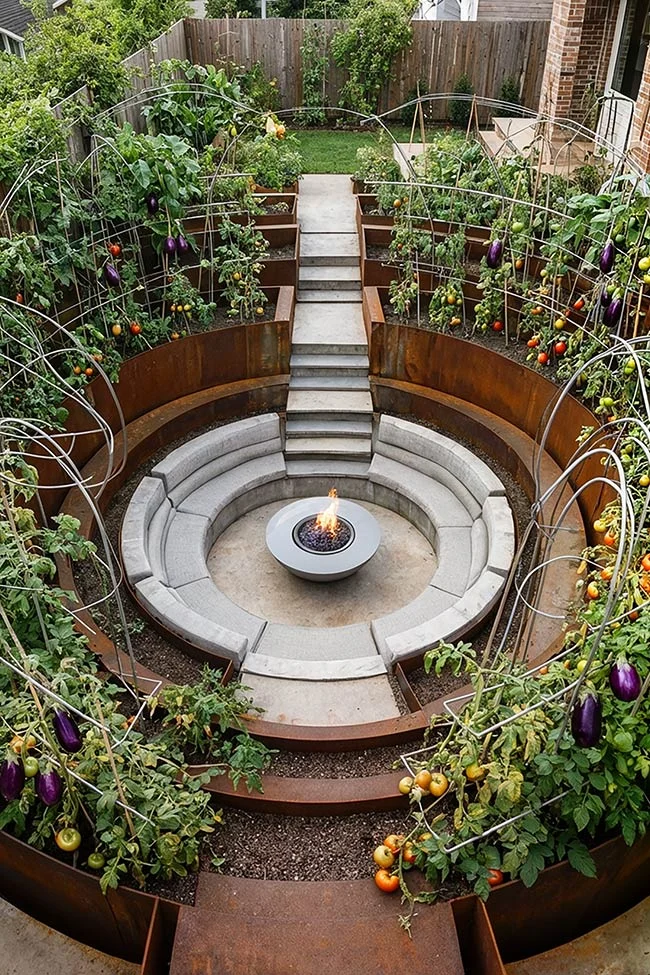
Symmetry and order are the hallmarks of a high-end architectural garden. This concentric design uses concrete seating and Corten steel rings to create a formal, almost meditative space for growing eggplant and tomatoes. It’s an expert-level configuration that manages water runoff perfectly while creating a stunning visual “bullseye” from the upper windows of the house.
18. The “Living Staircase” with Integrated Outdoor Library
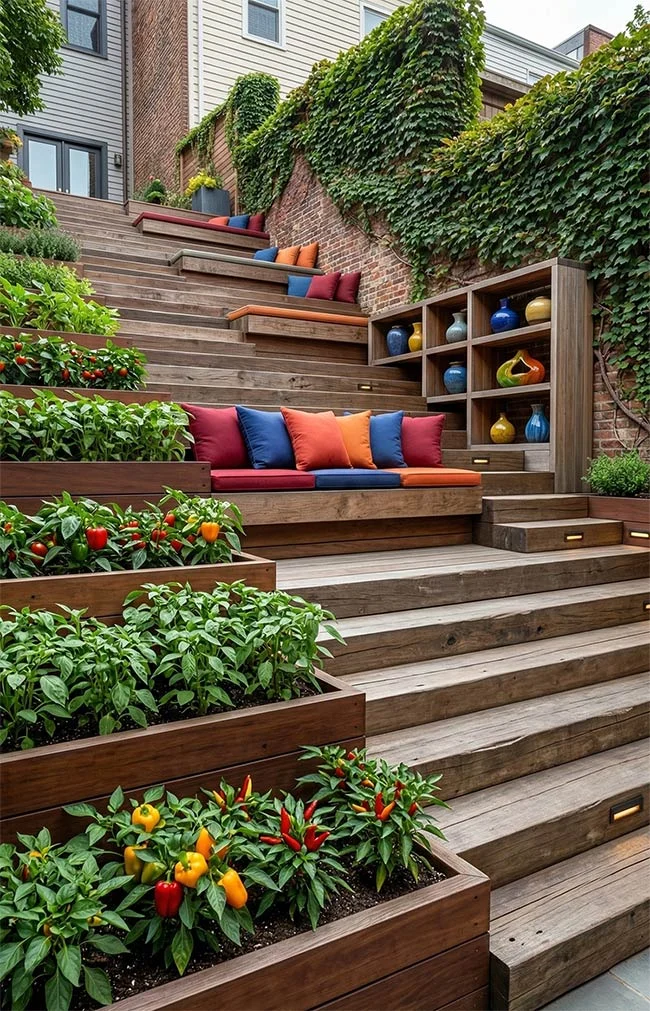
The “living staircase” is perhaps the most creative use of a steep slope I’ve ever seen. By making the steps wide enough for seating and incorporating colorful pillows and a built-in library, you turn a transition zone into a primary living area. The integrated herb planters on every level ensure that the scent of rosemary and mint follows you as you climb, creating a multi-sensory experience that perfectly captures the “Pinterest-style” lifestyle aesthetic.
19. Masterpiece Concentric Corten Steel Urban Farm
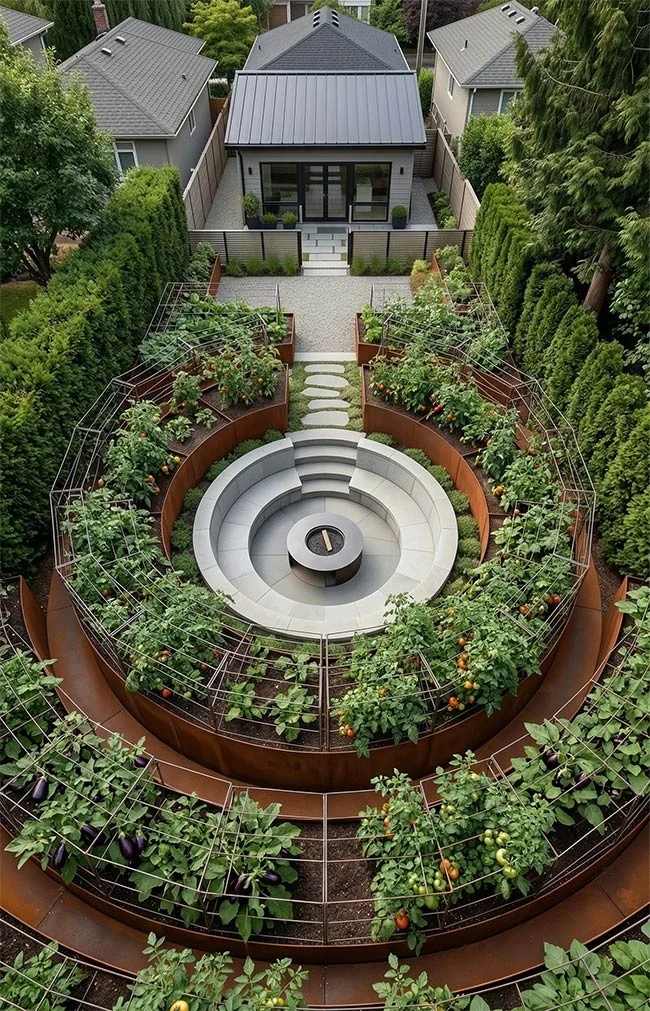
Large-scale concentric Corten steel rings represent the pinnacle of urban farm design. This setup uses a “theatre” style layout where the central fire pit is the stage and the vegetable tiers are the audience. The height of the rings provides excellent soil depth for deep-root crops, while the grid trellises ensure your tomatoes grow straight and healthy, maximizing yield in a limited urban footprint.