Living by the ocean sounds idyllic—until you realize the elements are actively trying to destroy your landscaping. Regular grass turns into a sandy mud pit. Ferocious winds snap delicate plants, and salt spray fries whatever is left. The secret to a gorgeous coastal front yard isn’t fighting nature; it’s outsmarting it. By mixing heavy, erosion-proof hardscaping with tough, deep-rooted native plants, you get a bulletproof, low-maintenance entryway. Let’s dive in.
1. Dry Riverbed For Sandy Soil
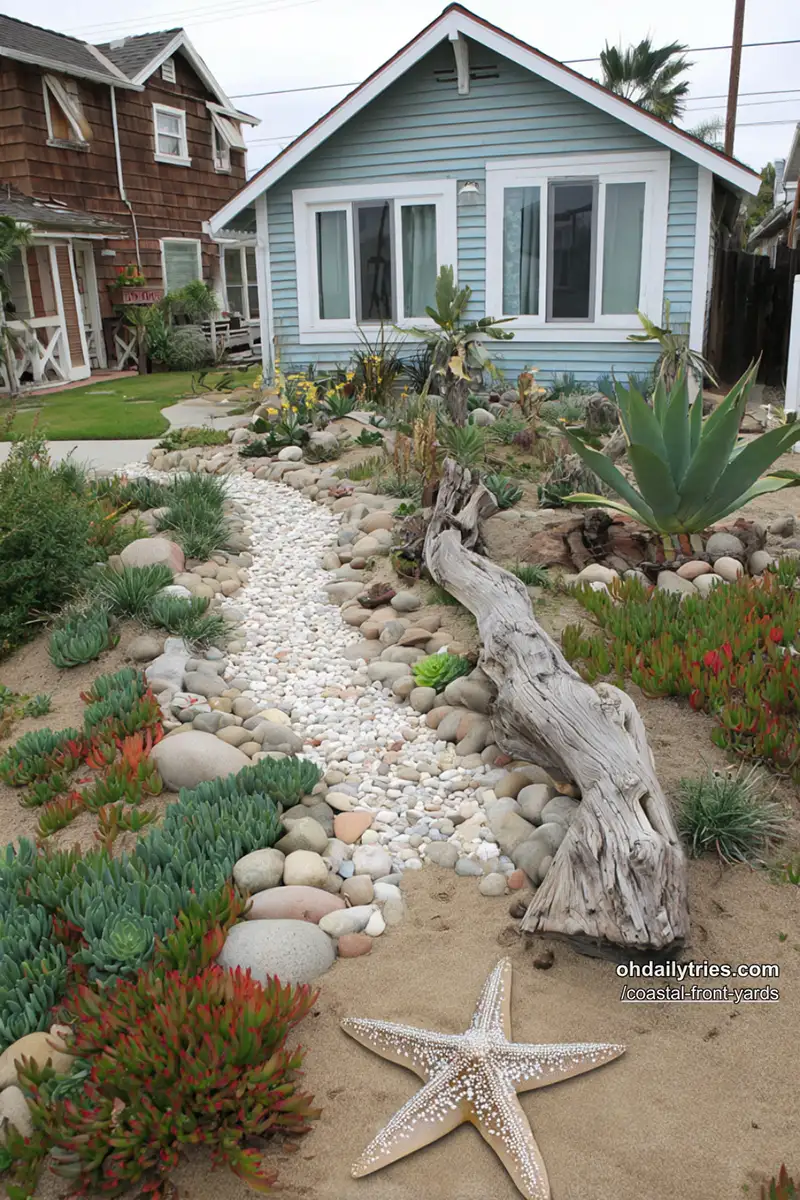
Coastal soil is often just loose sand. Traditional lawns constantly fail here. This dry creek bed uses white pebbles and massive driftwood to create structure. Succulents thrive in the poor soil. It needs zero water.
2. Boulders Stabilizing Sloped Paths
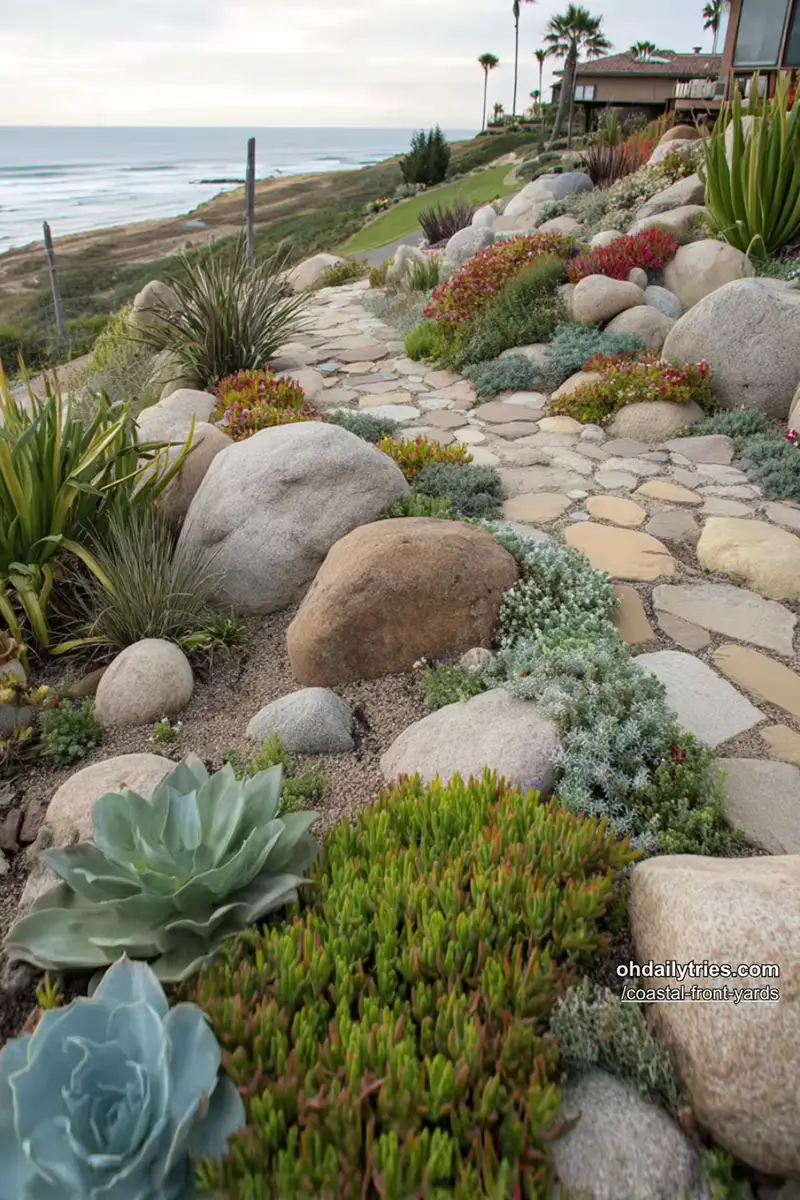
Sloped yards by the ocean face serious erosion issues. Heavy rain and wind strip away the topsoil fast. Look at how these oversized boulders are strategically dug into the hillside. They act as natural retaining walls. Paired with spreading groundcovers, the soil stays firmly locked in place. The flat stone path winds through it all. It gives you safe footing while navigating the steep grade without feeling like a concrete highway.
3. Tall Palms Framing The Walkway
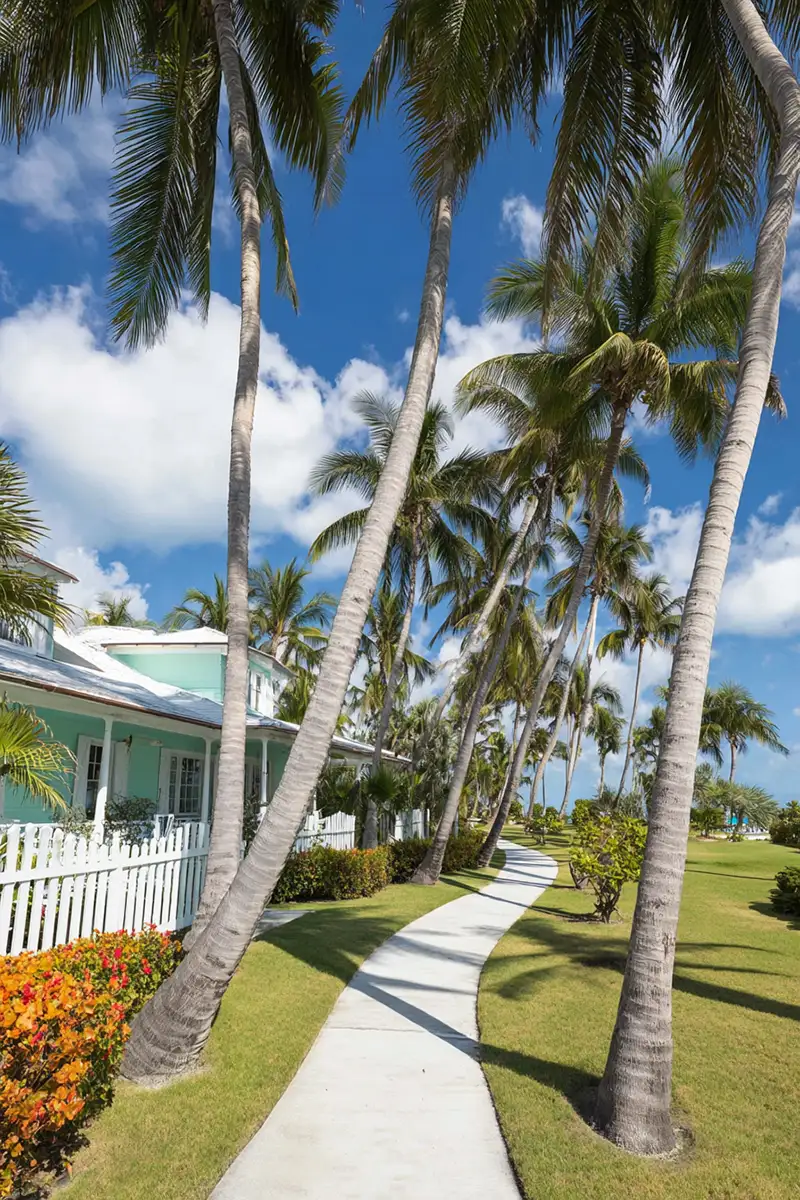
Flat coastal lots can feel too exposed. You need vertical elements. But massive shade trees block those ocean breezes. Tall, slender palm trees are the perfect fix. They line the curved path and draw the eye up. They bend with strong winds instead of snapping.
4. Dune Grass Instead Of Lawn
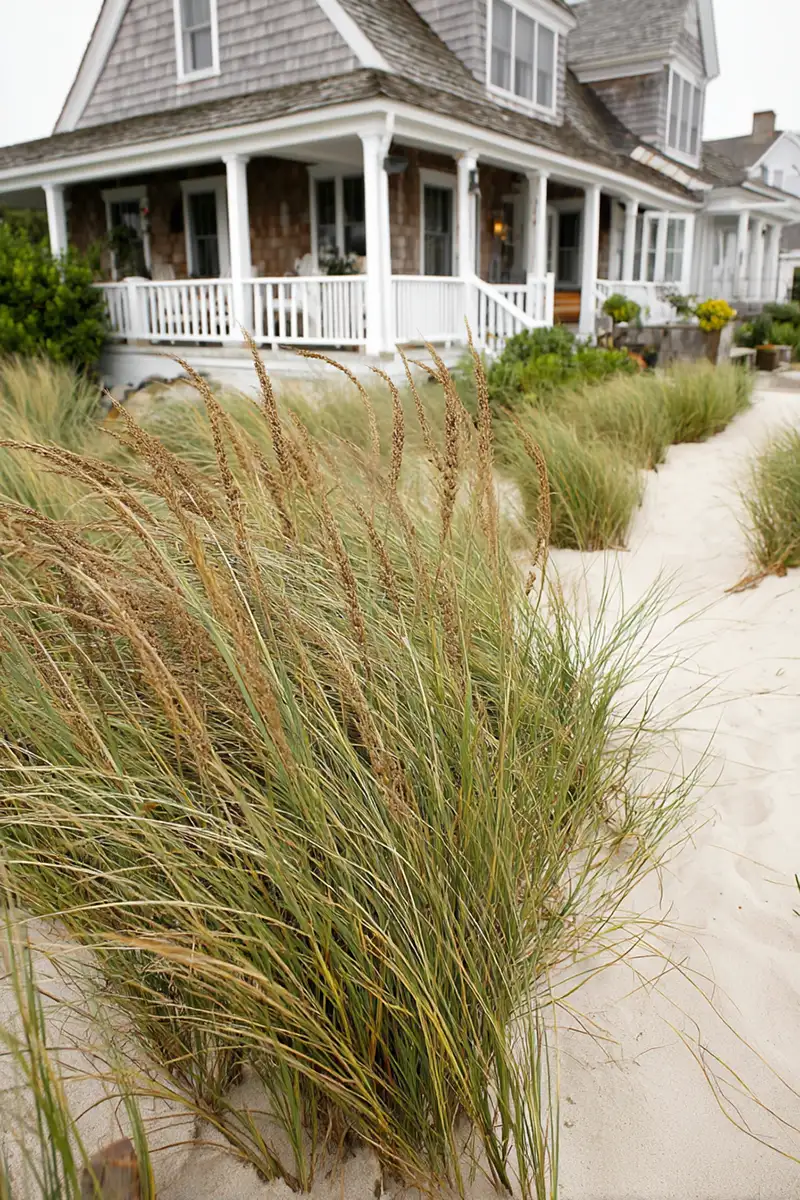
Stop fighting the sand. Native beach grasses stabilize the dunes naturally. They need zero mowing and thrive on salty air.
5. Tropical Water Feature Integration
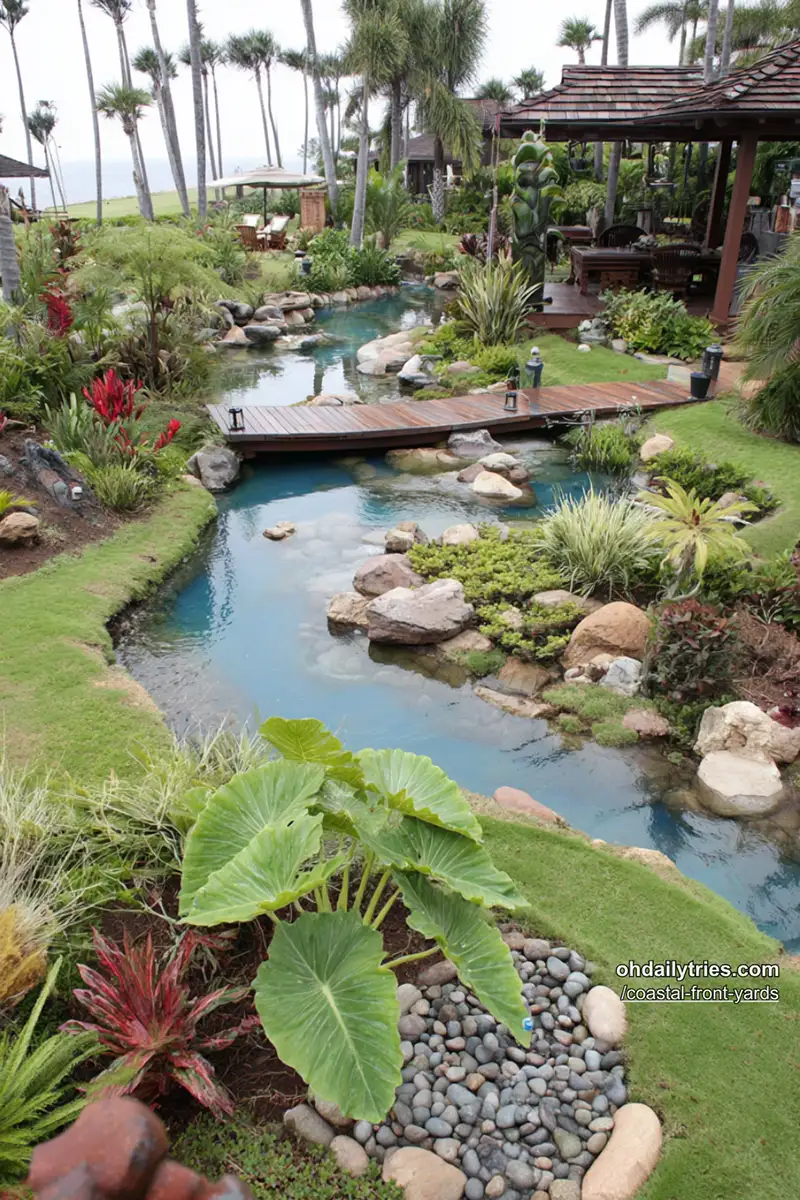
Salt spray usually destroys standard backyard plants. The trick here is creating a sheltered microclimate. Dense tropicals block the harshest ocean winds. The winding water feature with a simple wooden bridge brings a cooling element to the yard. It feels like a private oasis.
6. Irregular Flagstone Through Shrubs
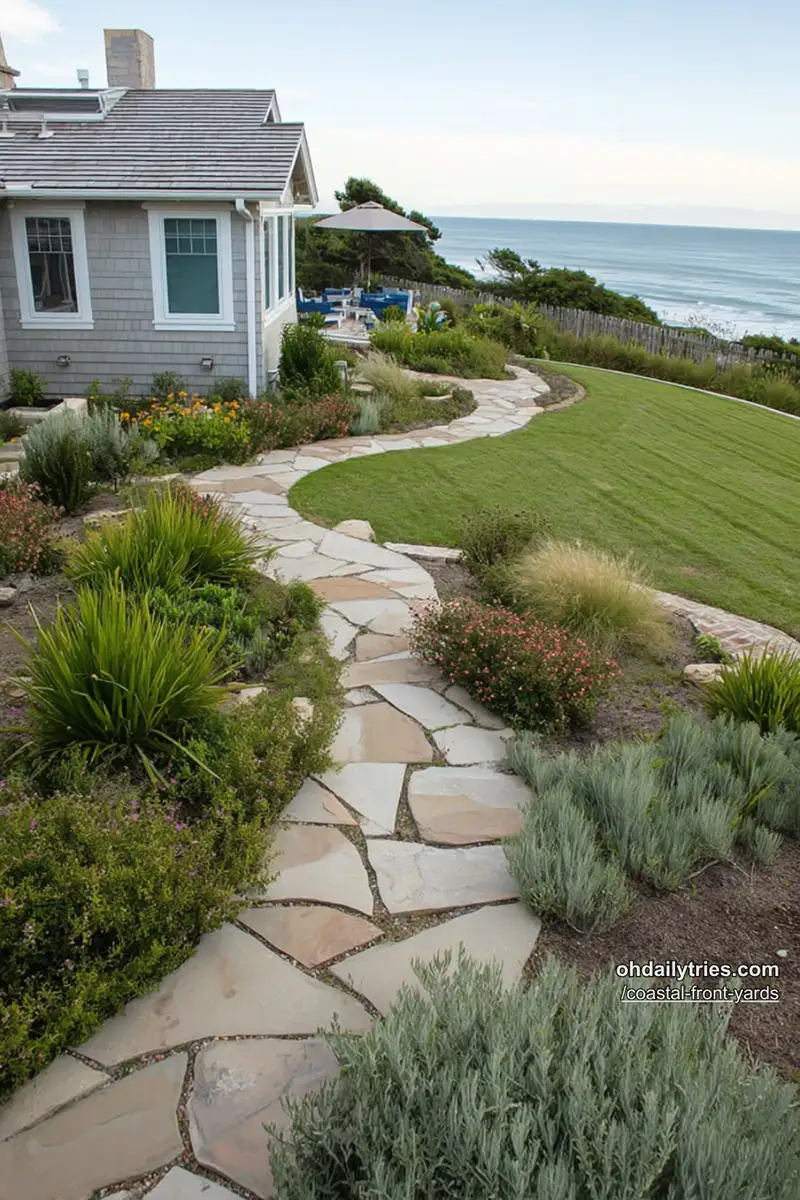
Paving a large yard right next to the water creates runoff problems. Solid concrete slabs just dump water straight down the slope. This irregular flagstone path is a smarter approach. The wide gaps allow rainwater to soak back into the earth. Flanking the stones with dense shrubs slows down the wind. It guides visitors gently toward the house while managing drainage effortlessly.
7. Wind Resistant Clipped Evergreens
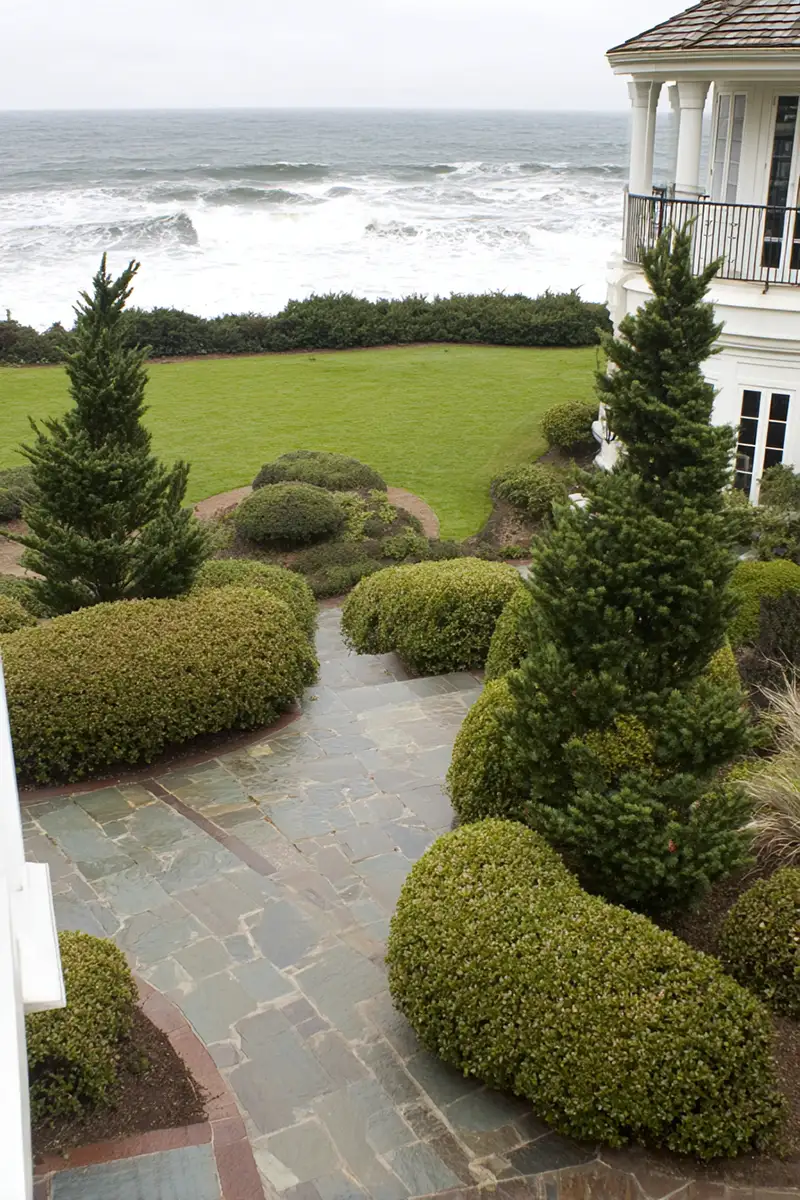
Violent ocean gales shred normal leaves to pieces. These tightly clipped, dense evergreen mounds handle storms easily. They deflect the wind. The heavy slate steps provide a solid anchor against the harsh elements.
8. Nautical Accents On Gravel
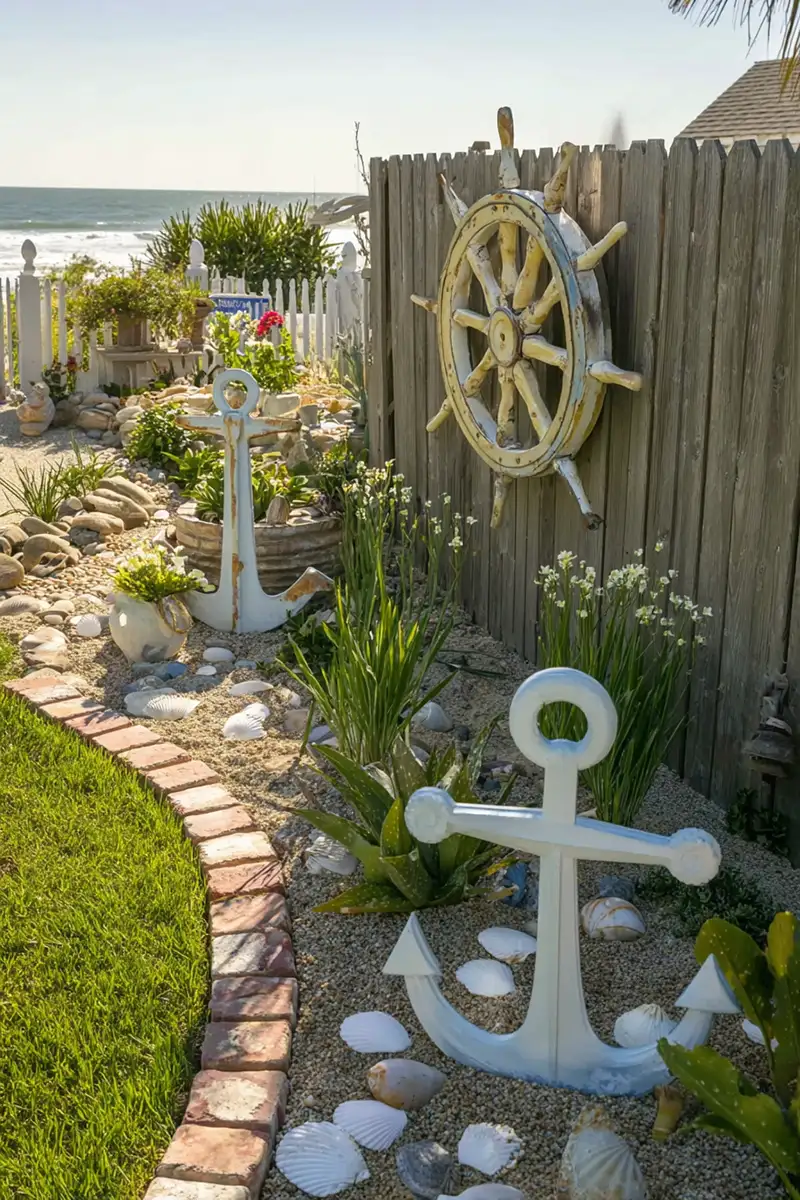
Thematic coastal decor easily looks cluttered. The fix is rigid color control. Stark white anchors and a weathered wheel pop against the plain fence. Setting them in a bed of heavy gravel keeps the yard maintenance-free. It stops the props from looking like random yard toys.
9. Rock Mulch For Delicate Blooms
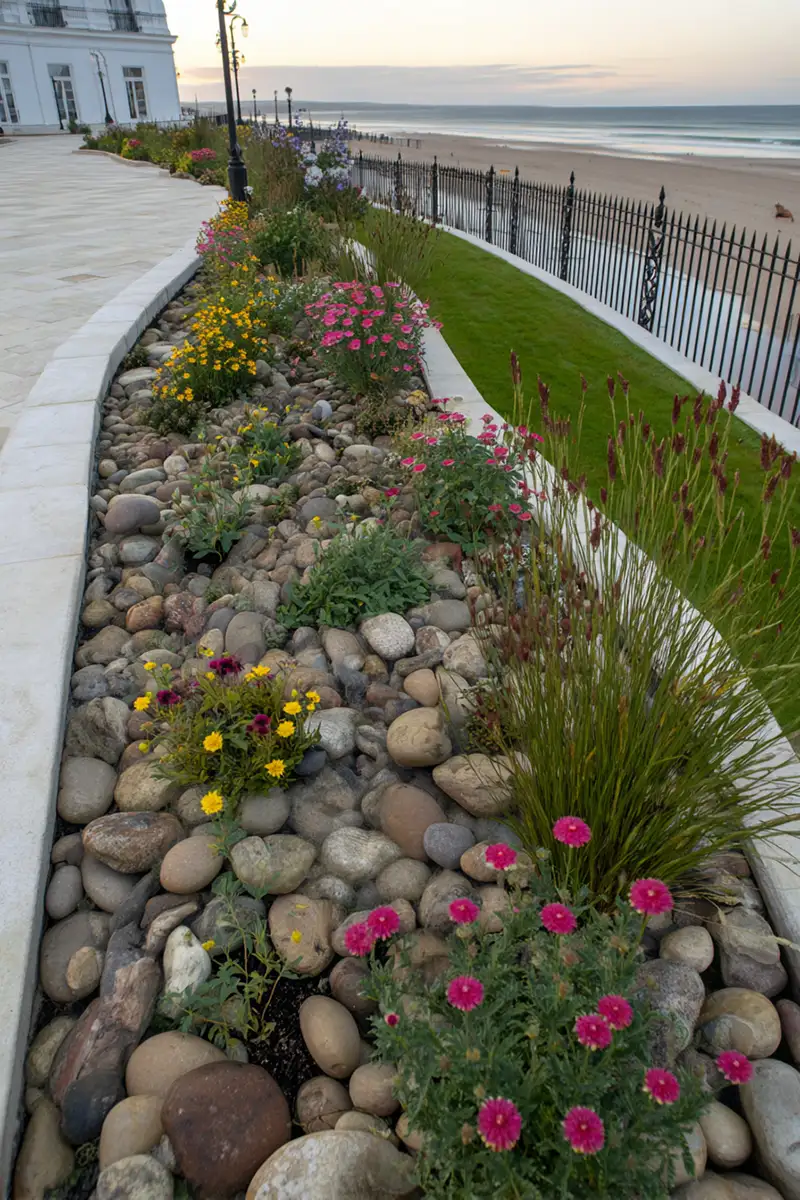
Harsh winds snap fragile flower stems. Tucking these blooms low among large, heavy river rocks protects them. The rocks stop the soil from blowing away.
10. Weathered Fencing Protecting Dunes
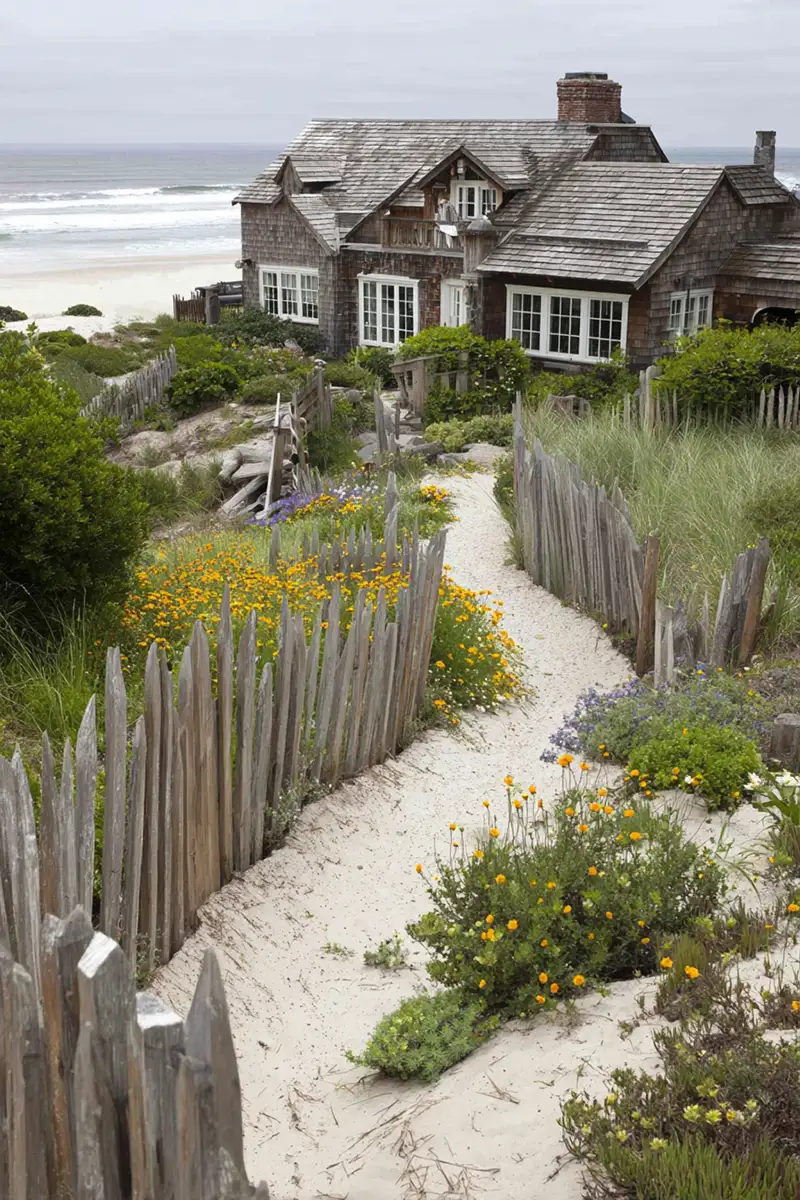
Foot traffic destroys fragile dune environments fast. People tend to wander. A rustic, staggered wooden fence is a great psychological barrier. It forces visitors to stay on the path without blocking the view. Native yellow wildflowers self-seed wildly outside the fence. It looks untamed but keeps the local ecosystem completely safe from trampling feet.
11. Concrete Pavers With Sea Glass Mulch
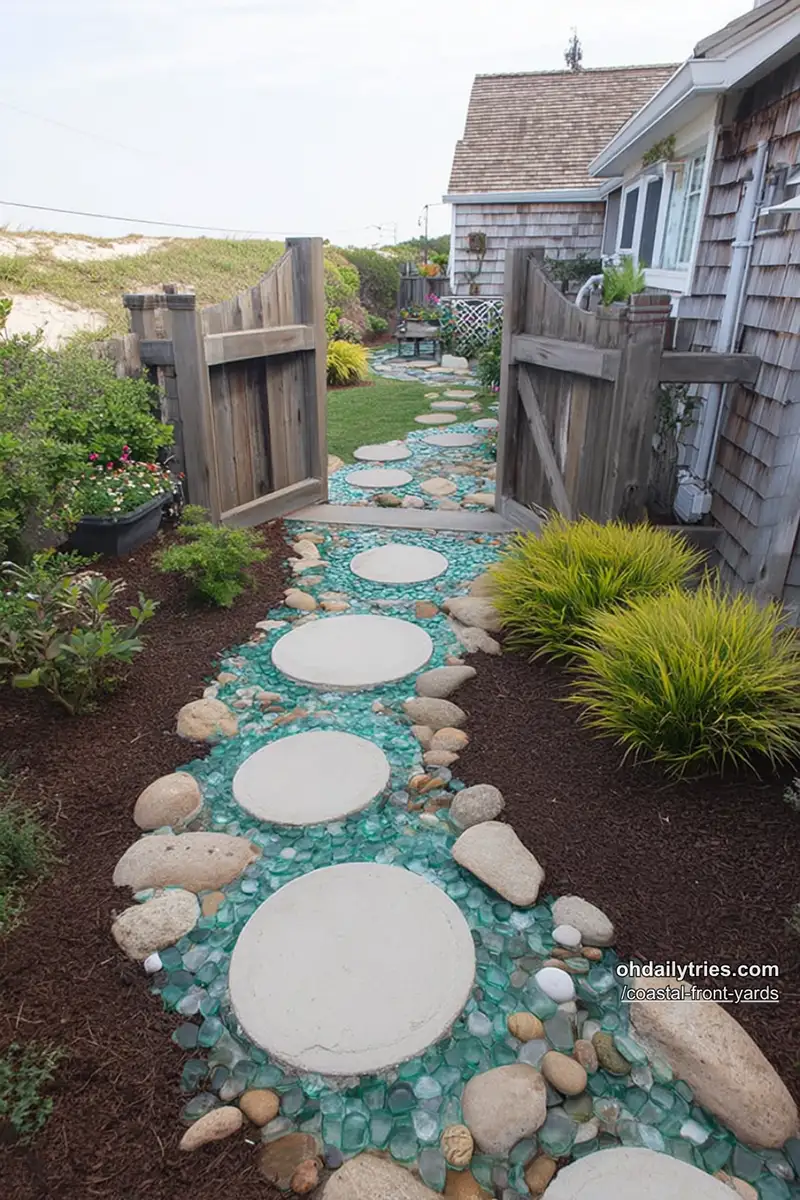
Coastal entryways turn muddy fast, and regular bark mulch just blows right away in ocean winds. Heavy concrete pavers fix the footing instantly. Tumbled sea glass fills the gaps as a brilliant, zero-maintenance groundcover that actually stays put.
12. Oversized Shell Planters And Driftwood Edging
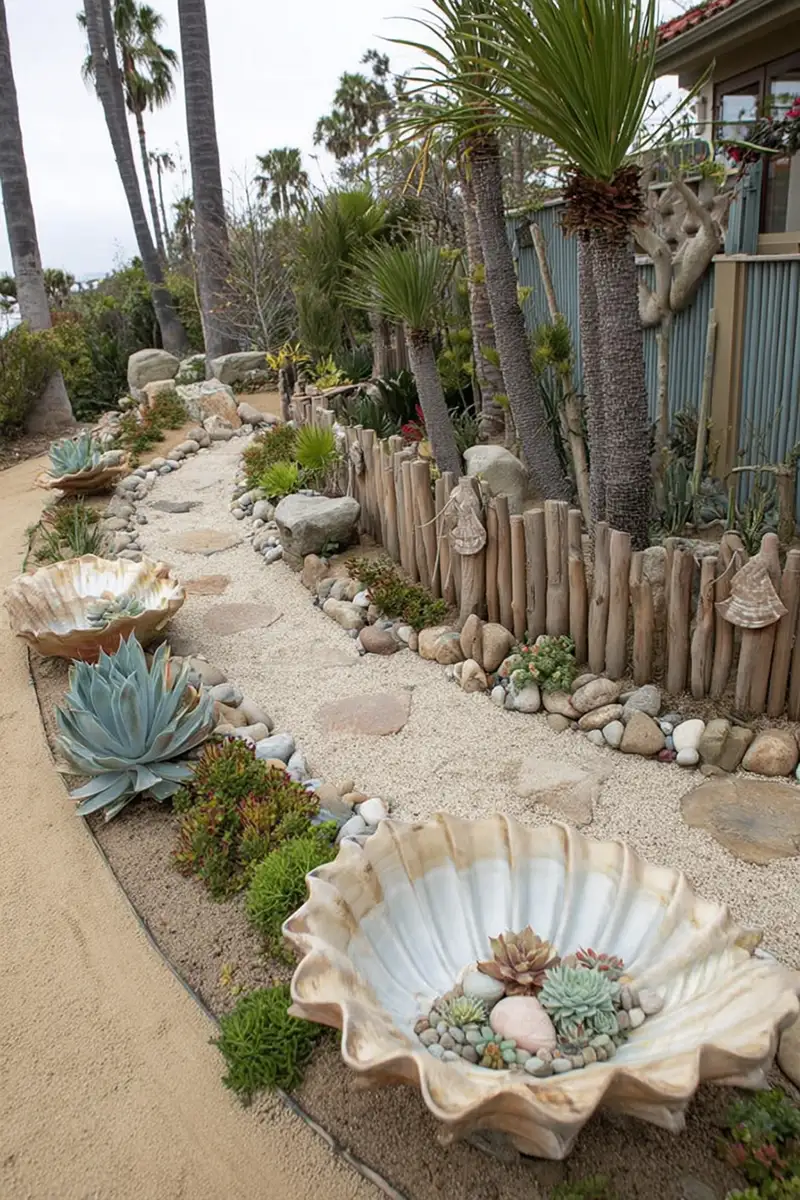
Metal planters rust out in weeks here. Using oversized clamshell replicas keeps fragile succulents elevated above the salty ground. Simple driftwood edging blocks the wind and completely ignores salt spray.
13. Mass Planting Hydrangeas Along Sand Paths
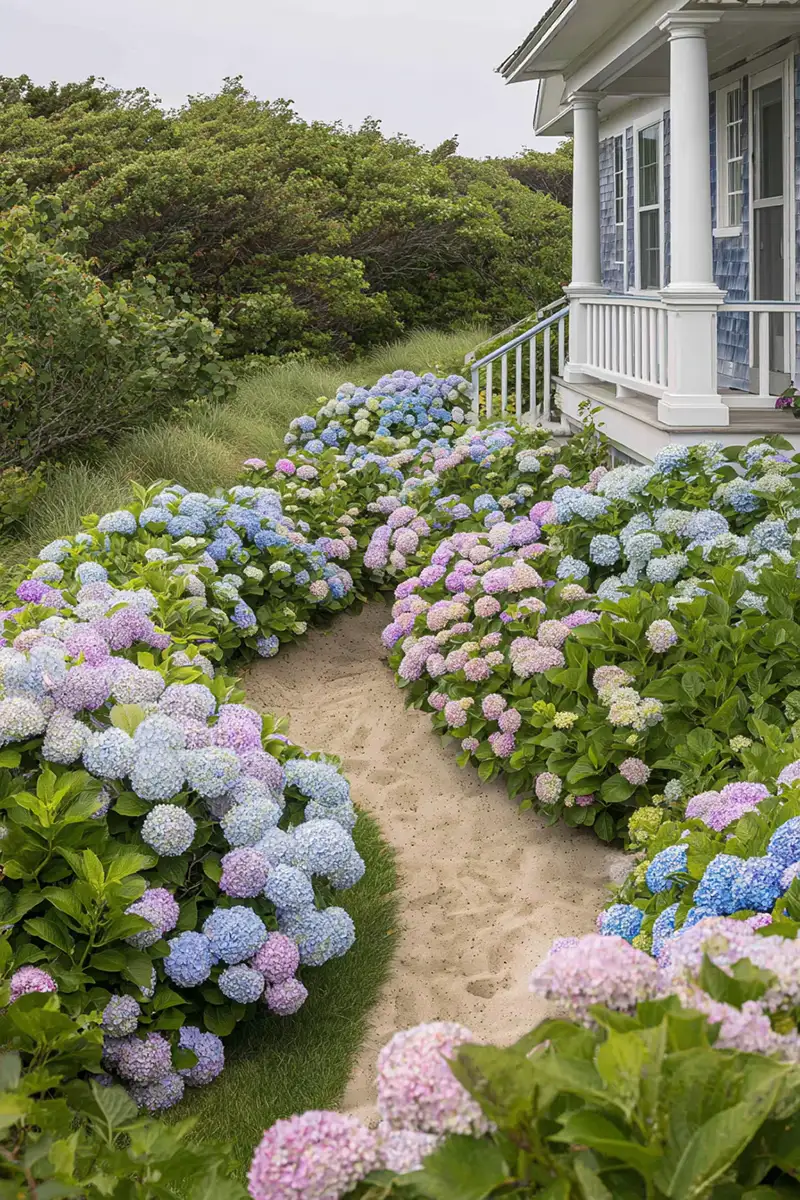
Bare sand paths wash away easily. Mass planting coastal-hardy hydrangeas right against the walkway solves this beautifully. Their dense root systems secretly lock the shifting sand in place, while the lush leaves buffer the harsh sea breeze. It’s a serious structural fix disguised as a romantic garden.
14. Brick Paver Patio For Stable Seating
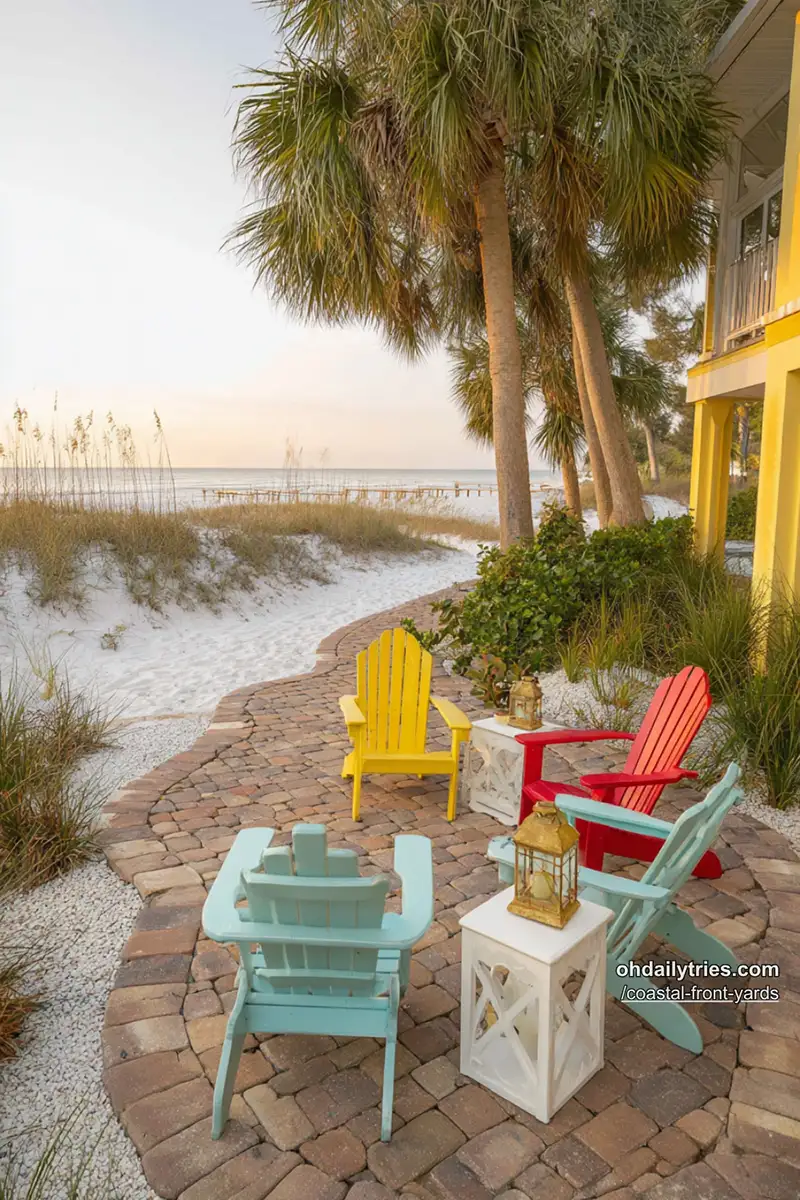
Lounge chairs sink straight into loose beach sand. A heavy brick paver patio provides a stable, permanent foundation for seating without pouring an ugly concrete slab.
15. Curved Limestone Wall For Raised Succulent Beds

Defining a front yard from the wild beach often looks forced. This curved limestone wall creates a clean but organic boundary. Filling it with a curated mix of white sand and tough succulents gives you total soil control.
16. Wooden Boardwalks And Terracotta Pot Gardens
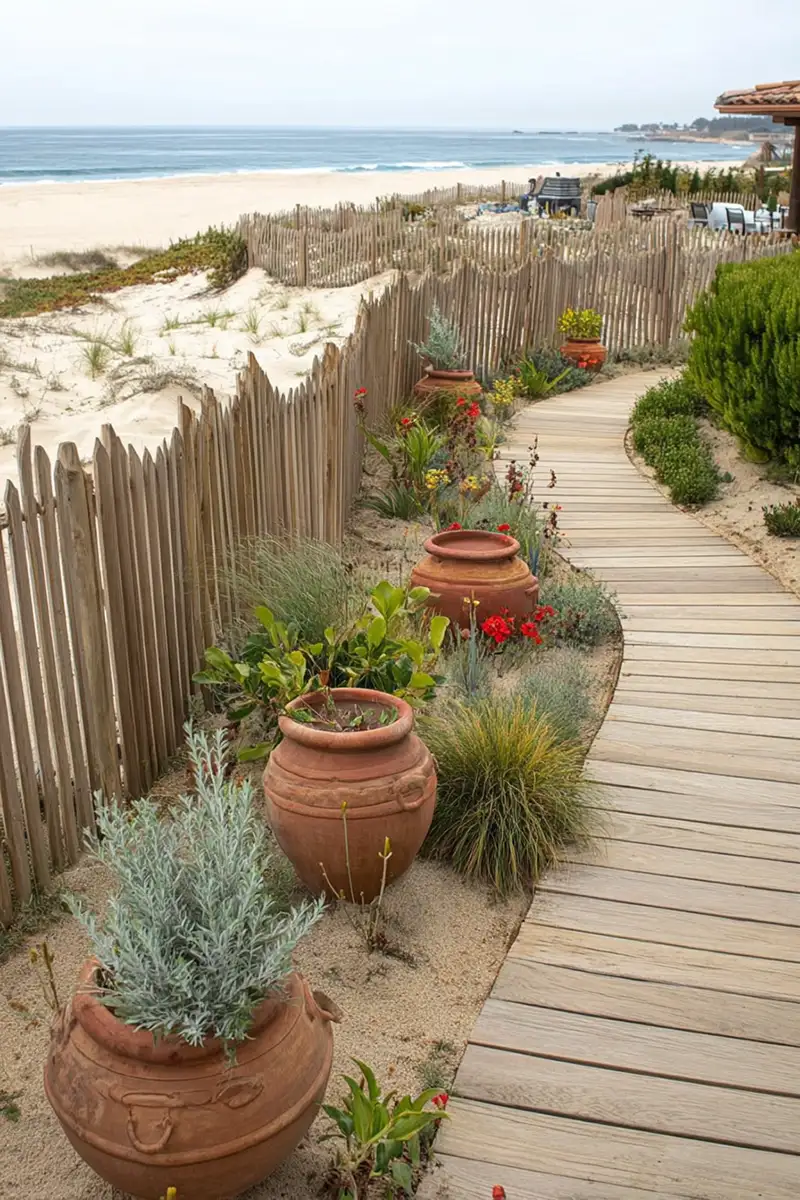
Trudging through deep sand every day is exhausting. A raised wooden boardwalk completely bypasses the struggle. Adding heavy terracotta pots along the edge lets you use rich potting soil for sensitive plants, and their sheer weight stops them from blowing over in a gale.
17. Corten Steel Fire Pit On Gravel

Salt air destroys iron fire pits. Corten steel is the ultimate coastal fix. It rusts intentionally to protect itself. Set on crushed gravel, it’s a permanent, fire-safe focal point.
18. Timber Terracing For Steep Dune Slopes
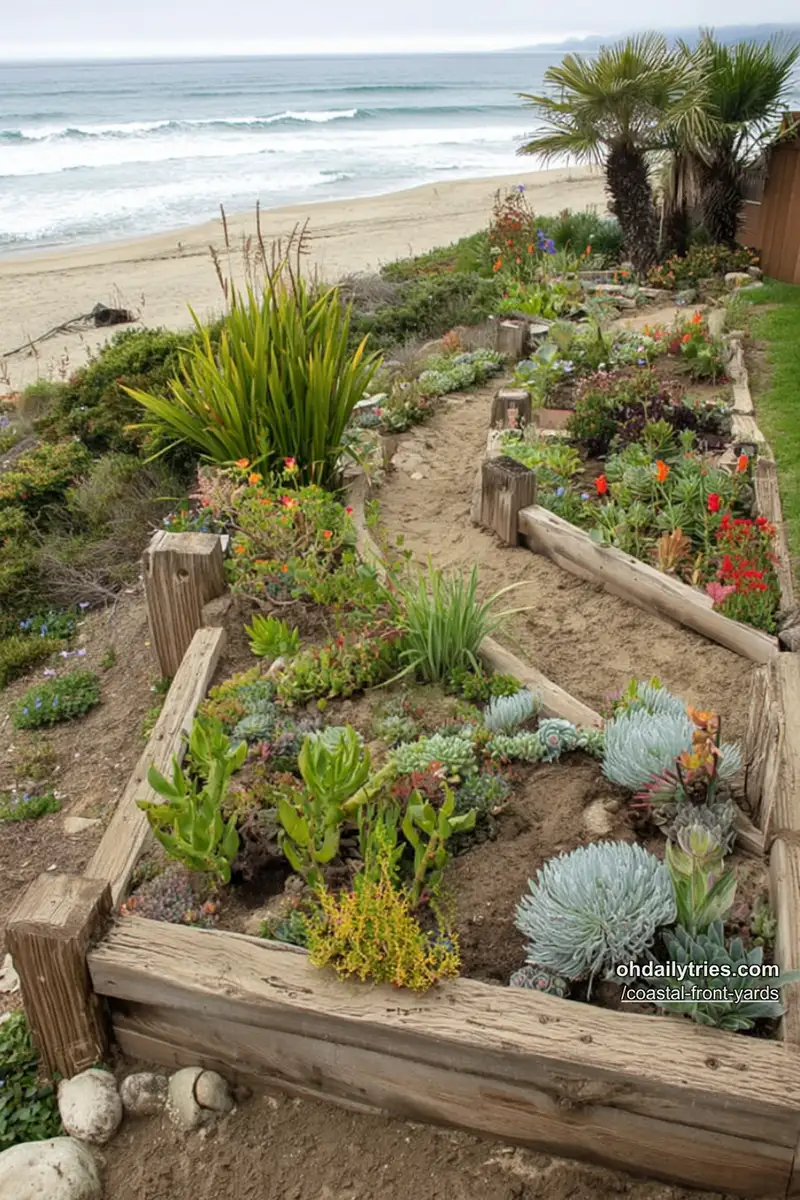
Steep dune slopes are an erosion nightmare. Weathered timber terracing instantly locks the loose dirt in place. It creates deep planting pockets so spreading succulents can root firmly and stabilize the entire hillside.
19. Flagstone Steps Embedded In Deep Rooted Agaves
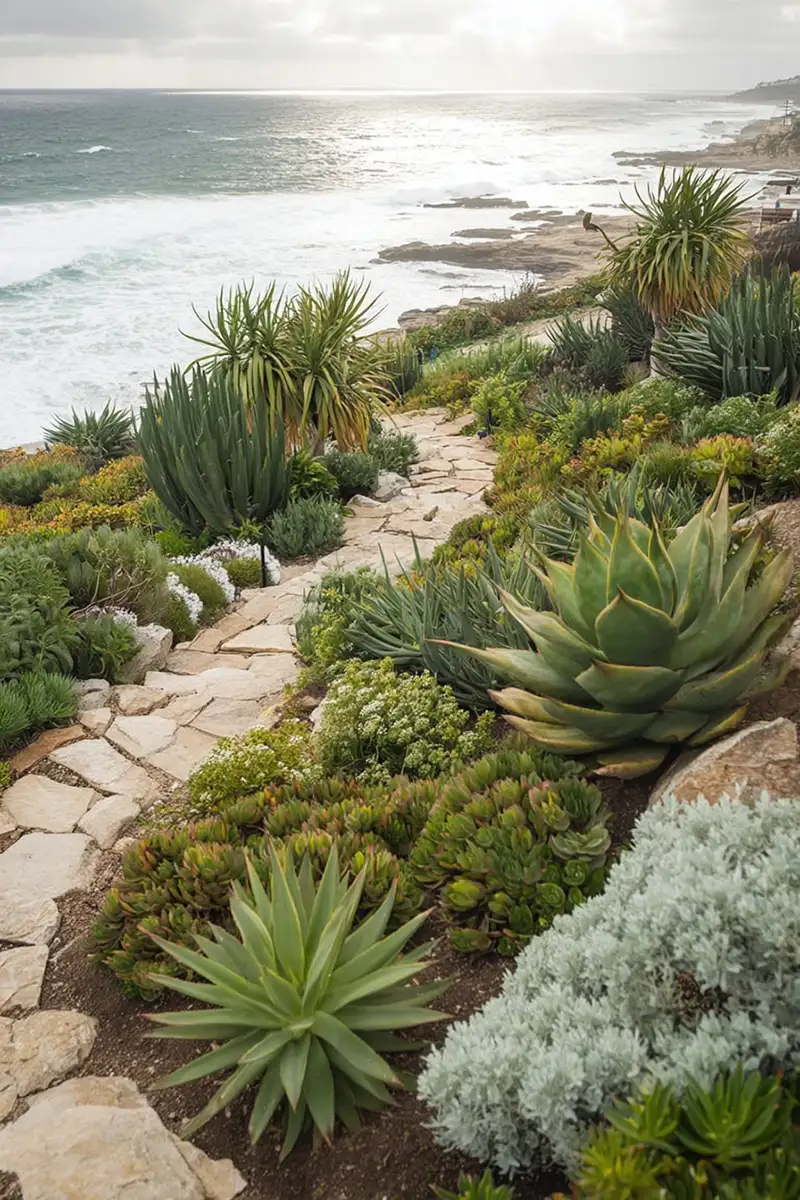
Paving a coastal cliffside is expensive and ruins natural drainage. Sinking rugged flagstone steps directly into the earth is the smarter move. Massive agaves planted tightly against the rocks do the real heavy lifting here. Their aggressive roots act like underground nets, stopping mudslides and keeping the path secure during heavy coastal rains.