Dragging a wobbly, rusted grill onto a wet patio every summer is miserable. So is sprinting inside with greasy hands because you forgot the tongs. Again. Outdoor hosting shouldn’t be a chaotic survival test. That’s why you build with brick. It’s heavy, stubborn, and totally ignores bad weather. A solid brick setup won’t tip over when you flip a heavy steak. The best outdoor brick kitchen ideas actively solve your backyard headaches—blocking harsh winds, hiding charcoal ash, and finally giving you a stable place to set your beer.
1. Copper Hood Over Brick
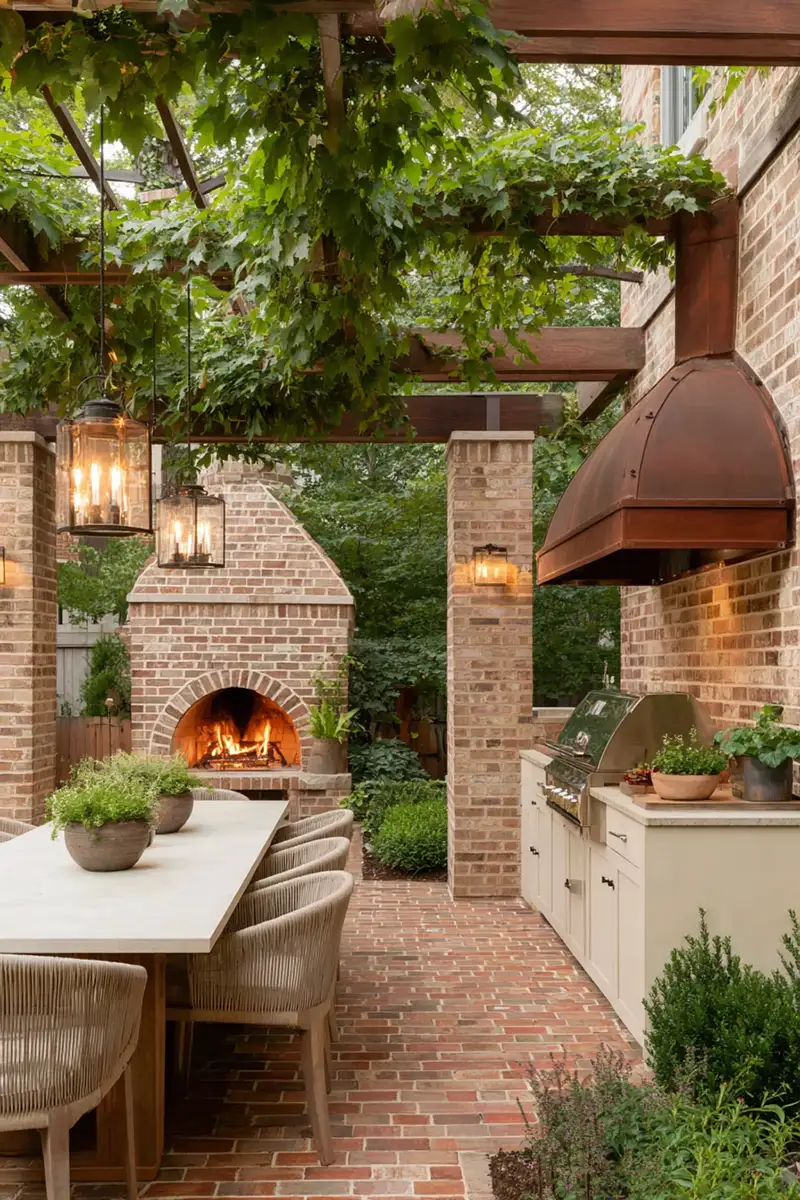
Smoke buildup under a vine-covered pergola is a real headache for outdoor dining. Installing a large, oxidized copper hood directly above the grill pulls exhaust away before it traps heat or damages the plants.
The matte finish of the metal sits quietly against the rough brickwork, solving the ventilation issue without looking like commercial restaurant gear.
2. Forest Edge Integration
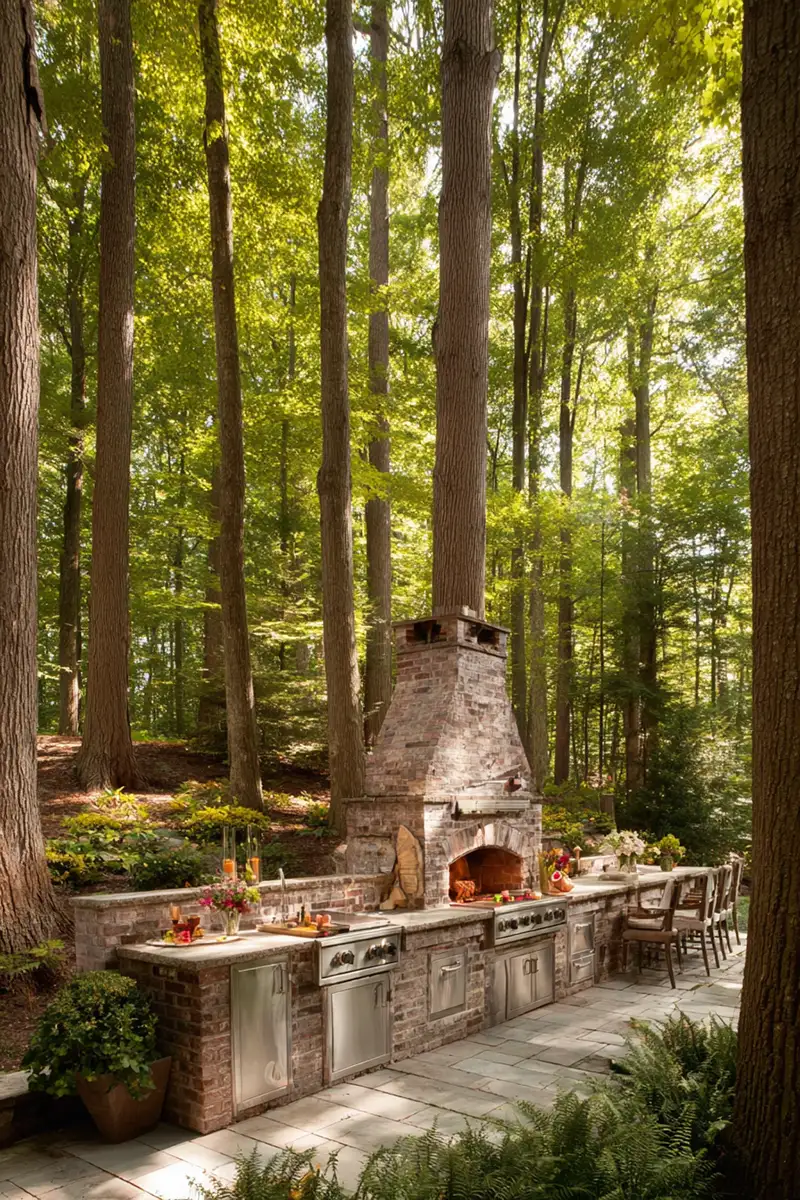
Placing an outdoor kitchen right near heavy woods usually creates a messy transition where dirt and debris take over. Here, a long, continuous brick counter serves as a solid structural barrier between the wild forest floor and the clean paving stones.
The heavy masonry handles falling leaves, sap, and damp conditions without degrading. Dropping modern stainless steel appliances into this raw, textured material frames the cooking zone clearly.
It respects the existing tree line while keeping the actual workspace highly functional, separated, and easy to hose down on a Sunday morning.
3. Matching Exterior Facades
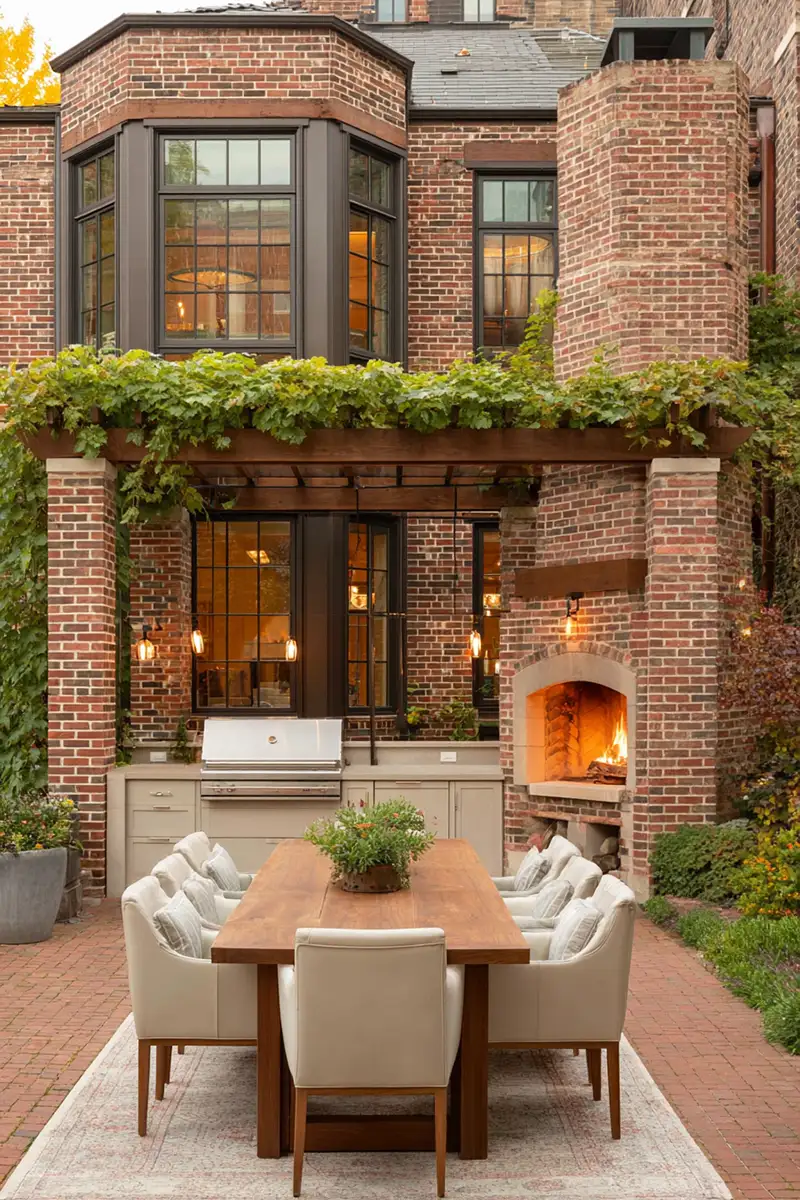
Add-on patios often look completely disconnected from the main house.
Matching the kitchen structure to the existing exterior brickwork fixes that instantly. It makes the outdoor prep area feel like it was planned from day one.
4. Compact Corner Setup
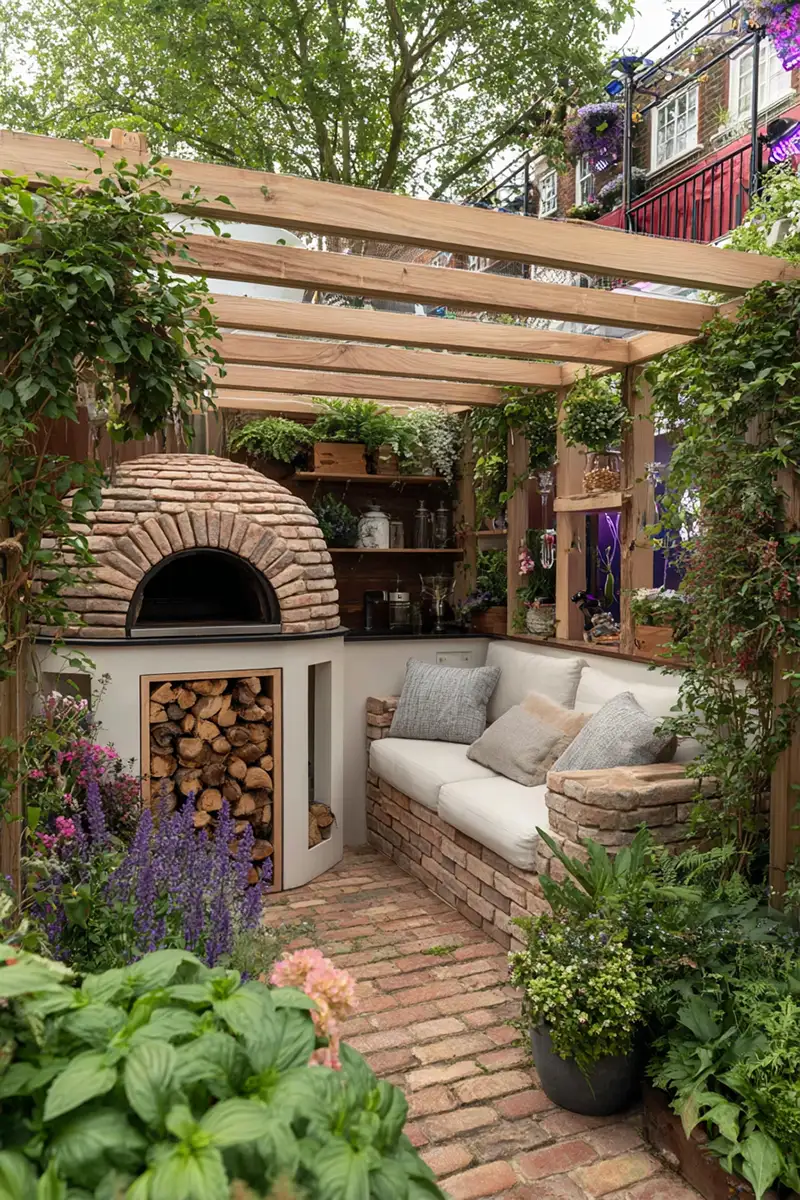
Tiny yards struggle with dead corners. Tucking a rounded pizza oven into the angle reclaims that space, while the built-in brick bench provides tough seating that ignores bad weather.
5. Pavilion Scale Dining
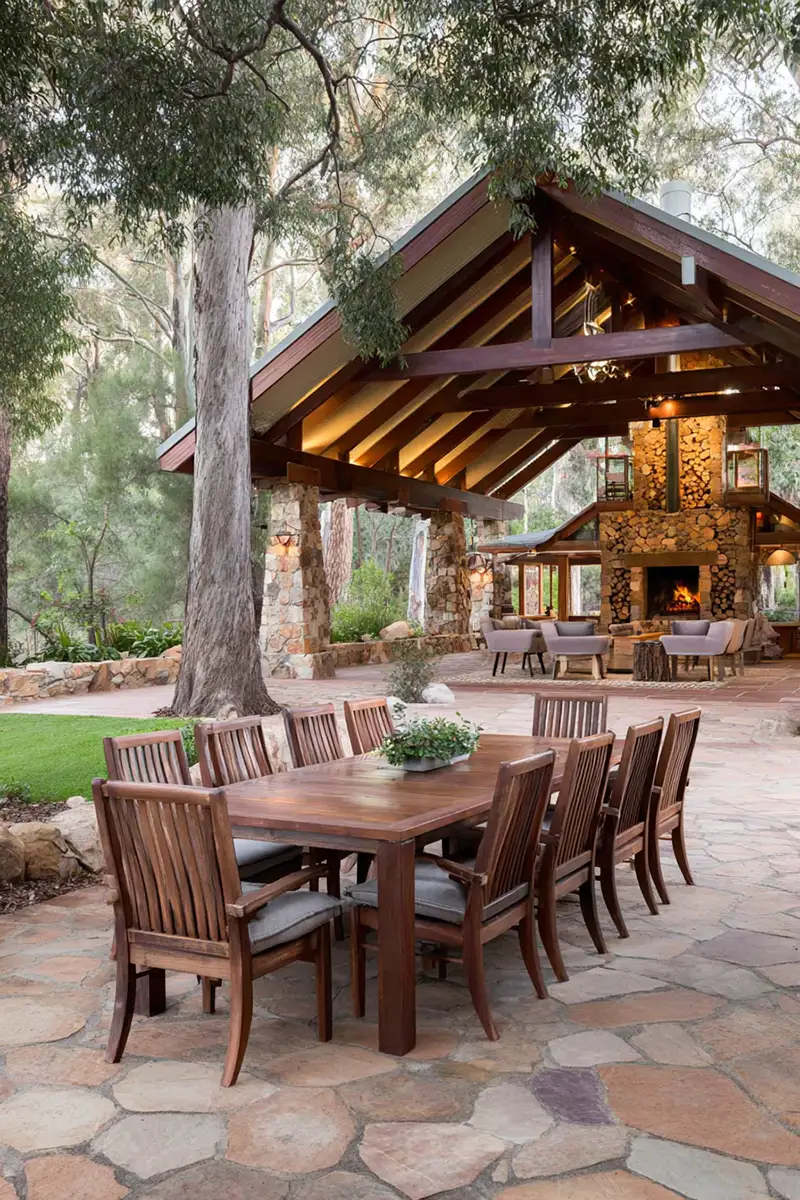
Vast open patios can feel aggressively exposed to wind and glare. Building a monumental pitched roof pavilion grounds the entire area.
The massive brick and stone fireplace at the far end acts as a heavy windbreak, stopping drafts from chilling guests at the long table. It creates a defined microclimate that actually makes sense for year-round use.
6. Freestanding Prep Station
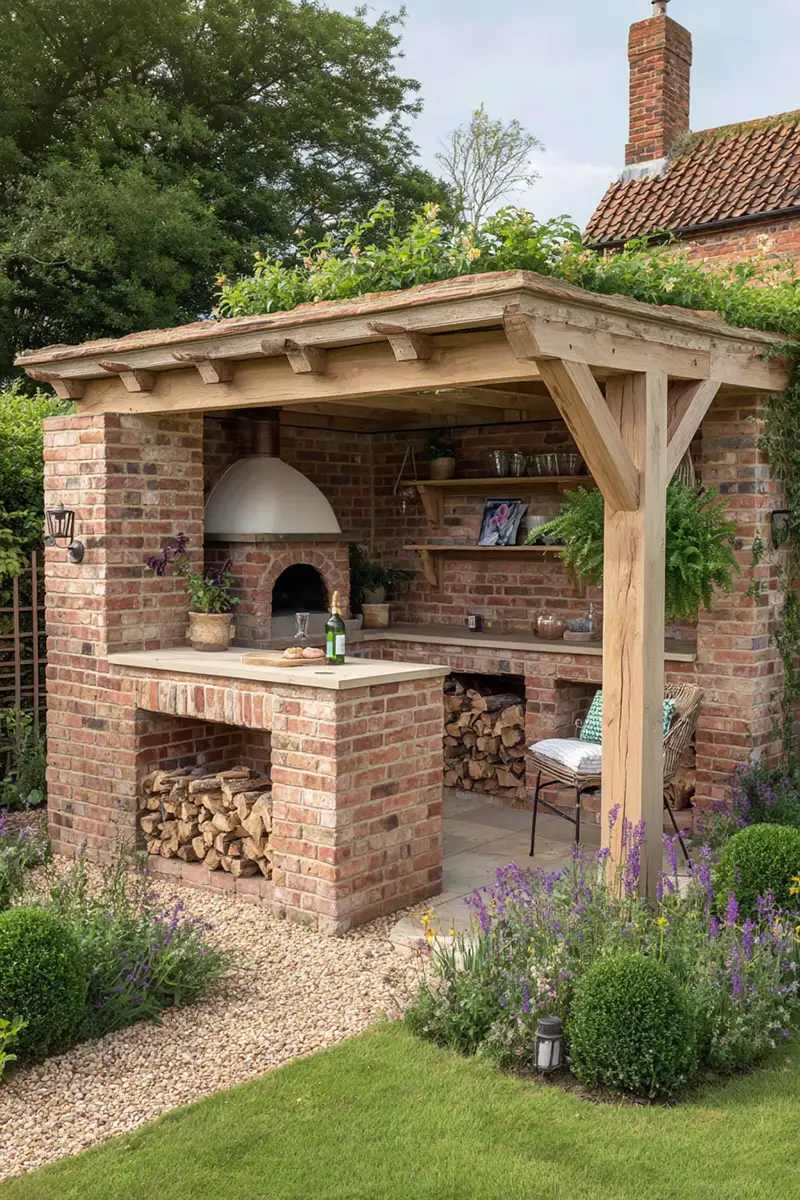
Leaving cooking gear out in the open ruins a tidy garden. This freestanding, L-shaped brick station acts as an anchor on the loose gravel.
A simple timber roof keeps the prep counter dry, while the open alcoves below ensure firewood stays ventilated.
7. Herringbone Path Connection
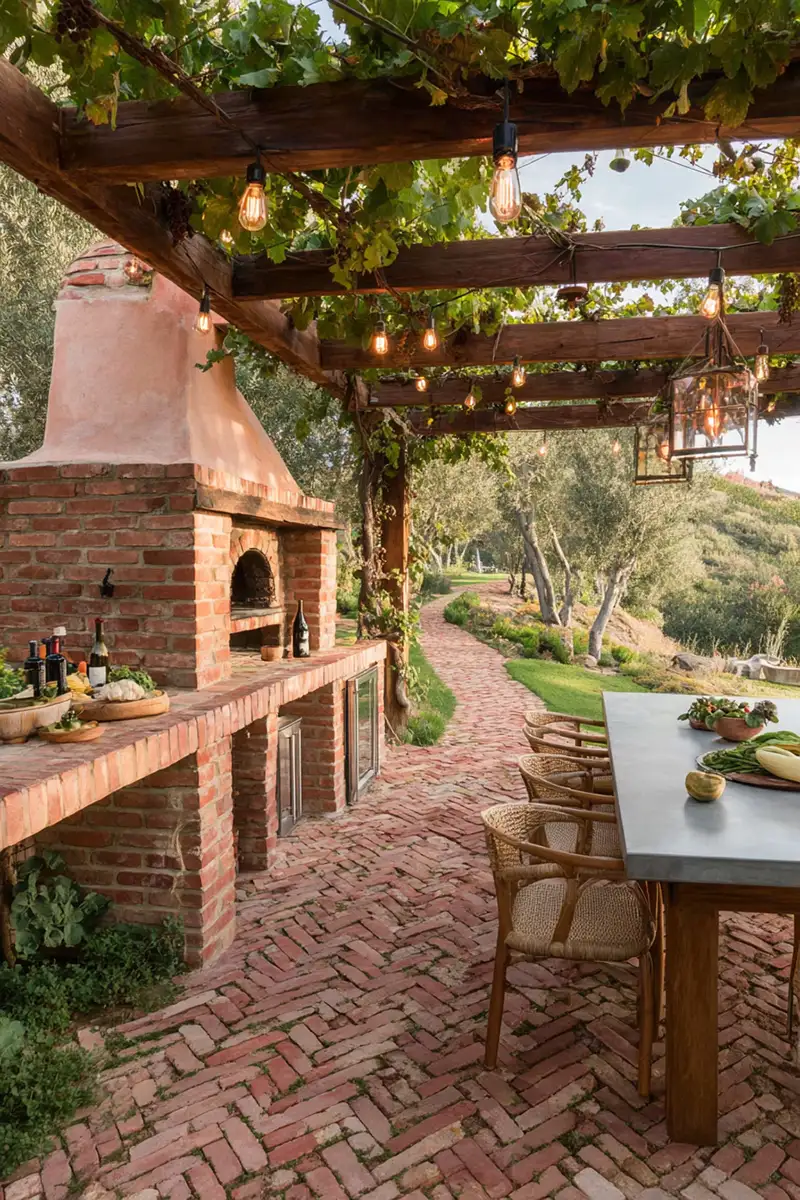
Carrying hot dishes across uneven lawn is an obvious risk. Running a flat, herringbone brick path right alongside the cooking counter creates a safe, non-slip transit route.
The open arches under the thick masonry counter provide deep, breathable storage for tools and wood, preventing trapped moisture.
8. Retaining Wall Grill
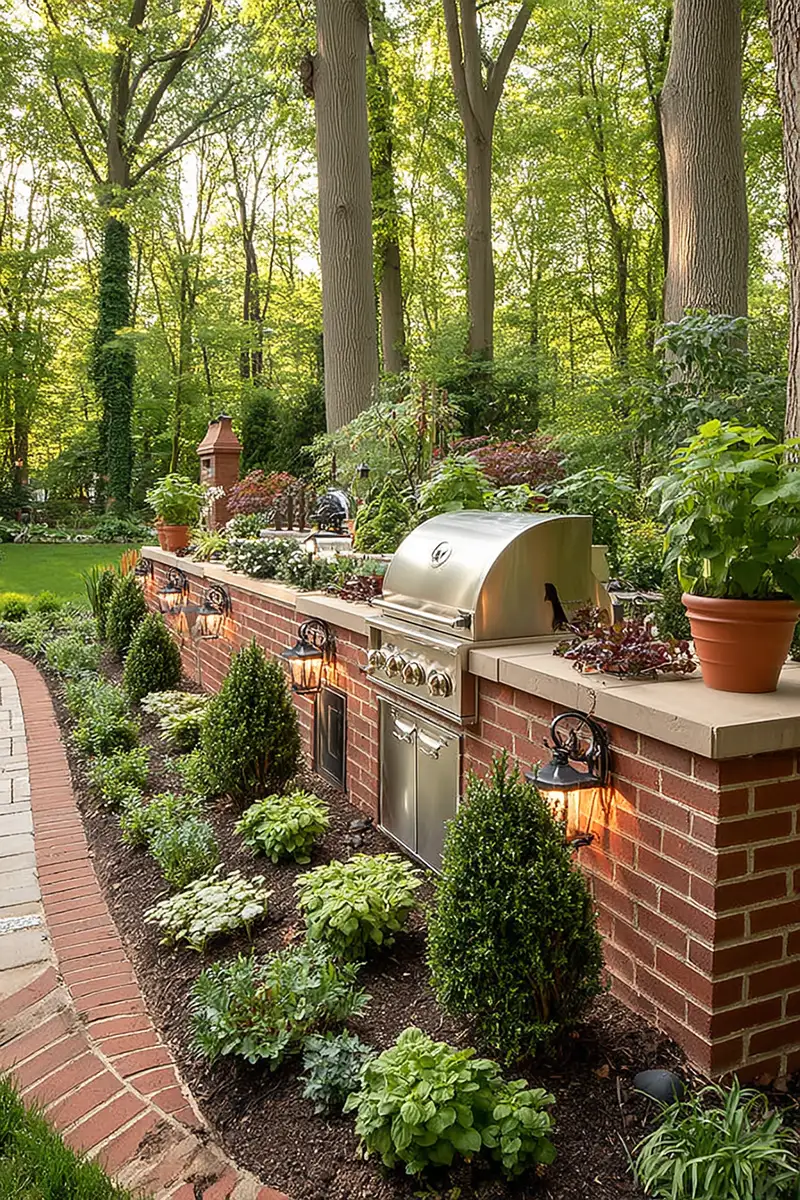
Sloping borders normally leave you with awkward drop-offs that eat up usable patio flooring. Integrating the grill station straight into a low brick retaining wall is a highly practical fix.
It holds back the soil for the lush garden beds behind it while giving the heavy stainless steel cooking unit a flush, custom look. This dual-purpose masonry saves a massive amount of square footage.
More importantly, it completely hides the greasy back-end of the grill from your seating area, keeping the sightlines clean.
9. Open Cabana Bar
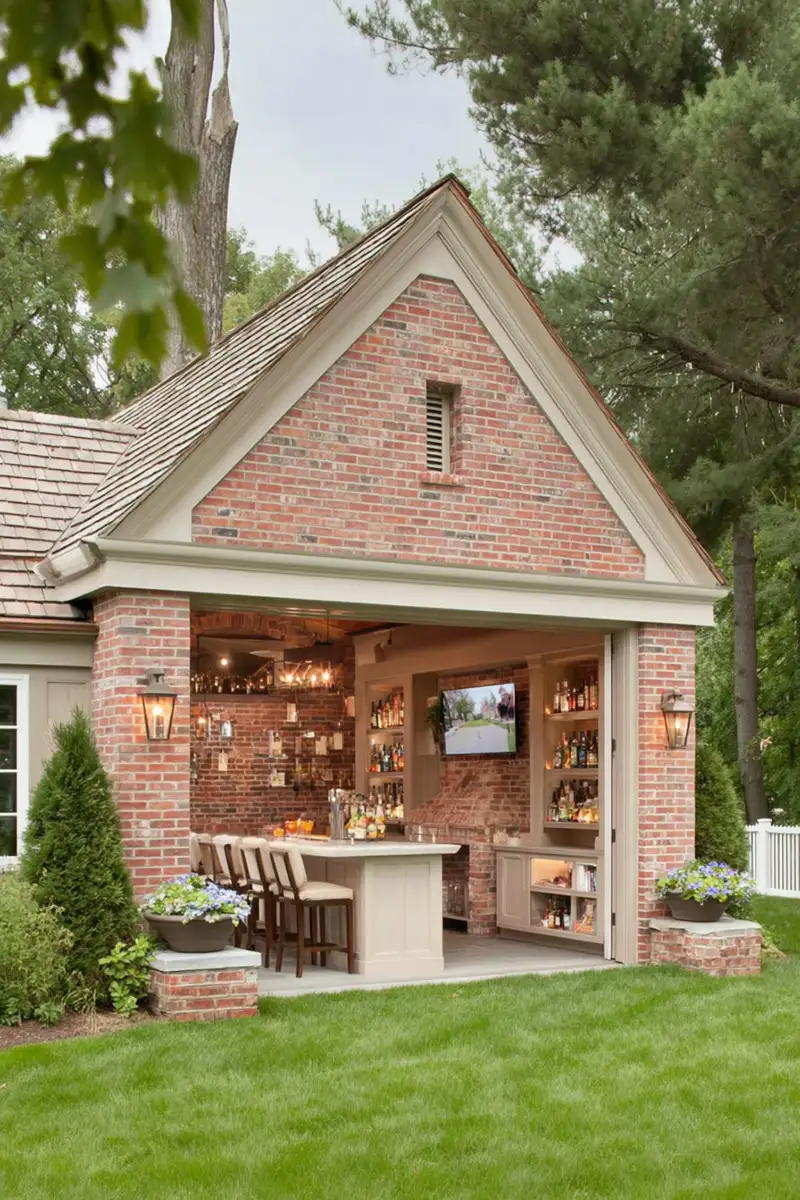
Running inside for drinks disrupts the whole party flow. A deep cabana setup with wide folding doors provides a fully stocked bar right by the lawn.
Using brick for the interior back wall handles any splashes or humidity, keeping the indoor-outdoor transition incredibly low-maintenance while protecting the electronics.
10. Poolside Counter Seating
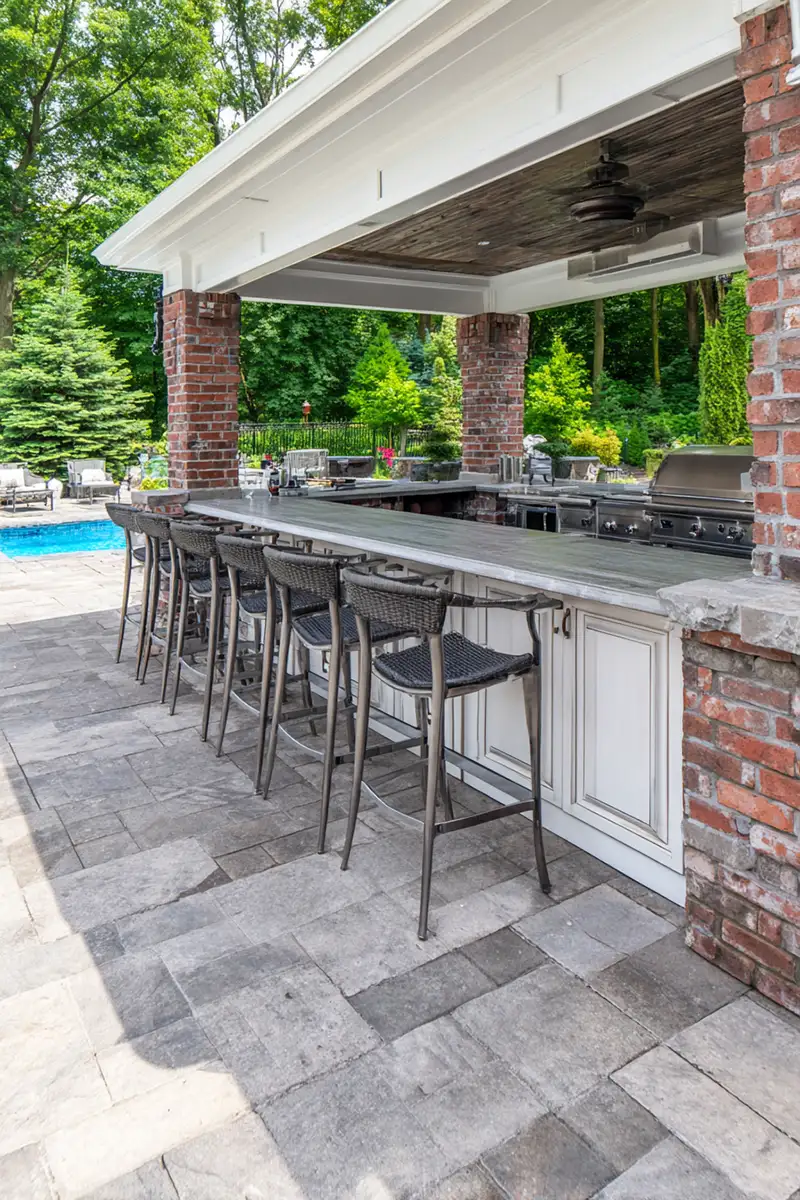
Wet swimmers wreck standard patio chairs. A thick concrete bar resting on a brick base takes all the water damage effortlessly, creating a bomb-proof drop zone for drinks.
11. Linear Buffet Station
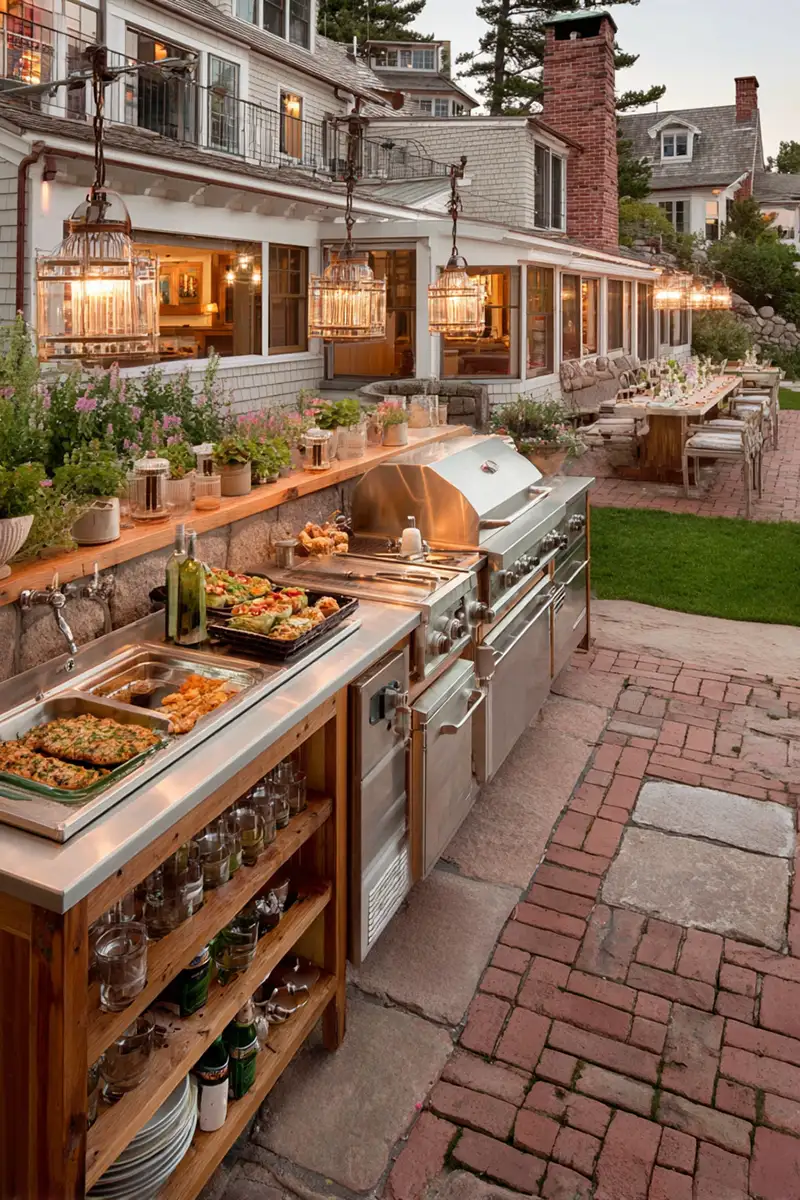
Feeding a huge crowd usually turns a patio into a chaotic traffic jam. Stretching a massive, linear brick-and-timber counter right along the edge of the property creates a highly efficient, one-way buffet lane.
It keeps the heavy food trays secure and pushes the guest line away from the actual hot grills.
12. Deep Gable Protection
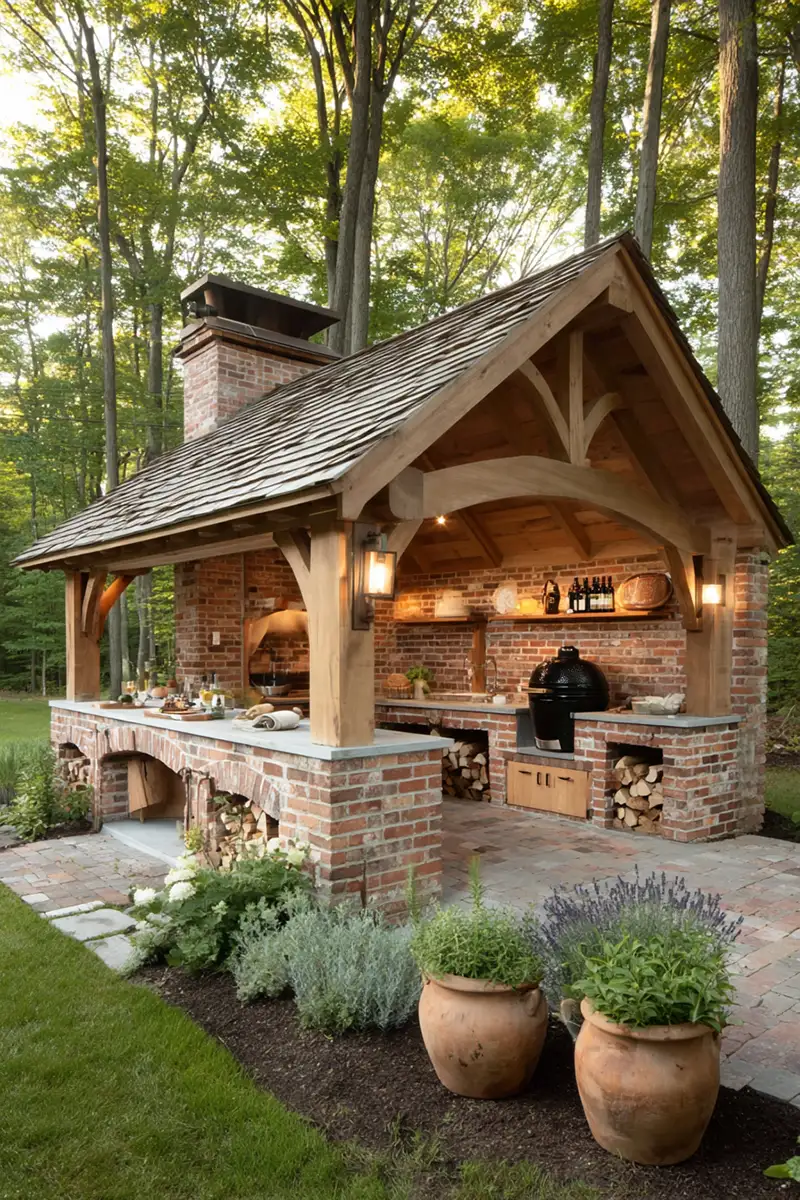
Managing a slow-cooking kamado grill or a wood-fired oven is stressful enough without worrying about sudden downpours ruining the temperature.
Building a deep, heavy timber gable roof directly over the masonry footprint completely solves this weather anxiety. The sturdy brick base anchors the structure against high winds, while the completely open sides allow all that heavy charcoal smoke to escape instantly instead of trapping it under the canopy.
13. Circular Shade Pavilion
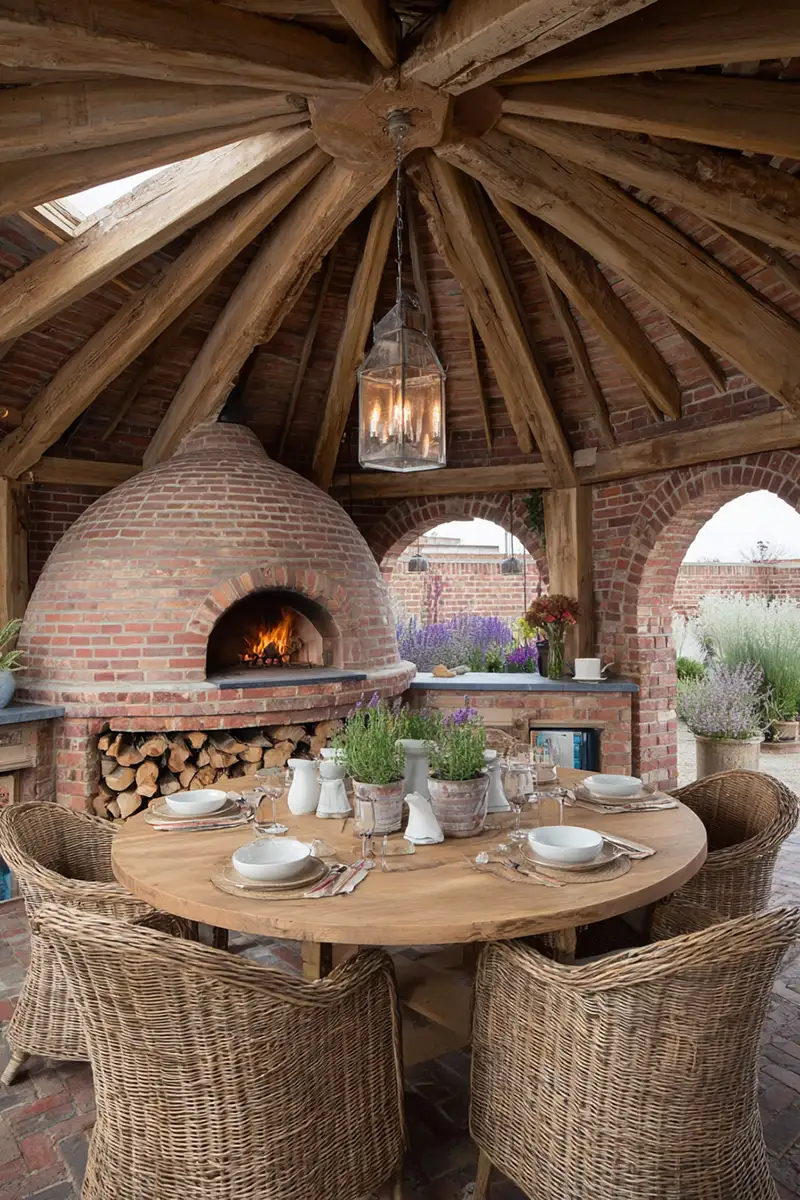
Harsh midday glare ruins summer lunches. A thick brick pavilion with deep archways naturally blocks the overhead sun, creating a cool, shaded microclimate that actively pulls cross-breezes right through the dining area.
14. Shaded Viewing Bar
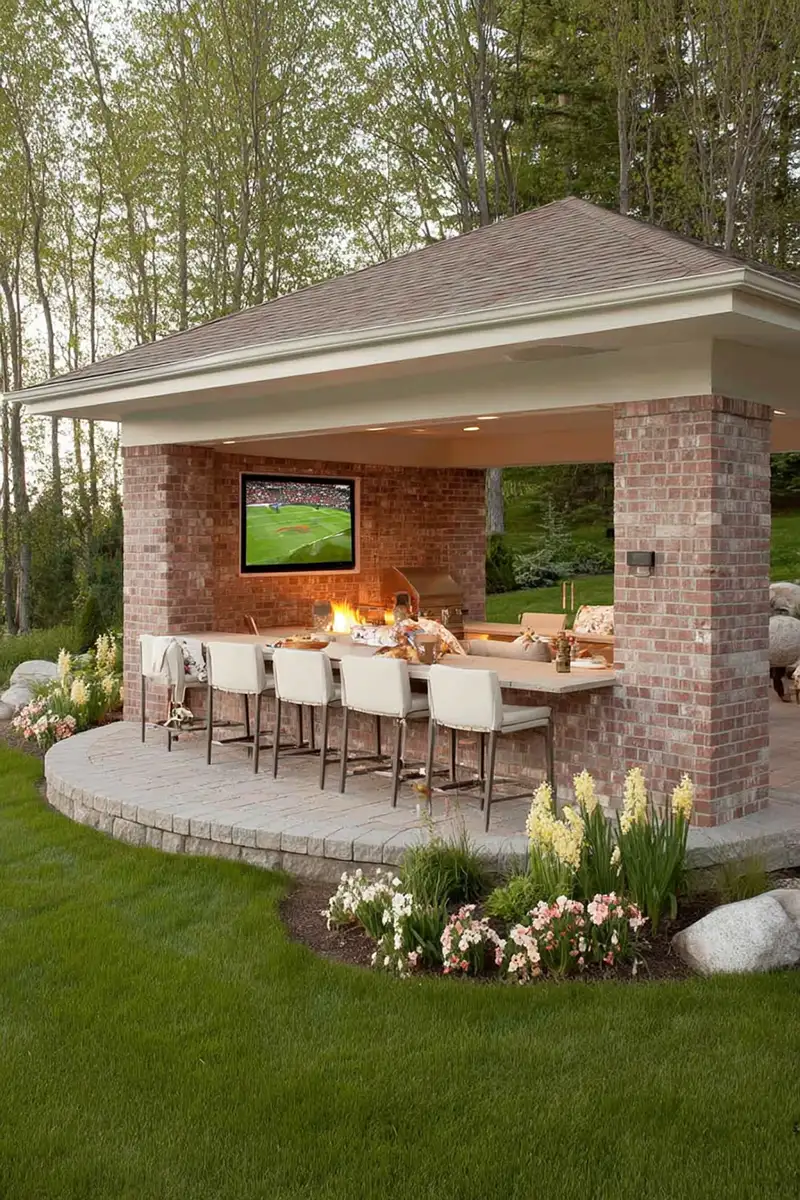
Trying to watch a daytime game outside usually means fighting terrible screen glare. Sinking the TV deep into the back wall of a solid brick pavilion creates a dark cavity that completely eliminates reflections.
The raised bar seating then keeps everyone engaged with the cook without crowding the actual hot plates.
15. Flush Wall Integration
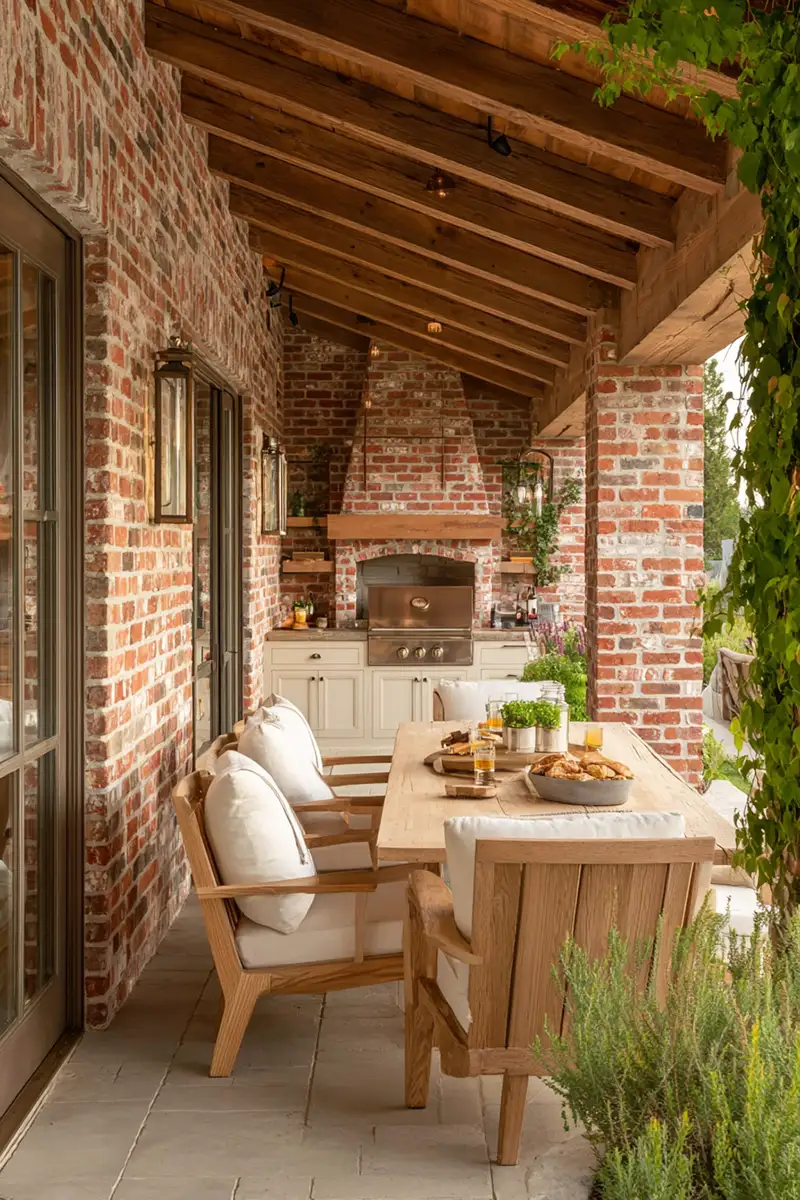
Narrow attached patios feel claustrophobic when loaded with gear.
Pushing the entire brick cooking station flush against the far end wall reclaims essential floor space, leaving exactly enough room for guests to pull back chairs without hitting anything.
16. Tiered Slope Management
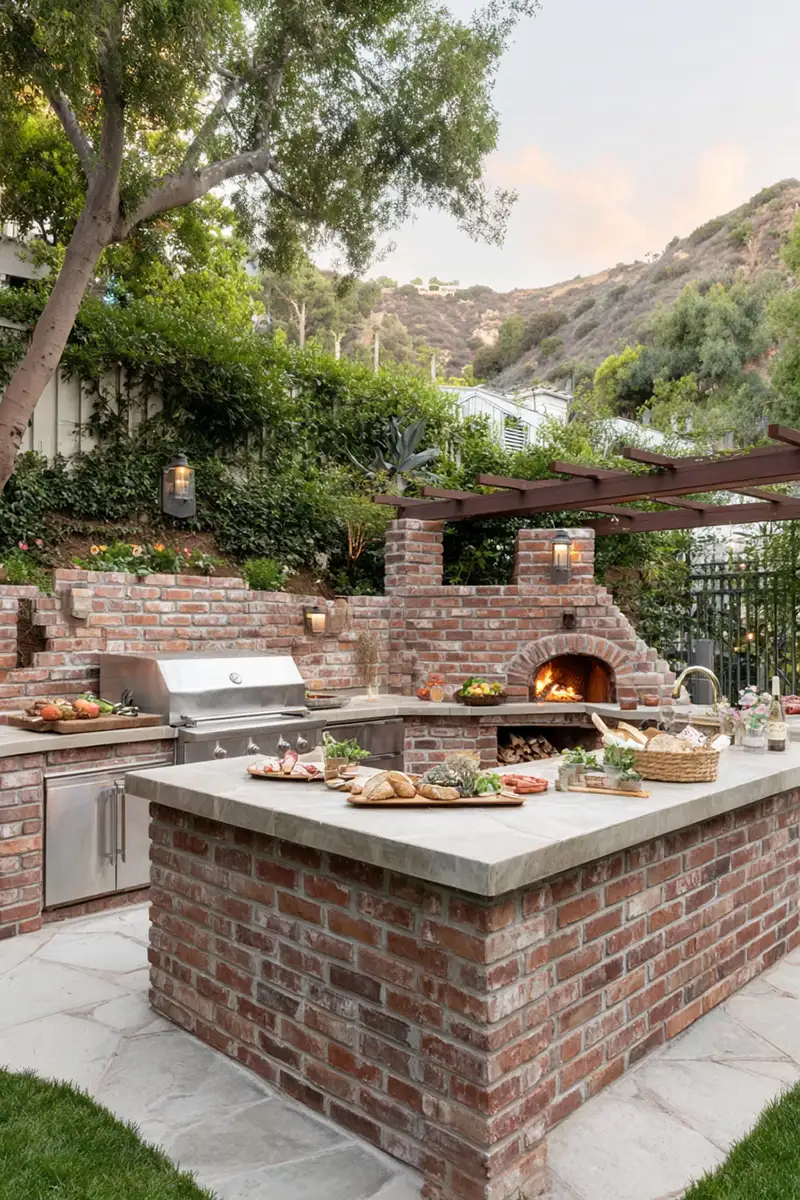
Aggressive hillside slopes normally waste huge portions of your backyard and constantly threaten to wash mud onto clean paving.
Using the actual outdoor kitchen as a multi-tiered retaining wall is an incredibly smart structural move.
The heavy brickwork safely holds back the garden beds and redirects runoff, while simultaneously carving out a perfectly flat, highly functional prep island in the reclaimed lower space.
17. Seamless Boundary Wall
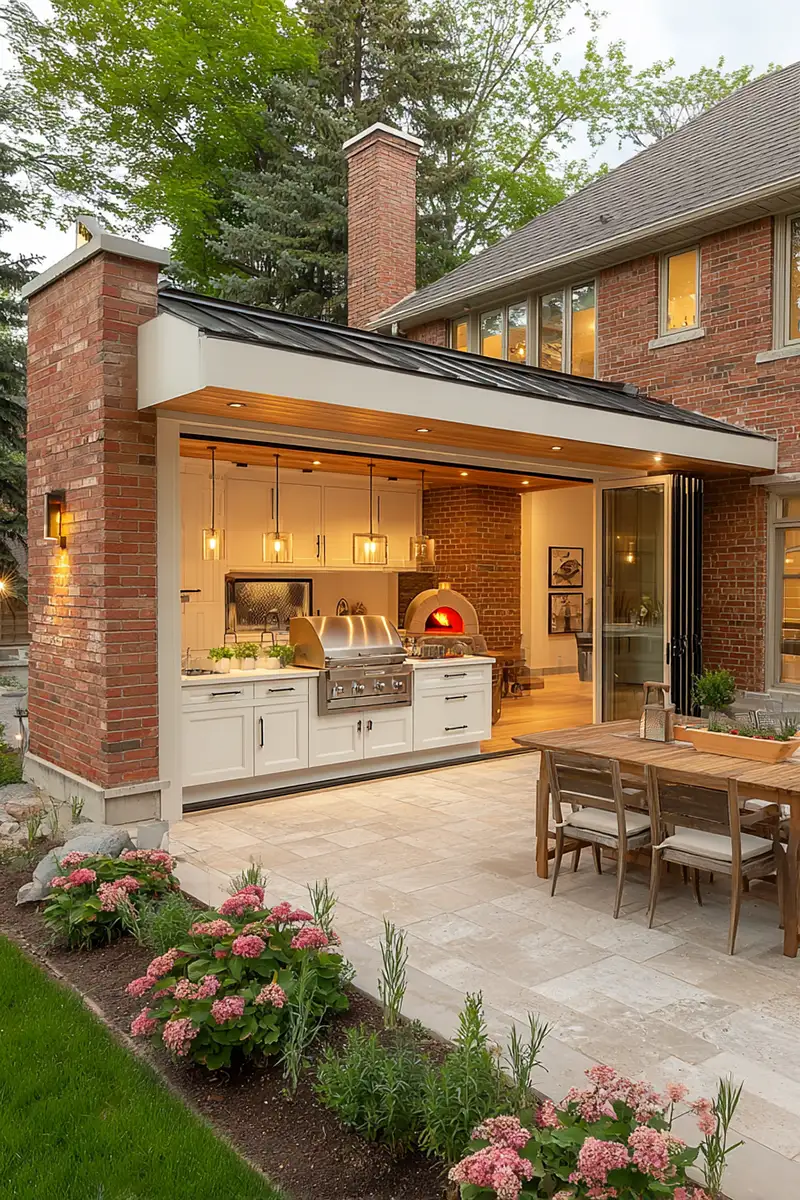
Lugging heavy prep bowls out the back door is a classic hosting headache. Installing a flush-threshold folding glass wall next to the exterior brick oven completely erases the boundary, allowing you to use your indoor sink and outdoor grill as one single, continuous workspace.
18. Framed Archway View
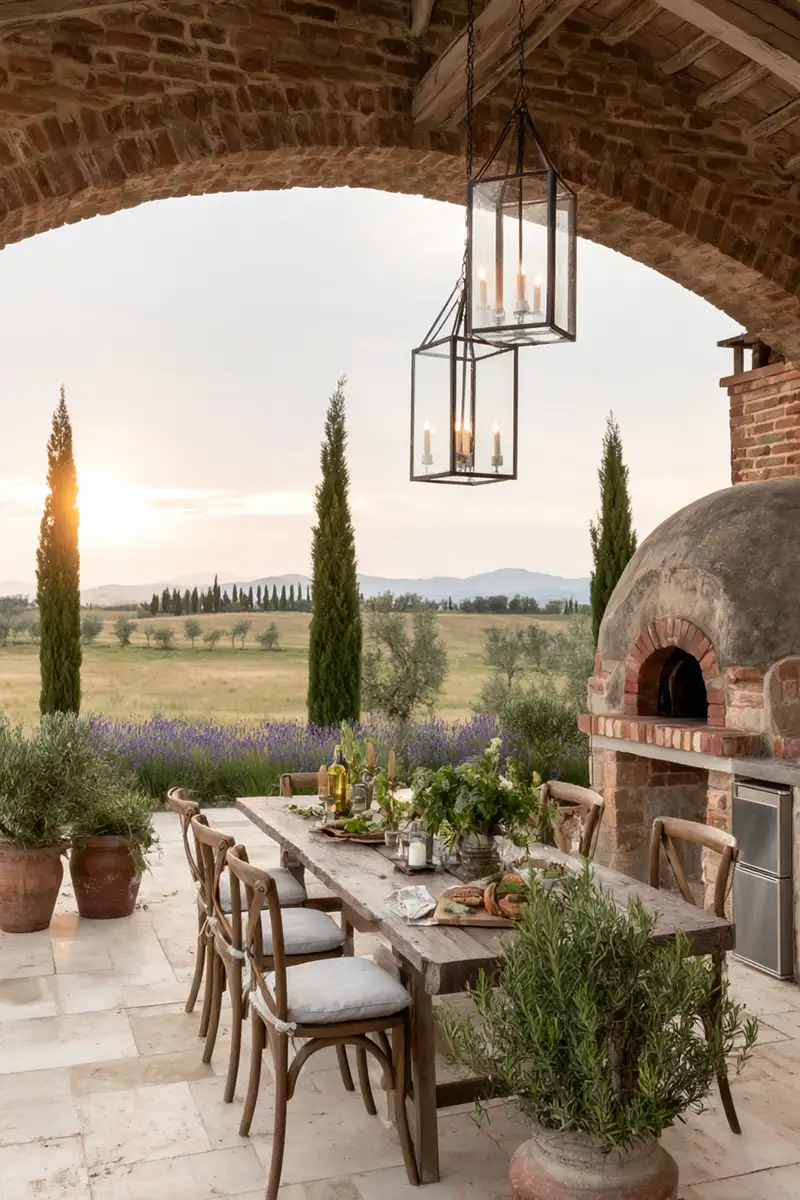
Bulky patio roofs easily block expensive rural views. An oversized masonry arch simply frames the landscape like a painting, keeping the actual cooking unit tucked neatly to the side.
19. Angled Social Hub
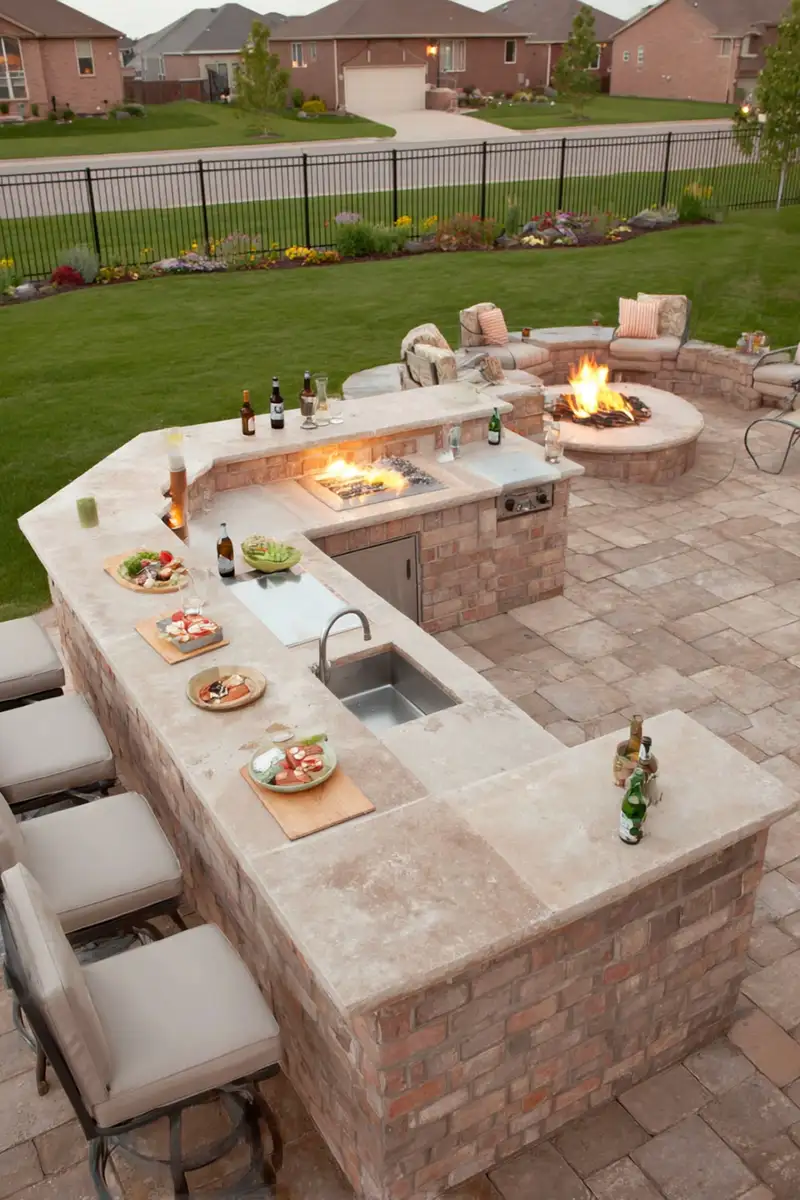
The person grilling often ends up entirely cut off from the main party. Bending a long stone-topped brick island into an angular shape directly connects the cooking zone to the sunken fire pit, forcing natural conversation across the bar.
20. Overhead Copper Storage
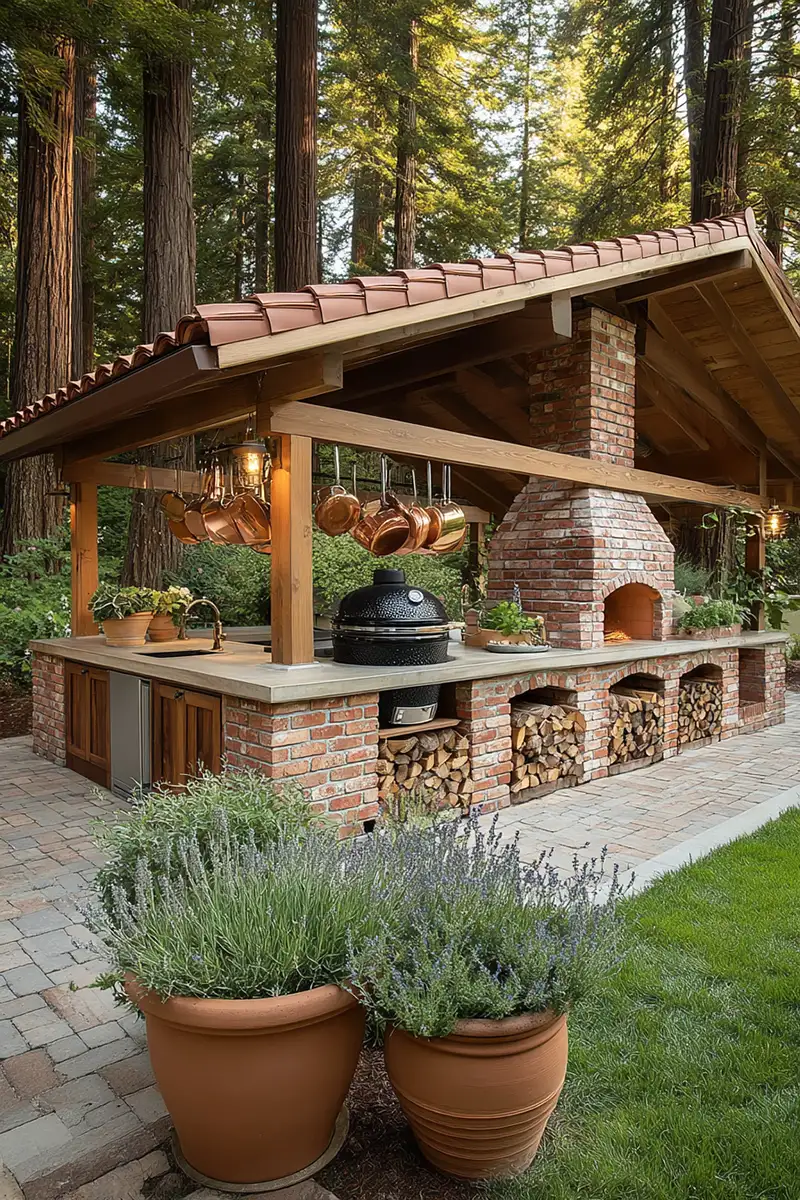
Storing bulky pots in outdoor cabinets almost always leads to hidden moisture and rust.
Suspending heavy copper cookware directly from a thick timber crossbeam uses dead vertical space, keeps the metal perfectly dry, and leaves the under-counter brick alcoves entirely open for holding wood.
21. Framed Ventilation Wall
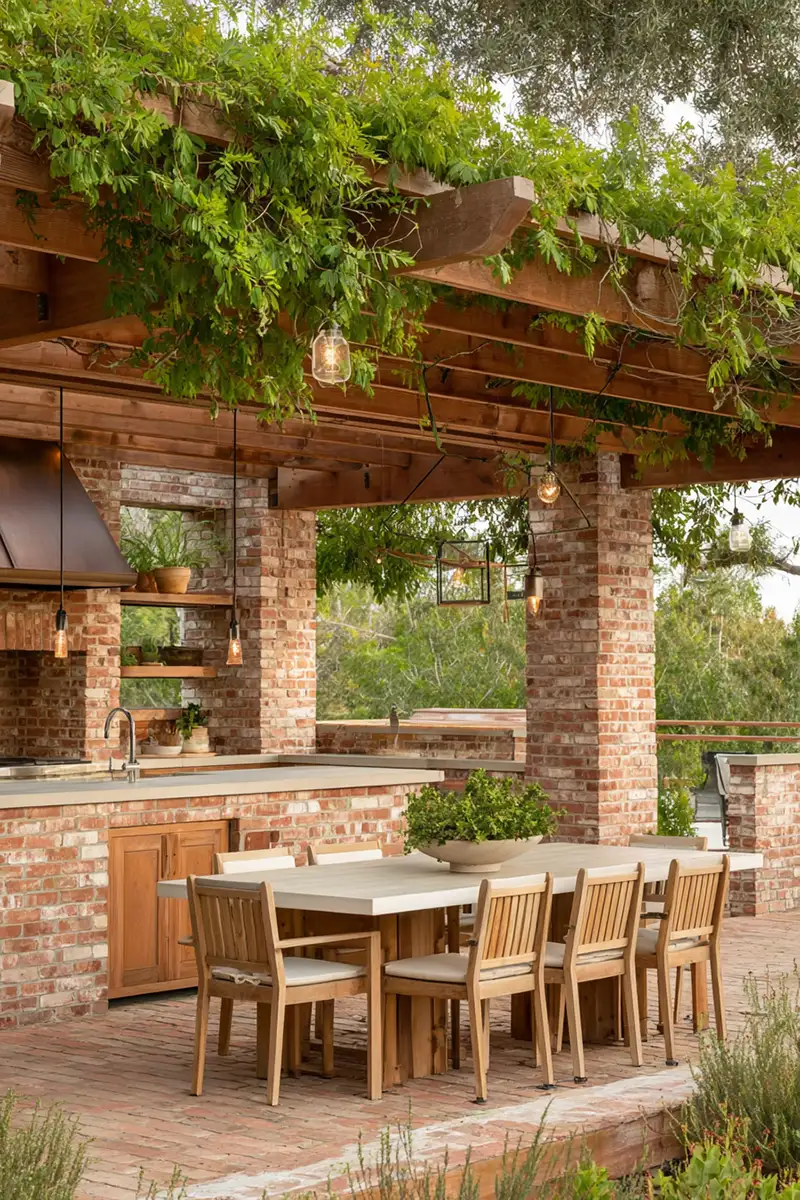
Building a solid privacy wall behind a grill usually turns the cooking zone into a sweltering, airless box. Punching wide, open “windows” straight through the brick masonry solves the airflow problem instantly.
It maintains the heavy structural support required for the thick timber pergola and climbing vines overhead, while allowing cross-breezes to cool the chef and offering structured glimpses of the wild canopy beyond the counter.