
The appeal of a container home is obvious—they are durable, modular, and carry a certain raw, industrial cool. However, the reality of living in one requires solving a few tricky design puzzles, from managing natural light to preventing that “metal fridge” feeling in the summer. These 25 examples prove that you don’t have to sacrifice style for structural integrity.
Instead of hiding the industrial character, these homes embrace it, using clever cantilevered decks and natural insulation solutions like green roofs to keep things comfortable. It’s a masterclass in how to build a residence that feels grounded, relaxed, and perfectly in sync with its surroundings, no matter how remote the location.
1. Vertical social space
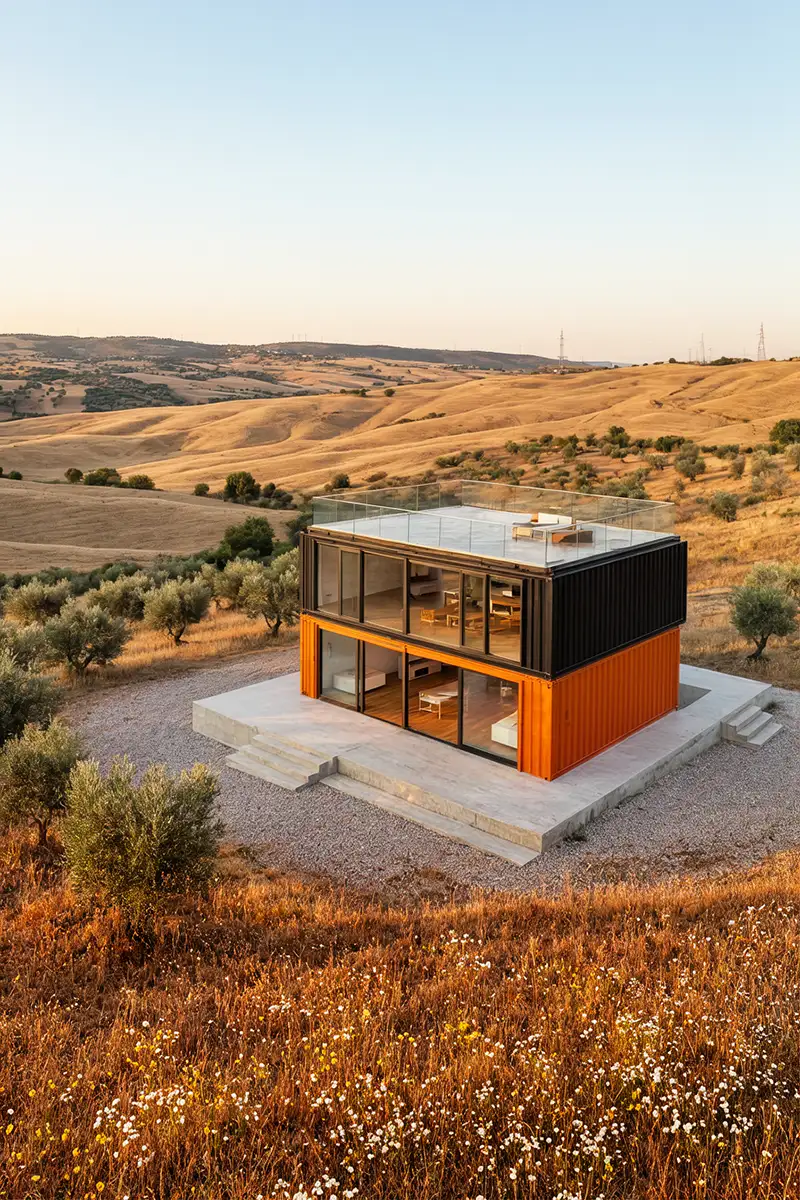
Steel boxes often feel cramped, but stacking two units and adding a full-length roof terrace solves the space issue. The glass railing on top makes the upper deck feel like an open-air room. It’s a smart way to get a 360-degree view without increasing the footprint of the foundation.
2. Cantilevered hillside stacking
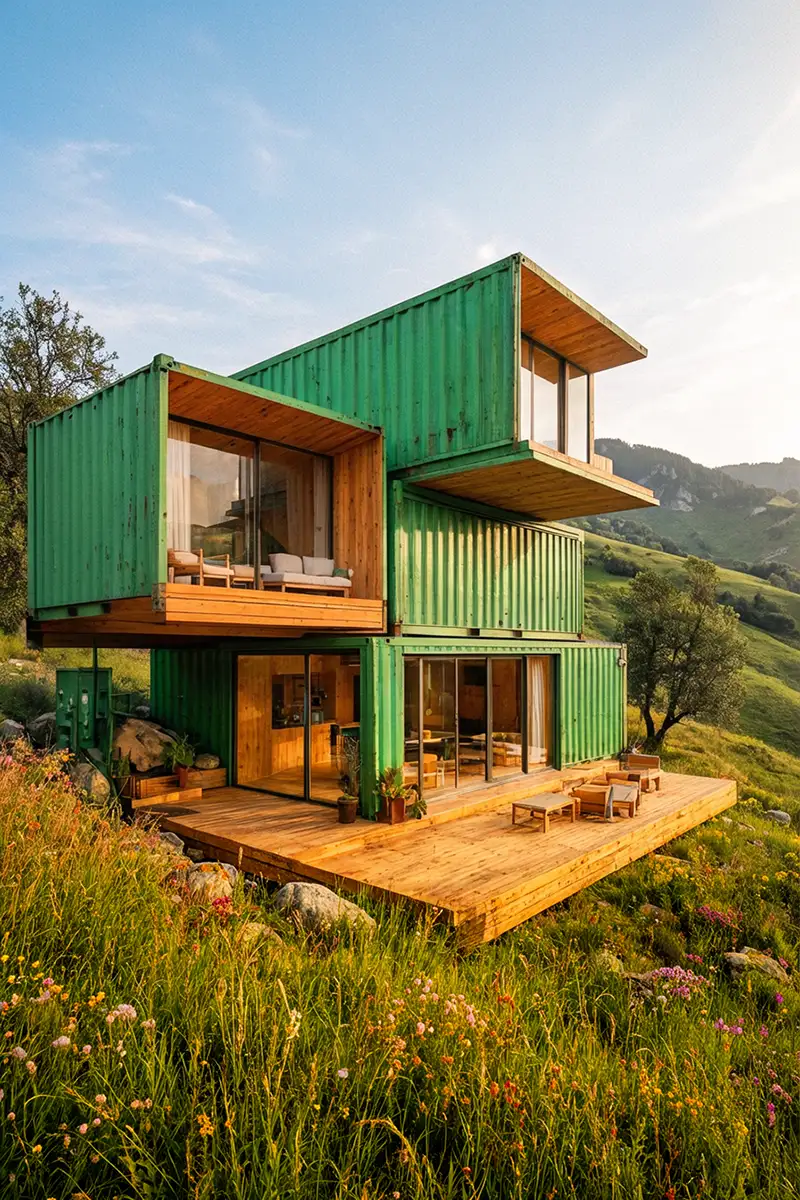
Sloped land usually requires expensive digging and heavy concrete walls. This design skips the mess by using the containers as structural beams that lean into the hill.
By cantilevering the top units out over the grass, the house creates its own shade for the wooden deck below. It keeps the ground natural and gives the interior a floating feel that works perfectly with the mountain backdrop.
3. Natural thermal insulation
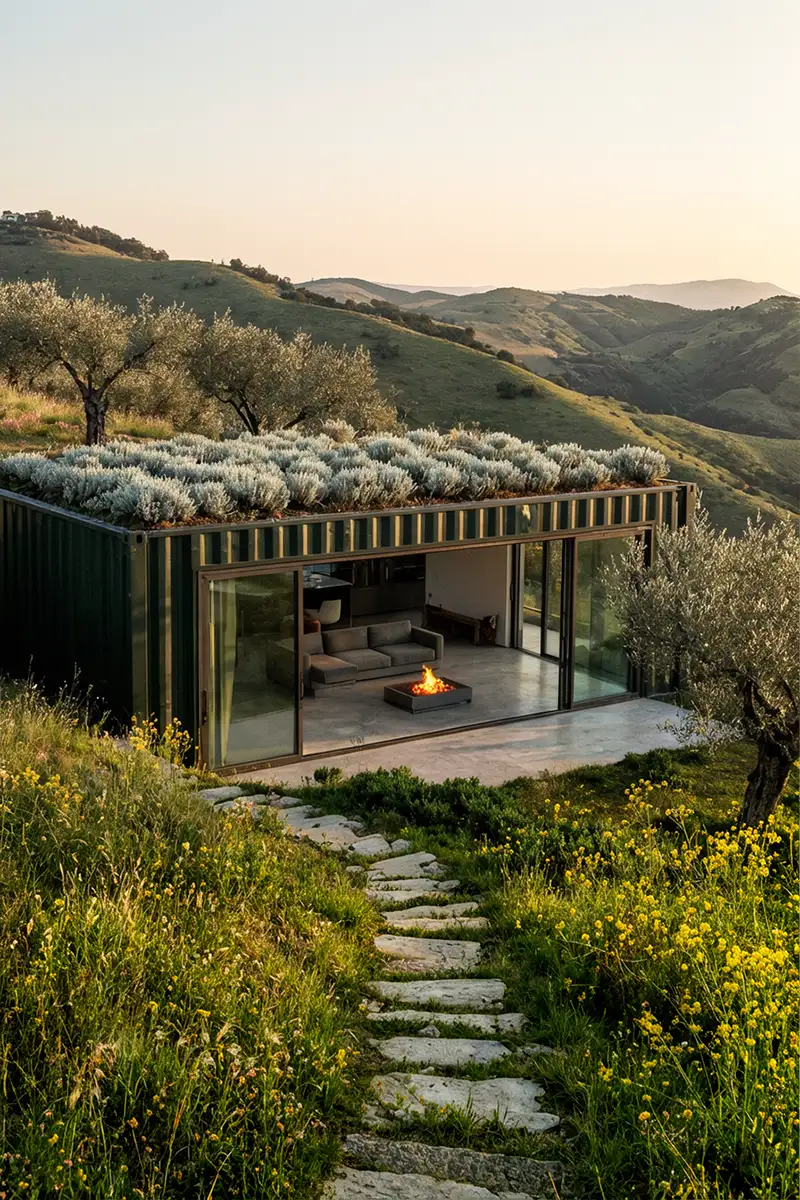
A flat metal roof can get very hot under the midday sun. This thick layer of planted lavender acts as a natural cooling system and heavy-duty insulation.
It turns the industrial structure into a piece of the garden while keeping the inside temperature steady and comfortable without constant air conditioning.
4. Glazed winter living
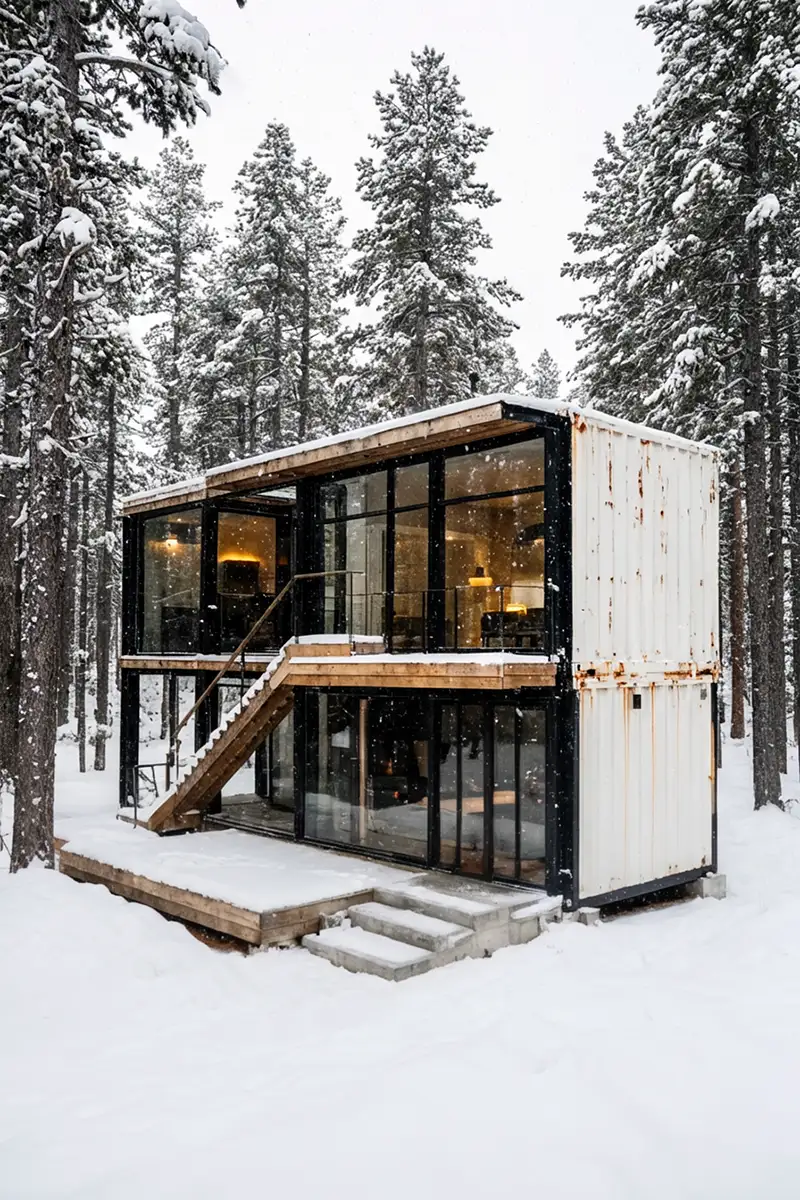
Wide glass panels turn these white metal shells into warm, light-filled hubs. The elevated concrete base keeps the floor dry and away from the moisture of the melting snow.
5. Suspended forest modules
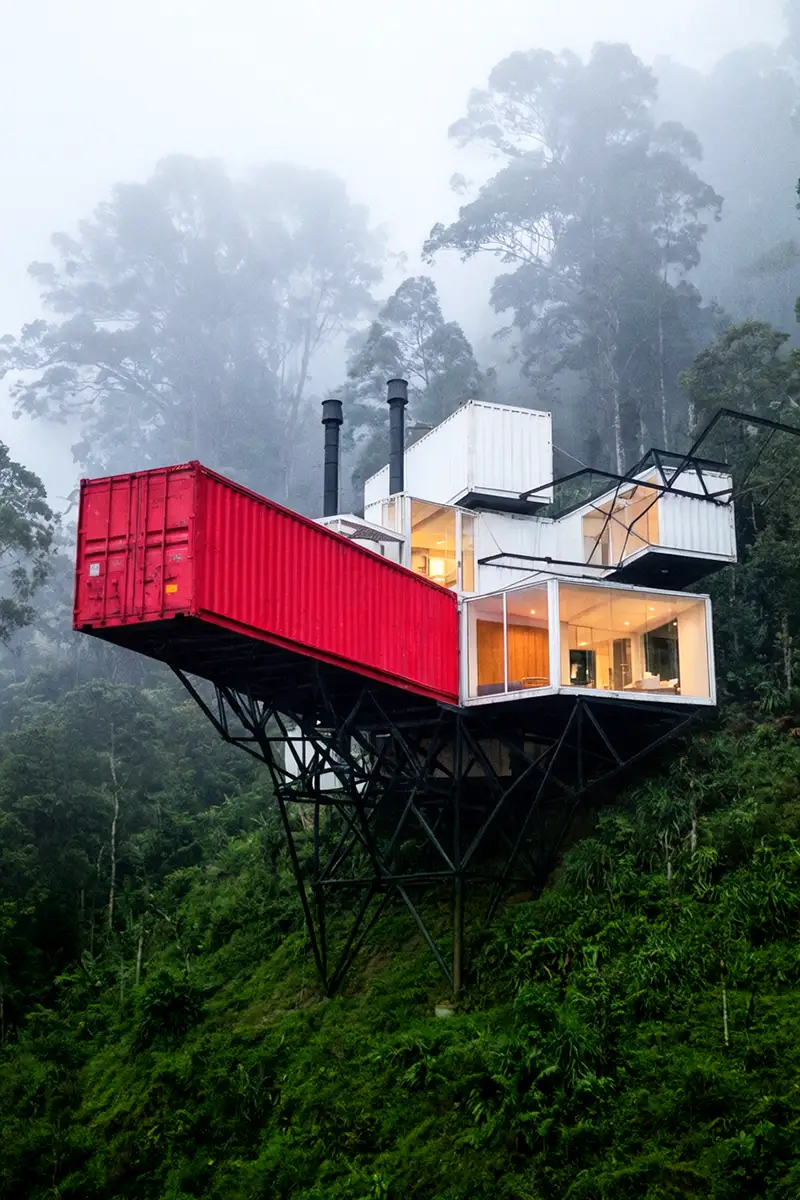
Building on a steep, wet forest slope is a nightmare for traditional foundations and drainage. These high steel legs lift the containers well above the fog and damp soil.
It protects the metal from rust and leaves the tree roots underneath untouched, creating a high-tech cabin that breathes with the woods.
6. Rooftop microclimates
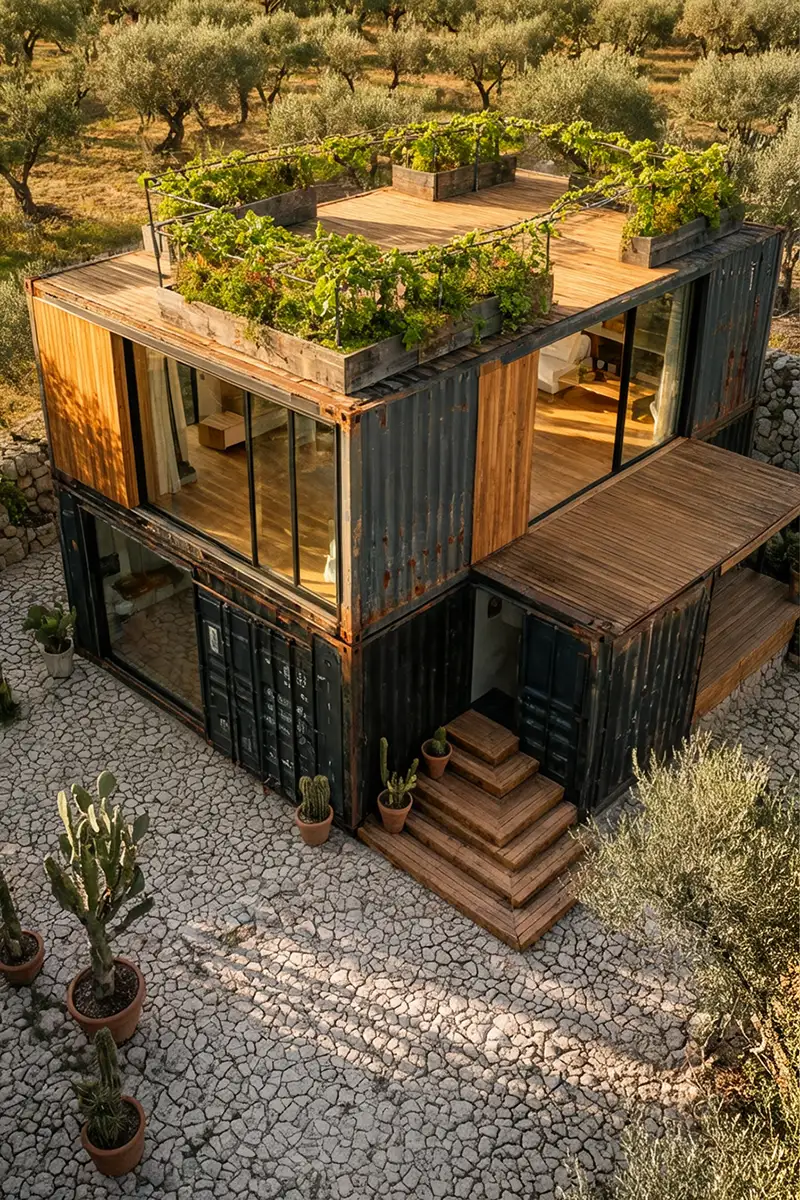
Dark metal can look harsh against stone, but adding warm wood steps and a rooftop trellis changes the entire mood. The plants on top provide a natural canopy that cools the steel surface.
By using a matte, dark finish, the house stays low-profile in the landscape. It’s a great example of how to make industrial materials feel quiet and grounded rather than loud and out of place.
7. Poolside architectural shade
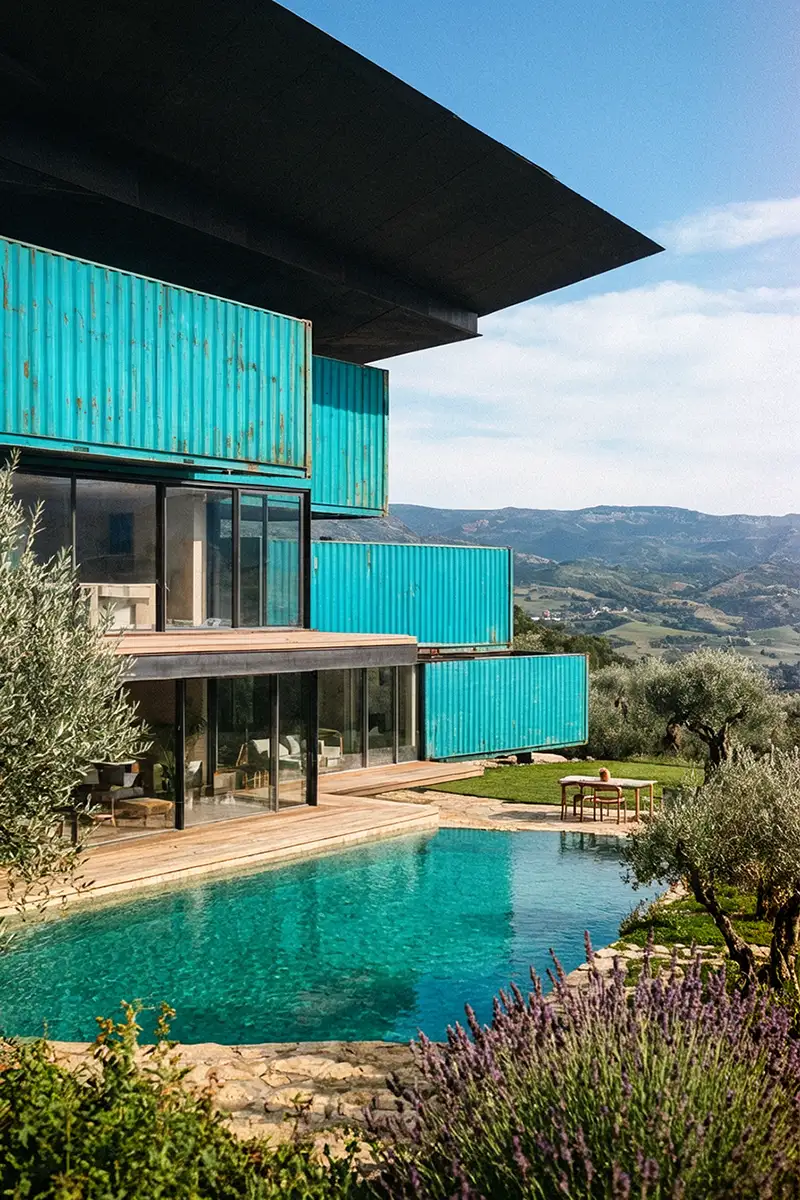
Large black roof overhangs are the secret to making this work. They protect the large glass walls from direct glare and keep the outdoor patio cool during the summer. The teal color of the containers reflects the pool water, making the whole setup feel cohesive rather than like a random metal box in a field.
8. Cascading mountain integration
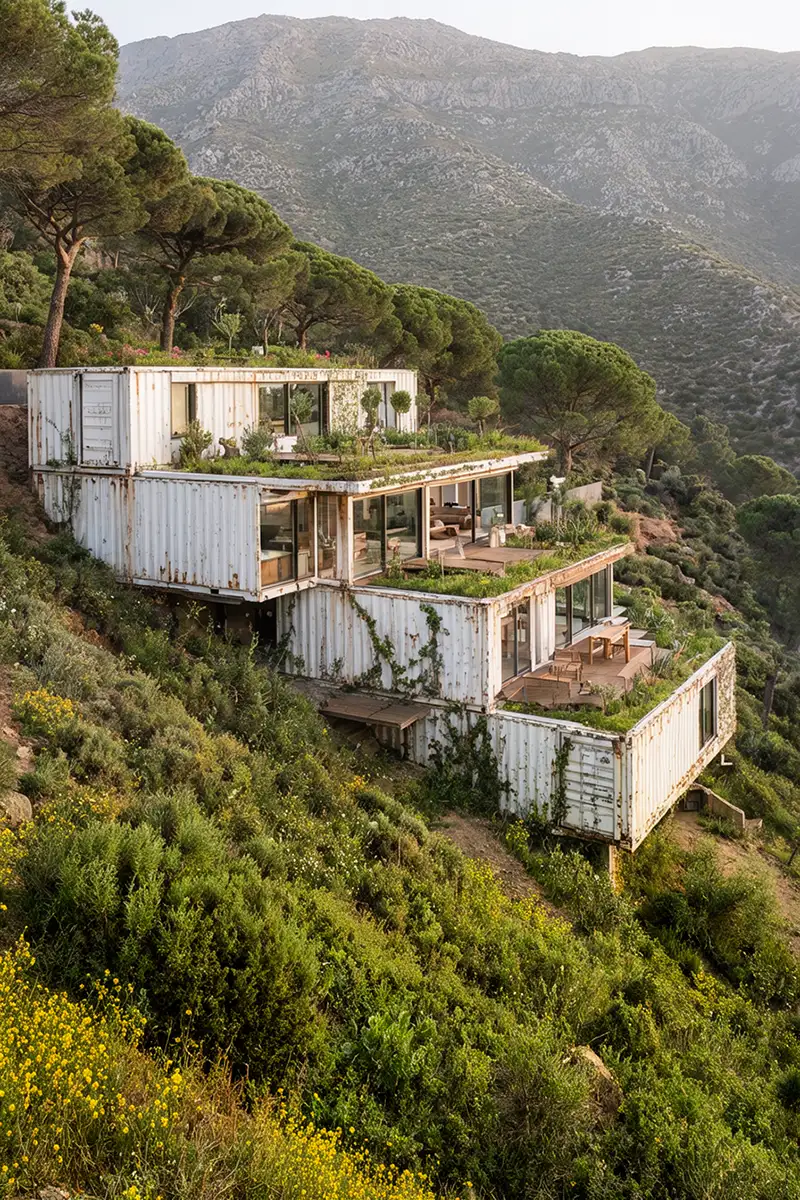
Staggering containers down a hill creates private terraces for every single floor. Each unit uses the roof of the one below it as a garden bed for native plants.
This clever stacking replaces the greenery the building occupies, ensuring the house looks like it grew out of the mountain rather than being dropped on it.
9. Panoramic deck extensions
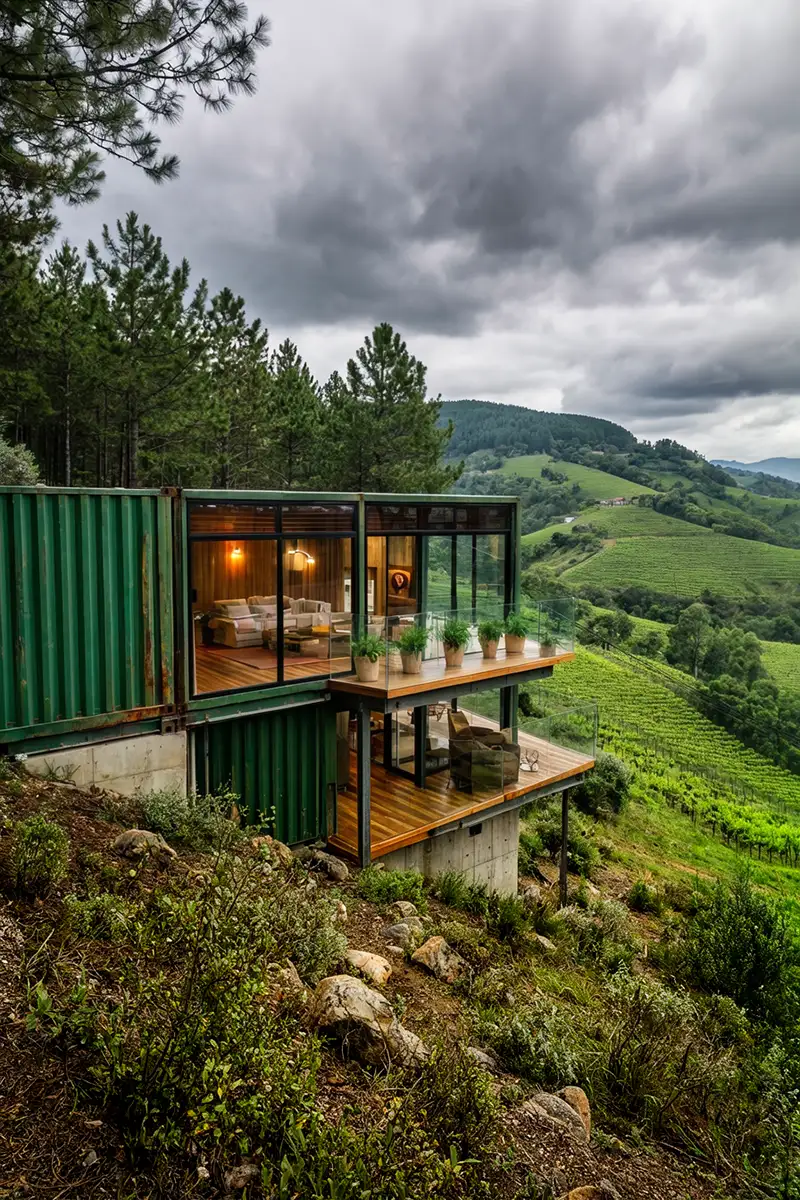
Thin glass railings keep the view of the valley completely clear from the sofa. The wooden deck extends the living room floor outside, making a small container footprint feel twice as wide as it actually is.
10. Coastal cliff protection
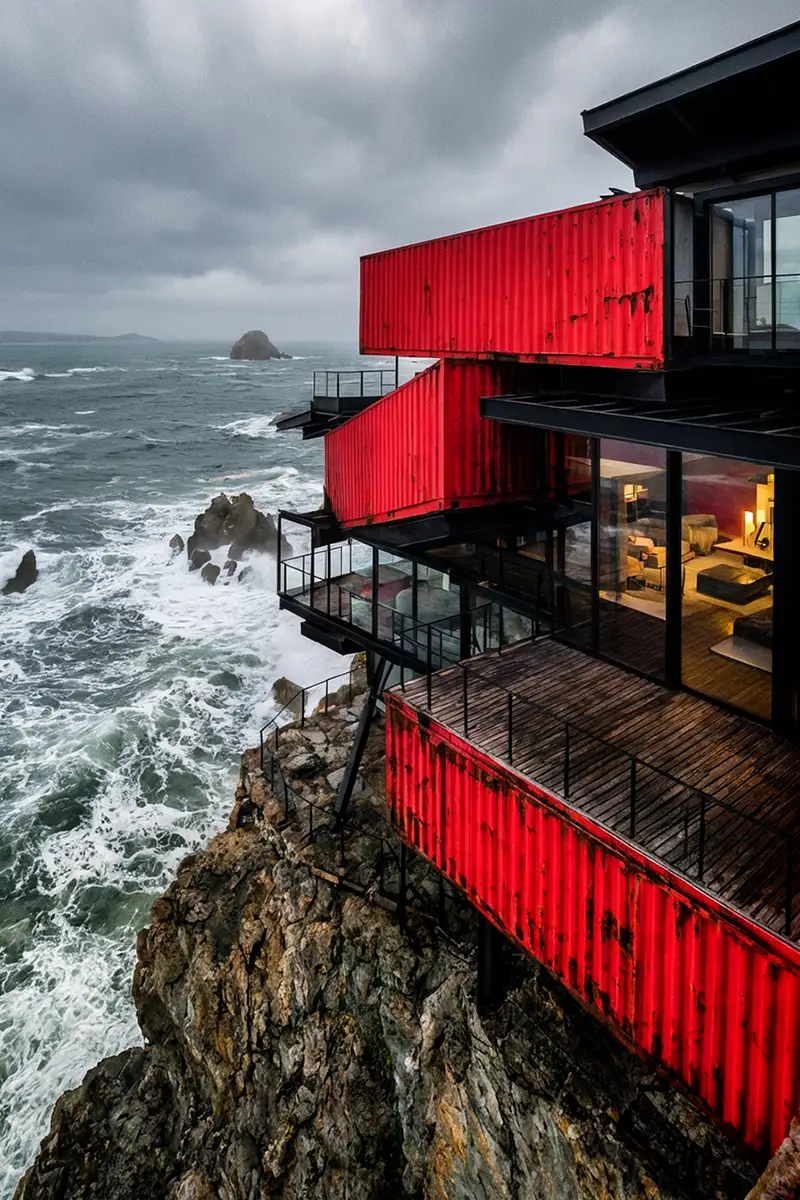
Facing the open ocean means dealing with constant salt spray and high winds. These red containers use heavy-duty industrial coatings to handle the rough climate. The way the modules are angled creates a sheltered pocket for the glass doors, so you get the wild view without the wind hitting the interior directly.
11. Solar-integrated winter cabins
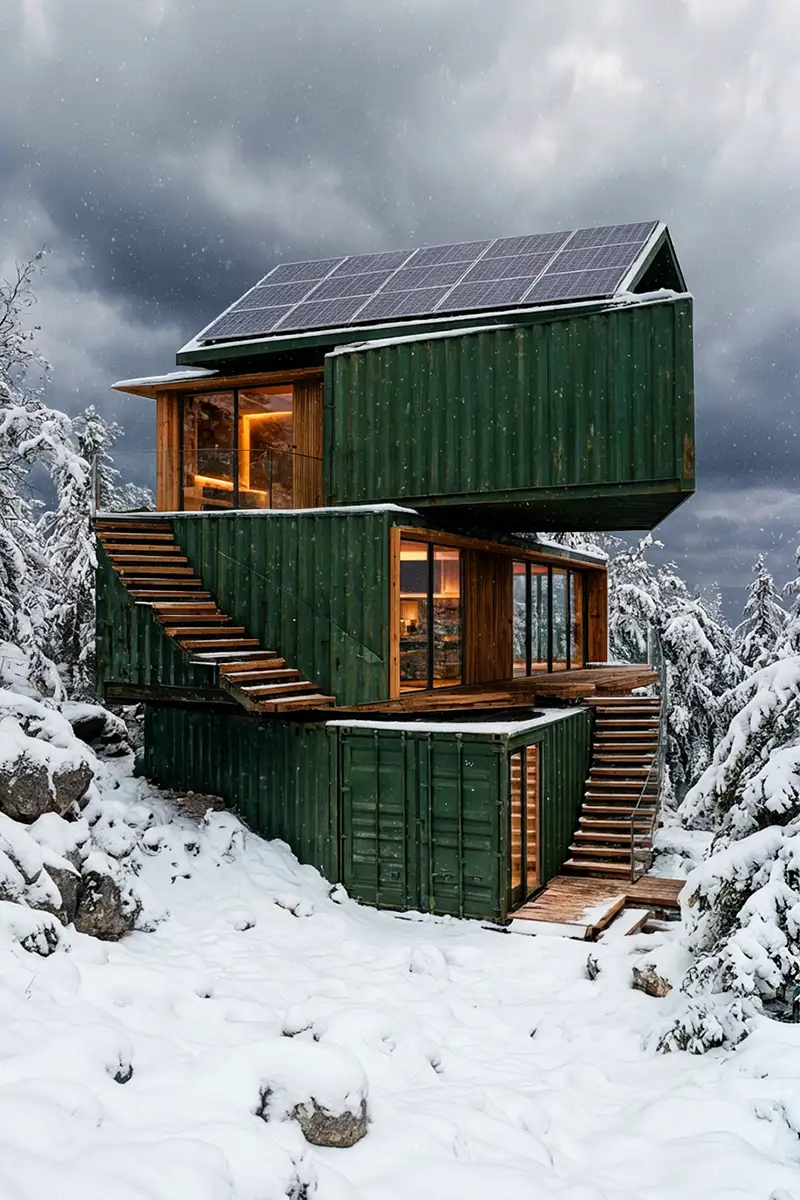
Keeping a house warm in heavy snow while staying off-grid is a major hurdle. This triple-stacked unit uses a pitched solar array on the top roof to capture low winter sun.
The deep green paint absorbs heat, while the wooden staircase provides a slip-resistant path that stands out against the white drifts.
12. Arid climate material layering
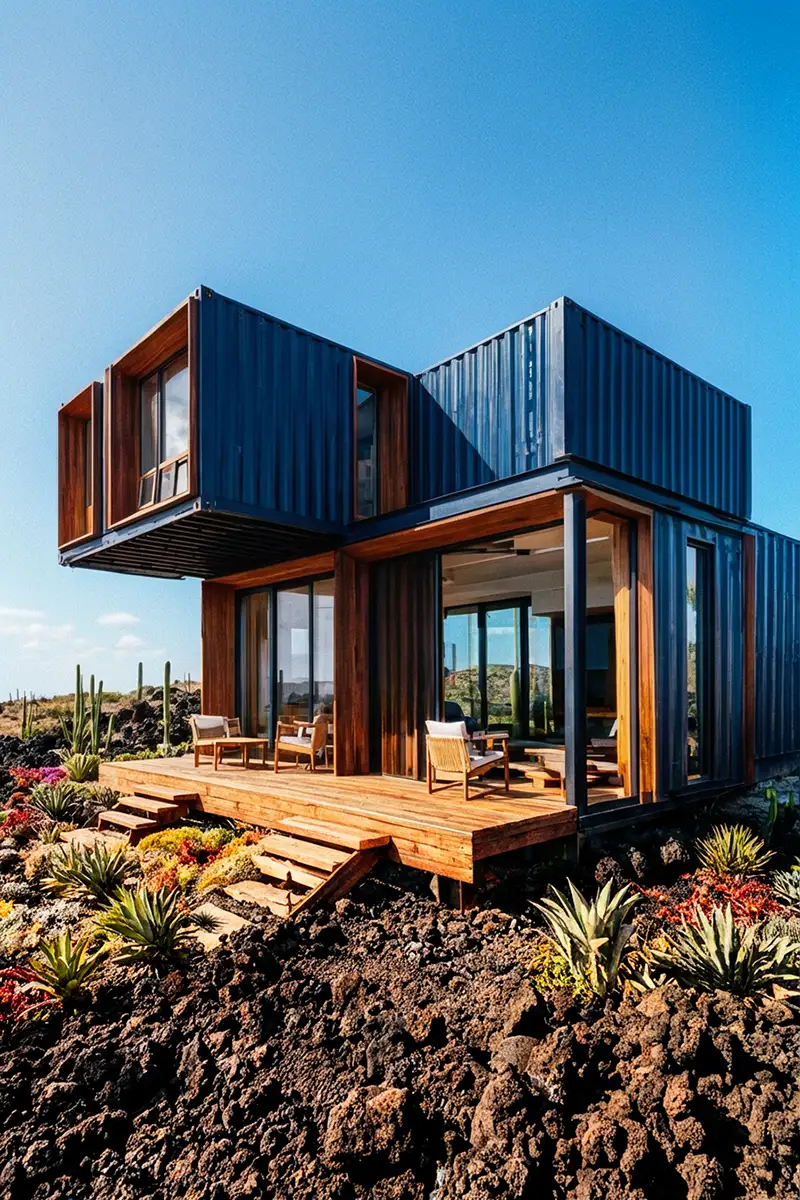
Dark navy steel absorbs heat fast in a desert. To fix this, thick wooden window frames are added to create deep shadows, naturally cooling the glass.
13. Geometric aperture solutions
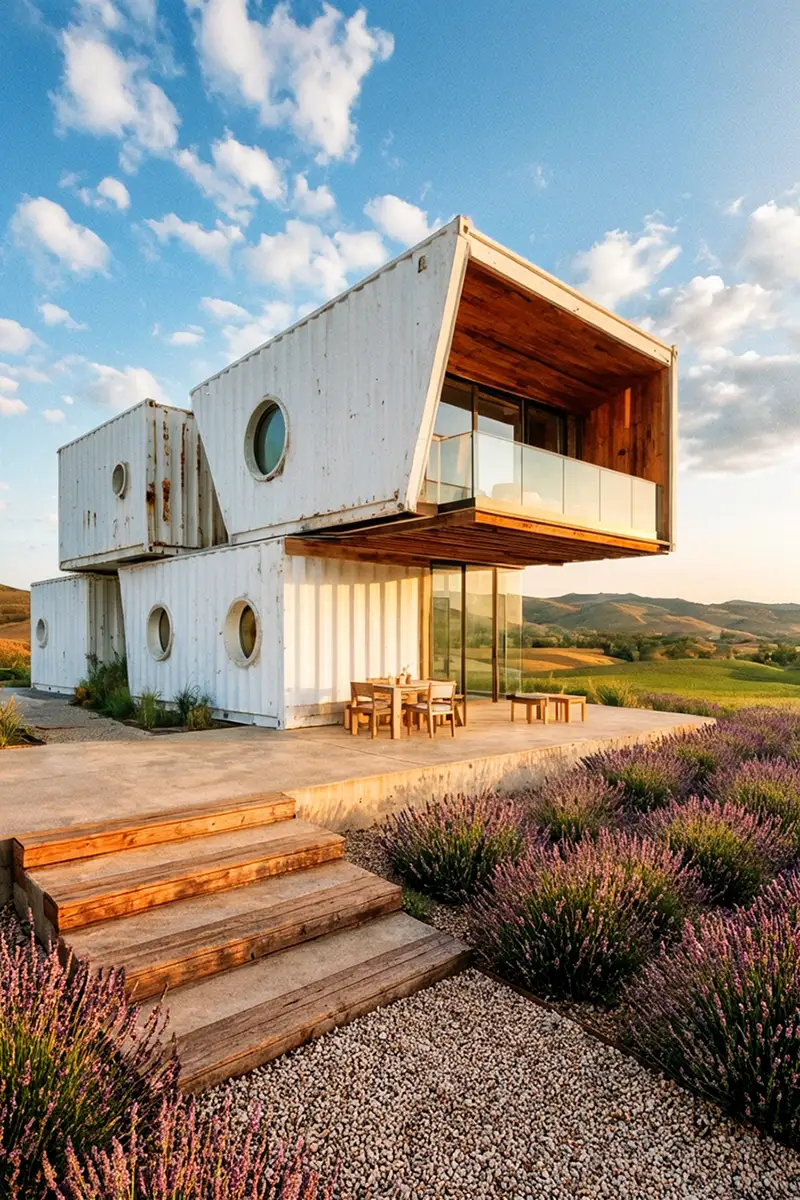
Standard rectangular windows can make a container feel too much like an office. By adding circular portholes and an angled cantilever, the structure gains a soft, nautical character that breaks up the long straight lines.
The elevated concrete patio keeps the lavender field at eye level, allowing the scent to drift in without letting the plants overgrow the house.
14. Floating desert foundations
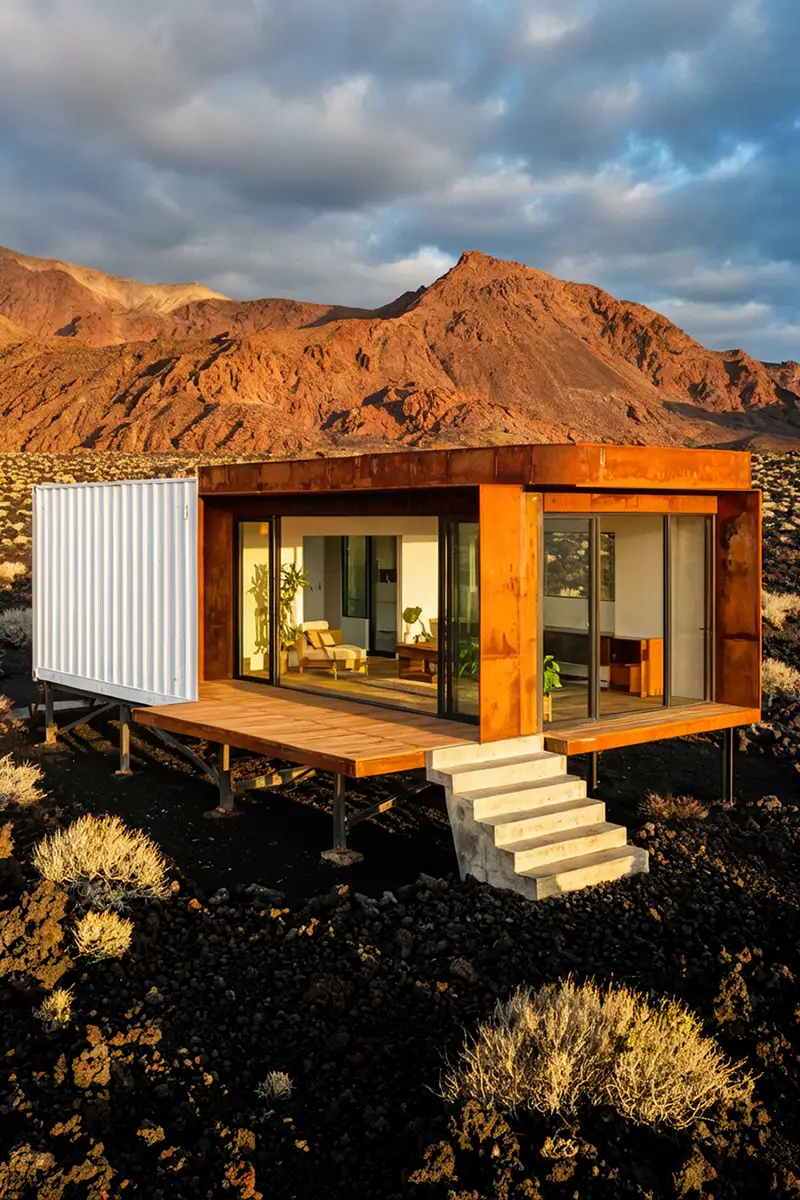
Lifting the main living space on steel stilts prevents the hot volcanic ground from heating the floor, allowing air to circulate freely underneath.
15. High-contrast forest silhouettes
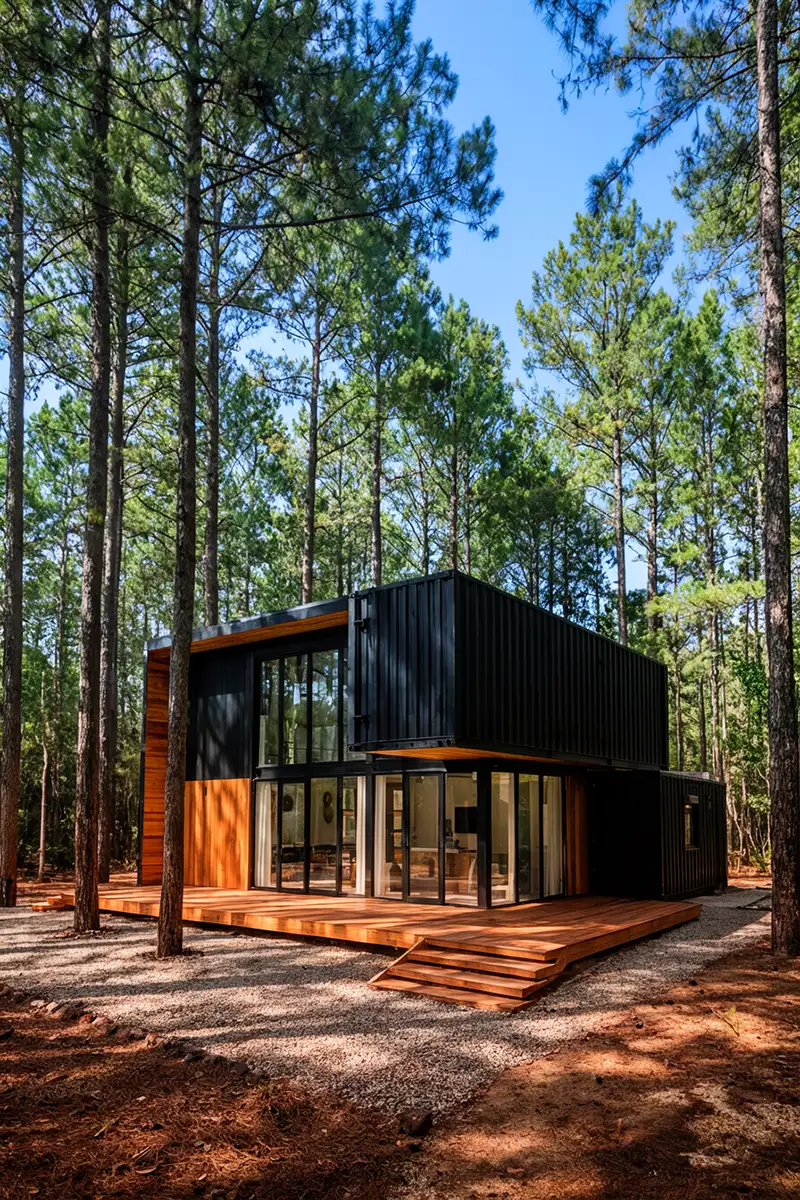
In a dense pine forest, natural light is often blocked by high canopies. The solution here is a massive two-story glass wall framed by black steel.
It pulls the vertical lines of the trees inside the home, while the warm wood siding on the ground floor keeps the entrance feeling approachable and sheltered.
16. Volcanic site pathing
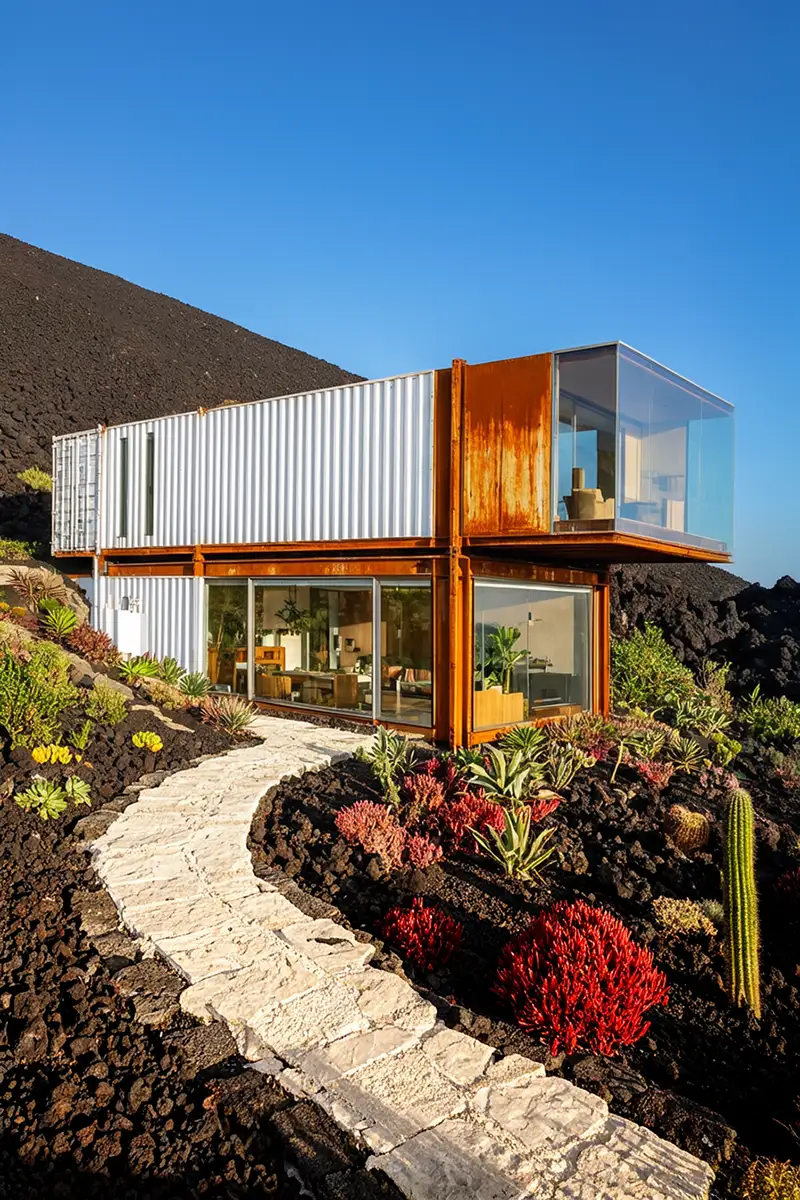
Building on uneven lava rock is tricky for walkways. A simple, winding stone path provides a stable surface that connects the modern white container to its wild, prickly surroundings.
17. Multi-tiered vertical modularity
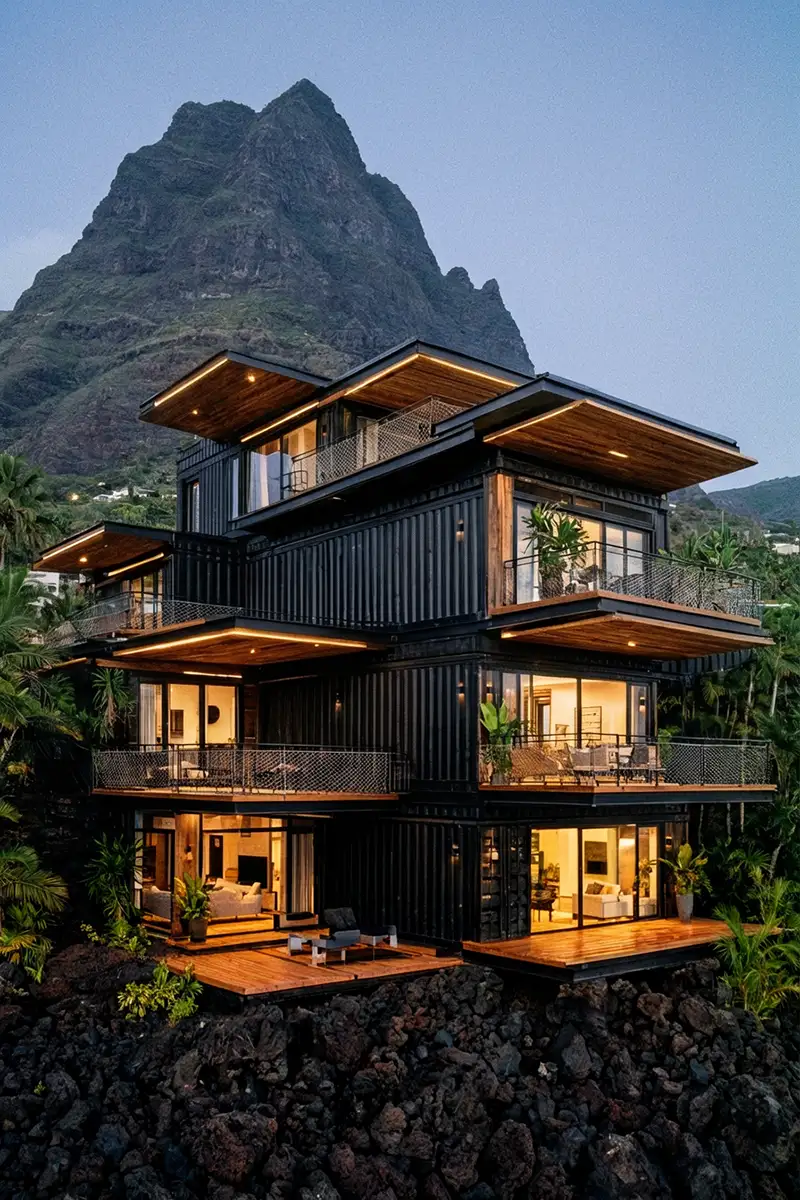
Housing a large family in shipping containers often results in a messy look. This design solves that by using a uniform matte black finish across multiple levels, creating a cohesive vertical “tower” effect.
Warm LED strips under the balcony overhangs define the edges at night, making the large structure feel safe and inviting rather than imposing against the mountain backdrop.
18. Metallic focal points
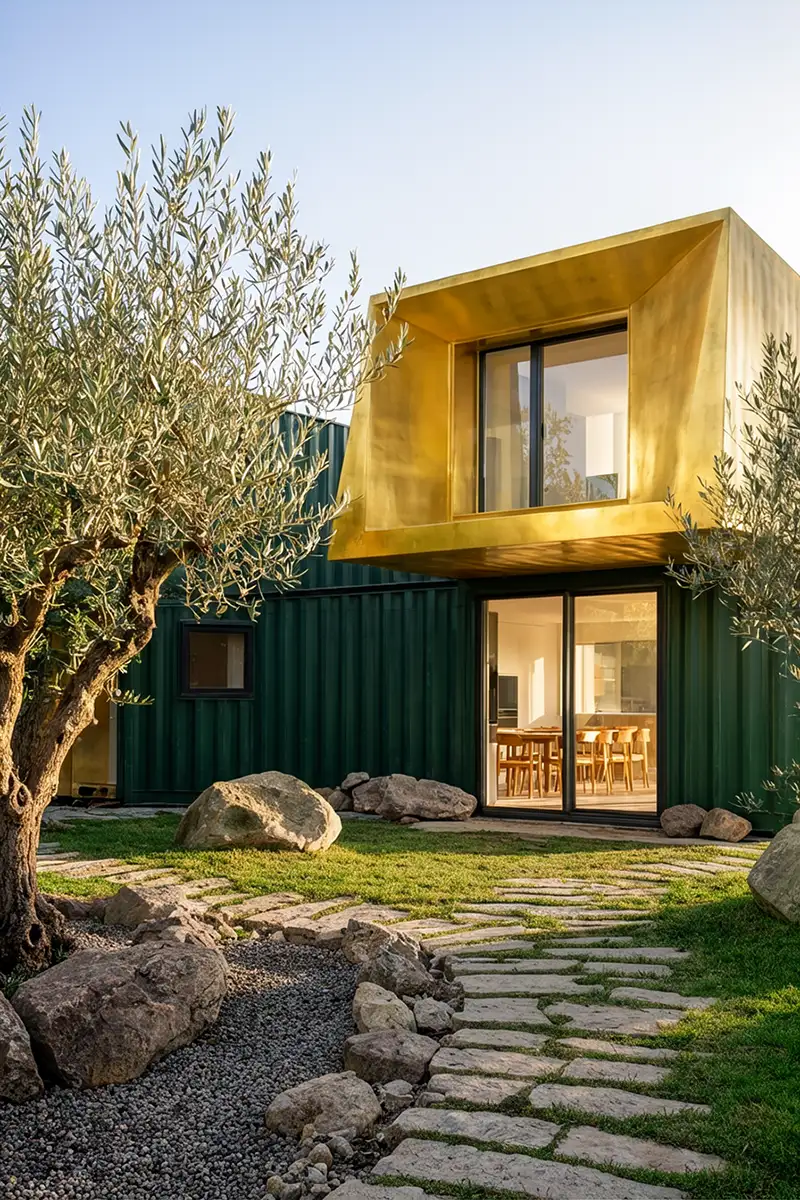
A gold-framed window box acts as a sun hood, shielding the interior from harsh glare while turning a simple green container into a high-end architectural statement.
19. Tropical rooftop ventilation
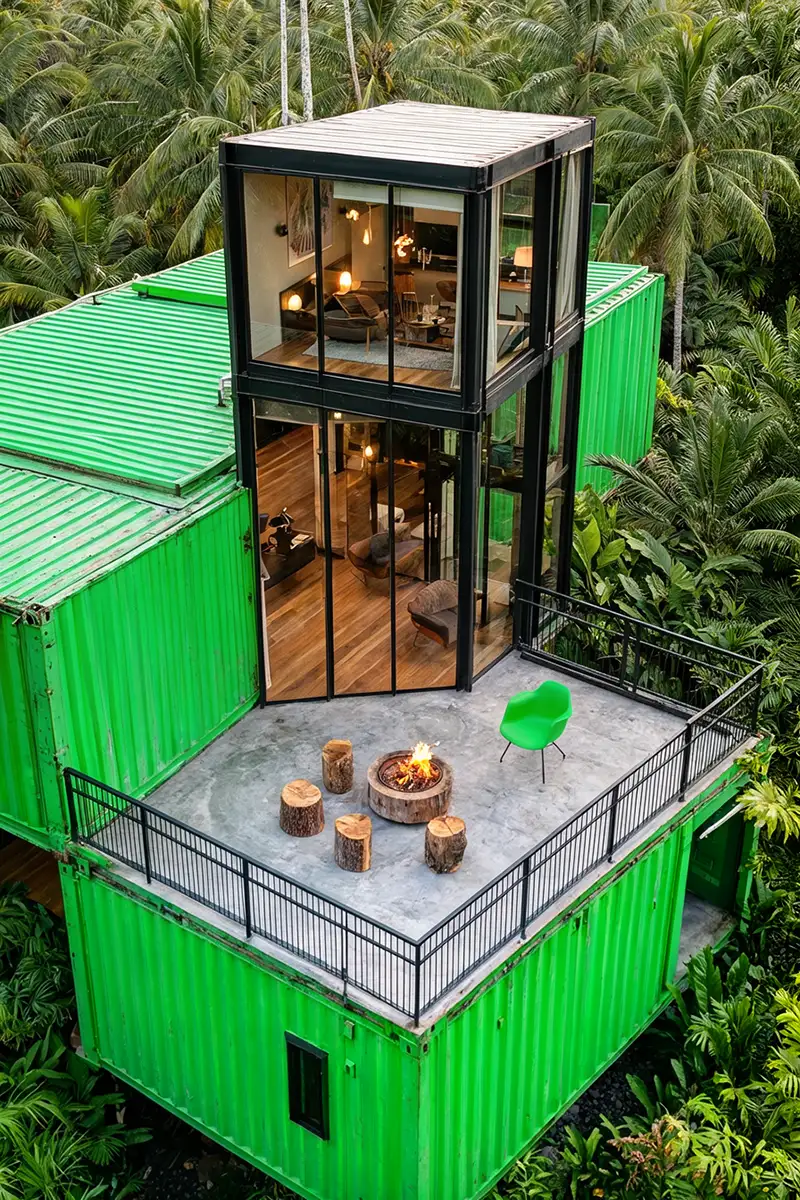
Jungle humidity is a killer for indoor comfort. By placing a fire pit on a wide concrete roof deck, the house creates an evening gathering spot away from the damp ground. The central glass tower acts as a thermal chimney, drawing hot air up and out of the lower living zones to keep the interior fresh and moving.
20. Minimalist misty woodland retreats
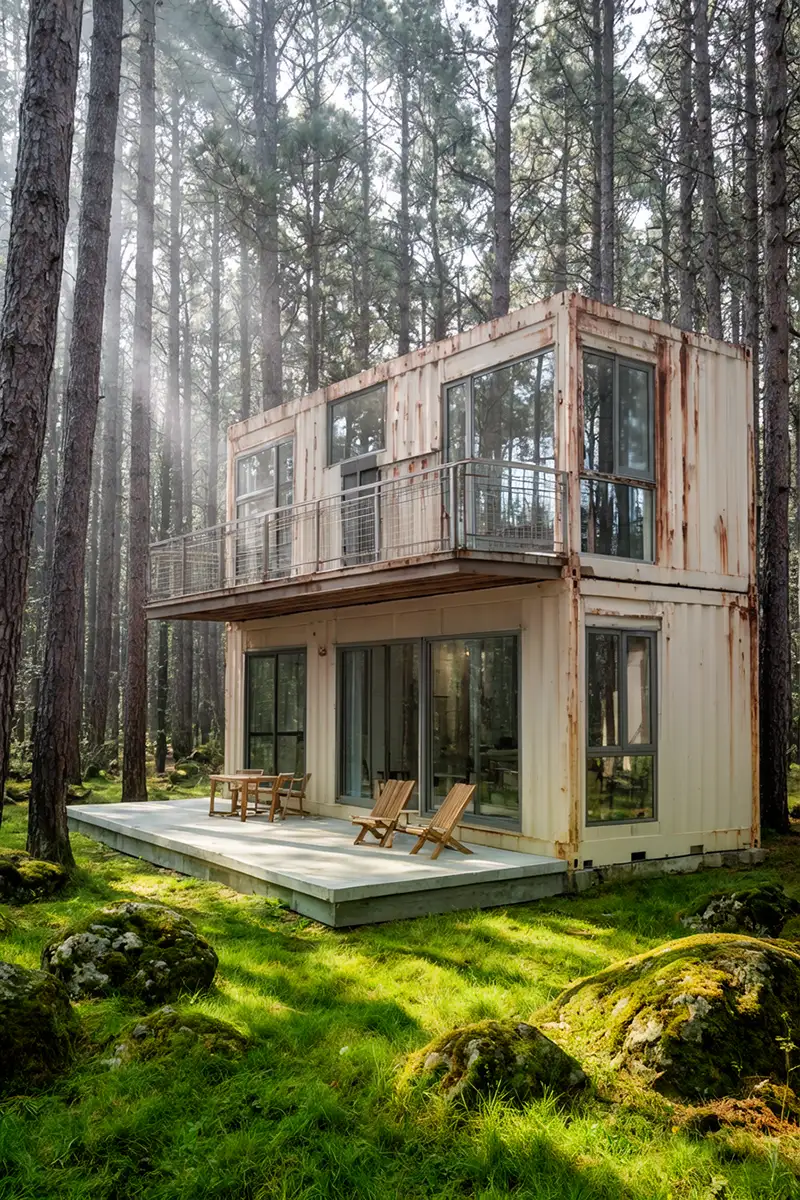
Distressed white paint works surprisingly well in misty woods. It reflects the soft, gray light, ensuring the house doesn’t disappear into the dark shadows of the tall trees.
21. Jungle Greenery and Industrial Red
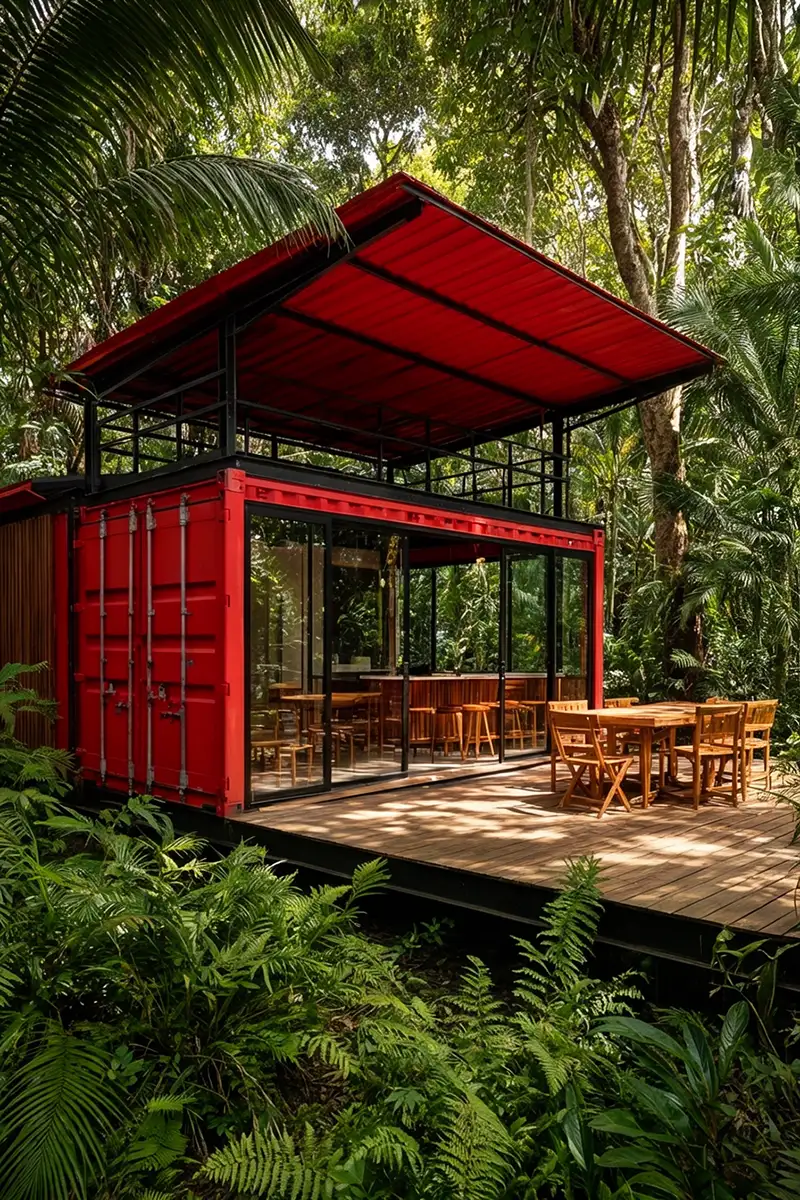
Placing a corrugated steel box in dense jungle greenery is always a massive design risk; it usually just looks alien and jarring. Instead of trying to blend in with camouflage greens, this cafe leaned hard into the contrast with a sharp, matte-red paint job.
It’s a clever bit of framing that actually celebrates the human element in the landscape. By blowing out the front with massive glass sliders, they’ve cleverley connected the cool interior with the humidity outside, turning an ugly shipping crate into an inviting pavilion.
The simple timber deck grounds the whole thing and provides a low-maintenance platform that encourages customers to step out into the view without cluttering the clean aesthetic.
22. Off-Grid Desert Compounds
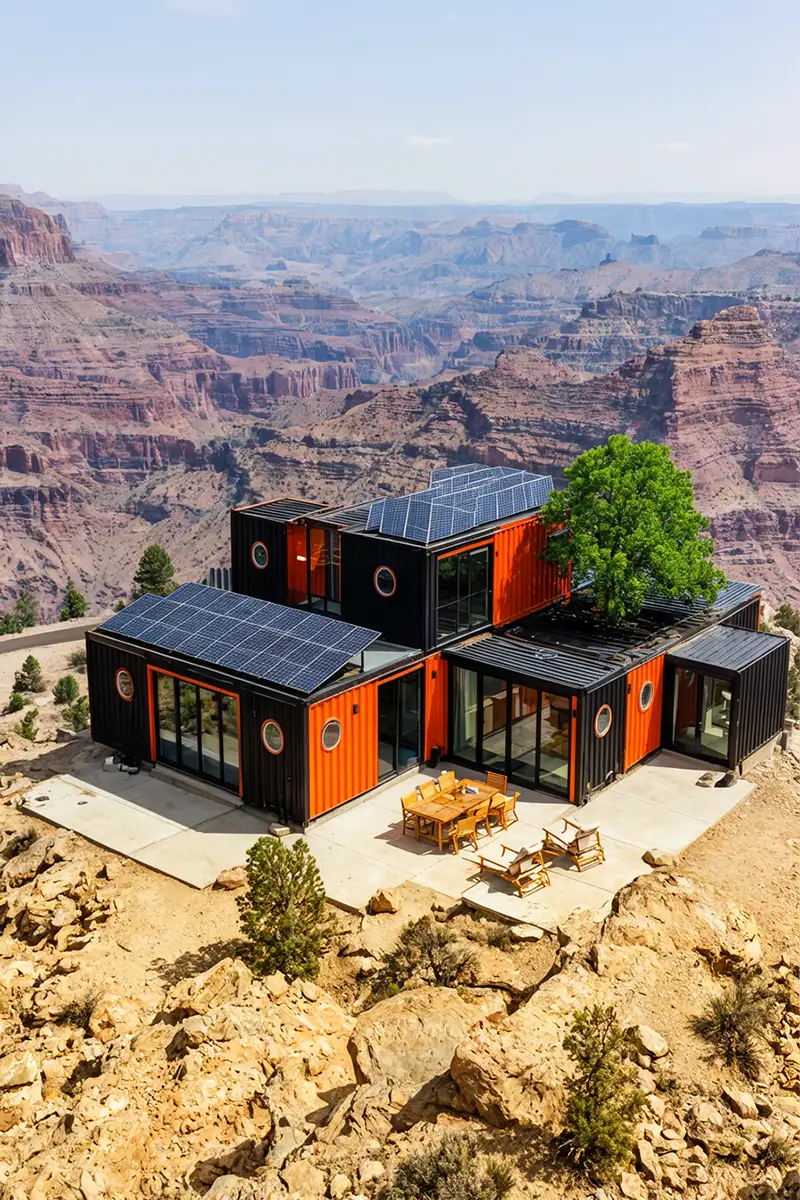
Powering a complex dwelling in a remote canyon is a logistical hurdle that many off-grid projects fail. This multi-container stack tackles it head-on with an extensive solar array covering the upper levels.
They haven’t tried to hide the panels; they’ve made them a key part of the modern, industrial silhouette against the rock. Modular construction allows for this sprawling layout, creating natural pockets of shade.
We especially like how the lower concrete platform defines a clear outdoor living zone that feels anchored to the desert floor, while those fun circular portholes hint at the shipping container’s nautical past, strategically placed for light and views.
23. Vertical Stacking for Snow
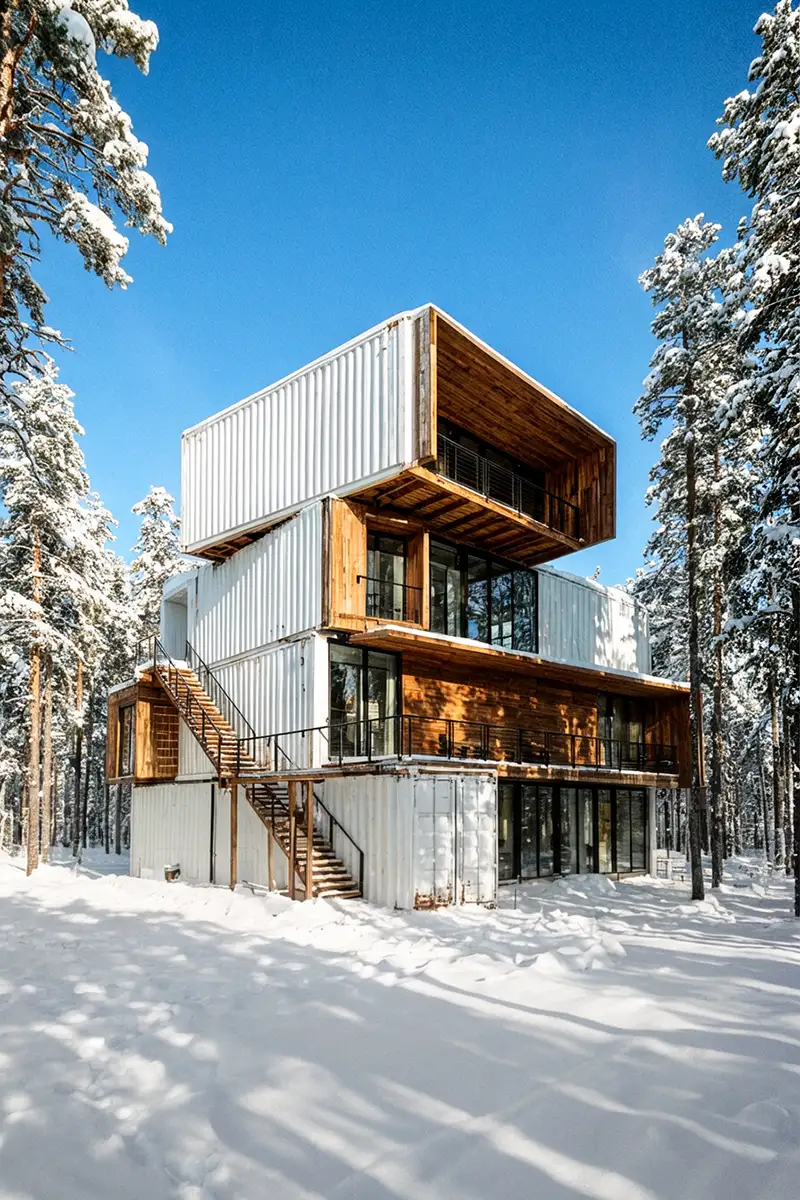
When you’re building in deep snow and dense forest, maximizing internal volume on a tiny footprint is the main challenge. Vertical stacking is the logical answer.
This four-story tower uses white corrugated metal to blend with the snow, which sounds simple but can often make a structure look cold. They solved that by lining the recessed balconies with warm timber paneling, immediately softening the industrial edge.
It shifts the look from “stacked fridges” to “modern cabin.” The large floor-to-ceiling glass sections frame the views while visible wood-lined interiors suggest a cozy, insulated sanctuary inside, proving compact design can feel open and luxurious even in extreme climates.
24. Urban Loft Platforms
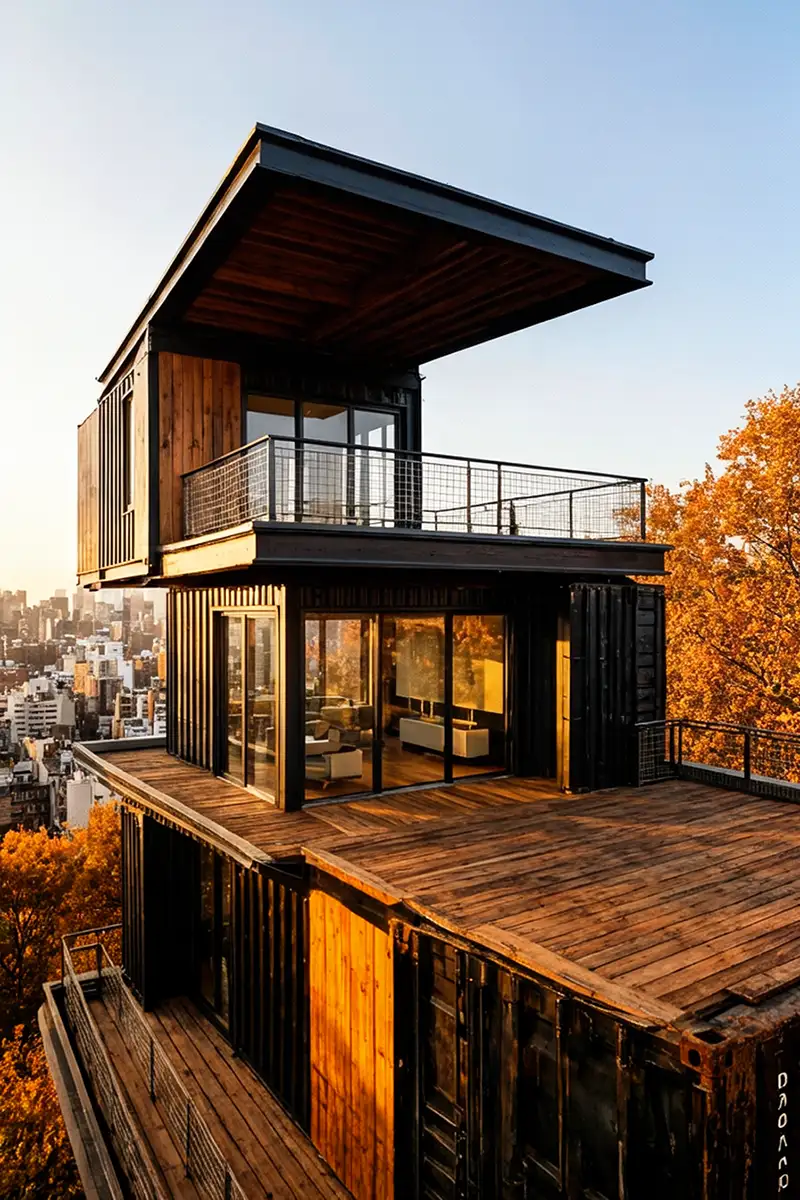
Achieving high-end urban living on a constrained site often requires expensive custom architecture, but this matte black container complex proves otherwise. The dark, sophisticated finish makes the units feel sharp, not cheap.
What we appreciate is the vast, multi-level timber deck. It effectively doubles the usable square footage, offering massive private outdoor space overlooking the city.
A dramatic roof cantilever adds architectural dynamic, while the existing autumn trees are cleverly utilized as natural screening, allowing for large, exposed glass walls without sacrificing privacy. It looks less like a container house and more like a private, elevated loft platform.
25. Bold Statements in White
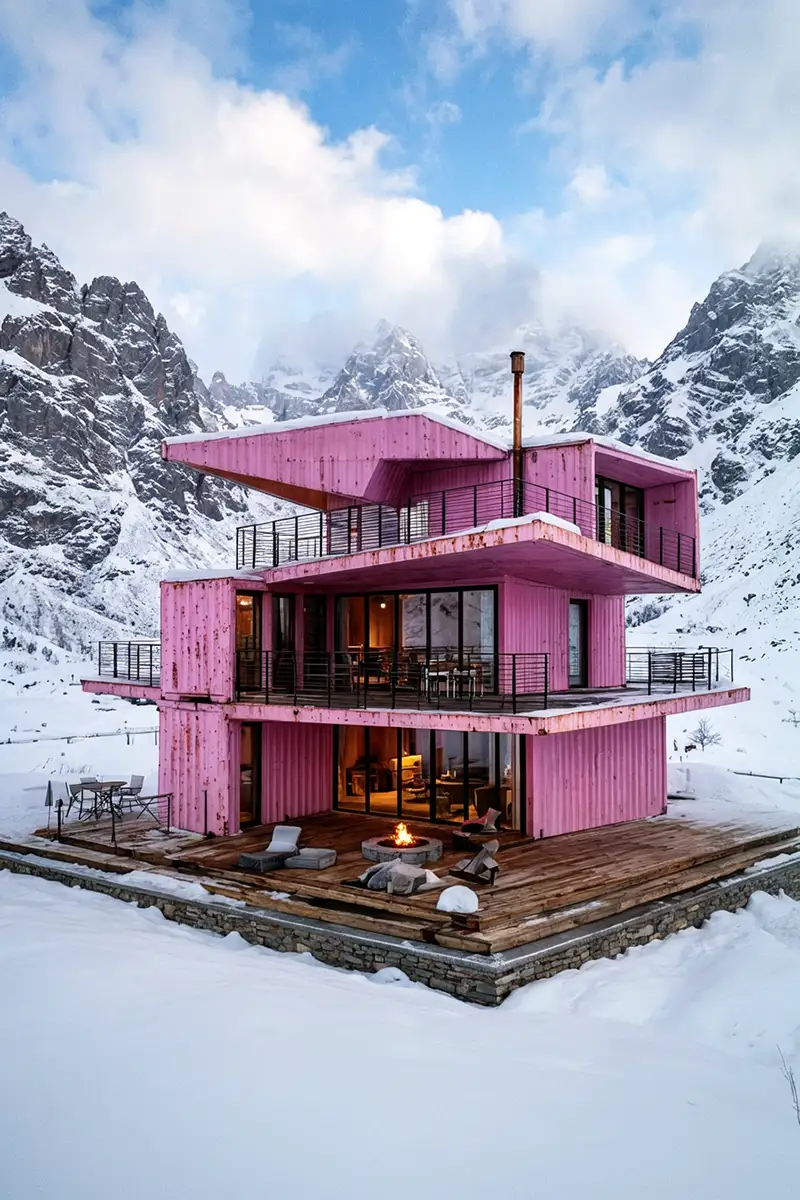
Sticking a bright pink, stacked metal complex at the base of snowy mountains is an aggressive aesthetic statement that could easily go wrong. This design works only because the surrounding landscape is monochromatic.
Against the white and gray, the pink pops. They’ve maximized the vertical stack to create multiple viewing platforms and balconies, activating every level. The vast ground-level wooden deck, complete with a fire pit, is a brilliant solution to activate the cold landscape.
It turns a harsh exterior into a luxurious, functional outdoor living room, proving bold color can activate a quiet environment if the programmatic design is smart.
