1. Open storage with woven baskets
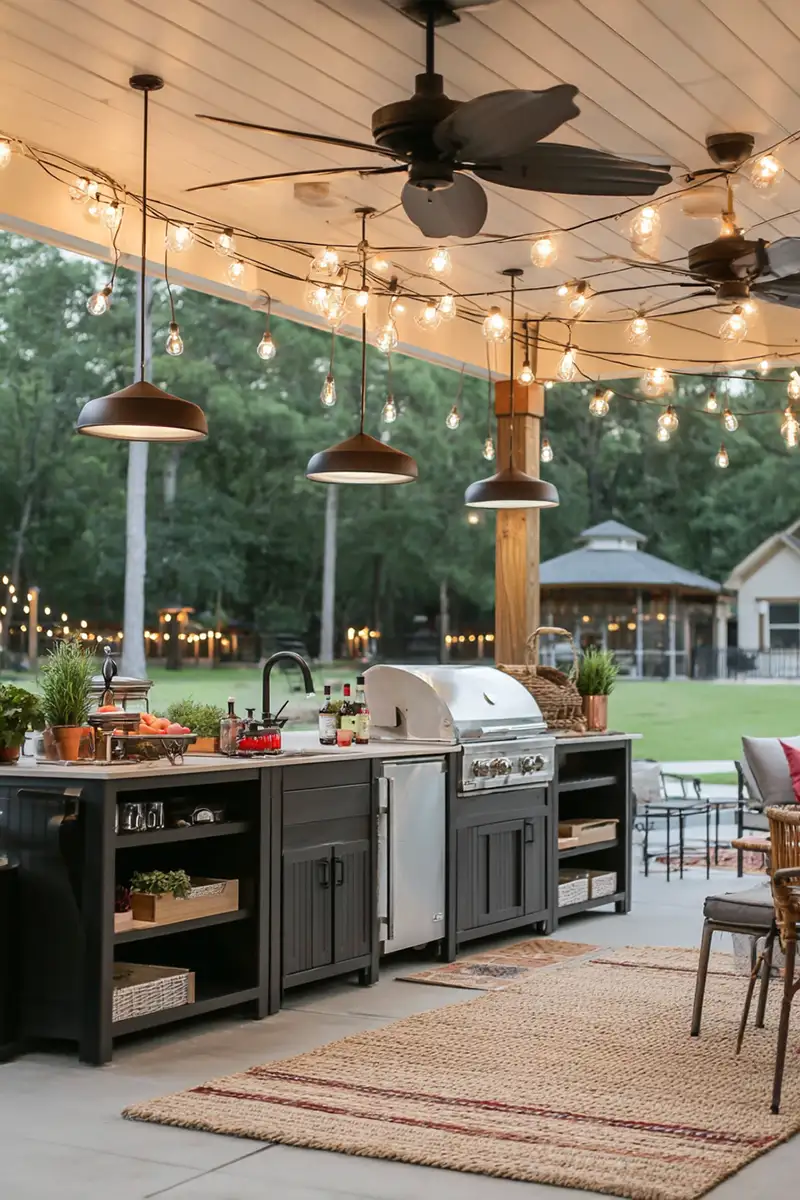
Open shelving in an outdoor kitchen often turns into a dust trap. I have dealt with wiping down gritty plates before every barbecue. This setup beats that problem.
The dark cabinetry uses heavy woven baskets on the bottom shelves. It keeps the visual weight light but hides the messy items. You just slide the basket out. Everything stays clean. The string lights overhead do the rest, drawing the eye up and away from the prep zones.
2. Heavy timber overhangs and planters
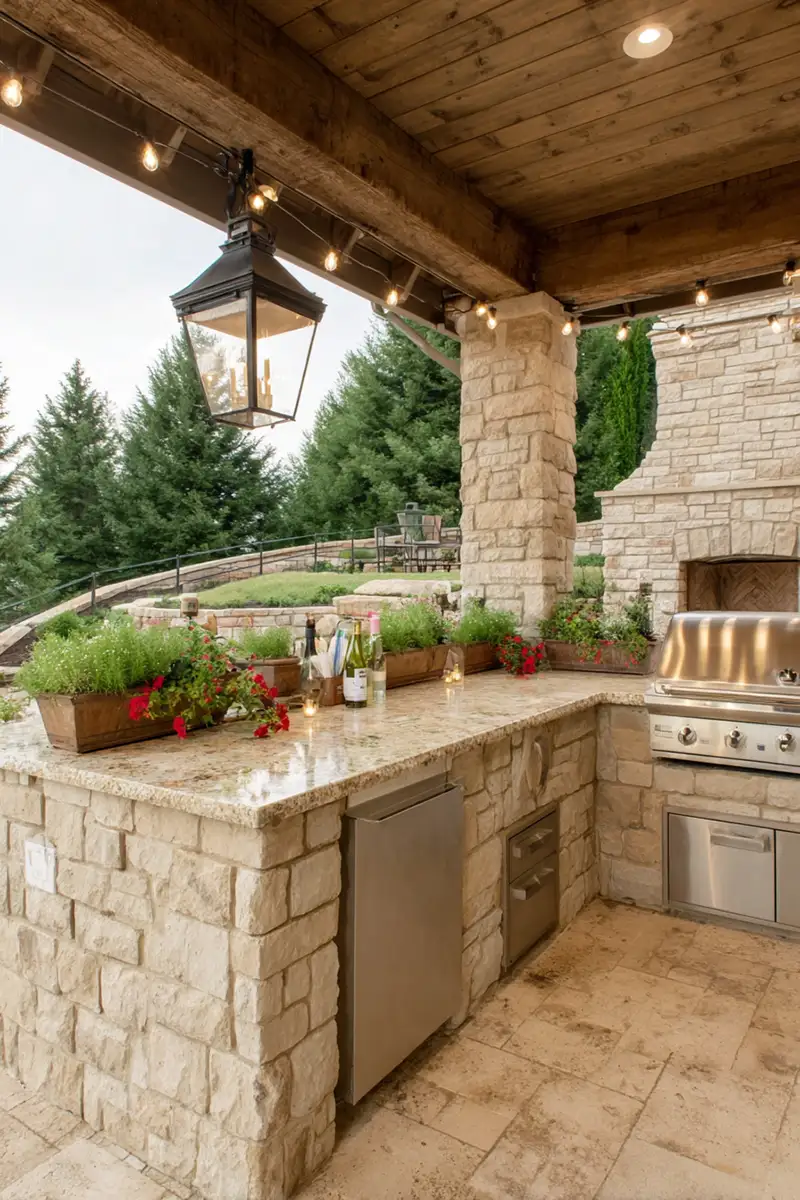
Stone countertops get incredibly hot under the summer sun. Building the cooking station under a deep, heavy timber overhang solves this completely.
I have found that adding long wooden planter boxes right on the counter is a smart touch. It softens the harsh edges of the masonry. It also keeps fresh herbs exactly where you need them.
3. Linear layouts for tight decks
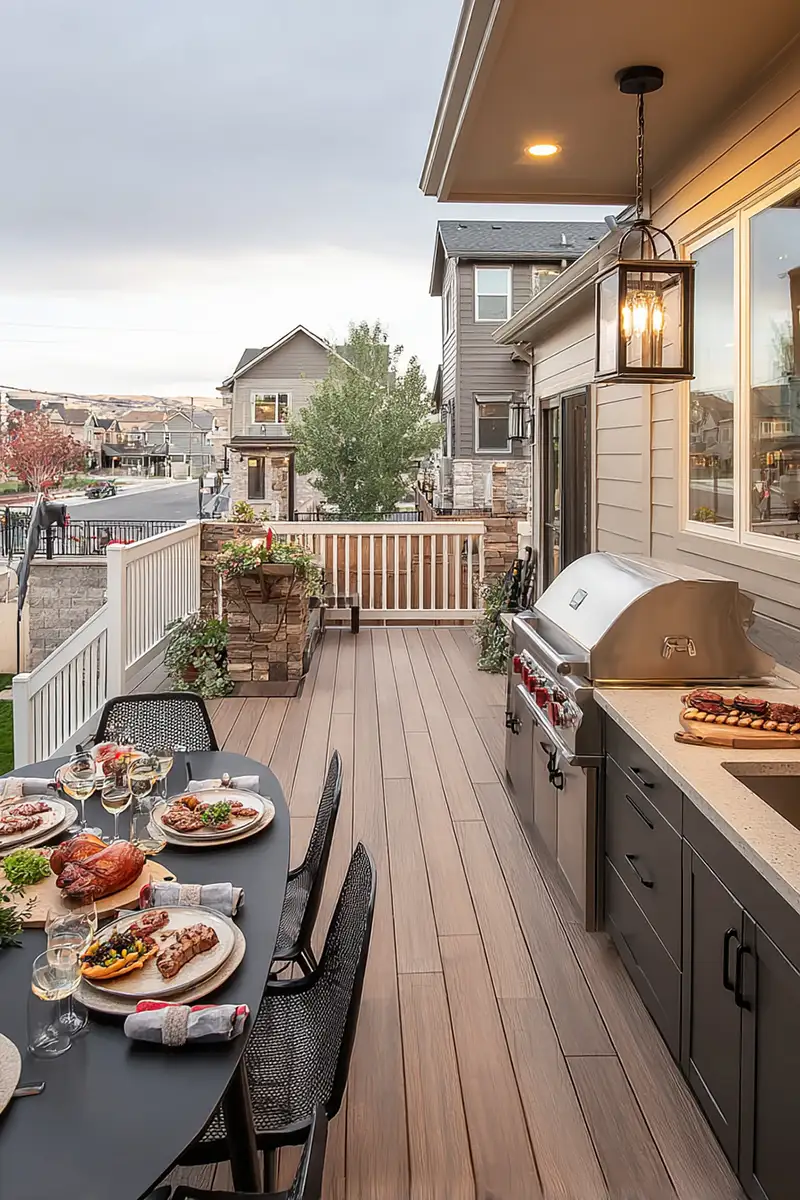
Deck space is usually tight. Pushing an entire kitchen onto a standard deck often leaves zero room for a proper dining table. Here is a smart fix.
They ran a slim, linear kitchen straight against the siding of the house. The dark cabinets blend in. This leaves the entire outer edge of the deck free for a large dining set.
I have learned that keeping the traffic flow entirely on one side prevents that cramped feeling when guests are mingling.
4. Deep islands for heavy prep
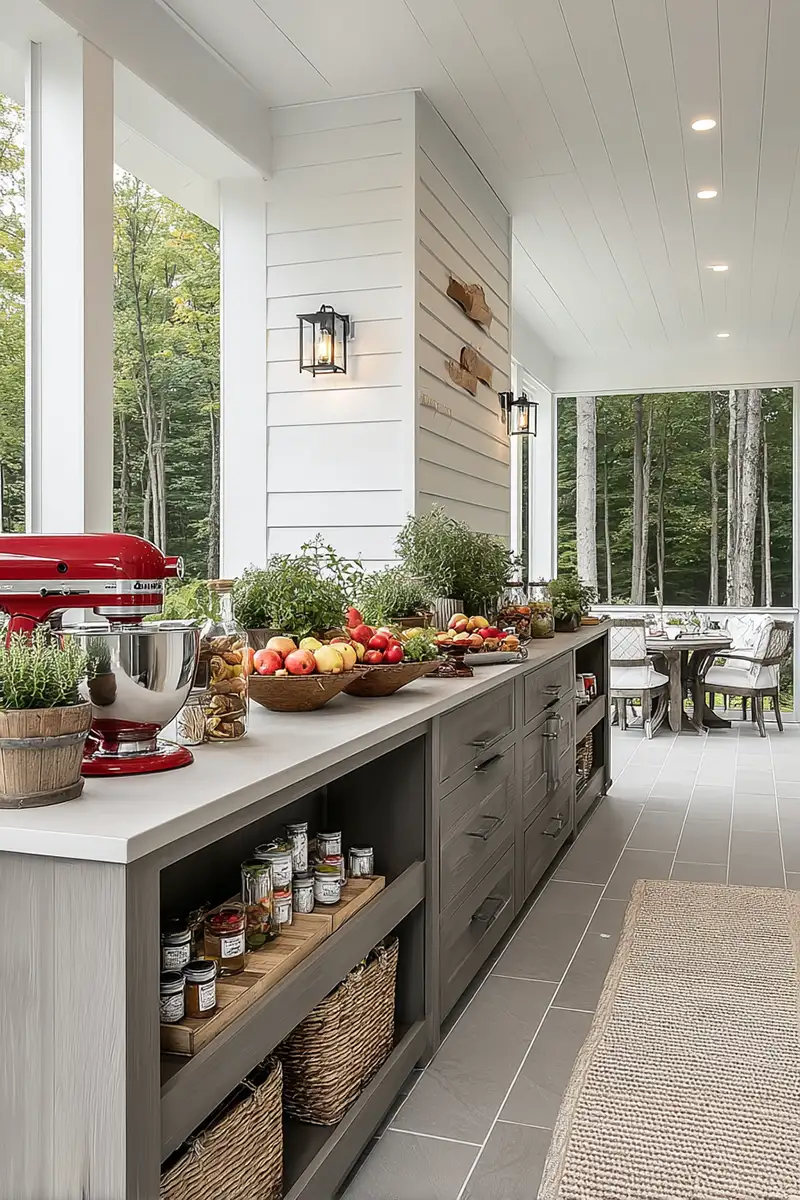
Prepping outdoors usually means running out of counter space fast. This extra-deep island changes the game. It handles a heavy stand mixer and leaves plenty of room to actually chop.
5. Balancing modern appliances with rustic wood
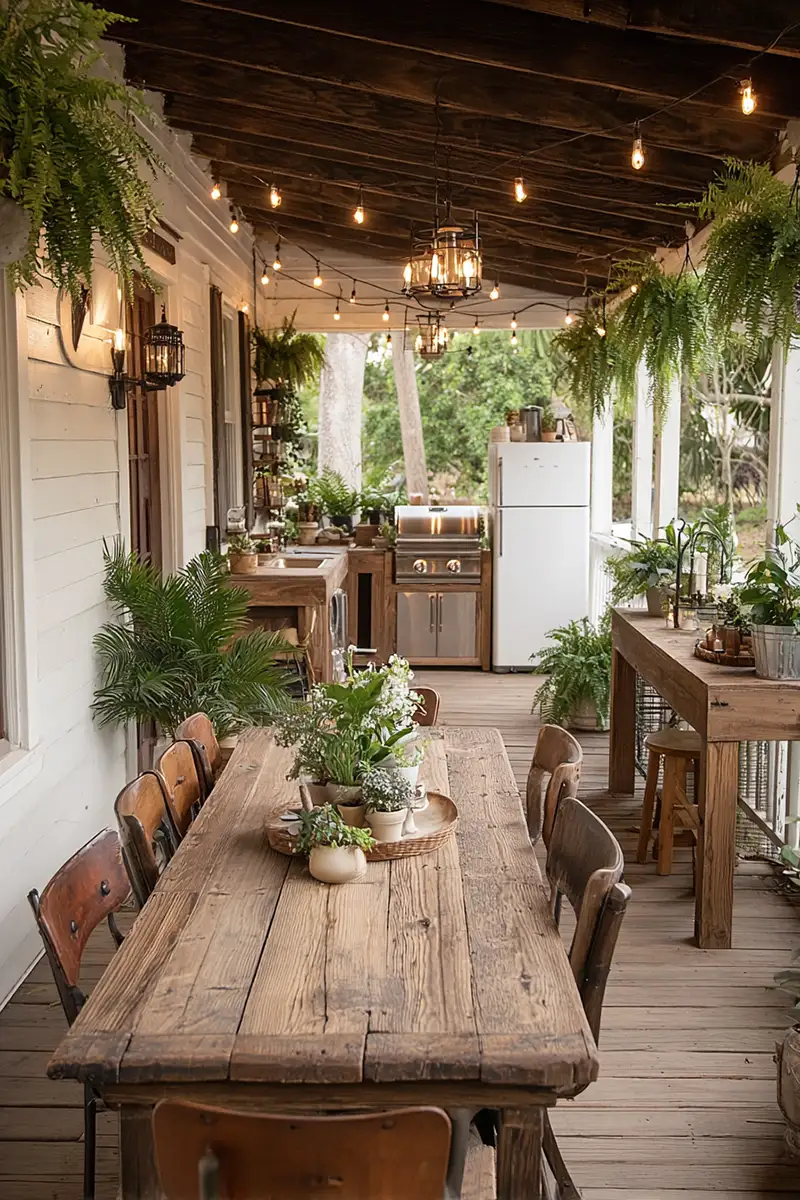
Adding full appliances to a rustic porch usually ruins the natural vibe. A bright white fridge sticks out terribly against weathered wood. They leaned into it here.
Flanking the stainless grill with rich, warm wood cabinetry grounds the space. The raw wooden dining table pulls it all together. In my experience, mixing a stark appliance with heavy natural texture makes the tech look intentional.
6. Vertical wall storage for narrow balconies
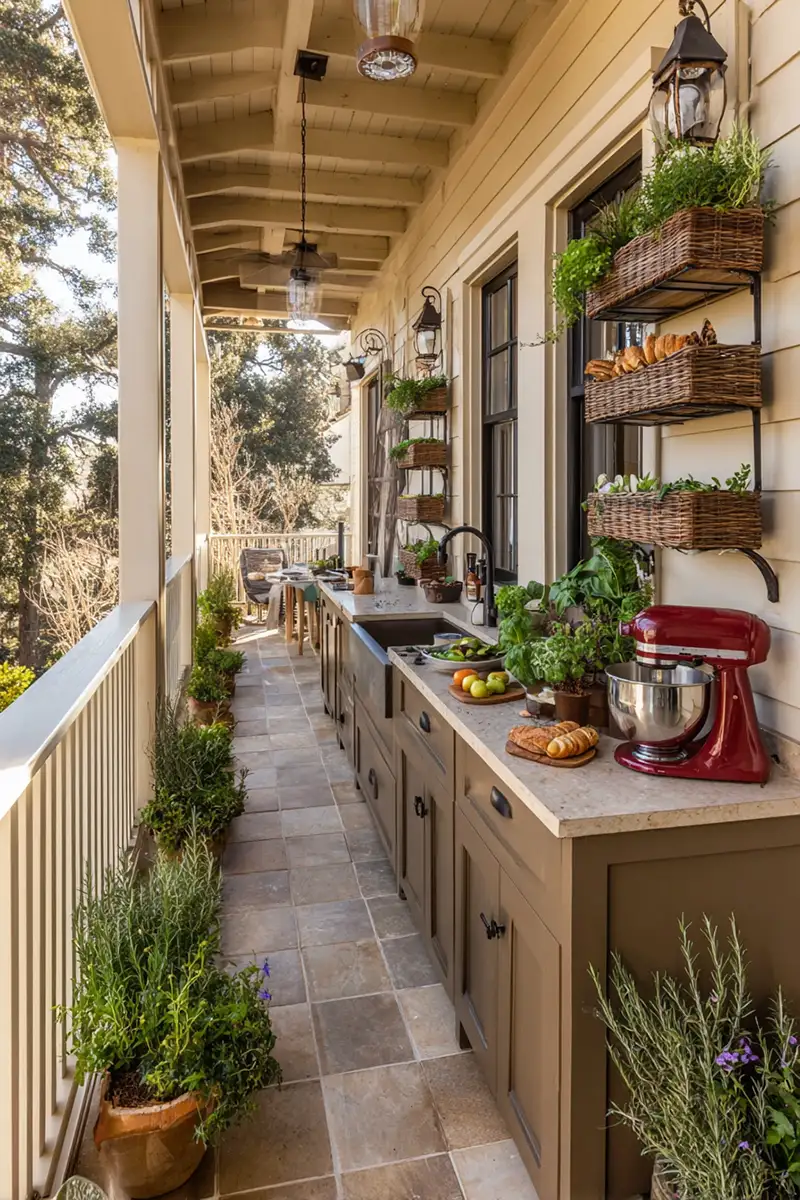
Narrow balconies are notorious for lacking storage. You cannot build deep cabinets without blocking the walkway. This design uses vertical space brilliantly.
Hanging tiered wicker baskets on the wall keeps fresh bread and produce off the counter entirely. I always look for ways to clear the deck. This leaves the slim prep area completely functional.
7. Dropped wire fixtures and protected cabinets
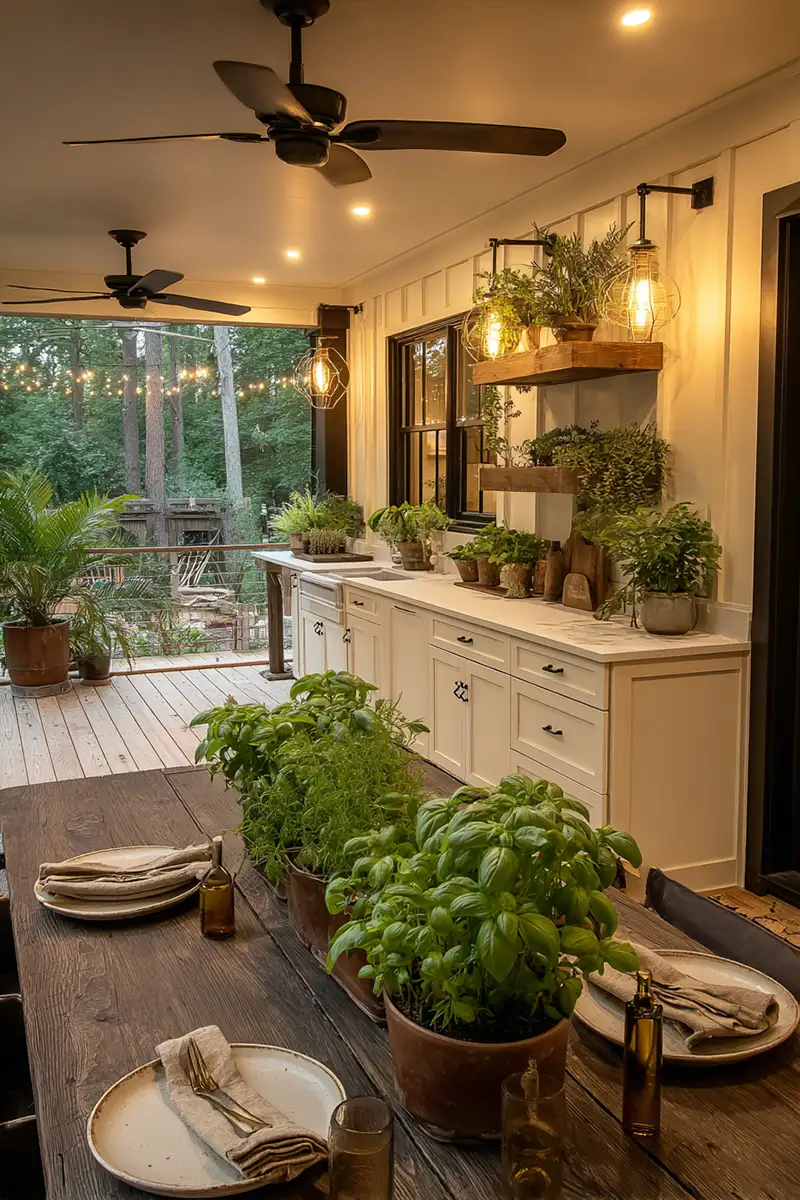
Lighting a covered patio kitchen is tricky. Recessed lights cast harsh shadows on your prep space.
These wire-caged hanging fixtures drop the light exactly where you chop. It is a huge relief for night grilling. I also noticed the crisp white cabinets.
Usually, white outdoors shows every speck of dirt. Placing them deep under the covered roofline protects the finish. The heavy use of potted basil on the table bridges the gap between the clean lines and the woods outside.
8. Weatherproof seating and iron frames
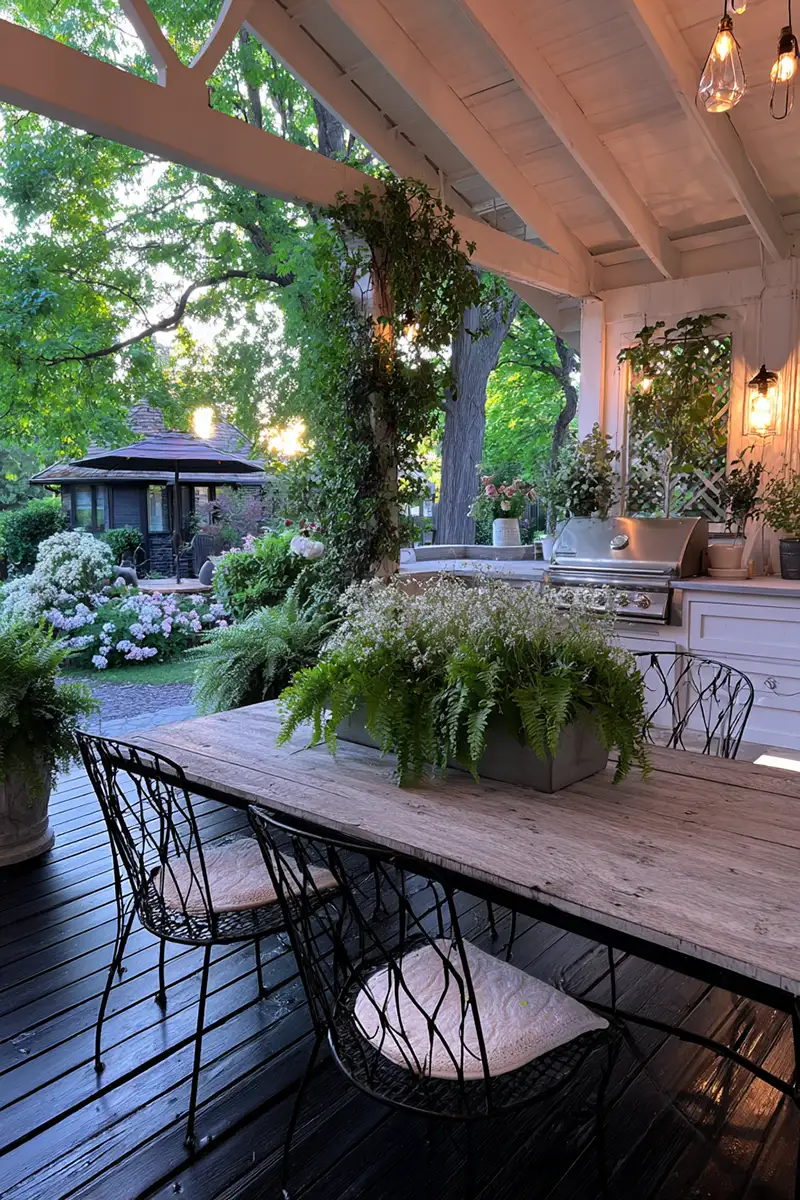
Keeping an outdoor dining area clean after rain is a headache. Iron chairs with removable cushions make it effortless. You just grab the fabric and go.
9. Rail mounted bar seating
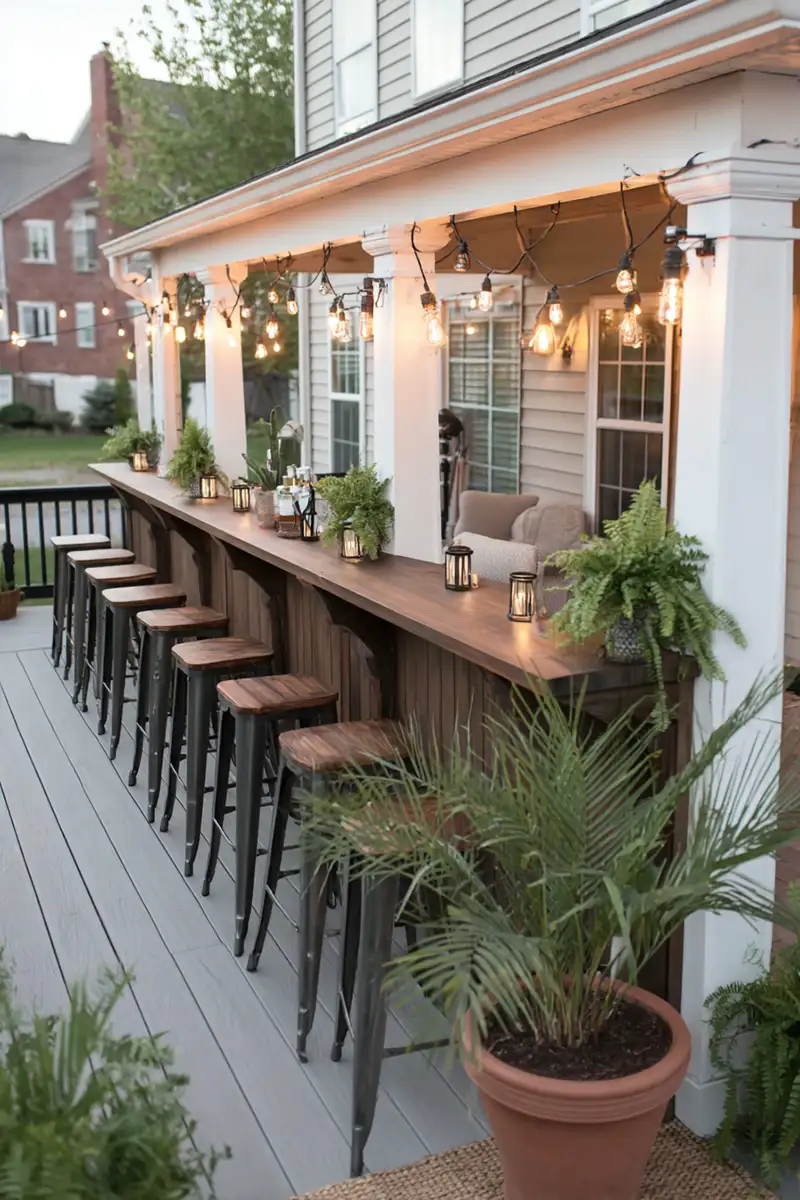
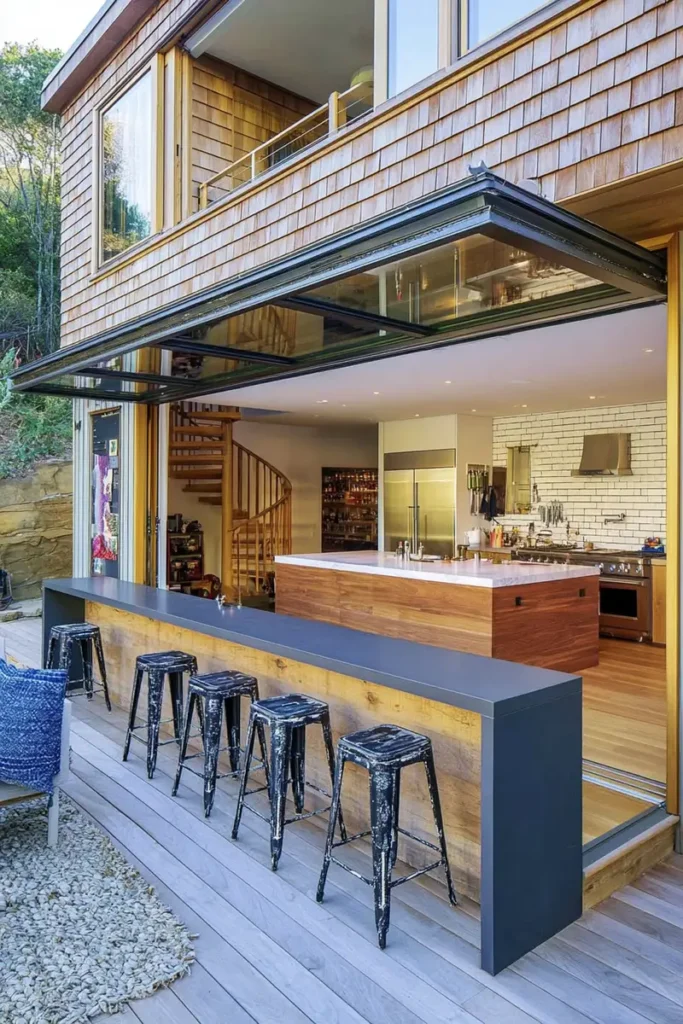
Entertaining a crowd on a small deck usually means scattered folding chairs. Building a bar counter straight onto the deck railing is a genius use of dead space.
It faces the yard. This keeps guests out of the cook’s way. I have found that a row of simple metal stools handles the elements perfectly and tucks away neatly.
10. Window pass throughs and vintage pendants
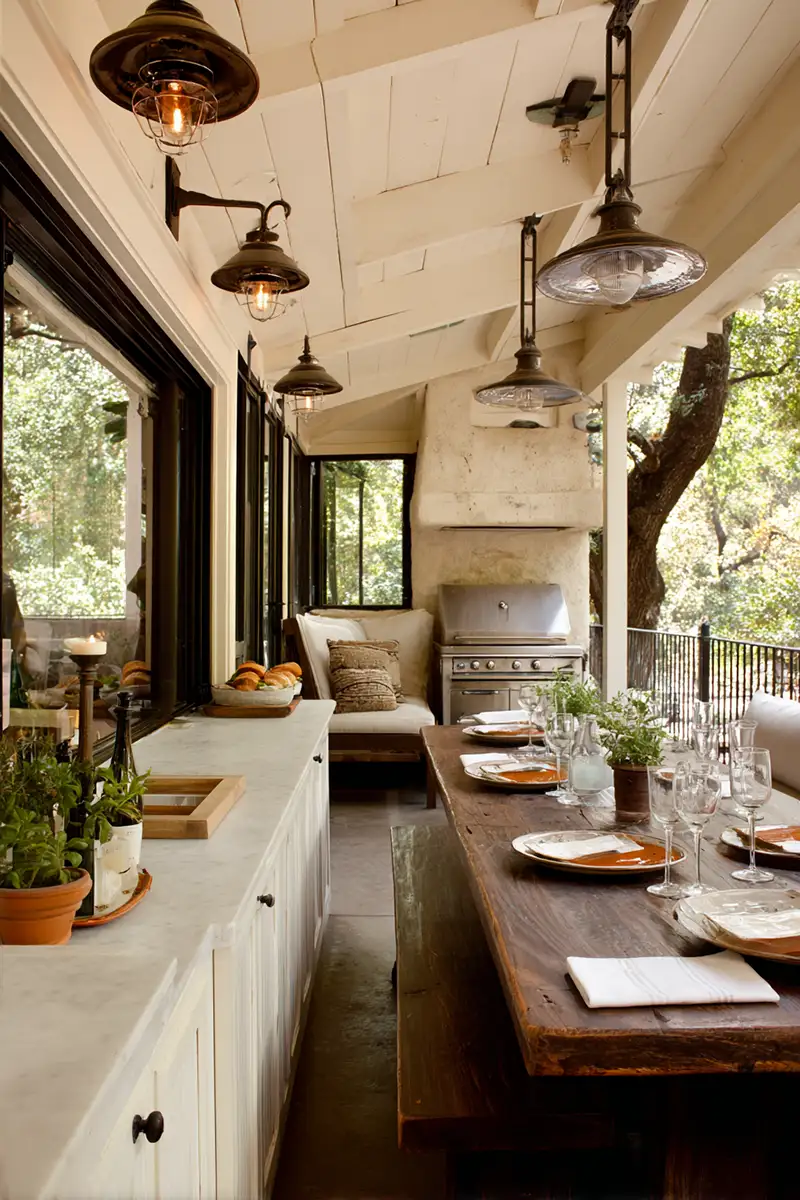
Connecting the indoor kitchen to the porch often feels awkward. This wide window pass-through handles the transition.
You hand platters right out to the stone counter. The vintage metal dome lights give the space an anchored, indoor feel despite being outside.
11. Warming up white cabinets with draped greenery
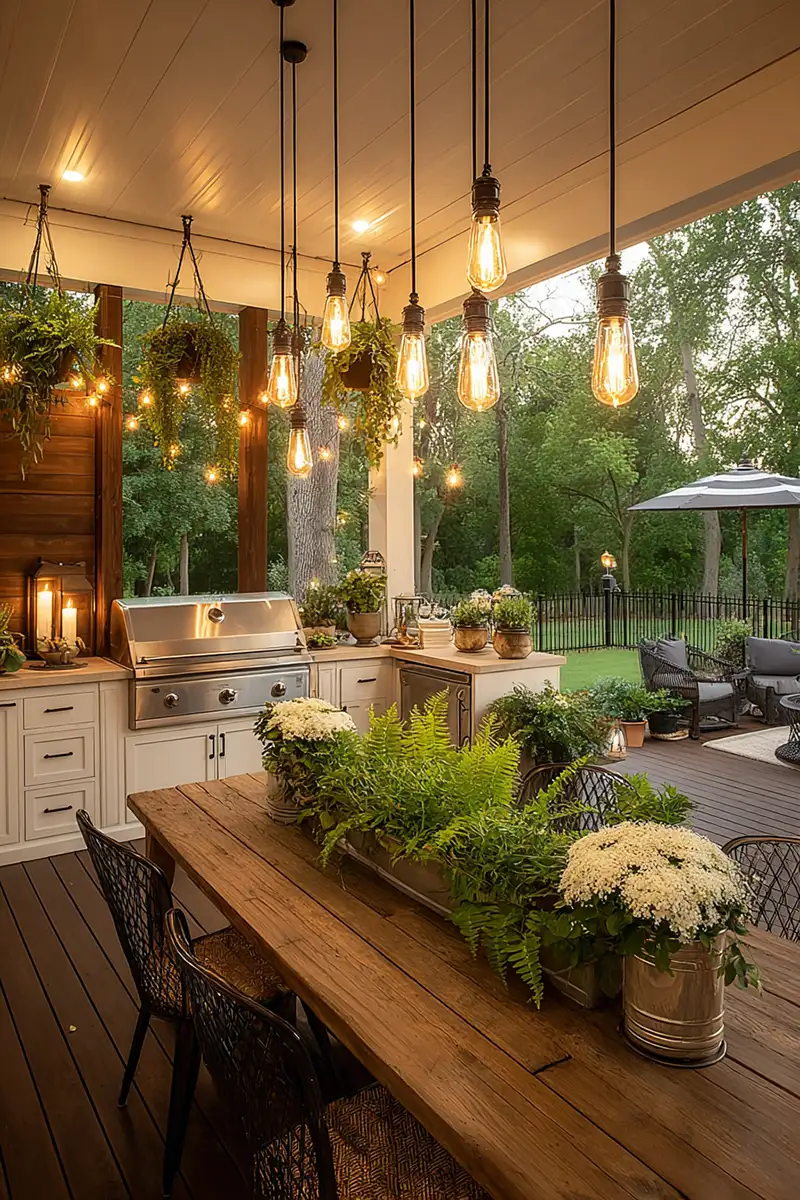
White outdoor cabinets often feel too sterile. They clash with a natural backyard. I always suggest softening them up. This setup uses a massive fern planter right down the center of the wooden table.
It pulls the green from the yard onto the deck. Grouping those hanging bare bulbs lowers the visual ceiling. The space instantly feels cozy instead of stark.
12. Under-cabinet lighting and pebble drainage
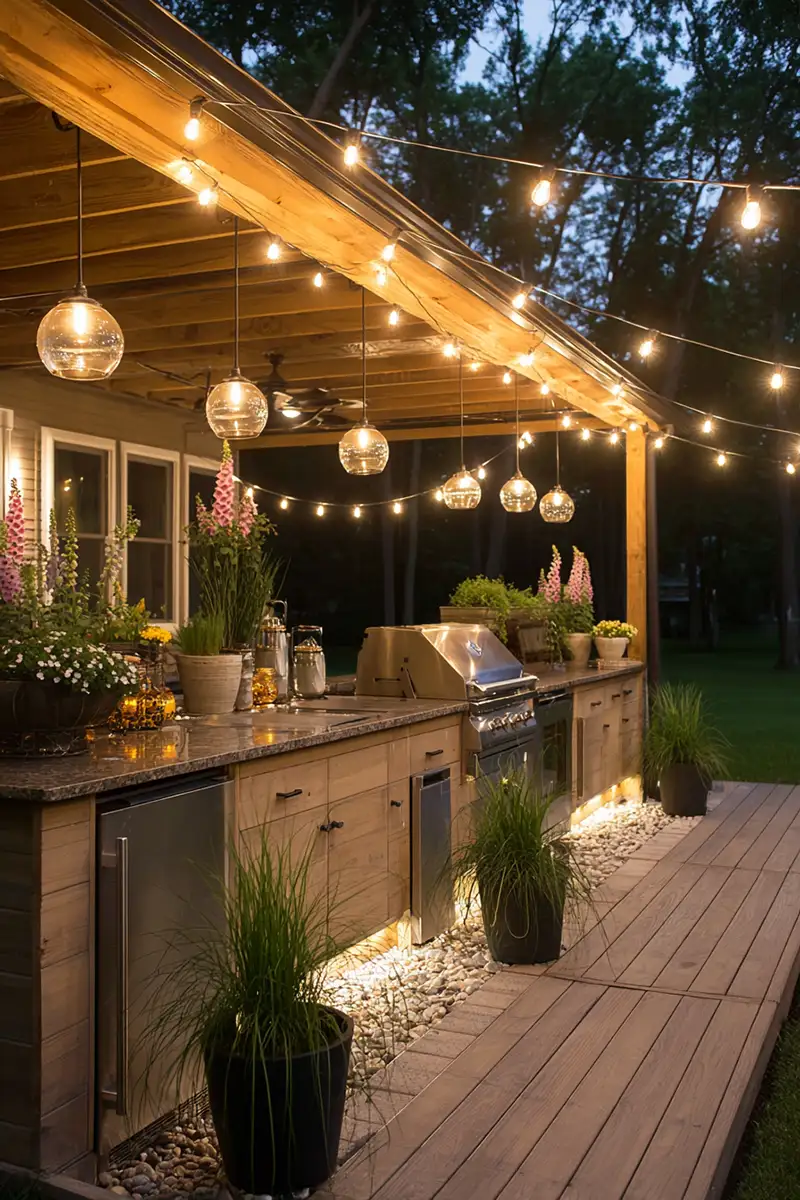
Deck edges near prep zones usually turn into muddy puddles. Water runoff rots wooden cabinet bases over time.
I have completely ruined good woodwork this way in the past. Look at this clever drainage solution. They laid a deep trench of white river rock right along the toe kick. It catches spills and heavy rain perfectly.
Adding that LED strip lighting under the cabinets is a brilliant functional touch. It highlights the natural stone texture. More importantly, it keeps your guests from tripping when fetching drinks at night.
13. Floating greens over compact dining
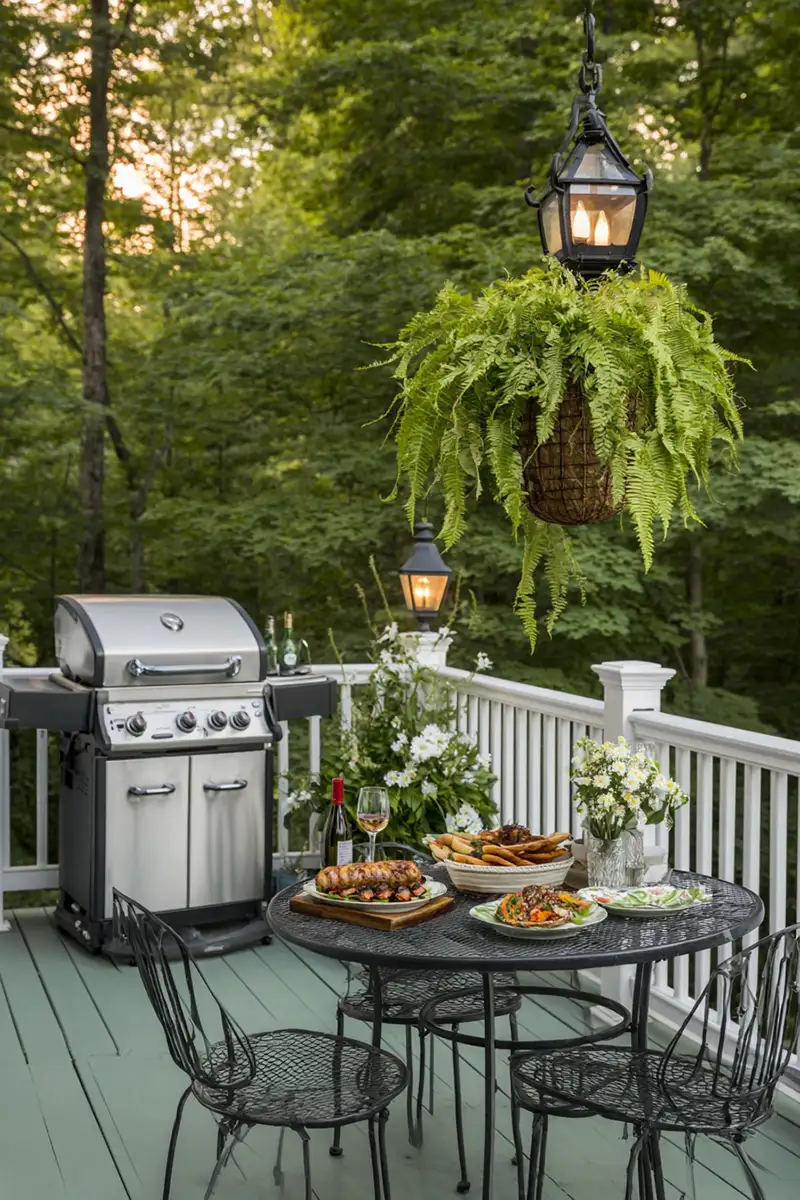
Tiny decks force tough choices. A small round iron table saves the layout here. Hanging the greenery and lanterns clears the floor completely.
14. Overhead racks for bulky cookware
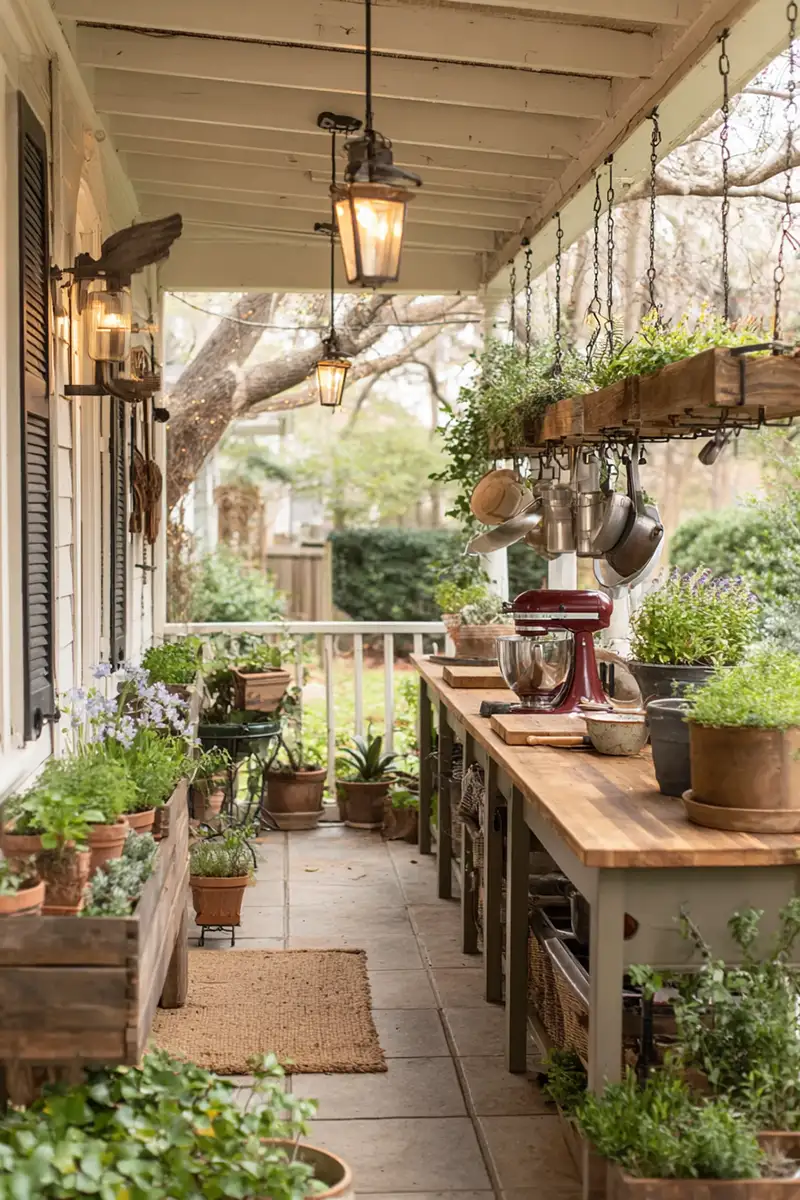
Storing metal pots in outdoor cabinets is a mistake. They easily get damp and rust.
This overhead hanging rack is a smart fix. It keeps heavy pans out in the open air so they stay dry. It also frees up the entire wooden prep counter. You get a massive workspace for chopping and mixing.
15. Heavy butcher blocks for deep prep
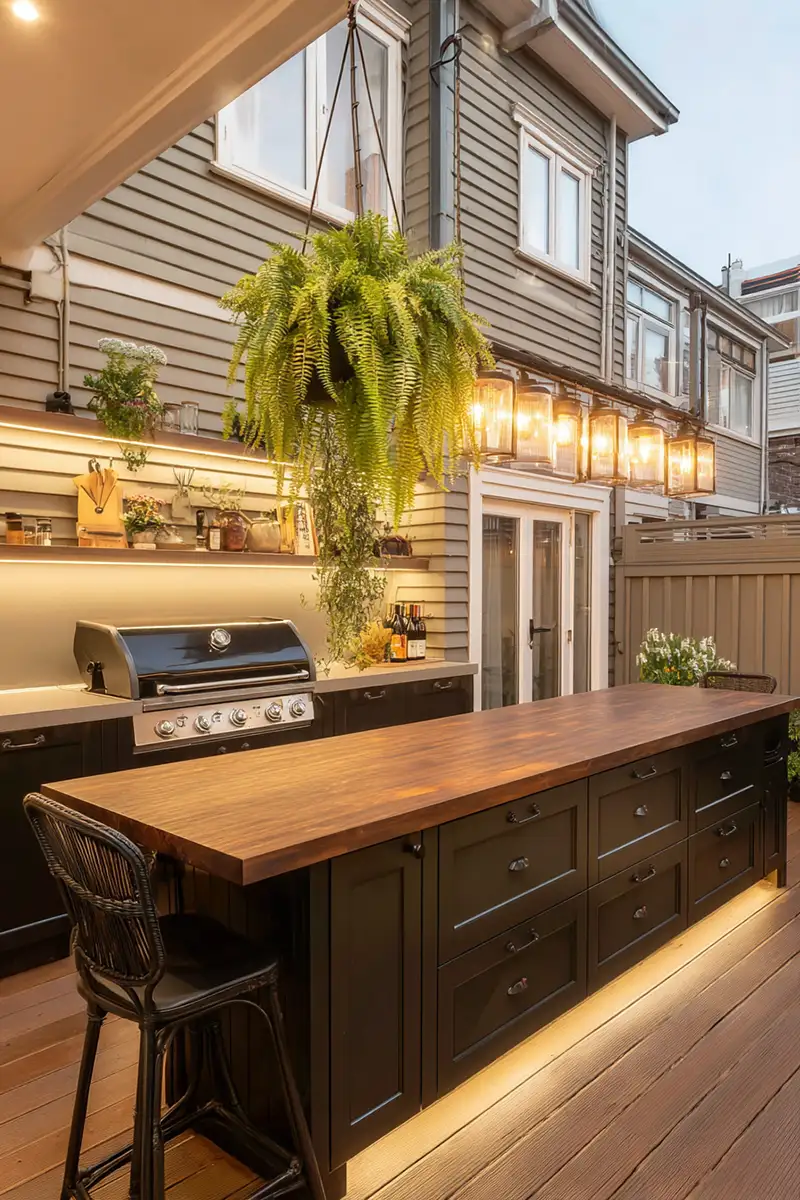
Flimsy outdoor islands wobble when you prep heavy meals. This thick butcher block top changes everything.
Dark cabinets hide scuff marks from bar stools. The heavy wood anchors the entire deck.
16. Built-in wood storage for pizza ovens
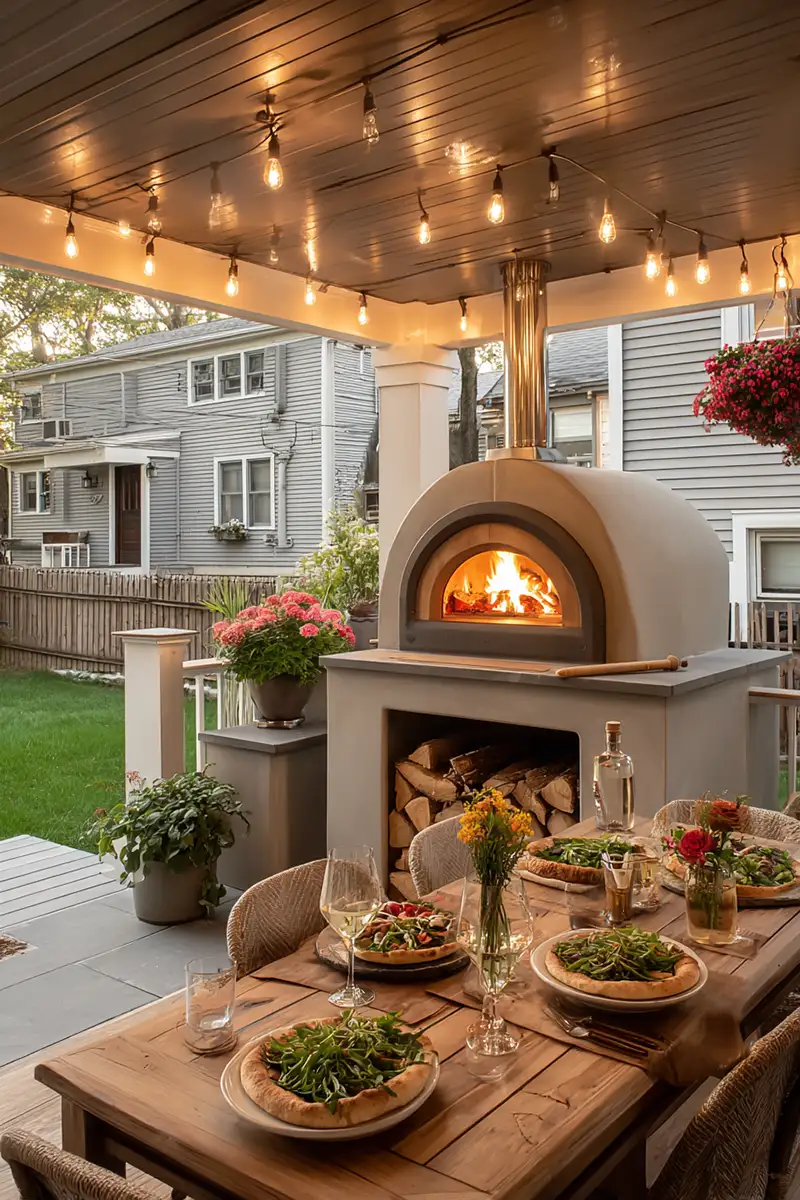
Pizza ovens are great, but the firewood creates a massive mess. Loose logs invite bugs right onto your deck. This custom base solves the headache.
It features a deep, dry nook built directly under the oven. Your wood stays stacked neatly out of the way.
I have noticed that keeping the fire source under a high, solid roof makes year-round cooking possible. You never have to cancel dinner over a light summer rain.
17. Using stone walls to level linear kitchens
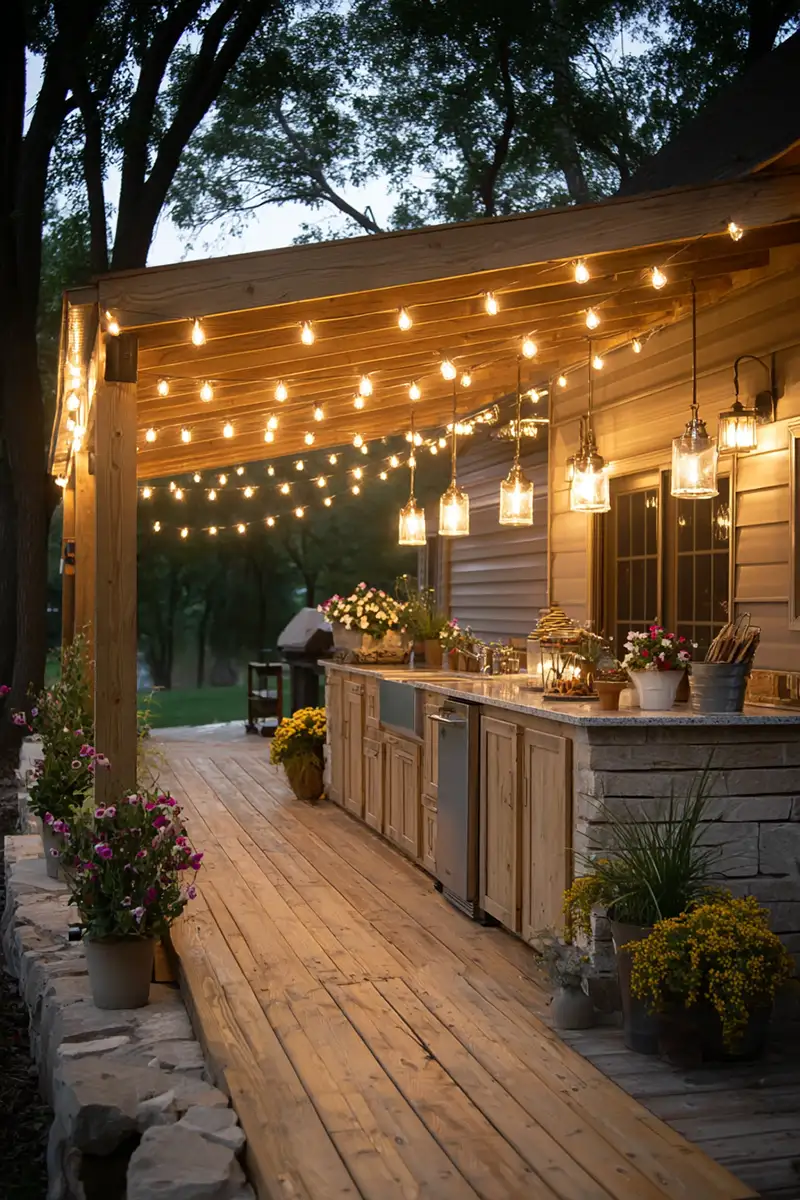
Sloped yards make building an outdoor kitchen difficult. Traditional decks require awkward leveling.
Building the counter directly into a low stone retaining wall solves the grade issue. The heavy stone acts as a natural rugged backsplash. It protects the back of the wooden cabinets from soil moisture. The long wooden deck acts as a clean, flat runway for the cook.